

Business
What Trump’s reclassification of pot and CBD could mean for seniors, research and stocks


Tarek Adieh, of Tampa, Florida, looks at cannabis flower from wholesaler Dep Kings at Champs Trade Show at the Palmer Events Center, Sept. 11, 2025.
Jay Jannar | Hearst Newspapers | Getty Images
President Donald Trump is expected to sign an executive order this week that would broadly expand access to cannabis. Industry advocates, executives and researchers who spoke to CNBC said the changes would come with big implications for both consumers and the health-care industry.
Trump said Monday he’s “strongly” considering an executive order that would reclassify pot as a Schedule III drug under the Drug Enforcement Administration, which would place cannabis alongside Tylenol with codeine, rather than Schedule I with the likes of heroin and LSD, as it’s classified now. The order would also authorize a pilot program allowing Medicare to cover cannabis products for seniors.
The proposal is expected to apply specifically to cannabidiol products, better known as CBD, aimed at treating chronic pain, sleep deprivation and other age-related ailments, said Shawn Hauser, a partner at cannabis-focused law firm Vicente LLP.
CBD has spiked in popularity in recent years, moving into the mainstream via canned cocktails and body lotions, but has yet to win full-throated backing from federal drug regulators.
“I expect the executive order will make clear what kind of cannabinoids are covered, that they have to come from a federally legal source,” Hauser told CNBC.
While many in the cannabis industry view the shift to Schedule III as a done deal, the inclusion of a controversial Medicare provision adds an extra wrinkle that could embed cannabis-derived products into the U.S. health-care system, despite limited clinical evidence of their efficacy, some experts told CNBC.
Insiders like Hauser expect the final order to define legal cannabinoids, administrative methods and a framework for Food and Drug Administration oversight.
“A lot of people want to see it, the reclassification, because it leads to tremendous amounts of research that can’t be done unless you reclassify,” Trump told reporters Monday. “So we are looking at that very strongly.”
Rescheduling and Medicare coverage are likely to trigger new investments from institutional capital and investors that typically follow federal insurance coverage to big pharmaceutical companies, said Timothy Seymour, founder and chief investment officer of Seymour Asset Management and a CNBC contributor.
“The valuation of the sector will be worth a lot more because institutional investors will be allowed in, will have access and will have liquidity, and exchanges will trade them,” Seymour told CNBC. “That immediately could double or triple the sector.”
The push for reclassification comes as a 2024 report found that more Americans reported using marijuana daily, or near-daily, than reported drinking alcohol at the same frequency. It was the first time the share of daily use had flipped in marijuana’s favor, based on analysis of 40 years of data from Carnegie Mellon University.
A budtender organizes and inventories marijuana flower at The Health Center, a medical cannabis and recreational marijuana dispensary in Denver.
Vince Chandler | Denver Post | Getty Images
Medicare disagreements
The Medicare initiative is being championed by billionaire Howard Kessler, a financier and longtime Trump ally who founded The Commonwealth Project in 2019. The organization says it advocates for senior care, including through cannabis use.
Kessler and advocates like Hauser have urged the administration to bypass typical FDA hurdles — like yearslong clinical trials — and use a pilot program to gather real-world data on the safety and outcomes of cannabinoids in the senior population.
Kessler did not respond to a request for comment. The White House also did not respond to a request for comment.
In September, cannabis companies’ stocks rallied on optimism that Trump would soon weigh in after he shared a Commonwealth Project video on Truth Social that branded CBD coverage as “the most important senior health initiative of the century.”
However, the Medicare proposal has drawn scrutiny, even from other Trump allies.
House Speaker Mike Johnson, R-La., has raised concerns about the cost and liability of such a program, the Washington Post first reported, while FDA officials argue that reimbursing Americans for non-agency-approved treatments would be unprecedented.
Beyond the politics, the scientific case for medical cannabis remains contentious.
Research shifts
The FDA has so far only approved CBD-based drug Epidiolex to treat rare forms of epilepsy. This narrow approval reflects both regulators’ caution and the fact that high-quality clinical trials are still limited for most of the other conditions where cannabis is being promoted.
Critics warn that a Medicare pilot program could endanger seniors, a demographic that often takes multiple daily medications. A recent FDA-funded study suggested that prolonged CBD use may cause liver toxicity and interfere with other life-saving medications.
“It’s not at all based on science. This is all based on money, and it’s egregious. That’s not the way we make medical decisions,” said Meg Haney, director of the Cannabis Research Laboratory at Columbia University. “[Kessler], who’s a buddy with the president … can make a lot of money selling something that has no evidence behind it.”
Other research has cast doubt on cannabis’ efficacy entirely, suggesting it may not be effective for many of the conditions targeted by the proposed pilot, Haney said.
For example, a 2023 review of 134 studies involving adults age 50 and older found medical cannabis to have inconsistent outcomes for improving conditions like end-stage cancer and dementia. The review also found more frequent links to harms including depression, anxiety, cognitive impairment and injury.
Rescheduling cannabis would, however, ease barriers to conducting clinical trials that experts say have historically stifled scientific research.
“Medical research has effectively been under lock and key,” said Ryan Vandrey, a Johns Hopkins University professor who helps run its Cannabis Science Lab. “Schedule I makes large, placebo-controlled trials incredibly difficult. Without that data, policymakers are being asked to make decisions in the dark.”
Investing potential
For investors, the specific terms of rescheduling are critical.
Rescheduling would improve growers’ access to banking and financial services because it would lift certain IRS tax restrictions, which bar cannabis businesses from deducting standard expenses.
The economic backdrop is already shifting: The annual value of the U.S. cannabis production jumped 40% last year from the previous year, according to the Department of Agriculture. The global market for cannabis-derived products is projected to hit $160 billion by 2032, according to Grand View Research.
Rumors of rescheduling and a possible pilot program helped shares of weed producers Tilray Brands and Canopy Growth jump 44% and 52%, respectively, on Friday.
As Seymour described it, Medicare coverage and federal insurance involvement is the “holy grail” that could unlock institutional capital.
A Schedule III classification could also help legitimize the sector for institutional investors who have been hesitant to wade in, paving the way for more stocks to be listed on the New York Stock Exchange and Nasdaq and shifting valuations from retail sentiment to fundamental cash flows.
“The Schedule I classification is what has held back a lot of institutional investors,” Seymour said. “Having to go out and tell their shareholders … that they own a company who’s selling something that is on a par with heroin, LSD or cocaine … is kind of a tough thing to swallow.”
Stocks of largest market cap cannabis companies in the U.S.
Business risks
If cannabis shifts to a reimbursable prescription drug model or federal legality, the category could attract interest from major pharmaceutical companies and distribution could eventually migrate from state-licensed dispensaries to national pharmacy chains like CVS and Walgreens.
That could spell trouble for smaller weed businesses.
Already, large pharmaceutical companies have the deep pockets needed to fund the multiyear, double-blind clinical trials required for FDA-approved drugs — a barrier to entry that few current cannabis operators can surmount.
However, Seymour views Medicare coverage as a catalyst for merger and acquisition activity rather than an immediate death knell.
“You are going to see more consolidation in the sector,” Seymour said. “Smaller companies that have good businesses, that are profitable … are probably going to be seen as targets.”
Meanwhile, Green Thumb Industries CEO Ben Kovler foresees more competition among pharmaceutical companies and cannabis companies to achieve medical breakthroughs.
“The pharma sector, in the past, has been a major lobbyist against [cannabis] because it is a threat,” Seymour said. “Therefore, yes, it’s a huge opportunity for pharma.”
— CNBC’s Brandon Gomez contributed to this report.





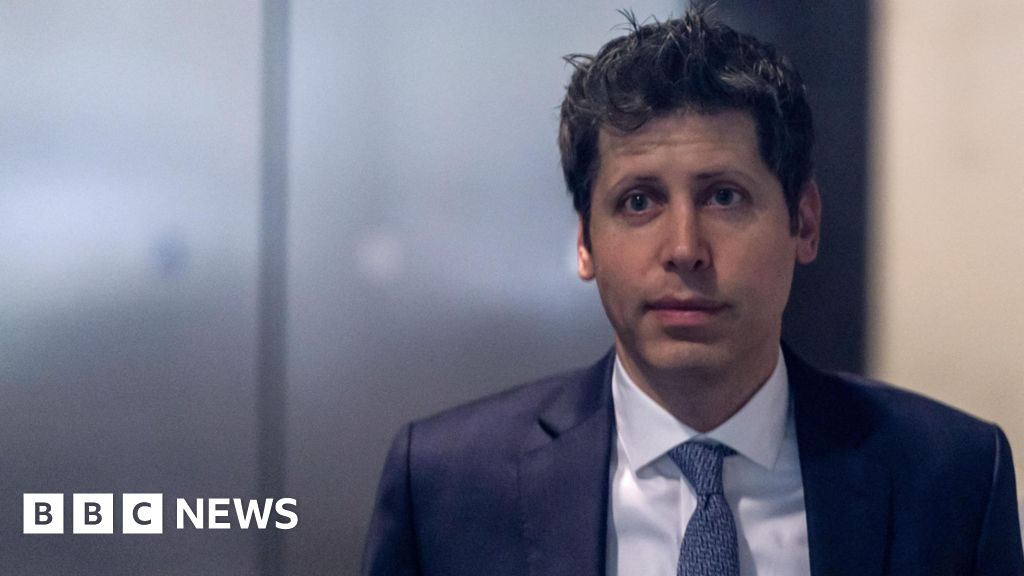
Sam Altman said Elon Musk tried many times for total control of OpenAI, which he’s now suing.
Source link

A United Airlines plane approaches the runway at Denver International Airport on March 23, 2026.
Al Drago | Getty Images
United Airlines flight attendants approved a new five-year labor contract with 31% average raises to base pay by August and other improvements, marking the last of the major carriers with unionized flight crews to reach a deal post-Covid.
The labor deal would give United’s roughly 30,000 flight attendants their first raises in close to six years. The company and the flight attendants’ union reached a preliminary deal in March. Crews had rejected a contract last year.
The union said the contract won 82% approval from the flight attendants, with close to 90% of them voting.
“The contract will immediately change the lives of United Flight Attendants, especially our thousands of new hires who have been hired since the pandemic,” said Ken Diaz, president of the United chapter of the Association of Flight Attendants.
The contract also includes boarding pay, or pay for when the aircraft’s door is open and travelers are getting on. Airlines had for years started flight attendants’ pay clock once the boarding door was closed.
The contract comes with a roughly 7% to 8% increase in compensation and $741 million in back pay, as well as quality-of-life improvements like restrictions on red-eye flights and “sit pay” during disruptions of more than 2½ hours.

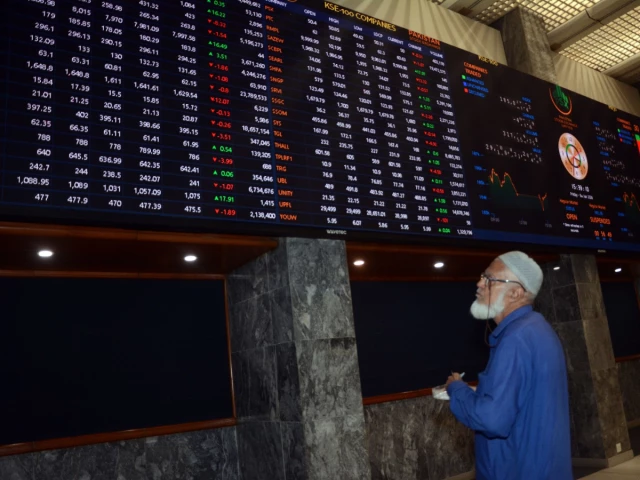
Stocks struggled on Tuesday, although blue chips proved resilient, amid a triple whammy of domestic political strife, surging US inflation and a lack of progress in the Middle East.
The FTSE 100 closed down just 4.11 points at 10,265.32. The FTSE 250 ended down 341.66 points, 1.5%, at 22,466.20, and the AIM All-Share fell 11.75 points, 1.4%, at 810.66.
The pound fell to 1.3505 dollars on Tuesday afternoon from 1.3651 dollars on Monday. Against the euro, sterling was lower at 1.1517 euros from 1.1584 euros on Monday.
The yield on UK 10-year gilts traded at 5.10%, up from 5.01% the day before.
Prime Minister Sir Keir Starmer defied calls for him to quit, despite a growing number of Labour MPs demanding that he steps aside.
“The Labour Party has a process for challenging a leader and that has not been triggered,” Sir Keir told ministers during crunch talks over his future, as no one person has stepped forward to challenge him yet.
“The country expects us to get on with governing. That is what I am doing and what we must do as a Cabinet,” he added.
More than 80 of Labour’s 403 MPs have now called for Sir Keir to quit immediately, or to set out a timetable for his resignation, including some ministers.
Banks sold off, amid reports of a possible windfall tax on the sector should there be a change at the top of the Government.
“Banks narrowly avoided a higher tax rate at the last budget, but our base case now assumes the UK banking surcharge to increase from 3% to 5%,” said the banking team at JPMorgan.
NatWest fell 3.2%, Lloyds Banking Group dipped 4.4% and Barclays declined 3.6%.
Meanwhile, the surging bond yields weighed on interest rate-sensitive housebuilders, with Barratt Redrow down 4.1% and Taylor Wimpey 2.4% lower.
Adding to the uncertain mood was another spike in the oil price as the impasse in the Middle East carried on.
Iran’s chief negotiator said on Tuesday that Washington must accept Tehran’s latest peace plan or face failure, after US President Donald Trump warned a truce was on the brink of collapse.
“Relations between Washington and Tehran appear to be more strained than at any time since the original ceasefire was announced just over a month ago,” observed David Morrison at Trade Nation, suggesting that hostilities could “resume at any time”.
Brent crude for July delivery was trading at 108.07 dollars a barrel on Tuesday, up compared with 103.70 dollars at the time of the equities close in London on Monday.
In Europe on Tuesday, the CAC 40 in Paris ended down 1.0%, and the DAX 40 in Frankfurt declined 1.6%.
In New York, the Dow Jones Industrial Average was down 0.5%, the S&P 500 fell 1.0% while the Nasdaq Composite was 1.7% lower.
The yield on the US 10-year Treasury widened to 4.46% on Tuesday from 4.39% on Friday. The yield on the US 30-year Treasury stretched to 5.02% from 4.97%.
The impact of the Iran war was reflected in soaring US inflation figures for April.
Annual CPI inflation sped up to 3.8% in April from 3.3% in March, above FXStreet-cited expectations of a 3.7% rise.
Monthly, energy costs were up 5.6% in April after a 21.3% jump in March.
Excluding food and energy costs, core CPI was up 2.8% year-on-year in April, up from 2.6% in March and higher than an expected 2.7%.
Analysts explained that much of the upside in core inflation came from a spike in shelter costs.
TD Economics said the numbers reinforce why the Fed needs to remain “patient”.
“Even assuming a ‘more normal’ reading on shelter prices last month, core inflation would’ve still firmed relative to March. With secondary price effects from higher energy prices likely to intensify in the months ahead, we’re likely to see core measures of inflation drift a bit higher and hover around 3% through year-end,” the broker said.
While Bank of America said the latest increase means inflation is getting “very uncomfortable” for the Fed.
Following the data, Fed futures now place a 60% probability of a rate hike by March next year.
The euro traded slightly lower against the greenback, at 1.1729 dollars on Tuesday from 1.1782 dollars on Monday. Against the yen, the dollar was trading at 157.73 yen, higher than 157.01 yen.
Back in London, Vodafone fell back 7.0% after mixed full-year results with adjusted earnings short of hopes but adjusted cash flow ahead.
“In the stock market it’s often said that it’s better to travel than arrive, hence why shares in Vodafone dipped on robust-looking full-year results after a strong rally in the past 12 months,” said Dan Coatsworth, head of markets at AJ Bell.
Vodafone shares have risen 60% in the last 12 months.
Intertek led the risers, up 6.4%, as it said it was “reviewing” the latest takeover proposal from suitor EQT Fund Management Sarl.
Intertek has turned down three previous approaches from EQT.
On the FTSE 250, Greggs rose 8.0% after reporting higher sales in the opening weeks of 2026 and maintaining full-year expectations.
But Wickes plunged 12% after reporting mixed trading as wet weather weighed on retail demand at the start of 2026.
Gold traded lower at 4,663.87 dollars an ounce on Tuesday, from 4,733.27 dollars on Monday.
The biggest risers on the FTSE 100 were Intertek, up 320.00p at 5,300.00p, British American Tobacco, up 255.00p at 4,634.00p, Compass Group, up 1.74p at 31.93p, Imperial Brands, up 104.00p at 2,832.00p and London Stock Exchange Group, up 328.00p at 9,348.00p.
The biggest fallers on the FTSE 100 were Vodafone Group, down 8.45p at 111.95p, 3i Group, down 116.00p at 2,400.00p, St James’s Place, down 52.50p at 1,154.50p, Lloyds Banking Group, down 4.28p at 94.06p and Marks & Spencer, down 13.60p at 308.90p.
Wednesday’s global economic calendar has eurozone industrial production and GDP data, the King’s Speech in the UK and US PPI figures.
Wednesday’s local corporate calendar has a trading statement from Spirax Group.
Contributed by Alliance News


Kim Kardashian faces legal trouble by ‘innocent’ man

President to undergo medical examination amid serious concerns

Taylor Swift spends quality time with family in New York City

-

 Tech1 week ago
DHS Demanded Google Surrender Data on Canadian’s Activity, Location Over Anti-ICE Posts
-
 Business1 week ago
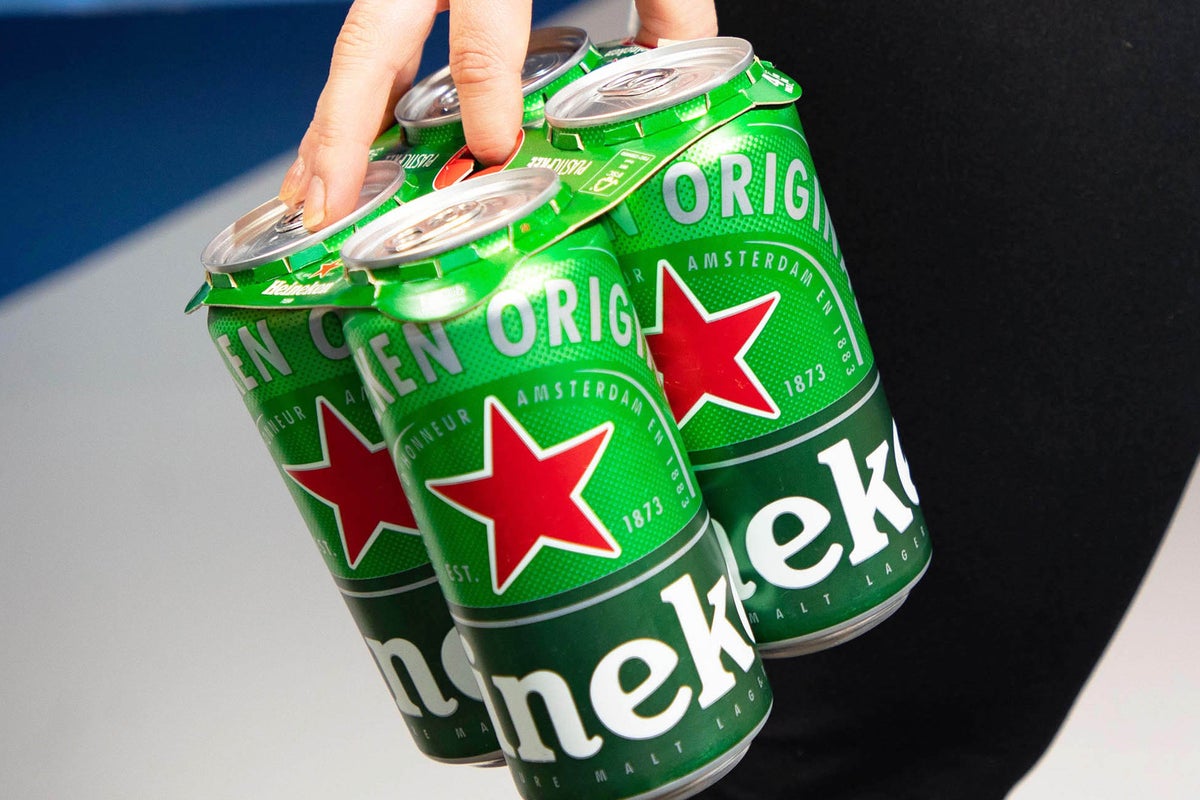
Heineken plans huge investment in hundreds of UK pubs ahead of World Cup
-

 Tech5 days ago
A new frontier: Identity stack evolves for agentic systems | Computer Weekly
-

 Tech4 days ago
‘Orbs,’ ‘Saucers,’ and ‘Flashes’ on the Moon: Pentagon Drops New UFO Files
-
 Business1 week ago
India among most resilient large EMs, better placed for future global shocks; policy reforms & strong buffers help: Moody’s – The Times of India
-

 Fashion5 days ago
New orders in German manufacturing up 5% MoM in Mar 2026: Destatis
-

 Tech5 days ago
What Microsoft Executives Really Thought About OpenAI in 2018
-

 Sports4 days ago
Shaheen Afridi achieves landmark feat during opening Test against Bangladesh