

Tech
Qi2’s Magnetic Wireless Charging Finally Arrives on Android

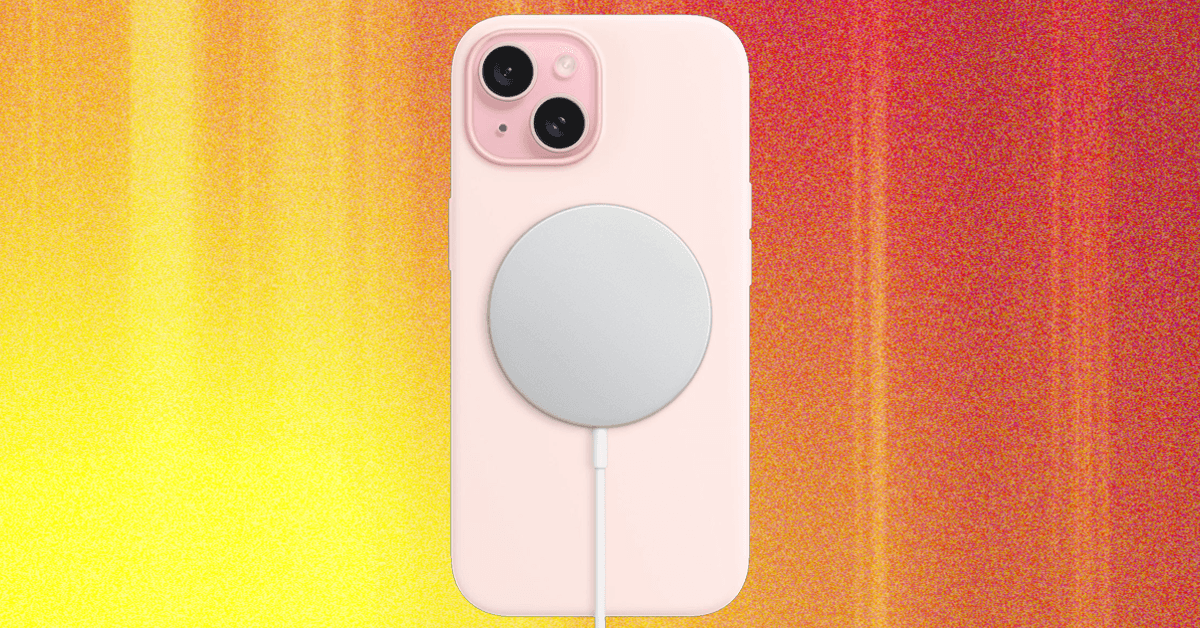
Other improvements Qi2 brings over Qi include wider device compatibility (from tablets to wearables), adaptive charging so chargers can talk to devices to supply the power they need instead of having a fixed power output, and enhanced safety with better heat management and foreign object detection.
What Is Qi2 25W?
The first major update for the Qi2 standard is Qi2.2.1, which the WPC is branding as Qi2 25W. While it won’t do anything to clarify the wireless charging scene, it is set to enable a host of improvements:
- Faster charging speeds of up to 50 watts, though it looks as though 25 watts will be the norm for now.
- Improved magnetic alignment, so phones can charge at maximum efficiency and speed, and different devices will be compatible with all Qi2 25W accessories.
- Backwards compatibility, meaning Qi2 25W devices will still work with Qi2 and Qi chargers, albeit at slower speeds.
The WPC says 14 products are certified so far, including 3-in-1 chargers, power banks, and car mounts, from Anker, Aukey, Baseus, Belkin, Ugreen, and Scosche, with hundreds more in the certification queue. Most interestingly, the WPC says, “in addition to Apple iPhone, major Android smartphones will join the Qi2 ecosystem for the first time with this launch.” But we don’t know yet which iPhone models or Android phones it is referring to.
A Complete List of Qi2 Phones
Sadly, there aren’t many Qi2-certified phones yet. Here’s the complete list:
A Complete List of Qi2-Ready Phones
Qi2-Ready phones are capable of charging at Qi2 speeds but lack the magnetic array, so they must be paired with Qi2-Ready cases with magnets in them to act as Qi2 phones. Here’s the list:
Expect a Delayed Wave of Qi2 Devices
Before a device can bear the Qi2 or Qi2 25W logo, the Wireless Power Consortium must certify it in its independent labs. The MPP Qi2 specification includes charging rate, magnet strength, and device compatibility. The Qi2 logo promises that the device meets the WPC’s exacting standards. But, as with the original Qi standard, there are also devices available that have not passed through the official Qi2 certification process.
Apple’s iPhone 12 to 16 range supports Qi2, and accessory makers like Anker, Belkin, Nomad, Mophie, Baseus, and many others have released Qi2 wireless chargers and power banks. You can expect a wave of Qi2 25W accessories and phones to roll out next, and we expect some Android manufacturers to jump fully on board later this year or early 2026. Phones typically have a two-year lead time, so that may account for the delay in Qi2 adoption. The WPC hopes that Qi2 will unify wireless charging and finally provide the universal global standard we have been waiting for, but we are no longer feeling quite so optimistic.
Power up with unlimited access to WIRED. Get best-in-class reporting and exclusive subscriber content that’s too important to ignore. Subscribe Today.












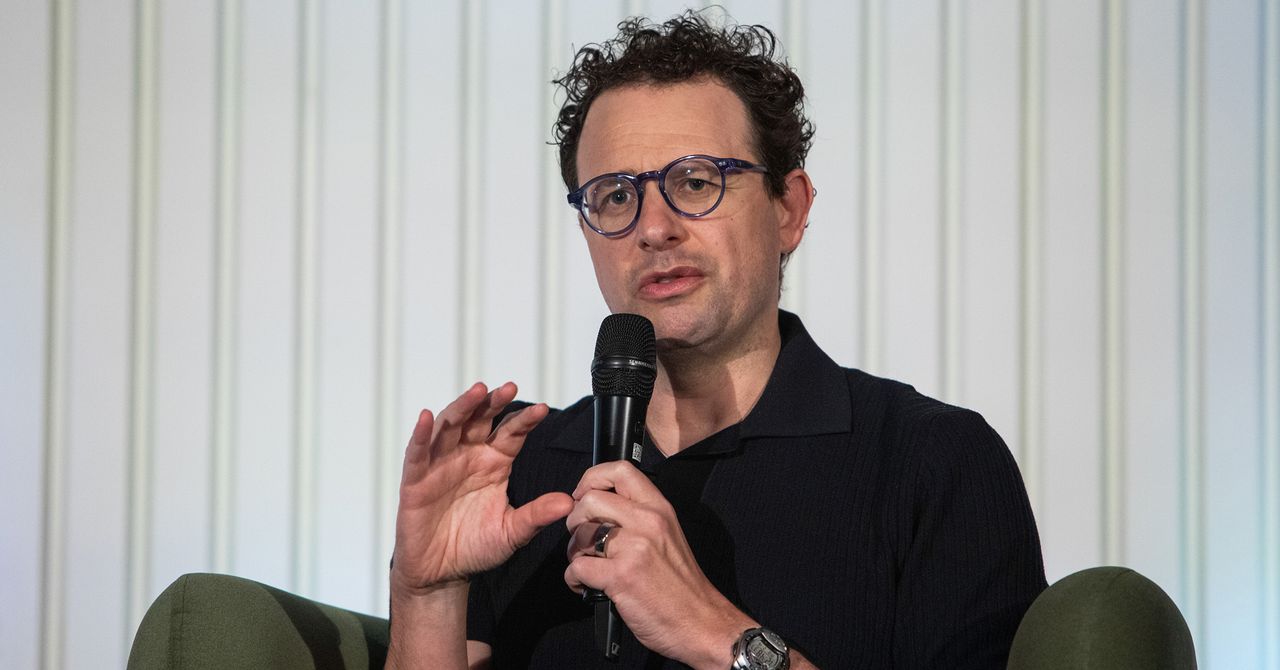
Anthropic is moving into a new London office as it seeks to expand its research and commercial footprint in Europe, setting up a scrap between the leading AI labs for talent emerging from British universities.
The company, which opened its first London office in 2023, is moving to the same neighborhood as Google DeepMind, OpenAI, Meta, Wayve, Isomorphic Labs, Synthesia, and various AI research institutions.
Anthropic’s new, 158,000-square-foot office footprint will have space enough for 800 people—four times its current head count—giving it room to potentially outscale OpenAI, which itself recently announced an expansion in London.
“Europe’s largest businesses and fastest-growing startups are choosing Claude, and we’re scaling to match,” says Pip White, head of EMEA North at Anthropic. “The UK combines ambitious enterprises and institutions that understand what’s at stake with AI safety with an exceptional pool of AI talent—we want to be where all of that comes together.
UK government officials had reportedly attempted to coax Anthropic into expanding its presence in London after the company recently fell out with the US administration. Anthropic refused to allow its models to be used in mass surveillance and autonomous weapon systems, leading to an ongoing legal battle between the AI lab and the Pentagon.
As part of the expansion, Anthropic says it will deepen its work with the UK’s AI Security Institute, a government body that this week published a risk evaluation of its latest model, Claude Mythos Preview. According to Politico, the UK government is one of few across Europe to have been granted access to the model, which Anthropic has released to only select parties, citing concerns over the potential for its abuse by cybercriminals.
The increasing concentration of AI companies in the same London district is an important step in creating a pathway for research to translate into AI products, says Geraint Rees, vice-provost at University College London, whose campus is around the corner from Anthropic’s new office.
“This cluster didn’t emerge from a planning document. It grew because serious researchers and companies understand that proximity isn’t a nice-to-have,” he said last month, speaking at an event attended by WIRED. “That’s how the innovation system actually works. It’s not a clean, linear transfer from lab to market. It’s messier, richer, more human than that.”

The increasingly long-in-the-tooth Computer Misuse Act (CMA) of 1990 remains an albatross around the neck of British cyber security professionals, and even though the UK government committed last December to reforming it, every minute of delay is holding back the nation’s security innovation, resilience, talent, and ability to defend itself against cyber attacks, campaigners have warned.
Ahead of the National Cyber Security Centre’s (NCSC’s) upcoming CYBERUK conference in Glasgow, the CyberUp Campaign for reform of the Computer Misuse Act (CMA) has published a new report, titled Protections for Cyber Researchers: How the UK is being left behind to maintain pressure on Westminster.
The CMA defines the vague offence of unauthorised access to a computer, which the campaigners want changed because it was written 35 years ago and fails to account for the development of the cyber security profession, and the fact that in the course of their day-to-day work, cyber pros may sometimes need to hack into other systems.
“Cyber attacks are growing in scale, sophistication and severity, with a devastating impact on infrastructure, businesses and charities,” said a CyberUp campaign spokesperson.
“While other countries have moved to refresh their cyber laws in response, the UK’s Computer Misuse Act hasn’t been updated since before the modern internet – hardly the best platform for accelerating our defences into the next decade.”
The group’s report highlights how other nations, Australia, Belgium, France, Germany, Hong Kong, Malta, Portugal, and the USA, have already secured legal protections for cyber professionals that enable them to go about their business without fear of prosecution.
In Portugal – Britain’s oldest formal ally under a treaty dating back to the 14th Century – the government last year published Decreto-Lei 125/2025, implementing the European Union (EU) Network and Information Systems (NIS2) Directive and revising the country’s cyber crime law to ensure that ethical hackers and professional cyber security practitioners working in good faith are both recognised and protected.
Portgual’s laws now accept some elements of cyber work may have to happen without explicit permission or involve unanticipated technical overreach that has a legitimate purpose.
As such, Portugal says that security work undertaken in good faith won’t be punished as long as the researcher fulfills a set of conditions. For example, they can act only to find vulnerabilities and these must be reported immediately, they must avoid taking harmful actions, like conducting DDoS attacks or installing malware, and they must respect the integrity of any data they may find or access and delete it within 10 days once the issue is addressed.
CyberUp said Portugal’s example demonstrates how cyber crime laws can be modernised to legally protect research carried out in the public interest.
“Portugal has demonstrated how to modernise their equivalent law through cyber legislation. We urge the government to follow this example and act swiftly through the Cyber Security and Resilience Bill to achieve meaningful reform, or risk lagging even further behind our peers,” the spokesperson said.
Defence Framework
Working with cyber security experts and legal advisors, the CyberUp campaign has developed its own Defence Framework that would allow cyber professionals to present a statutory defence in court as long as they adhere to the Framework’s four core principles.
- Harm Vs. Benefit: The benefits of the activity must outweigh the potential harms;
- Proportionality: Cyber pros must take all reasonable steps to minimise the risks of their activity;
- Intent: They must act honestly, sincerely, and clearly direct themselves towards improving security;
- Competence: Their qualifications and professional memberships should demonstrate they are suitably equipped to perform cyber security work.
The campaigners say this framework will bring clarity and confidence to the security sector, enabling cyber pros to run essential research tasks without fear of criminal prosecution, helping organisations operate to recognised legal standards, and enabling a more open and collaborative relationship between the cyber sector and the UK government.
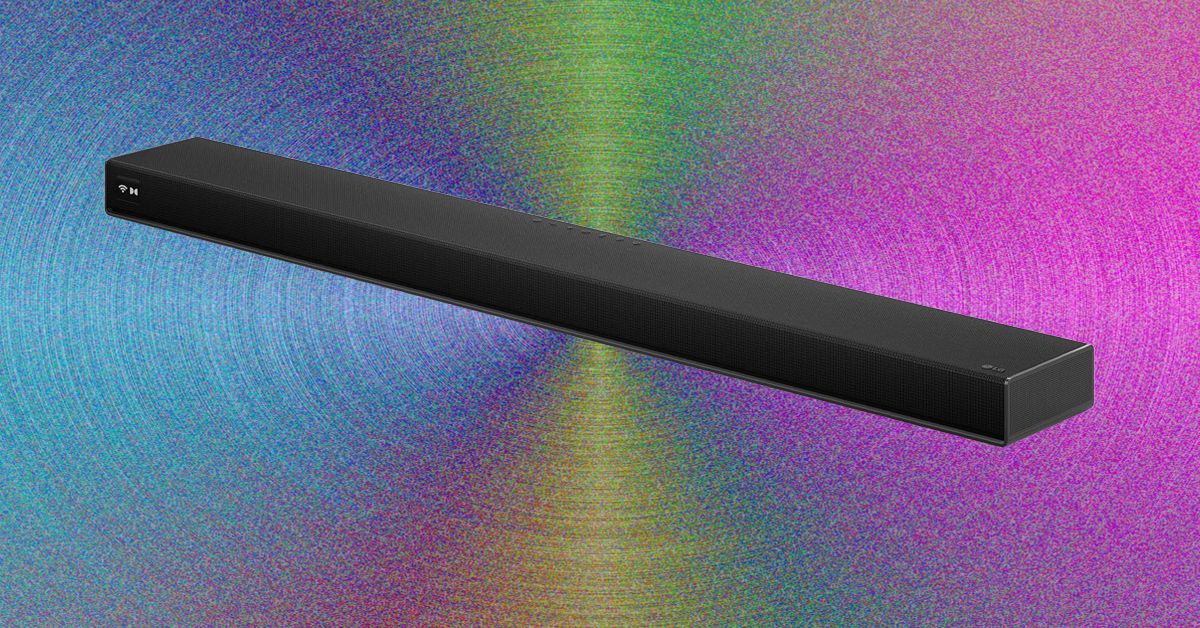
Setup was relatively quick and painless. You just have to unbox four speakers, a soundbar, and a subwoofer, attach their power cables, and plug in everything. Pairing happens through the LG ThinQ app, which allows you to set up the Sound Suite system and tune it to exactly where you’re sitting in the room using your cell phone’s microphone.
You can also set up each speaker to play music and group it with any other LG smart speakers you might have around your home, like the more affordable $250 M5 bookshelf speaker, to create a whole-home system.
Once all the components were synced, I plugged the soundbar into the C5 OLED via HDMI, and was able to easily control everything via the TV remote’s volume and mute buttons. More in-depth settings had to happen in the app, but if you’re anything like me, this won’t become a regular chore. You’ll set it how you like it once and move on. While the pairing functionality with the LG TV was nice, it’s not required–the eARC port lets the Sound Suite work perfectly with any modern TV.
The bar itself runs the show, with a black-and-white display on the far left that shows your mode and volume, among other settings. In the center of the bar and below each speaker, an LED light strip that also shows you the volume when you change it, which is a nice touch.
Getting Musical
Photograph: Parker Hall
The sound of the LG Sound Suite is full and cinematic, thanks in no small part to the extra dedicated speakers. Most competitors lack front left and right, simply opting to use the soundbar for these channels. As such, the width and breadth of the soundstage were bigger than most competitors I’ve tried, with only Samsung’s flagship HW-Q990F as a real contender. Even the Samsung lacked the lower-frequency audio quality that these LG speakers provide.


Orioles lose controversial challenge after Coby Mayo unintentionally triggers review

Israel and Lebanon agree to 10-day ceasefire, says Trump

Spoiler alert! Surprise twist in “Survivor 50” elimination

-

 Entertainment1 week ago
Queen Elizabeth II emotional message for Archie, Lilibet sparks speculation
-

 Tech1 week ago
Azure customers up in arms over ‘full’ UK South region | Computer Weekly
-

 Tech1 week ago
As the Strait of Hormuz Reopens, Global Shipping Will Take Months to Recover
-

 Fashion1 week ago
CII submits 20-pt agenda to Indian govt to back firms hit by Iran war
-

 Tech1 week ago
This AI Button Wearable From Ex-Apple Engineers Looks Like an iPod Shuffle
-

 Politics6 days ago
Indian airlines hit hardest after Dubai limits foreign flights until May 31
-

 Entertainment4 days ago
Palace left in shock as Prince William cancels grand ceremony
-

 Politics6 days ago
Chinese, Taiwanese will unite, Xi tells Taiwan opposition leader