

Tech
Hasan Piker Built His Twitch Empire With Shure Microphones, Lumix Cameras, and Lots of Zyns


Hasan Piker is 15 minutes late to our Zoom. He’s just gotten back from the gym, where he works out seven days a week, first thing in the morning, with no rest days. He’s been up since 5. In 45 minutes, he goes live for an eight-hour stream on Twitch. Everything is already set up, so we can chat right up until he needs to switch over, he tells me. There’s no buffer time.
Piker is a man accustomed to operating under pressure, which is fortunate because the pressure has rarely been greater. To his audience—mostly young, white men—the 34-year-old far-left commentator is a spokesperson against a failing establishment. To his critics within the Democratic Party, he is a liability protected by his “jock insurance” when he makes controversial comments about Israel and US foreign policy. Last month, a Wall Street Journal op-ed demanded that Democrats sever ties with him entirely, branding him “anti-American, anti-women, anti-Western, and antisemitic.” As Politico puts it, the left is in a Piker pickle. Piker has learned to manage with the help of his daily routine.
“Mental sanity in an insane world has to be propped up by a rigorous regimen,” Piker tells WIRED. “Think about it. Death. Destruction. An ineffective state that won’t address the working class’s needs. To maintain some semblance of hope, I have to keep my sanity, and I figured out this is the way to do it.”
I spoke with Piker—who has previously chatted with WIRED global editorial director Katie Drummond—about his relentless routine, his streaming setup, and his borderline obsession with Zyns.
When you wake up, what’s the first thing you reach for?
My phone, unfortunately. Then, my Finasteride.
Are you a coffee person?
Yes. Once I’m done tweeting, reading, and listening to NPR Morning Edition, I get out of bed and slam two double espresso shots back-to-back. And I take a bunch of pills. I take my creatine in the morning. I take fish oil pills because I throw up when I eat seafood. I take a bunch of multivitamins, ashwagandha, zinc—all that good stuff.
You stream for at least eight hours a day. When do you have the time to eat lunch?
I eat the same lunch every day, on stream, usually around 3 pm. It’s a pound of chicken. Straight white chicken breast and rice—it’s either going to be Asian or Middle Eastern chicken. I also drink a lot of cold brew while I’m slamming 3-milligram Zyns. Sometimes I substitute the 6-milligram Zyns. Coffee and cinnamon are my two flavors.
You’re often reacting to breaking news in real time for thousands of viewers. How do you avoid giving an instant take that might age badly?
It happens, but I try to be restrained. I have my ideology and message discipline on the things I’ve been talking about for years, and because the problems persist, it’s not difficult to have an instant reaction. I have talked about the necessity for gun control thousands of times at this point. So, in the aftermath of yet another horrible mass shooting, I know there are certain systemic factors at play that I can talk about instantly.
There are a lot of younger crowds watching you. How do you frame some of these political issues to them?
Donald Trump has made my job infinitely easier. My job is to educate people on imperialism and sometimes reflect on the perspective of victims. This is not an often-discussed part of our war machine. We talk about how wars impact us—our sons and daughters are sent overseas, they die, and we’re spending all of our money on it, for petro-capitalists or whatever. But rarely is there focus on the actual victims on the ground and how their perspective even shifts over time once they realize that America and Israel aren’t exactly invested in the liberation of the Iranian people as they initially presented.












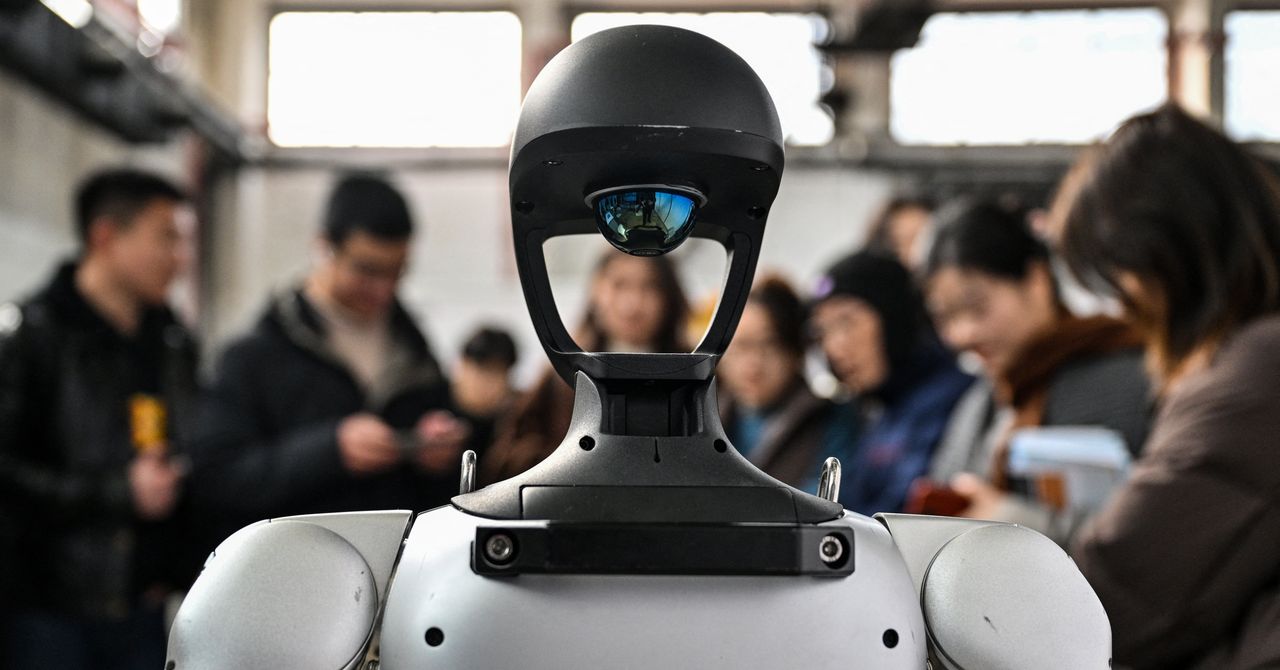
Listing consumer electronics on the internet’s large ecommerce marketplaces is a key step in “democratizing” the products, allowing them to be purchased by anyone with just a click. It has happened to cars (in the United States, you can buy a Hyundai on Amazon), and now it’s happening to humanoid robots.
The Chinese manufacturer Unitree Robotics, among the most active robot-makers in the field, is preparing to bring its most affordable model, the Unitree R1, to international markets through Alibaba Group’s marketplace. According to reports in The South China Morning Post, the rollout will initially cover North America, Japan, Singapore, and Europe. There’s no exact on-sale date for the robots yet, but the Post report says it will show up as soon as this week.
This is not the first time Unitree has used AliExpress as a global storefront. The company’s G1 model, the more powerful and more expensive predecessor to the R1, is already listed at just under $19,000.
It’s as much of a symbolic step before as a commercial one; selling a humanoid robot on a global marketplace positions the product as easily attainable. This serves as a step toward normalization of the tech, which is still not widely adopted. The sale of the R1 simply lowers the threshold of access even further, and shifts humanoid robots from the territory of promise to that of concrete availability.
Lower Price, Higher Demand
When it was announced last summer, the starting price of the R1 was 39,900 yuan, or about $5,900. Today, the basic version starts at 29,900 yuan, or about $4,370.
That price will fluctuate given changes in exchange rates and shipping costs that add on import taxes and tariffs. Still, that figure sounds surprisingly low considering that some of the R1’s other competitors in the humanoid robotics landscape are far more expensive.
The price tag for Unitree’s own flagship H1 robot approaches $90,000. Tesla’s Optimus robot, which is not yet on sale to the public, is aiming for a starting price under $20,000, but that price will only be attainable when Tesla reaches production of 1 million units a year. Meanwhile, robots from Figure AI and Apptronik are hovering around $50,000 per unit. The R1’s objectively low price essentially makes it a hatchback in a world of sedans.
The R1 is 4 feet tall, weighs 50 pounds, and has 26 smart joints. You can talk to it and give it commands; Unitree’s large-language multimodal model with voice and image recognition is on board. Curious coders can program it using a software developer’s kit. But the real calling card is the R1’s physical performance. The robot can do cartwheels, lie down and stand up independently, and run downhill. Unitree calls it “born for sport,” and videos of its presentation made the rounds months ago. Handstands and wheel kicks are not exactly what you’d expect from a robot that costs less than a used car.
Put It to Work
As impressive as the Unitree R1’s moves are, it lacks hands with articulated fingers, and its motors can’t generate a lot of torque. It is not designed to be a domestic helper or to manipulate complex objects. The company presents it as an “intelligent companion” for interaction, research, and software development.
The EDU model (Go2 EDU, G1 EDU) add an Nvidia Jetson Orin module with more computing power for artificial intelligence tasks. That model also has two degrees of freedom for the head and optional right hands. In that robot’s case, the target market is laboratories and universities. The limitations of the basic R1 put it largely in the same camp. This is not a household robot that makes coffee and walks the dog, but it is a good choice for researchers, labs, and anyone who wants to test robotics algorithms on solid hardware without spending a fortune.
It is true that bringing a relatively capable humanoid to global markets at this price does lower the barrier to entry for developers, researchers, and enthusiasts. It is a real leap from a few years ago, even if some people will buy it just to keep it in the living room to take a bow when guests arrive.
This story was originally published by WIRED Italia and translated from Italian.
Tech
UK reliance on US big tech companies is ‘national security risk’, claims report | Computer Weekly

The UK is over-reliant on a small number of big tech companies to provide critical datacentres, software and digital infrastructure, placing national security at risk, according to a report by the Open Rights Group (ORG).
The report, which is backed by a number of MPs, warned that the UK’s dependency on US big tech companies places the UK at risk as relations between the two countries have become strained.
Rifts between the UK and the US over the conduct of the US and Israel’s war with Iran, if they are exacerbated, could expose the UK to threats of US sanctions that could impact critical infrastructure, the report said.
Big Tech companies have used their power and resources to control markets, limit innovation and lobby government, allowing them to capture the market for UK’s critical infrastructure, said the lobbying group, adding: “This over-reliance on foreign companies has become an urgent issue of national security as US foreign policy actions are creating geopolitical uncertainty.”
Risk of sanctions
The US has powers to issue sanctions that can be used to stop companies supplying technology services to government institutions or individuals, which could place critical services at risk in the event of a dispute with the US.
The US used its powers to sanction the International Criminal Court (ICC), leading Microsoft to block the email account of the ICC’s chief prosecutor after the US objected to the ICC issuing warrants targeting the Israeli prime minister Benjamin Netanyahu.
“If the UK’s relationship with the US were to deteriorate – for example, over Greenland or Iran – the US could leverage power through its corporate dominance of the UK’s critical infrastructure,” the report said.
The UK also risks exposure to surveillance of sovereign data through US cloud services, which US agencies can access under the US Cloud Act; and Chinese tech companies, which under China’s national intelligence laws must assist the Chinese government and intelligence services.
Risk of lock-in
The UK government is dependent on strategic IT suppliers and consultancies that have led to government departments being “locked-in” to a particular suppliers technology, while being vulnerable to overcharging and cost overruns, the report argued.
The Competition and Markets Authority estimated in a report last year that the UK could be paying up to £500m a year more for cloud services than it would if the market was more competitive.
The Open Rights Group urged the UK government to follow EU countries, including Germany, France, the Netherlands and Denmark, which are making strategic investments in technology that is based on open standards and publicly available open source software. It argued that investing in open source software, which must be made publicly available free of charge, will boost the economy and boost innovation, citing EU research that suggested that every £1 invested in open source technology produces £4 in economic payback.
UK should promote sovereign cloud
Lib Dem MP Tim Clement-Jones told Computer Weekly that the government should change its procurement rules to assist UK cloud providers to scale up: “We need to change our procurement rules to actually discriminate in favour of UK providers.”
He added that the government should provide more encouragement to open-source software providers and to the development of sovereign AI models: “There seems to be very little real holistic sort of strategy on all of this,” he said.
Labour MP Clive Lewis said that the UK government’s dependence on big tech companies, such as Palantir, had left the UK “dangerously vulnerable”, saying: “With increasing geopolitical uncertainty as a result of US and Israeli military actions, the UK must ensure that it has control over its critical digital infrastructure. Digital sovereignty must be a priority.”
Sian Berry, an MP for the Green party, said that digital sovereignty should be a top government priority. “As global events continue to cause instability, we must build much more resilience to protect our critical digital infrastructure from the potential threat of sanctions and service withdrawal,” she added.

In a matter of days, MAGA media figures have gone from defending President Donald Trump as God’s chosen president to making the case that he is actually the antichrist.
The accusations reached a fever pitch on Sunday night, after Trump posted an AI-generated image depicting himself dressed in a white robe and red sash and placing a hand radiating golden light on a man in a hospital bed. The image, which Trump deleted from Truth Social after around 14 hours, seemed to invoke Jesus Christ, and it outraged some supporters who likened Trump’s behavior to the antichrist—a figure in Christian theology who opposes Christ and whose appearance many believe could augur the end of time.
Major figures in the MAGA universe quickly spoke out. “It’s more than blasphemy. It’s an Antichrist spirit,” former congressperson Marjorie Taylor Greene posted to X on Sunday.
“In 18 months I went from hesitantly voting for Trump to thinking there’s a decent chance he’s the antichrist,” added Clint Russell, host of the right-wing Liberty Lockdown podcast.
“I genuinely believe Trump is currently demon possessed,” far-right Texas pastor Joel Webbon wrote on X. Hours later, Webbon hosted a livestream chat titled “Is Donald Trump the Anti-Christ?”
The Knights Templar Order, a Christian organization based on a medieval military order, wrote of the post that they had “no other choice but to condemn it wholeheartedly and ask for a public apology.”
For more than a decade, Trump and his supporters have used explicitly religious rhetoric and images to mobilize his base. But in recent weeks, some of Trump’s actions—from posts about the Vatican to messages about Iran posted on Easter Sunday—have caused a major schism among his supporters that could have lasting effects for him and the Republican Party.
The White House did not respond to a request for comment. During a Monday news conference, Trump denied that the image portrayed him as Jesus, telling reporters that he thought the image depicted him as a doctor. “It’s supposed to be me as a doctor, making people better,” Trump told reporters.
Several MAGA influencers have been claiming that Trump is the antichrist for some time now. Conservative pundit Tucker Carlson, in a 43 minute-long opening monolog on his show last Monday, suggested that the administration’s war in Iran was also a war on the Christian faith. Carlson made the video in response to a Truth Social post from Trump on Easter where the president threatened to destroy significant infrastructure in Iran. (“Open the Fuckin’ Strait, you crazy bastards, or you’ll be living in Hell,” Trump wrote. “JUST WATCH! Praise be to Allah.”) Despite his never saying the word “antichrist” during the video, people ranging from MAGA media figures like Alex Jones to users of the DonaldTrump666 subreddit thought Carlson was insinuating that Trump was the antichrist.
This rhetoric marks a significant departure for Carlson. Though he has become more critical of the president and his administration recently, Carlson has long used religious language supportively when it comes to Trump. At the 2024 Republican National Convention, Carlson claimed that Trump survived the assassination attempt in Butler, Pennsylvania, by “divine intervention.”
Trump also claimed divine intervention after the incident, as did many of his allies. Robert Jones, the president and founder of the Public Religion Research Institute, tells WIRED that Trump’s frequent portrayals of himself as a messianic figure have helped bring MAGA to a breaking point. “The reason why people have reached for [the antichrist label] is because Trump has actually set the stage for that himself,” says Jones.


Energy shock, uncertainty slow growth in East Asia Pacific: World Bank

Nepal’s LDC graduation raises job loss concerns in garment sector

Diplo reacts to Justin Bieber Coachella set amid mixed reviews

-

 Fashion7 days ago
India’s exports face reset as EU links trade to carbon metrics: EY
-

 Politics1 week ago
Trump confirms rescue of airman whose F-15 was downed in Iran
-

 Tech5 days ago
As the Strait of Hormuz Reopens, Global Shipping Will Take Months to Recover
-

 Entertainment6 days ago
Queen Elizabeth II emotional message for Archie, Lilibet sparks speculation
-

 Tech6 days ago
Azure customers up in arms over ‘full’ UK South region | Computer Weekly
-

 Entertainment7 days ago
Lamar Odom shocking response to Khloé Kardashian account of his overdose
-

 Sports1 week ago
With Messi goal, Inter Miami open new stadium with dream moment
-

 Tech5 days ago
This AI Button Wearable From Ex-Apple Engineers Looks Like an iPod Shuffle