

Business
CNG, Domestic PNG Prices Set To Drop By Rs 2-3 From January 1

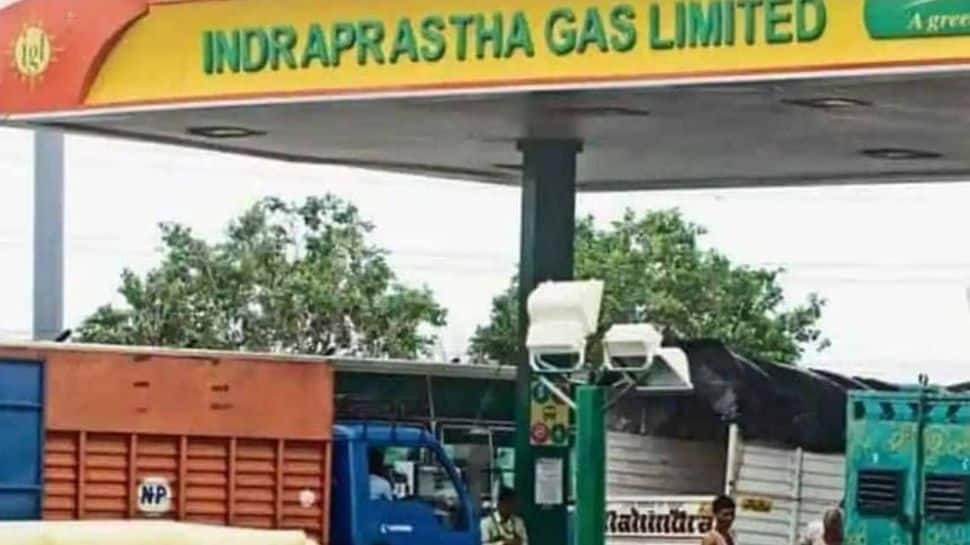
New Delhi: Consumers across India are set to benefit from reduced prices of Compressed Natural Gas (CNG) and domestic Piped Natural Gas (PNG) as the Petroleum and Natural Gas Regulatory Board (PNGRB) announced a tariff rationalization that will come into effect from January 1, 2026.
In an exclusive interview, AK Tiwari, Member, PNGRB, said that the new unified tariff structure will result in savings of Rs 2-3 per unit for consumers, depending on the state and applicable taxes. The regulator has simplified the tariff structure by reducing the number of zones from three to two. Under the previous system announced in 2023, tariffs were divided into three distance-based zones. Rs 42 for distances up to 200 kilometers, Rs 80 for 300-1,200 kilometers, and Rs 107 for distances beyond 1,200 kilometers.
“We have rationalized the tariff. Instead of three zones, there will be two zones, and the first zone will be applicable for CNG and domestic PNG customers on a pan-India basis,” Tiwari explained. The unified rate for Zone 1 has now been fixed at Rs 54, down from the earlier rates of Rs 80 and Rs 107.
The new tariff structure will benefit consumers across 312 geographical areas covered by 40 City Gas Distribution (CGD) companies operating in India. “This will benefit consumers in the transport sector who use CNG and households that use PNG in their kitchens,” Tiwari said.
The PNGRB has mandated that the benefit of this rationalized tariff must be passed on to consumers, and the regulator will actively monitor compliance. “Our role is to balance the interest of consumers as well as the operators in this business,” Tiwari added.
Discussing the expansion of CNG and PNG infrastructure, Tiwari said that licenses have been granted to cover the entire country, with operators including public sector undertakings (PSUs), private companies, and joint ventures.
The PNGRB is supporting CGD companies by facilitating interactions with state authorities, which has resulted in several states reducing Value Added Tax (VAT) and streamlining permission processes. “We are supporting them not just as a regulator but as a facilitator,” he said.
The government’s push to provide subsidized and rationalized gas for CNG and domestic PNG consumption is expected to drive growth in natural gas usage across the country, with the CGD sector identified as the primary growth driver for natural gas consumption in India. (ANI)
Business
PSX gains over 2,500 points as US-Iran peace hopes fuel bullish rally | The Express Tribune

KSE-100 surges past 170,000 intraday on strong institutional buying, easing geopolitical tensions
KARACHI:
The Pakistan Stock Exchange (PSX) extended strong bullish momentum on Monday as the benchmark KSE-100 Index hovered around 170,423.30 points at 1:24pm, up 2,579.06 points or 1.54% in intraday trade.
During the session, the benchmark index touched an intraday high of 171,519.26 points, while the day’s low was recorded at 170,161.66 points. Market participation remained strong, with traded volume reaching 125.96 million shares and total traded value standing at Rs11.75 billion.
Read: PSX gains 2,248 points in mixed week
Investor sentiment remained upbeat amid reports of a likely peace agreement between the United States and Iran, which boosted confidence across regional markets and improved risk appetite among investors.
Analysts said the rally was driven by aggressive institutional buying and renewed optimism over easing geopolitical tensions following progress in US-Iran negotiations.
The previous close of the KSE-100 index was 167,844.24 points.
Trump said on Saturday that an agreement would include the reopening of the Strait of Hormuz, without giving further details.
Source link
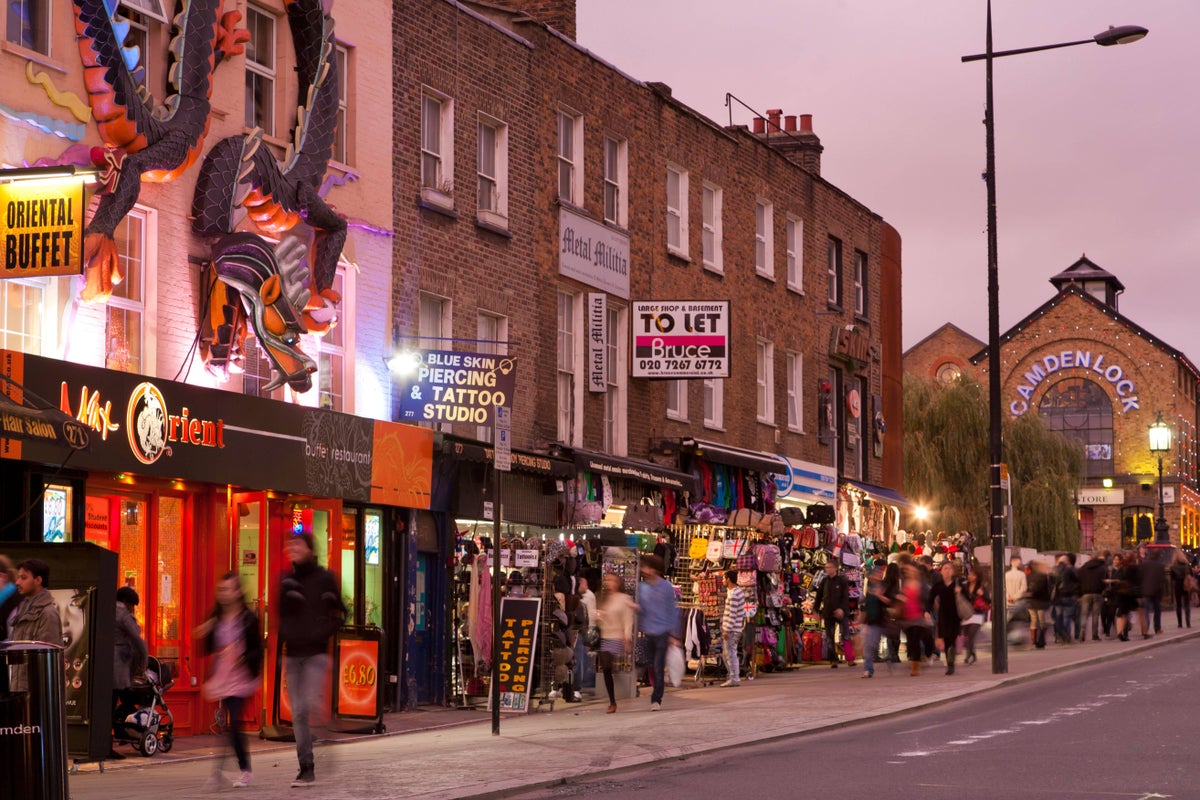
UK high streets and shopping destinations are showing signs of recovery as more than 13 retail stores opened each week over the past year, according to new figures.
However, England and Wales have still seen more than 6,000 retail premises vanish from local communities over the past five years.
Analysis of Valuation Office Agency data by tax firm Ryan, found that there were 507,810 retail premises across England and Wales at the end of 2025.
It said the figures showed that a recent contraction across the sector has appeared to stabilise, with a 723 net increase in the number of retail stores compared with a year earlier.
Property numbers increased across every region of England and Wales, with the exception of the North West, which saw a decline of 41.
It suggests that parts of the sector are now beginning to rebalance following significant structural contraction seen since the pandemic.
The creation of new retail units also comes as many retail real estate firms, such as Hammerson, have turned empty large units, often former department stores, into a greater number of smaller units.
Other retail groups, such as John Lewis, have moved away from ambitions to transform some retail property for other uses such as rental accommodation.
Nevertheless, the retail sector is still facing pressure from higher business rates for many firms, increased labour costs and concerns over consumer sentiment.
The data also shows that there has also been significant decline over the past few years, with a net reduction of 6,045 retail properties since the end of 2020.
London recorded the largest five-year regional reduction, with 1,266 retail premises disappearing over the period, followed by the South East (-1,191), North West (-719) and North East (-672).
The figures show retail premises which have permanently disappeared from communities altogether, having either been demolished or converted for alternative use.
The figures come as Ryan’s 2026 annual business rates review highlighted that the retail sector saw a 9.3% increase in rateable values at the 2026 business rates revaluation despite the major shift in the retail landscape since the pandemic.
Alex Probyn, practice leader for Europe and Asia-Pacific property tax at Ryan, said: “The pandemic accelerated structural changes that were already emerging across the retail sector, including changing consumer behaviour, hybrid working patterns and a reduced reliance on traditional retail floorspace in many locations.
“Many locations were arguably over-retailed before Covid and high streets have evolved towards more mixed-use environments, with retail space being rebalanced alongside growing demand for residential, leisure, hospitality and service-led uses.
“The revaluation outcome does suggest a large proportion of retail premises have seen bigger increases in their assessments than underlying market conditions and rental evidence would have led occupiers to expect.
“Retailers should therefore carefully review and, where appropriate, challenge their assessments.”


I’ve Become Emotionally Attached to My Lululemon Duffel Bag
[CinePlex360] Please moderate: “Zayn Malik than
[CinePlex360] Please moderate: “Your comprehens

-

 Entertainment1 week ago
Where Pete Davidson, Elsie Hewitt stand after breakup: Details revealed
-

 Politics1 week ago
Rising diesel costs from Iran war strain US school budgets
-

 Tech1 week ago
Why Is Your Grill So Dumb? The Best Grills Set Temp Like an Oven
-

 Tech1 week ago
This Solar-Powered Smart Sprinkler Keeps My Lawn Watered Without Any Power Cables
-

 Fashion7 days ago
Turkiye’s current account deficit expected to widen in 2026: Minister
-

 Fashion1 week ago
India’s Pearl Global’s FY26 revenue crosses $521 mn milestone
-

 Fashion6 days ago
Nigeria Kwara Garment Factory, KWS Garment Production Village ink pact
-

 Fashion5 days ago
US cotton planting advances to 41%, concerns persist in Texas