

Fashion
EU Commission sees growth slowdown as energy shock drives up inflation

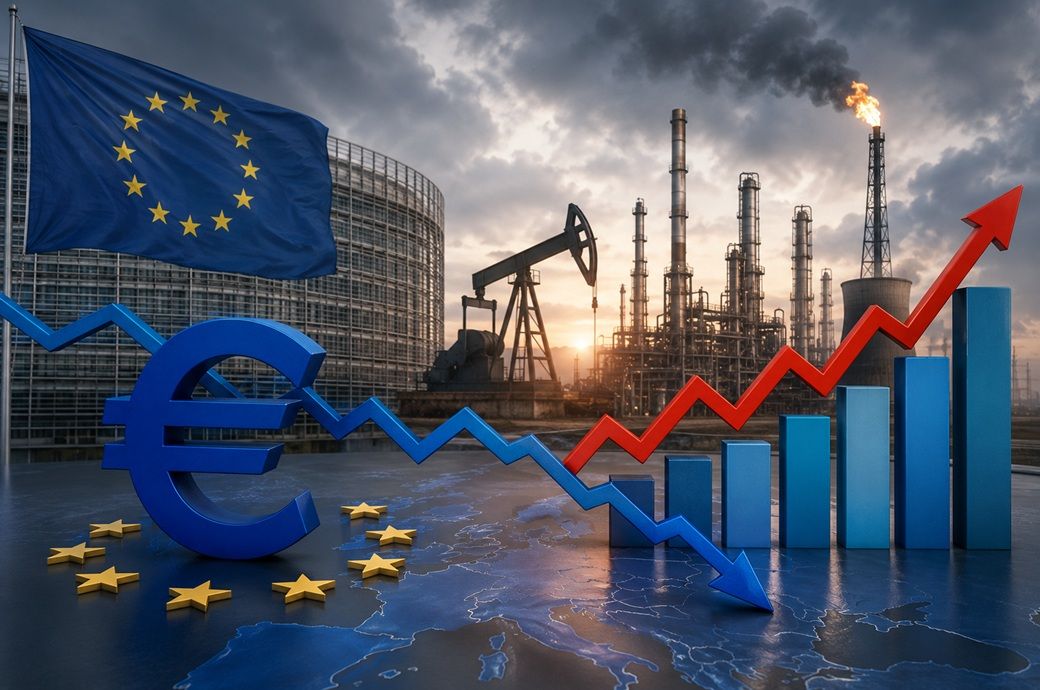
The impact of the energy shock is set to extend into 2027, with GDP growth picking up to a modest 1.4 per cent and inflation easing to 2.4 per cent—still some 0.3 pp higher than projected in autumn 2025.
The downward revision to growth in 2026 compared to autumn partly reflects slightly stronger-than-expected growth conditions at the beginning of 2026.
EU GDP growth is projected to slow down to 1.1 per cent this year, while inflation may rise to 3.1 per cent, the European Commission’s Spring 2026 Economic Forecast said.
The impact of the energy shock is set to extend into 2027.
The European Central Bank and most other EU central banks are expected to tighten their monetary policy stance or, at a minimum, delay previously anticipated easing measures.
Moreover, the inflation forecast for 2027 is influenced by the postponement of the roll-out of new EU Emissions Trading System, which, in the previous forecast round, was estimated to add 0.2 to 0.3 pp to inflation.
Futures energy prices point to a relatively swift, albeit partial, normalisation of supply conditions, with oil and gas prices expected to peak in the current quarter and decline to around 20 per cent above pre-war levels by end 2027.
Inflation data for March and April 2026 already point to a strong surge in energy prices. Energy inflation in the EU is expected to peak above 11 per cent in the second quarter (Q2) this year and remain above 10 per cent for the rest of the year, before declining in early 2027, and turning negative from Q2 2027.
In response to higher inflation, the European Central Bank (ECB) and most other EU central banks are expected to tighten their monetary policy stance or, at a minimum, delay previously anticipated easing measures.
Higher financing costs and weaker profits weigh on firms’ capacity to finance investment, while elevated uncertainty prompts many to postpone or scale back investment plans, a release from the commission said.
Despite a strong carryover from 2025, gross fixed capital formation is now expected to grow by only 2.2 per cent in 2026 and 2 per cent in 2027—a marked deceleration from the 2.8 per cent increase in 2025, and a downward revision compared to the Autumn 2025 Forecast.
With employment growth now projected to slow to 0.3 per cent in 2026 and 0.4 per cent in 2027, the unemployment rate is expected to stabilise at around 6 per cent. Nominal wages are set to decelerate less than previously expected in 2026, and remain sustained, growing by around 3.5 per cent in 2027, as they adjust with a lag to higher inflation.
Productivity growth is expected to slow to 0.7 per cent in 2026, as firms retain labour in a context of uncertain demand prospects, before recovering to 1 per cent in 2027.
EU merchandise balance is expected to decline to 1.2 per cent of GDP in 2026 and 1.1 per cent in 2027.
Overall, the current account surplus is projected to fall from 2.4 per cent of GDP in 2025 to 1.7 per cent in 2026 and 1.6 per cent in 2027.
The EU aggregate general government deficit is projected to gradually widen over the forecast horizon, rising from 3.1 per cent of GDP in 2025 to 3.6 per cent in 2027. This deterioration reflects a combination of subdued economic activity, higher interest expenditure, rising defence spending and new fiscal measures that aim to shield consumers and firms from high energy prices, the Commission said.
Risks to the outlook are primarily linked to the evolution of the conflict in the Middle East and its implications for global energy markets, it added.
Fibre2Fashion News Desk (DS)













The April figure was far below market forecasts of a 15,000 gain.
Full-time jobs dropped by 10,700 in April after a sharp rise in March.
Australia’s net employment fell by 18,600 month on month in April.
The April figure was far below market forecasts of a 15,000 gain.
Full-time jobs dropped by 10,700 in April after a sharp rise in March.
The unemployment rate rose to 4.5 per cent in April, the highest since November 2021, while the labour force participation rate eased to 66.7 per cent.
The unemployment rate rose to 4.5 per cent in April, the highest since November 2021. The labour force participation rate eased to 66.7 per cent.
The official statistical agency observed that a drop in female employment—the first since August 2025—drove the overall fall.
Fibre2Fashion News Desk (DS)

The Indian PET resin market witnessed significant week-on-week fluctuations during March-May ****. During the first week of March, Asia domestic India PET bottle flakes prices were assessed near $*.** per kg and remained largely stable on a weekly basis. However, during the second week of March, prices sharply increased to around $*.** per kg, reflecting a week-on-week rise of nearly ** per cent amid tight domestic supply conditions and reduced producer operating rates. In the third and fourth weeks of March, prices increased further to nearly $*.** per kg, marking an additional weekly gain of around * per cent. The bullish momentum continued into the first week of April, when prices touched nearly $*.** per kg, reflecting another week-on-week increase of approximately * per cent.
From mid-April onward, the market entered a correction phase as downstream polyester demand remained weak, and buyers shifted towards cautious procurement activity. During the second and third weeks of April, prices eased gradually towards $*.** per kg, indicating a weekly decline of around *–* per cent. The softer trend continued through late April and early May, with prices declining towards $*.** per kg and later $*.** per kg due to subdued polyester operating rates and sufficient domestic availability. By May **, ****, Asia domestic India PET bottle flakes prices were assessed around $*.*** per kg, reflecting an overall decline of nearly * per cent from the April peak, while Asia FOB India PET Bottle Flakes prices were reported near $*.*** per kg during the same period.
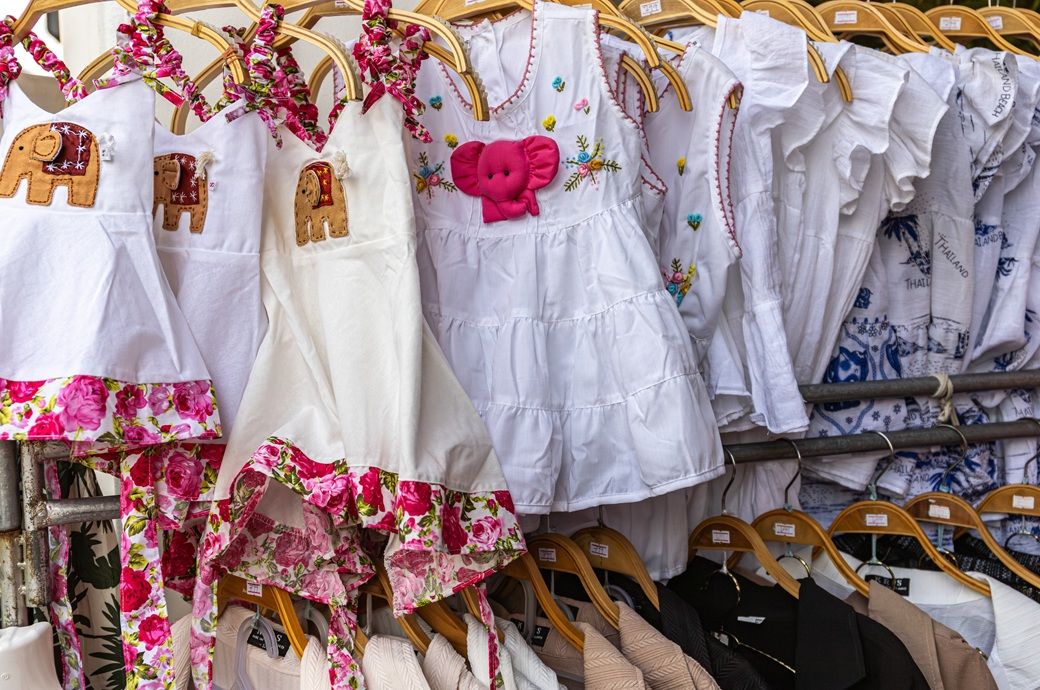
The country imported apparel worth $**.*** million during January-March ****, up **.* per cent from $**.*** million in the corresponding period of ****. The latest figures indicate that inbound apparel shipments have remained on a steady growth path since ****, according to *fashion.com/market-intelligence/texpro-textile-and-apparel/” target=”_blank”>sourcing intelligence tool TexPro.
The Russia-Ukraine war has had a significant economic impact on Georgia. The conflict triggered a large influx of Russian and Ukrainian migrants, which initially acted as an economic boon for the country. It fuelled rapid growth, lifted consumer spending, and increased demand for housing, services, textiles, and apparel. However, the war also deepened geopolitical polarisation and accelerated Georgia’s economic and energy reliance on Moscow.


EU Commission sees growth slowdown as energy shock drives up inflation

Pilgrims kick off Hajj as war’s trajectory hangs in the balance

Meghan Markle makes statement as William scones remark takes unexpected turn

-

 Entertainment1 week ago
Where Pete Davidson, Elsie Hewitt stand after breakup: Details revealed
-

 Politics1 week ago
Rising diesel costs from Iran war strain US school budgets
-

 Tech1 week ago
Why Is Your Grill So Dumb? The Best Grills Set Temp Like an Oven
-

 Tech1 week ago
This Solar-Powered Smart Sprinkler Keeps My Lawn Watered Without Any Power Cables
-
 Fashion6 days ago
Nigeria Kwara Garment Factory, KWS Garment Production Village ink pact
-

 Fashion7 days ago
Turkiye’s current account deficit expected to widen in 2026: Minister
-

 Entertainment1 week ago
Princess of Wales praised as ‘step ahead’ of royal family
-

 Fashion1 week ago
India’s Pearl Global’s FY26 revenue crosses $521 mn milestone