Last year, analyst Forrester reported that while IT departments manage billion-dollar portfolios, their internal operations lag in automation, coordination and visibility. The complexity of managing a modern IT architecture means network management must evolve. This is not something that is entirely new.
Automation is part of the functionality available in modern network management tools. Big data analysis of network log files is used in security information and event management (SIEM), and machine learning (ML) is helping network administrators identify potential issues before they affect the business.
Phil Huang, business development and field application manager at D-Link, explains: “We have been offering a pure cloud management platform for networks for a number of years and the AI [artificial intelligence] assistance behind such network management gives us the ability to monitor in real time and also proactively try to alert of any potential problems that may arise.”
Advances in tooling potentially reduce the complexity of network management. Matt Stava, CEO and chairman of third-party support firm Spinnaker Support, says this changes the role of IT administrators and programmers. Looking specifically at network skills, he says: “The need for a Cisco-certified expert is getting less and less right now.”
Modern networking skills
Modern IT infrastructure means that having an industry-certified network specialist is becoming less relevant. In a March 2026 blog post, Amit Katz, vice-president of ethernet switch at Nvidia, highlights the shifts occurring in network management.
In the post, Katz points out that while the value of a new network administrator may have previously been measured by their level of expertise in a particular networking command line interface (CLI), the advent of hybrid cloud and DevOps means there is a growing shift towards application programming interfaces (APIs).
“Skills in Ansible, Salt [the open source automation framework] and Python now have more value than a Cisco certification,” he says.
Now, Katz believes the tasks network administrators need to do are very different from the way they used to monitor and manage networks.
Skills in Ansible, Salt and Python now have more value than a Cisco certification Amit Katz, Nvidia
“You’ve moved from tools that polled devices across the datacentre using SNMP [Simple Network Management Protocol] and NetFlow [which monitors IP traffic] to new switch-based telemetry models where the switches proactively stream flow-based diagnostic details,” he notes in the blog post.
And according to Katz, while network administrators have a lot of experience introducing new workloads into datacentres – some of which have unique networking requirements – building an AI cluster is actually very different.
He writes: “It is tempting to think that AI is just a bigger and faster big data application. But AI is different, and AI can be hard without the right tools.”
AI also has a role to play in helping network administrators manage this complexity more easily. Information Services Group (ISG), a research and advisory firm, says organisations are taking advantage of the enhanced capabilities of AI and ML to automate configuration changes and optimisation across the network.
In an ISG article about how AI is transforming network operations, Marc Herren, a director at ISG, notes that AI can analyse network data and identify patterns to automatically generate configurations that optimise performance.
He says Cisco and Juniper Networks, the latter now being part of Hewlett Packard Enterprise, are developing intent-based networking products that use AI to understand an administrator’s intent and automatically configure the network accordingly. Such technology is essential to keep on top of ever-more-complex network management.
Network complexity
In a presentation at Microsoft Build 2025, Phil Gervasi, director of technical evangelism at Kentik, spoke about how networks are growing in complexity. They now span different clouds, datacentres, edge computing and hybrid IT infrastructure, all of which introduce new challenges for network management.
“The volume of telemetry, events and logs has exploded beyond human capacity to analyse in real time,” he told attendees. At the same time, as Gervasi noted, network teams are under pressure to improve the mean time to resolution of an issue, and maintain uptime without expanding headcount.
The volume of telemetry, events and logs has exploded beyond human capacity to analyse in real time Phil Gervasi, Kentik
“What AI offers is not magic, but a better way to correlate data, forecast performance and understand network behaviour in context. So, in short, AI helps operators move from reacting to predicting,” he added.
While ML is being used in networking for capacity planning, anomaly detection and baselining, Gervasi said that large language models (LLMs) offer a different approach to network management. “Unlike classical data models, which rely on structured data, LLMs operate on unstructured information like documentation, configuration files and tickets,” he told Build 2025 delegates. However, LLMs are probabilistic, which means they can produce inconsistent and different answers to the same prompts.
They also hallucinate. To get around these limitations, Gervasi stressed the need to ensure quality of training data, proper evaluation and controlled model behaviour. These are key to keeping LLM responses honest.
Privacy and regulation are also issues for LLMs, especially when handling network data that could contain sensitive information. Some IT operations challenges are inherent to AI use. For Gervasi, IT decision-makers need to be aware of the difficulties that may arise when integrating real-time telemetry, dealing with diverse data types, and managing compute costs for AI workloads.
But, despite these caveats, Gervasi believes the real power of LLMs lies in their ability to synthesise vast volumes of data into information that can then be used by people to make better decisions.
The starting point in using AI for network management is collecting network telemetry logs, helpdesk ticket and configuration files. Those then need to be cleaned up and stored in a format that can be accessed by the AI system.
Gervasi told delegates that one of the most effective ways to use this information is through retrieval augmented generation (RAG). As an example, he said when a user submits a query, the system converts the question into a mathematical representation, which searches a vector database for semantically related data, such as telemetry, past incidents or documentation.
“The LLM then synthesises an answer, using both its general knowledge and the retrieved context,” he explained.
Another use for LLMs is in text-to-structured query language (SQL), which, as Gervasi noted, enables network engineers to use natural language, where their queries are converted by the LLM into an SQL query and then, where relevant, provide a graphical representation of the data.
Once the data is in a format the AI model can process, agentic AI is a natural progression. “An LLM doesn’t just respond to prompts, but acts kind of like the brain, coordinating multiple tools,” he says.
During the presentation, Gervasi spoke about how with agentic AI powering network management, an agent could run a trace route, collect network telemetry, consult a knowledge base, and then generate a remediation plan, all autonomously, but with human oversight.
This is something that is likely to provide autonomous operations behind commercial network provider services. Analyst Gartner expects that AI will be embedded into managed network services (MNS) by 2028, to increase and enhance operational efficiency and enable more informed decision-making.
According to Gartner, AI will be used to ensure that networks are robust and agile enough to adapt to changing demands and traffic patterns. “Looking ahead three to five years from now, we anticipate significant transformation in MNS due to extensive use of AI and automation,” the analyst firm stated in its AI will transform managed network services in the next three years report.
For Stava and other industry watchers, the hot skill is agentic AI and the ability to integrate AI agents into workflows to achieve a business outcome. And these outcomes are increasingly IT-focused, especially as IT teams are being asked to do more with fewer resources and being put under increasing strain to support companies’ appetites for all things relating to AI.
But AI also has a big role to play in making networks more manageable. As network management becomes more automated and networks become self-healing, network engineers will need to learn how to integrate the latest tooling with agentic technology to provide the data stream for AI-powered network management.
As we get out of the house, the gear-obsessed WIRED Reviews team is writing about our favorite bags and EDCs. Today, reviewer Martin Cizmarraves about his Topo Designs backpack. You can also check out other Bag Check stories where WIRED writers share their carryall of choice.
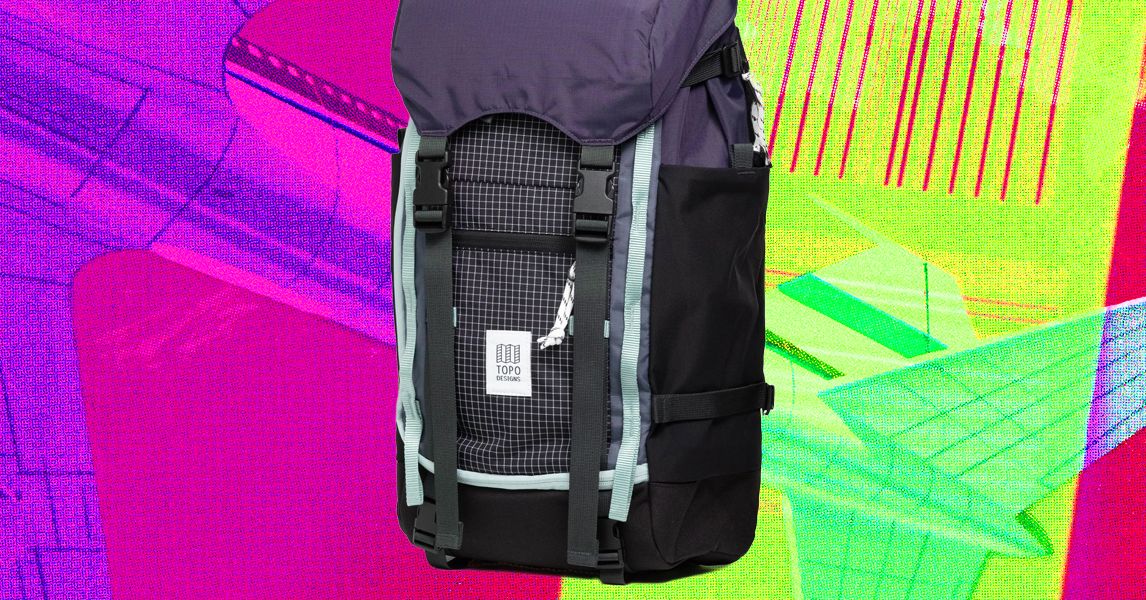
Topo Designs may just make the best bags in the world. The Denver-based gorpcore brand sells gear that looks cool, lasts forever, and has every feature a sensible person desires in a bag without making the product feel overbuilt. If I ever win the lottery, I won’t tell anyone, but there will be signs—like me hauling groceries from Trader Joe’s in two Mountain Gear bags. (I currently use blue polypropylene Ikea bags and shop at Aldi.)
In March, I took a spring break trip to Ireland and Scotland with a carry-on-sized roller bag and the Topo Designs Rover Trail pack as my personal item. I am frequently testing new bags, and I didn’t think much about the decision to commit to the Rover for a week. I quickly learned that you get to know a bag pretty well when you take it on seven flights and stay at eight different hotels in 10 days. By the time I landed back home, I was fully convinced the Rover is the best backpack I have ever used.
Photograph: Martin Cizmar
Topo Designs
Rover Trail Pack
Like the six or seven other models of Topo Designs bags I’ve tested—and maybe more extensively than any of the others—the Rover manages to artfully incorporate all the thoughtful little features I appreciated in other backpacks without even a hint of showiness.
At the top of the bag, there’s a zipped compartment that flips open to reveal the rucksack-style opening, which closes with a drawstring. This is where I like to put my keys, any important paperwork I may have on me, and sometimes my wallet. Typically, I find myself double- and triple-checking the zipper to make sure nothing is falling out. No need with the Rover, because inside that zipped compartment, there’s also a clip for keys and an additional zipped mesh sleeve. This feature lets you double-bag anything you don’t want to risk falling out—in my case, passports for myself and my daughter. When I got through the TSA line at the airport, I clipped in my car keys for the week, zipped the passports into the mesh sleeve, and never worried about losing either.
Aerodynamic drag is a major “barrier” in high-speed airplanes, automobiles, and bullet trains. This is because a design with less aerodynamic drag allows the aircraft to move at higher speeds with less energy.
When an aircraft or car body moves at high speed, a thin layer of air called the “boundary layer” is formed on its surface. This boundary layer has two states: laminar flow, in which air flows in an orderly fashion, and turbulent flow, which involves turbulence.
The longer the air stays in the laminar flow state with low friction, the smaller the air resistance becomes, but as the air speed increases, it transitions to turbulent flow. The key to reducing aerodynamic drag is how to delay this transition to turbulence.
For more than 80 years, the principle of “the surface of an object must be smooth” has been the basic premise of aeronautical engineering throughout the world in order to suppress the transition to turbulence and reduce aerodynamic drag. This premise was based on the results of a 1940 study by Ichiro Tani, a Japanese aerodynamicist who quantitatively demonstrated the relationship between “surface roughness” (an indicator of the state of the machined surface) and turbulent transition, arguing that surface roughness, which was unavoidable with the manufacturing technology of the time, prevented laminar flow from being realized.
However, in 1989 Tani reinterpreted the experimental data on rough-surface pipes obtained by fluid engineer Johann Nikulase in the 1930s, bringing a new perspective that “roughness may not necessarily only promote turbulent transition and increase fluid resistance.” Inheriting this idea, a research group led by Yasuaki Kohama of Tohoku University experimentally demonstrated in the 1990s that fibrous rough surfaces, which have fine fibrous irregularities on their surface, have the effect of delaying transition under certain conditions.
The same Tohoku University research team recently announced a discovery that significantly advances this trend. Aiko Yakino, associate professor at Tohoku University’s Institute of Fluid Science, and her research group were the first in the world to demonstrate that aerodynamic drag can be reduced by up to 43.6 percent simply by applying distributed micro-roughness (DMR), a surface roughness so fine and irregular that it cannot be distinguished by the naked eye.
This technology is fundamentally different from the “rivulet (shark skin) process,” which is known as a typical aerodynamic drag reduction technology. The rivulet process mimics the fine longitudinal grooves in shark skin, and by carving grooves approximately 0.1 mm wide along the direction of airflow, it aligns the vortices that occur near the wall surface of turbulent airflow areas. DMR, on the other hand, delays the switch from laminar to turbulent flow by means of random and minute irregularities. The flow zones it affects and the mechanisms it employs are based on completely different concepts.
Precise Measurement in a Wind Tunnel Without Support Bars
A key factor in this achievement was the use of a different wind tunnel experiment method than before. Conventional wind tunnel experiments had structural limitations: the support rods and wires essential for supporting the model disrupted the airflow, negating the minute changes in air resistance caused by micro-scale roughness.
The world’s largest 1-meter magnetic support balance system (1m-MSBS), owned by the Institute of Fluid Science, Tohoku University, has fundamentally solved this problem. This device can levitate a streamlined model approximately 1.07 m in length inside a wind tunnel without contact using electromagnetic force. Because it does not use any support rods or other means, it completely eliminates interference with the airflow around the model.
Yakino and his team precisely measured the total drag coefficient on smooth and DMR-coated surfaces over a wide range of Reynolds numbers (ratio of inertial to viscous forces acting on the fluid) (Re = 0.35 x 10⁶ to 3.6 x 10⁶).
Shopping for a Dyson vacuum is an experience. There are many models to navigate and serious price tags on most of them. As someone who tests vacuums for a living, I have to admit that a Dyson blows most other vacuums away. There are a few cheaper models I’ll still grab (check out my full guide to cordless and robot vacuums for more recommendations), but if you’re dreaming of a Dyson, this weekend is a great time to buy.
Several Dyson models I love are on sale for the long weekend. This weekend’s sale includes Dyson’s newest robot vacuum and the PencilVac that I can’t stop using, and my overall favorites like the V15 Detect and Gen5Detect, and more models our team has loved using. Read on to find out every on-sale Dyson I’d buy this weekend.
Best Dyson Vacuums on Sale for Memorial Day
The Best Dyson for the Price
If you’re looking for the best features for the best price, I already recommend the Dyson V15 Detect when it’s not on sale, making this an even better time to buy. You’ll get both a Fluffy Optic cleaner head and a Digital Motorbar cleaner head to use for hard floors, carpet, or rugs, trigger control, and details about the particles you suck up while you vacuum. It’s lightweight and easy to use anywhere in the house, and the hour-long battery life should be plenty for a whole-home clean.
A More Powerful Dyson
Dyson’s more powerful stick vacuum is the Gen5Detect, which is a great option if you have pets since it has a faster motor with more suction power than the V15 Detect to suck up more pet hair (it’s our top vacuum for pet hair for a reason) and has a HEPA filter to keep allergens contained inside of the vacuum instead of being released back into the air. It also comes with a true power button, so you don’t have to hold onto the trigger button the entire time to use it. Similar to the V15 Detect, it comes with both a Digital Motorbar cleaner head and a Fluffy Optic cleaner head to use on carpet and hard floors, respectively. You’ll also get two more attachments, plus a built-in dusting and crevice tool (it’s nice not to have to wonder where this attachment is!) It’s an expensive vacuum, but well worth the investment when it’s on sale.
If You Only Have Hard Floors
I shouldn’t like the PencilVac so much, but I find myself reaching for it often, and I think it’s plenty worth its abilities when it’s on sale. Part of what makes it so easy to grab compared to my other stick vacuums is how easy it is to store and keep charged with the freestanding charging base, letting it stand wherever I like in my home as long as there’s an outlet nearby. The PencilVac has two versions, the Fluffy and Fluffycones, with the latter having a design that has fluffy cone-shaped rollers to best collect debris. It is limited to only hard floors and has a short battery life, but I love how maneuverable and lightweight this vacuum is. It’s usually a high price tag for its abilities, and even on sale, it’s not what I would call cheap, but it’s a great, quick daily vacuum.
Dyson’s Latest Robot Vac
Dyson’s newest robot vacuum, the Spot+Scrub Ai, is its first that doubles as both a vacuum and a mop. It has a large base station that reminds me of Dyson’s vacuums, since the dry debris canister is clear and rounded like the ones you’d see attached to a Dyson stick vacuum or one of its upright models. It does a good job mopping and vacuuming, and can learn multiple floors, and the navigation has improved since the older Dyson 306 Vis Nav. Still, it’s not perfect navigation, since the camera sits below the top of the vacuum and doesn’t always see low-profile furniture that it’ll bump into. If you don’t have a ton of low furniture (or tons of IKEA pieces, as I do), this vacuum could be just perfect for you.
A Stick Vac and Mop
Dyson
V15s Detect Submarine
If you want a vacuum that doubles as a mop, look no further than this variation of the V15 Detect that’s also on sale for the holiday weekend. The V15s Detect Submarine comes with the Submarine wet roller head that transforms it from a regular Dyson vacuum (that still comes with both the Fluffy optic cleaner head and Digital motorbar cleaner head for you to use on hard floors and carpet) into a wet roller mop. You can’t buy a regular V15 Detect and add this attachment on; this V15s is made to work with this Submarine head. You’ll fill the small reservoir on the roller head with water and can start mopping away, but you will have to rinse the mop head afterwards by hand, which is a little gross.
A Handheld-Only Dyson
Photograph: Brenda Stolyar
If you’re not looking to spend a ton but want a Dyson that’s super portable and great for stairs, cars, and even boats, the Dyson Car+Boat is made for that. It’s in the name, after all. This handheld-only vacuum packs solid power and has a great battery life for a handheld vacuum. It uses a trigger-style control like the V15 Detect, which I actually find ideal for cleaning compact spaces like stairs and cars so that you’re not fumbling to switch it off as you move around the car or to the next set of stairs. It’s an affordable way to get into the Dyson ecosystem, especially since it’s on sale.







-Reviewer-Photo-SOURCE-Brenda-Stolyar.jpg)





 Entertainment1 week ago
 Politics1 week ago
 Tech1 week ago
 Tech1 week ago
 Fashion6 days ago
 Fashion7 days ago
 Entertainment1 week ago
 Fashion1 week ago