

Fashion
Rent the Runway to swap debt for equity in revival effort


By
Bloomberg
Published
August 21, 2025
Rent the Runway Inc. will hand over a controlling stake in the company as part of a plan to cut debt and grow, after residual effects of the Covid-19 pandemic pushed the firm to the brink of bankruptcy.
The deal, with lender Aranda Principal Strategies and other partners, will wipe more than $240 million of debt from Rent the Runway’s balance sheet, according to an emailed statement. The company, which allows subscribers to rent clothing for the office and events, will have several more years to repay $120 million in remaining borrowings.
Private equity firms Story3 Capital Partners and Nexus Capital Management, along with Aranda, will also inject $20 million into the company as part of the transaction. Aranda was spun off from Singapore’s Temasek Holdings Pte. as a private credit platform earlier this year.
The three investors will receive a majority ownership stake in the company, representatives for Rent the Runway said in an interview — about 86% before accounting for a management incentive plan and a rights offering set to give existing stockholders the opportunity to purchase as much as $12 million of shares.
The offering will be at $4.08 a share, according to the statement. The stock closed Wednesday at $4.485, up from a record low of $3.77 in April. Shares have dropped by two-thirds over the past year. “I’m viewing this as an IPO 2.0 for the company,” Chief Executive Officer Jennifer Hyman said in an interview.
Rent the Runway’s operations and trajectory over the past 18 months encouraged lenders to agree to the plan, which allows management and current owners to retain stakes in the firm, according to Hyman.
“Every single financial metric has substantially improved over last several years, and we were able to do that with shackles on,” Hyman said, referring to the company’s debt load. She acknowledged alternatives included potentially filing for bankruptcy.
Its debt burden grew larger as it started paying interest in kind, which allows borrowers to defer paying interest in cash but tack it on as additional debt due at maturity. The decision was made in light of financial pressures stemming from the pandemic, when people stopped wearing chic work-wear in office and turned to pyjamas at home.
Hyman co-founded Rent the Runway with her business partner Jenny Fleiss in 2009, introducing people to the option of renting clothing for events. The company then started offering a subscription: members can borrow merchandise for a monthly fee.
The firm was valued at $1 billion in 2019, a figure that dropped to $750 million after the pandemic hit in March 2020. Rent the Runway went public in 2021, betting in-person events such as weddings would return, and had more than 147,000 subscribers as of the end of the first quarter.
The company has struggled to revive its business since its public listing amid a subscriber slump. Management executed a reverse stock split in 2024 remain on the Nasdaq. Revenue fell 7.2% in its most recent quarter.
Hyman has been working to revamp Rent the Runway’s operating model. The service has begun sharing revenue with brand partners — made possible in part by its shift to an “asset-light” model.
While Rent the Runway previously owned the inventory on its platform, it more recently shifted to a model that allow brands to put their items on the platform for free and receive a portion of the revenue generated when the goods are rented out. Hyman plans to hone in on that strategy after the recapitalisation and find more companies to work with.
“My primary action post this deal clothing is doing even more deals with brand partners around the world,” said Hyman. “It allows us to invest in even more inventory.”
More merchandise is critical to the company’s revival effort, and management hopes that a larger assortment of items will lure more subscribers. Rent the Runway has added 1,000 new styles and expects to accelerate that process.












Fashion demand in 2026 remains intact but more selective, with consumers spending cautiously and prioritising value, durability and versatility.
Intentional purchasing and promotion sensitivity are reshaping pricing dynamics and margin structures.
Polarised consumer behaviour is pushing brands to rebuild trust, justify full price and align sustainability with longevity.
Source link
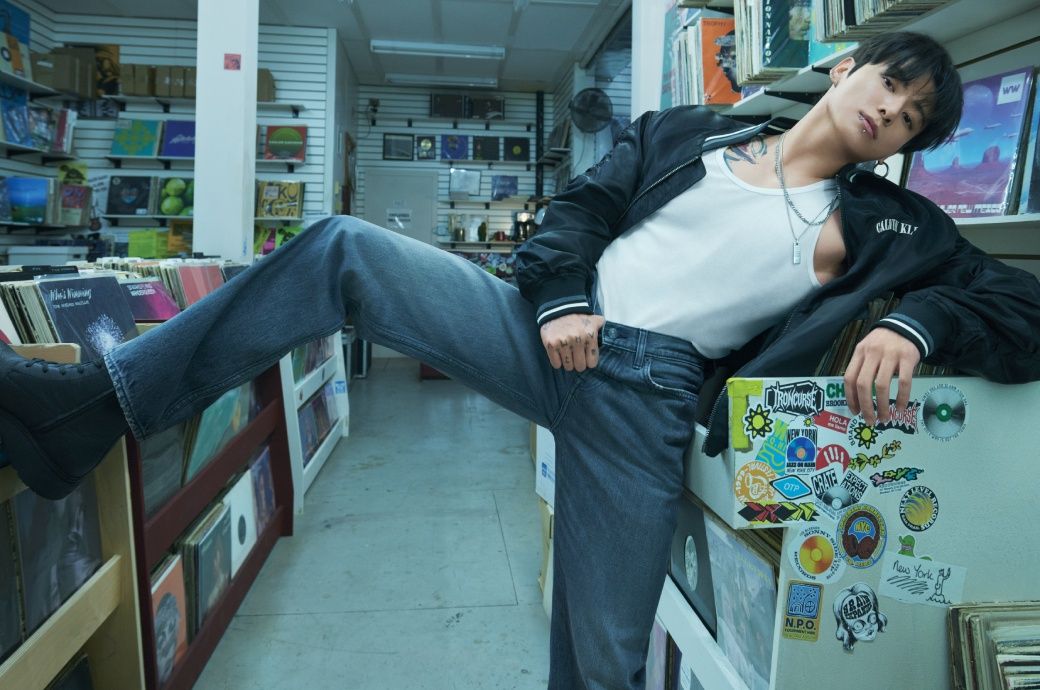
Directed and shot by Mert Alas, the new chapter sharpens the focus on denim as the ultimate expression of personal style through icon Jung Kook’s distinctive and influential point of view as he lives in the moment.
Calvin Klein, owned by PVH Corp., has unveiled its Spring 2026 denim campaign fronted by BTS icon Jung Kook.
Directed and photographed by Mert Alas, the cinematic film fuses music, movement and city energy, highlighting 90s Straight, Baggy and reworked Trucker silhouettes.
A special appearance by Rosie Perez amplifies the brand’s signature visual storytelling.
The campaign unfolds across a series of immersive worlds, unified and guided by Jung Kook’s style, attitude and way of living. The high-impact film fuses fashion and entertainment, moving to an instantly recognizable soundtrack and brought to life through the artist’s signature choreography and commanding presence. The interplay of music and movement – complete with a cameo from New York City legend Rosie Perez – captures the impact synonymous with Calvin Klein’s iconic visual storytelling.
Calvin Klein jeans are at the center of the wardrobe with hero silhouettes leading the narrative: the effortless attitude of the 90s Straight; the relaxed and nostalgic proportions of the Baggy; and new interpretations of the iconic Trucker jacket — all reimagined with elevated washes and designed for versatility. Casual logo tees and oversized bombers complete the looks, reinforcing denim as both uniform and statement.
“I love Calvin Klein jeans because they’re designed to be lived in,” said Jung Kook. “The looks I wore for this campaign nod to ‘90s style while feeling completely modern. It was exciting to bring together my love of music, dance and fashion against the energy of the city.”
Note: The headline, insights, and image of this press release may have been refined by the Fibre2Fashion staff; the rest of the content remains unchanged.
Fibre2Fashion News Desk (RM)

Premier Li Qiang, who delivered the report at the opening of the fourth session of the 14th National People’s Congress in Beijing, said the growth target is “well aligned with the country’s long-range objectives through the year 2035 and is broadly in line with the long-term growth potential of China’s economy, with favorable conditions in place for achieving this target.”
China has set a GDP growth target of 4.5–5 per cent for 2026, alongside goals to stabilise employment, manage inflation, maintain grain output and cut emissions.
The plan also preserves flexibility for structural reforms under the 15th Five-Year Plan, aiming to balance steady economic expansion with long-term, high-quality and sustainable development.
Main development targets for 2026 also include a surveyed urban unemployment rate of around 5.5 per cent, creation of over 12 million new urban jobs, a rise in the consumer price index of around 2 per cent, personal income growth in step with economic growth, a basic equilibrium in the balance of payments, grain output of around 700 million tonnes, and a drop of around 3.8 per cent in carbon dioxide emissions per unit of GDP.
Qiang said the targets took into account the need to leave room for structural adjustments, risk prevention and reform in the opening year of the 15th Five-Year Plan (2026–30) period, to lay a solid foundation for improved performance in the coming years. Government at local level should, taking into account their own conditions, make solid efforts to deliver positive outcomes, he added.
Analysts said the 2026 target reflects a pragmatic approach in recognising structural and cyclical challenges facing the world’s second-largest economy, while pursuing reasonable growth in line with high-quality development.
Fibre2Fashion News Desk (JP)


US Senate backs Trump’s Iran operations after House vote

Harry Kane calf injury imperils Bundesliga record chase

Here’s Every Country Directly Impacted by the War on Iran

What are Iran’s ballistic missile capabilities?

India Us Trade Deal: Fresh look at India-US trade deal? May be ‘rebalanced’ if circumstances change, says Piyush Goyal – The Times of India

Attock Cement’s acquisition approved | The Express Tribune

-
Business1 week ago
Attock Cement’s acquisition approved | The Express Tribune
-
 Politics1 week ago
What are Iran’s ballistic missile capabilities?
-
Business7 days ago
India Us Trade Deal: Fresh look at India-US trade deal? May be ‘rebalanced’ if circumstances change, says Piyush Goyal – The Times of India
-

 Politics1 week ago
US arrests ex-Air Force pilot for ‘training’ Chinese military
-

 Fashion1 week ago
Policy easing drives Argentina’s garment import surge in 2025
-
 Business6 days ago
Greggs to reveal trading amid pressure from cost of living and weight loss drugs
-

 Sports1 week ago
Sri Lanka’s Shanaka says constant criticism has affected players’ mental health
-

 Sports6 days ago
LPGA legend shares her feelings about US women’s Olympic wins: ‘Gets me really emotional’