

Business
Japan hikes interest rate to highest level since 1995 as inflation bites

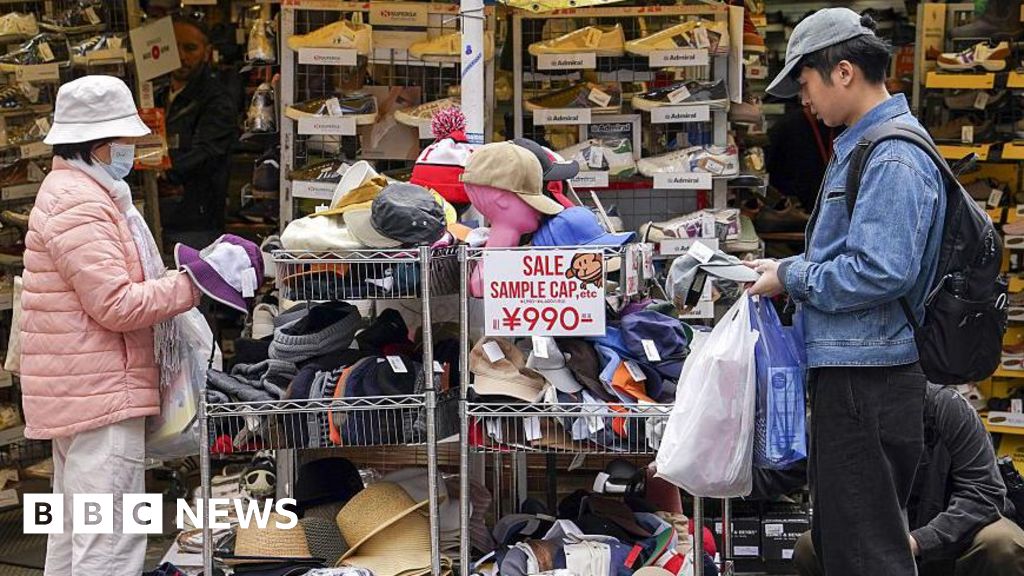
Japan’s central bank has raised its main interest rate to the highest level in 30 years as the country faces a cost-of-living squeeze.
In a widely expected decision, the Bank of Japan’s policy board, led by governor Kazuo Ueda, increased its benchmark rate by a quarter of a percentage point to “around 0.75%” on Friday.
The move comes as new Prime Minister Sanae Takaichi is keen that inflation comes down but also needs the cost of government borrowing to be cheap.
It marks both the first time the BOJ has hiked rates since January and the first rise since both Takaichi and Ueda took up their current roles.
When a central bank raises interest rates it tends to have the effect of increasing the value of the country’s currency.
In Japan’s case, it has the potential of easing inflation as the yen’s low value versus other major currencies, like the US dollar and the euro, has pushed up the cost of imports, which in turn has helped to fuel inflation.
At the same time, higher interest rates push up government borrowing costs because when rates go up governments, like anyone else, have to pay more to borrow money.
Last year, Takaichi described the idea of a rate hike as “stupid” although she has not publicly criticised Ueda’s policies since she took office in October.
Still, Takaichi has made the fight against inflation a priority as rising costs have eroded support for her party, the LDP.
On Friday, official figures showed Japan’s inflation, excluding food and fuel, rose by 3% in November. That remains above the bank’s target rate of 2%.
But Shoki Omori, chief strategist at Mizuho in Tokyo, told the BBC that the interest rate rise will do little to ease inflation as it has already been priced in by currency markets and the yen remains relatively weak.
Most economists expect the BOJ to raise its benchmark interest rate once more next year to hit 1%.
It marks a major change in Japanese policy makers’ approach to interest rates.
“What we’re seeing is a historic shift after nearly three decades of long standing low rates in Japan,” said Julia Lee from Pacific FTSE Russell, part of the London Stock Exchange Group.
But Takaichi’s stance on monetary policy may make it harder for the bank to hike again, said Shigeto Nagai, head of Japan economics at Oxford Economics.
“The BoJ will need time, probably around six months, to monitor the impact of the rate hike on the real economy before it makes its final move,” he said.
The BOJ’s latest rate rise comes as other major central banks around the world are moving in the opposite direction – lowering the cost of borrowing.
On Thursday, the Bank of England cut its main interest rate to 3.75%, the lowest level since February 2023.
Last week, the US Federal Reserve lowered interest rates for the third time this year, even as internal divisions create uncertainty about additional cuts in the coming months.
The central bank said it was lowering the target for its key lending rate by 0.25 percentage points, putting it in a range of 3.50% to 3.75% – its lowest level in three years.

The speed of price rises in the UK has stayed the same, according to data which was collected before the US-Israel war with Iran began.
Source link

Buying continued at the Pakistan Stock Exchange (PSX), with the benchmark KSE-100 Index gaining over 1,700 points during the opening minutes of trading on Wednesday. At 10 am, the benchmark index was at 155,730.37, up 1,764.37 points (1.13%).
Buying interest was observed in key sectors, including automobile assemblers, cement, commercial banks, fertiliser, oil and gas exploration companies, OMCs, power generation, and refinery. Index-heavy stocks, including ARL, HUBCO, PSO, MARI, OGDC, POL, PPL, HBL, MCB, and MEBL traded in the green.
On Tuesday, PSX ended with moderate gains as thin volumes and profit-taking capped the upward momentum despite supportive global cues and easing geopolitical concerns.
The KSE-100 Index closed at 153,966.36 points, gaining 1,225.99 points or 0.80%.
K-Electric led trading volumes with over 35 million shares exchanged, coinciding with the company’s announcement of a new chief executive earlier in the day.
Market heavyweights, including Engro Holdings, Fauji Fertiliser Company, Lucky Cement, Systems Limited, and Hub Power Company, contributed significantly to the index gains, while banking and select industrial stocks weighed on overall performance.
Despite the rebound, analysts noted that the market remained cautious after last week’s decline, which was driven by geopolitical uncertainty, particularly tensions in the Middle East, and concerns over global energy prices.
Experts suggest that future market direction will depend on regional stability, energy policy developments, and progress in ongoing discussions with the International Monetary Fund.
Globally, stocks rose, and oil fell on Wednesday on reports the US is seeking a month-long ceasefire in its war on Iran, and had sent a 15-point plan to Iran for discussion, raising hopes for a resumption of oil exports out of the Persian Gulf.
S&P 500 futures rose 0.9% in the Asian morning, European futures lifted 1.2%, and Brent crude futures fell about 6% to $98.30 a barrel.
Fed hike odds jump to 26% from 70% cut probability week ago as Middle East war fuels inflation fears
A picture showing $100 bills. SOURCE: REUTERS
Currency markets took a breather on Wednesday, with traders cautious over United States President Donald Trump’s efforts to bring an end to the war with Iran. While Trump told reporters at the White House the US was making progress in talks with Iran, Tehran denied that direct negotiations had taken place, keeping investors on edge.
The US dollar index, which measures the greenback’s strength against a basket of six currencies, was last 0.13% higher at 99.317, with the euro little changed at $1.1603. The British pound was 0.16% weaker at $1.3388 as data showed that British consumer price inflation held at an annual rate of 3.0% in February, unchanged from January’s rate. However, inflation is broadly expected to pick up as the war in the Middle East pushes up prices.
The subdued volatility contrasted with a pickup in equities and a fall in crude oil prices after Trump said on Tuesday the US was making progress in its efforts to negotiate an end to the war.
Read: Trump approval sinks to 36% as fuel prices surge amid Iran war
“For those reacting to every breaking headline around dialogue between the US and its allies and Iran, including speculation of high-level talks and temporary ceasefire proposals, an element of fatigue is now firmly setting in,” said Chris Weston, head of research at Pepperstone Group Ltd in Melbourne.
Against the yen, the US dollar was up a slight 0.2% at 158.99, after the release of minutes from the Bank of Japan’s January policy meeting showed many board members saw the need to keep raising interest rates without any specific pace in mind. The Australian dollar weakened 0.33% to $0.697 after the release of inflation data for February, which showed a 3.7% rise prior to the start of the US-Israeli war with Iran, a slightly slower pace than expected by analysts.
Although markets still anticipate no change in US interest rates this year, expectations of policy tightening are rising. Fed funds futures now imply a 26.1% chance of a 25-basis-point hike at the Federal Reserve’s December meeting, compared to a 69.5% probability of a cut a week ago, according to CME Group’s FedWatch tool.
Read More: Global shares skid as oil surge threatens inflation shock
The Fed may need to keep interest rates steady “for some time” before further cuts are warranted, Fed Governor Michael Barr said on Tuesday, noting continued inflation above the Fed’s 2% target and the risks posed by the conflict in the Middle East.
Bond markets rebounded after a volatile week, with the yield on the US 10-year Treasury bond down 3.4 basis points at 4.356%. “Higher oil prices added to expectations of increasing inflationary pressures and tighter monetary policy,” analysts from Westpac wrote.
In cryptocurrencies, bitcoin climbed 1.6% to $71,202.33, while ether was up 1.2% at $2,174.14.


US’ Torrid sees FY25 sales fall 9.4%, reports $7 mn loss

Wristband enables wearers to control a robotic hand with their own movements
UK inflation rate steady in February ahead of Iran war

-

 Fashion7 days ago
Sales at US apparel, clothing accessories stores up 4% YoY in Jan 2026
-
 Business1 week ago
Peloton is launching bikes and treadmills for gyms, accelerating commercial strategy
-

 Tech1 week ago
Justice Department Says Anthropic Can’t Be Trusted With Warfighting Systems
-

 Fashion1 week ago
Trump signs order to combat fraudulent ‘Made in America’ labels
-
 Business1 week ago
Stocks and pound rise as US rate call approaches
-

 Fashion1 week ago
Lenzing launches TENCEL Lyocell-HV100 at Intertextile Shanghai
-

 Sports7 days ago
March Madness 2026 – How to watch in SA, start time, schedule, TV channel for NCAA championship basketball tournament
-

 Entertainment7 days ago
Val Kilmer revived 1 year after death through AI