

Tech
Trump Is Betting Big on Intel. Will the Chips Fall His Way?


The US government is aiming to take an equity stake in Intel in exchange for grants the company was already committed to receive under the Biden era CHIPS Act, according to comments US commerce secretary Howard Lutnick made in an interview with CNBC. The move is part of the government’s efforts to boost US chip manufacturing.
“We should get an equity stake for our money, so we’ll deliver the money which was already committed under the Biden administration,” Lutnick said. “We’ll get equity in return for it.” Previously, the government was discussing taking a 10 percent stake in Intel, according to the New York Times.
The deal could help the venerable chipmaker fund its US-based semiconductor fabrication plants, or fabs, which have required billions of dollars to construct and maintain, even as demand for Intel chips has waned in recent years. Some chip industry experts and members of the Trump administration say that keeping Intel afloat is essential to US national security, because it lessens the country’s reliance on chipmakers overseas.
But analysts and one notable economist say a potential tie-up between Intel and the US government could present a conflict of interest and may not result in the kind of domestic chipmaking industry the administration is angling for.
“It’s not the right policy to have the US government own things, to have privatization in reverse,” says Stephen Moore, a visiting fellow at The Heritage Foundation and a former senior economic adviser to Trump’s 2016 campaign. “That’s similar to Europe’s industrial model, and we haven’t done that often here in the US, because a lot of it ends up failing.”
Government Intervention
The US government has some history of investing in the private sector. Moore cites a 1980s program called the Synthetic Fuels Corporation, a federally directed multibillion-dollar investment in companies producing liquid fuels from coal, oil shale, and tar sands. It was hailed by President Jimmy Carter as “the cornerstone of our energy policy” and had fallen apart by 1986.
Then, in the wake of the 2008 financial crisis, the US government stepped in with multibillion-dollar bailouts to stop US automakers and some banks from going under. Those funds were issued either through the Troubled Asset Relief Program, in which the US Treasury Department bought up or guaranteed toxic assets, or in the form of bridge loans. Many were eventually repaid.
More recently, the Department of Defense agreed to fund a US-based rare-earth magnet company, MP Materials, via equity and loans, in order to expand production and decrease the country’s reliance on China. The deal would in theory give MP Materials the capital to increase its manufacturing capacity from 3,000 to 10,000 metric tons.
Moore says the ideal scenario is that these arrangements between the government and private industry have an end point. “It should be an agreement to own a short-term stake and then divest,” he says.
But the current Trump administration has been taking some of these public-private business dealings a step further: In June, the administration approved a partnership between Japanese steel company Nippon Steel and Pittsburgh-based US Steel, dependent on a national security agreement and a so-called golden share provision. The government insisted that it have a say in US Steel’s company decisions, including board appointees and future relocation plans. (This deal was also designed to help the US compete with China on steel production.)











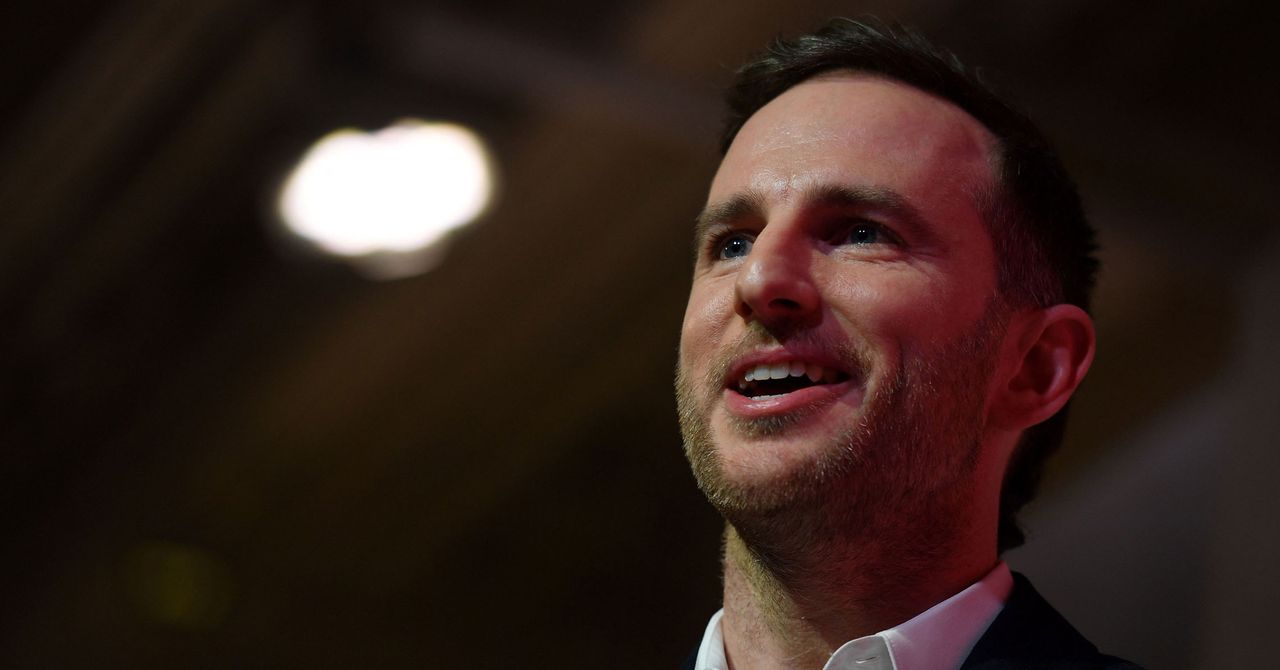
Joe Gebbia, cofounder of Airbnb and the US Chief Design Officer appointed by Trump, was spotted in San Francisco today using a mysterious metallic device. In a social media post on X viewed over 500,000 times, a man who looks like Gebbia sits with an espresso at a coffee shop. He’s wearing metallic buds that bisect his ears, with a matching clamshell-shaped disc in front of him on the counter.
After the video was posted Monday morning, social media users were quick to suggest that this could be some kind of prototype from OpenAI’s upcoming line of hardware devices designed in partnership with famed Apple designer Jony Ive. An OpenAI spokesperson declined to comment on the potential Gebbia video after WIRED reached out. Gebbia also did not respond to a request for comment.
The device Gebbia appears to be wearing looks quite similar to the hardware seen in a fake OpenAI ad that was widely circulated on Reddit and social media in February. That video from last month seemingly showed Pillion actor Alexander Skarsgård interacting with an AI device that had a similar-looking pair of earbuds and a circular disc. At the time, OpenAI denounced the widely seen video as not real. “Fake news,” wrote OpenAI President Greg Brockman at the time, responding to a social media post.
The earbuds seen in the video of Gebbia also look quite similar in shape to the Huawei FreeClip 2, a pair of open earbuds released earlier this year. However, the clamshell seen on the coffee counter next to Gebbia is different from Huawei’s most recent headphone case. It would also be quite surprising if a government official were seen using Huawei tech, considering the Chinese company is effectively banned from selling its phones in the US due to security concerns.
WIRED’s audio experts say he’s most likely wearing open earbuds, as Gebbia’s pair share some similarities with Soundcore’s AeroClips or Sony’s LinkBuds Clip, though the cases for those buds don’t match what’s on the table in front of Gebbia. WIRED also ran the photo and video through software that attempts to identify AI-generated outputs and other deepfakes. The detection software, from a company called Hive, says the odds are low that this imagery of Gebbia was generated by AI. Still, AI detectors are not always reliable and can include false outputs. It’s possible that the entire post could be a synthetic hoax.
Could this be some kind of soft launch teaser for OpenAI’s hardware? The timing of this trickle out would make sense, since the company may ship devices to consumers sometime early in 2027. Still, OpenAI denied any involvement with the previous pseudo-ad for the metallic AI hardware, with its shiny earbuds and matching disc.
“There are Chinese components as well—we are totally open about it—but the key is that as we compile the software ourselves and install it in Finland, we protect the integrity of the product,” Pienimäki says.
What makes Sailfish OS unique over competitors like GrapheneOS or e/OS is that it’s not based on the Android Open Source Project, but Linux. That means it has no ties to Google—no need for the company to “deGoogle” the software; meaning there’s a greater sense of sovereignty over the software (and now the hardware). Still, it’s able to run Android apps, though the implementation isn’t perfect. Another common criticism is that it’s not as secure as options like GrapheneOS, where every app is sandboxed.
There’s a good chance some Android apps on Sailfish OS will run into issues, which is why in the startup wizard, the phone will ask if you want to install services like MicroG—open source software that can run Google services on devices that don’t have the Google Play Store, making it an easier on-ramp for folks coming from traditional smartphones without a technical background. You don’t even need to create a Sailfish OS account to use the Jolla Phone.
Jolla’s effort is hardly the first to push the anti-Big Tech narrative. A wave of other hardware and software companies offer a “deGoogled” experience, whether that’s Murena from France and its e/OS privacy-friendly operating system, or the Canadian GrapheneOS, which just announced a partnership with Motorola. At CES earlier this year, the Swiss company Punkt also teamed up with ApostrophyOS to deploy its software on the new MC03 smartphone. Jolla is following a broader European trend of reducing reliance on US companies, like how French officials ditched Zoom for French-made video conference software earlier this year.
The Phone
A common problem with these niche smartphones is that they inevitably end up costing a lot of money for the specs. Take the Light Phone III, for example, a fairly low-tech anti-smartphone that doesn’t enjoy the benefits of economies of scale, resulting in an outlandish $699 price. The Jolla Phone is in a similar boat, though the specs-to-value ratio is a little more respectable.
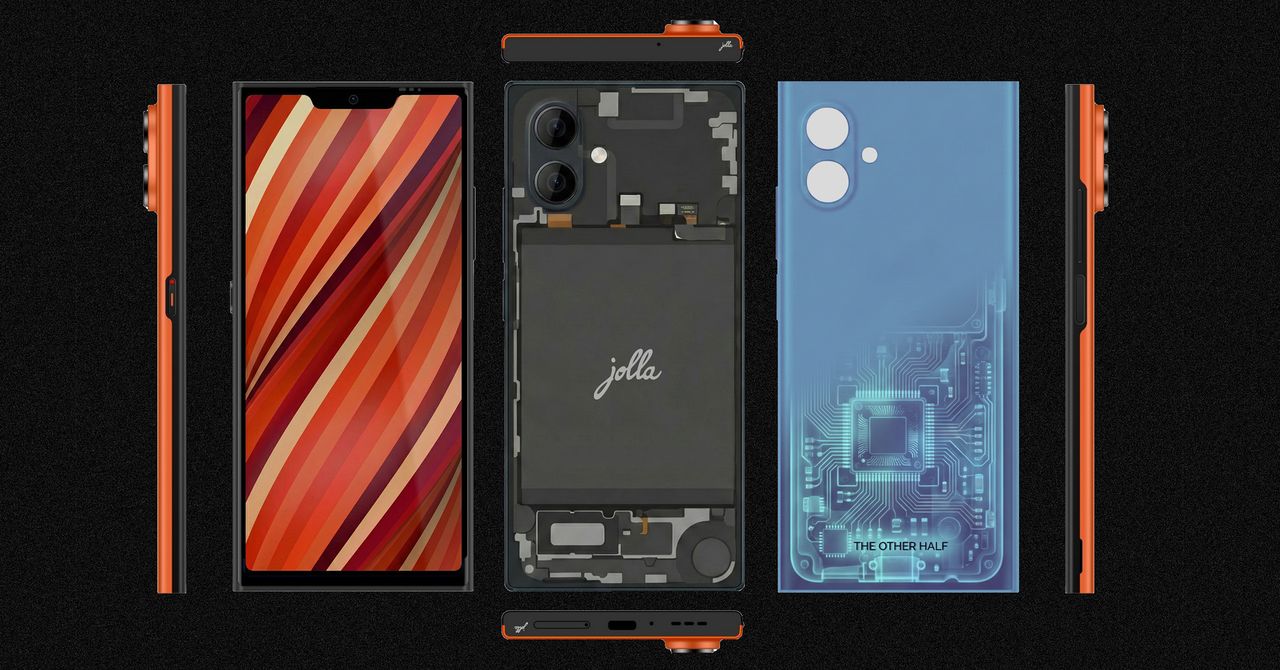
It’s powered by a midrange MediaTek Dimensity 7100 5G chip with 8 GB of RAM, 256 GB of storage, plus a microSD card slot and dual-SIM tray. There’s a 6.36-inch 1080p AMOLED screen, the two main cameras, and a 32-megapixel selfie shooter. The 5,500-mAh battery cell is fairly large considering the phone’s size, though the phone’s connectivity is a little dated, stuck with Wi-Fi 6 and Bluetooth 5.4.
Uniquely, the Jolla Phone brings back “The Other Half” functional rear covers from the original. These swappable back covers have pogo pins that interface with the phone, allowing people to create unique accessories like a second display on the back of the phone or even a keyboard attachment. There’s an Innovation Program where the community can cocreate functional covers together and 3D print them. And yes, a removable rear cover means the Jolla Phone’s battery is user-replaceable.
Flying on Mars — or any other world — is an extraordinary challenge. An autonomous spacecraft, operating millions of miles from pilots or engineers who could intervene on Earth, must be able to navigate unfamiliar and changing environments, avoid obstacles, land on uncertain terrain, and make decisions entirely on its own. Every maneuver depends on careful perception, planning, and control systems that are fault-tolerant, allowing the craft to recover if something goes wrong. A single miscalculation can leave a multi-million dollar spacecraft face-down on the surface, ending the mission before it even begins.
“This problem is in no way solved, in industry or even in research settings,” says Nicholas Roy, the Jerome C. Hunsaker Professor in the MIT Department of Aeronautics and Astronautics (AeroAstro). “You’ve got to bring together a lot of pieces of code, software, and integrate multiple pieces of hardware. Putting those together is not trivial.”
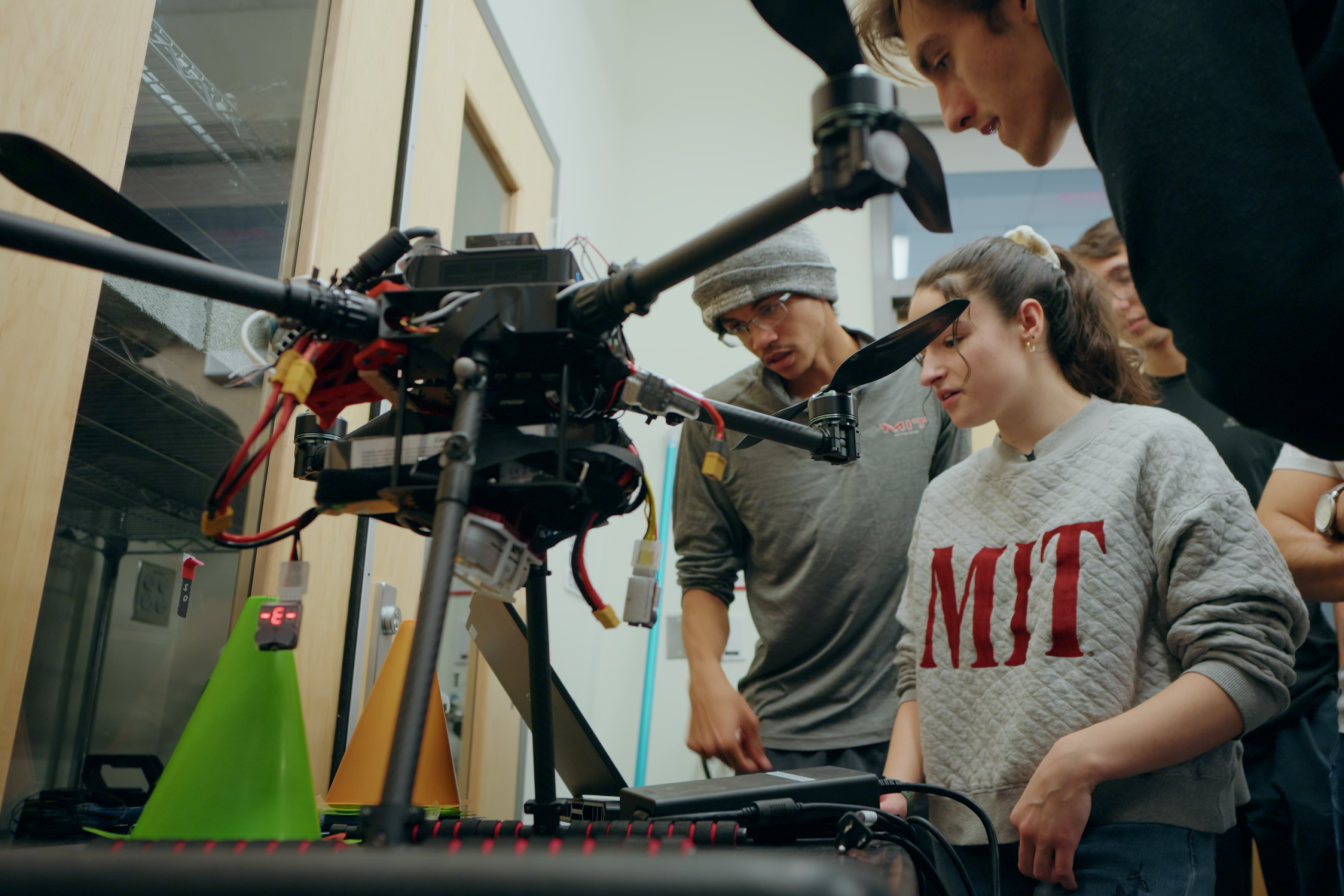
Not trivial, but for students nearing the culmination of their Course 16 undergraduate careers, far from impossible. In class 16.85 Autonomy Capstone (Design and Testing of Autonomous Vehicles), students design, implement, deploy, and test a full software architecture for flying autonomous systems. These systems have wide-ranging applications, from urban air-mobility and reusable launch vehicles to extraterrestrial exploration. With robust autonomous technology, vehicles can operate far from home while engineers watch from mission control centers not too different from the high bay in AeroAstro’s Kresa Center for Autonomous Systems.
Roy and Jonathan How, Ford Professor of Engineering, developed the new course to build on the foundations of class 16.405 (Robotics: Science and Systems), which introduces students to working with complex robotic platforms and autonomous navigation through ground vehicles with pre-built software. 16.85 applies those same principles to flight, with a basic quadrotor drone and an entirely blank slate to build their own navigation systems. The vehicles are then tested on an obstacle course featuring dubious landing pads and uncertain terrain. Students work in large teams (for this first run, two teams of seven — the SLAMdunkers and the Spelunkers) designed to mirror real-world missions where coordination across roles is essential.
“The vehicles need to be able to differentiate between all these hidden risks that are in the mission and the environment that they’re in and still survive,” says How. “We really want the students to learn how to make a system that they have confidence in.”
Design and Testing of Autonomous Vehicles
Video: MIT AeroAstro
Mission: Figure it out, together
“The specific mission we gave them this semester is to imagine that you are an aircraft of some kind, and you’ve got to go and explore the surface of an extraterrestrial body like Mars or the moon,” Roy explains. “You need to use onboard sensors to fly around and explore, build a map, identify interesting objects, and then land safely on what is probably not a flat surface, or not a perfectly horizontal surface.”
A mission of this magnitude is far too complex for any one engineer to tackle alone, but that too poses a challenge for a large team. “The hardest problems these days are coordination problems,” says Andrew Fishberg, a graduate student in the Aerospace Controls Laboratory and one of three teaching assistants (TAs) for the course. “To use the robotics term, a team of this size is something of a heterogeneous swarm. Not everyone has the same skill set, but everyone shows up with something to contribute, and managing that together is a challenge.”
The challenge asks students to apply multiple types of “systems thinking” to the task. Relationships, interdependencies, and feedback loops are critical to their software architecture, and equally important in how students communicate and coordinate with their teammates. “Writing the reports and communicating with a team feels like overhead sometimes, but if you don’t communicate, you have a team of one,” says Fishberg. “We don’t have these ‘solo inventor’ situations where one person figures everything out anymore — it’s hundreds of people building this huge thing.”
The new faces of flight
Students in the class say they are eager to enter the rapidly evolving field, working with unconventional tools and vehicles that go beyond traditional applications.
“We continue to send rovers to extraterrestrial bodies. But there is an increasing interest in deploying unmanned systems to explore Earth,” says Roy. “There’s lots of places on Earth where we want to send robots to go and explore, places where it’s hazardous for humans to go.” That expanding set of applications is exactly what draws students to the field.
“I was really excited for the idea of a new class, especially one that was focused on autonomy, because that’s where I see my career going,” says senior Norah Miller. “This class has given me a really great experience in what it feels like to develop software from zero to a full flying mission.”
The Design and Testing of Autonomous Vehicles course offers a unique perspective for instructors and TAs who have known many of the students throughout their undergraduate careers. As a capstone, it provides an opportunity to see that growth come full circle. “A couple years ago we’re solving differential equations, and now they’re implementing software they wrote on a quadrotor in the high bay,” says How.
After weeks of learning, building, testing, refinement, and finally, flight, the results reflected the goals of the course. “It was exactly what we wanted to see happen,” says Roy. “We gave them a pretty challenging mission. We gave them hardware that should be capable of completing the mission, but not guaranteed. And the students have put in a tremendous amount of effort and have really risen to the challenge.”


Duke of Edinburgh rallies Commonwealth spirit ahead of Glasgow 2026
[CinePlex360] Some plugins have failed to updat

Cardi B seemingly takes aim at ex, Patriots’ Stefon Diggs, during concert rant: ‘Who you playin’ with?’

-
 Business6 days ago
Households set for lower energy bills amid price cap shake-up
-
 Politics5 days ago
What are Iran’s ballistic missile capabilities?
-

 Entertainment1 week ago
Talking minerals and megawatts
-
 Business6 days ago
Lucid widely misses earnings expectations, forecasts continued EV growth in 2026
-

 Sports5 days ago
Sri Lanka’s Shanaka says constant criticism has affected players’ mental health
-

 Tech6 days ago
Here’s What a Google Subpoena Response Looks Like, Courtesy of the Epstein Files
-
 Business6 days ago
Income Tax Draft Rules 2026: Key Changes On How And When Pan Card Will Be Required?
-

 Sports1 week ago
South Africa thrash India by 76 runs in T20 World Cup Super 8 – SUCH TV