

Entertainment
Barry Manilow reveals lung cancer diagnosis, cancels some concerts due to surgery

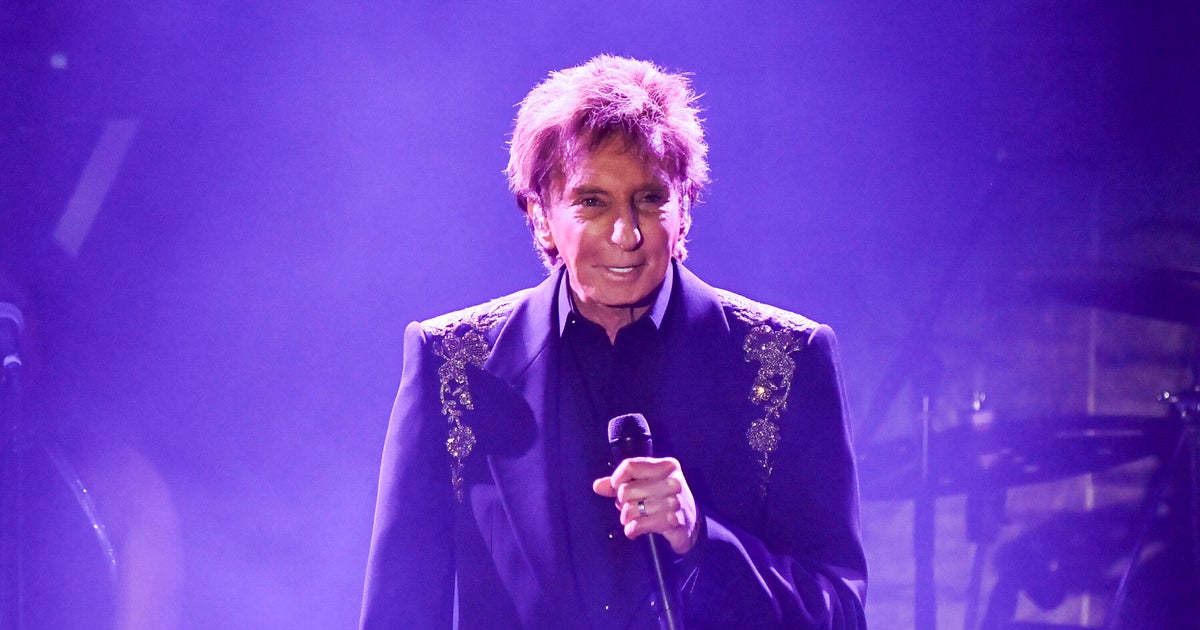
Barry Manilow, the singer-songwriter known for hits like “Copacabana,” announced Monday that he was recently diagnosed with lung cancer and will need to reschedule January concert dates in order to have surgery.
In a statement shared on Instagram, Manilow, 82, said that an MRI scan detected “a cancerous spot” on one of his lungs after he suffered a lengthy bout of bronchitis in the midst of his Las Vegas residency.
“As many of you know I recently went through six weeks of bronchitis followed by a relapse of another five weeks. Even though I was over the bronchitis and back on stage at the Westgate Las Vegas, my wonderful doctor ordered an MRI just to make sure that everything was OK,” Manilow said in the statement. “The MRI discovered a cancerous spot on my left lung that needs to be removed.”
“It’s pure luck (and a great doctor) that it was found so early,” Manilow said, adding that he is going to have surgery to have the spot removed.
“The doctors do not believe it has spread, and I’m taking tests to confirm their diagnosis,” he said. “So, that’s it. No chemo. No radiation. Just chicken soup and I Love Lucy reruns.”
Manilow just finished a string of Christmas shows at the Westgate Las Vegas Resort and Casino, where he has a lifetime residency. His January concert dates will be rescheduled as he recovers from surgery, he said.
The singer assured fans that he will be back to work by February and intends to perform Valentine’s Day weekend.
“I’m very sorry that you have to change your plans,” he said.
“Just like you, we were all looking forward to the January shows and hate having to move everything around,” he added. “In the meantime, I’m counting the days until I return to my home away from home at the Westgate Las Vegas for our Valentine’s weekend concerts on February 12-13-14 and throughout 2026. Something tells me that February weekend is going to be one big party.”



Princess Beatrice and her husband Edoardo Mapelli Mozzi are currently struggling through a tough phase as reports about their marriage cause major concerns.
While there are many royal reporters who have claimed that the couple is having a rocky marriage in the wake of the Epstein scandal, other reports have cited close friends that there is no trouble in paradise.
In one of The Mail reports, Edo was reached out where he denied the claims of marital woes. Although that did not do much to settle the discourse surrounding Beatrice’s marriage.
Now, in a new Daily Mail report, it was revealed that the couple are planning to move to the US in a bid to avoid all the drama that has caused them a massive headache. Sources have said that Beatrice is “mortified” and unable to sleep and eat due to the scandal.
Even though there is no wrongdoing associated to their names, her father Andrew and mum Fergie’s involvement with paedophile Jeffery Epstein has cause enough issues.
In a discussion on the Royalist podcast, journalist Paula Froelich believes that it could be a good idea to move to Florida where the couple can stay under radar since many of the people associated with Epstein live there. Hence, they would prefer not to bring it up got their own sake.
Meanwhile, Daily Beast editor Tom Sykes, Beatrice appears to be more “emotionally dependant” on her mother and she is “very British” to adjust in the US.

Kerry Katona has broken her silence over the Dubai row with Katie Price in a bombshell interview on Saturday, confessing she is ‘so over the drama.’
It comes after Kerry and Katie’s 22-year friendship was reportedly strained following the fight between their partners.
The punch-up reportedly occurred when Paolo believed Lee was speaking to Katie in an ‘aggressive manner,’ and he reportedly unfollowed Katie’s new husband.
Now, Kerry has made her clear stance, saying she has no ‘interest in revisiting the alleged fallout. She insisted she is in a ‘good place’ and that Katie can do as she pleases.
Speaking to The Sun, Kerry rolled her eyes as she said: ‘I don’t wanna talk about Kate. I don’t wanna talk about Lee.
‘I’m not interested in this saga. I’m not gonna be pulled in. I’m not gonna give it any oxygen. I’m in a good place. Kate can do what she wants.
‘She’s a grown-a** woman. That’s all I have to say. It’s boring now. I am so over it. Can we have a new drama?’
Last month, it was reported that Kerry had ‘quietly unfollowed’ Lee following their trip to Dubai, which allegedly ended in chaos.
‘Kerry quietly unfollowed Lee a few days ago,’ a source claimed to The Sun.
‘She is still upset about what happened when they were all in Dubai together, and at the end of the day, her loyalties are with Paolo, not Katie and her new man.’
At the time, the source said Kerry is speaking again to Katie but does not want anymore contact with Lee.
It comes after Kerry recently showed off the results of her lymphatic drainage massage, designed to remove waste, excess fluid, and toxins from her body by sharing before and after images.
Kerry’s stomach and torso appeared more defined as lay wrapped in a towel in the photos.
Lymphatic drainage is a specialised massage technique that is performed by a trained professional which stimulates the natural movement of lymph fluid.
- Meeting to focus on easing tensions amid Middle East war.
- Pakistan emerges as mediator between Iran, US.
- FMs of Turkiye, Egypt arrive, Saudi FM due in Islamabad.
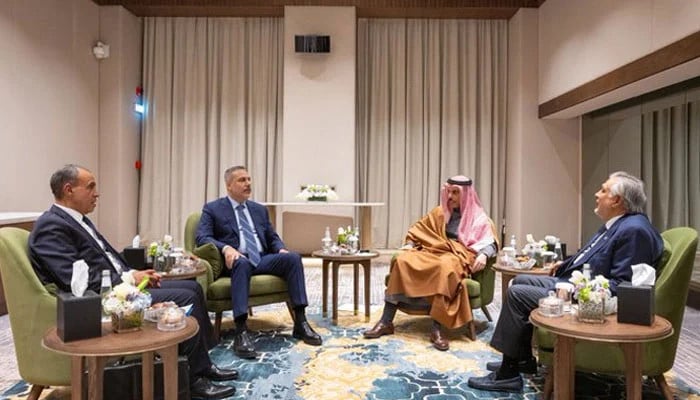
Pakistan is all set to host a quadrilateral meeting of foreign ministers from Saudi Arabia, Turkiye, and Egypt from March 29-30 in Islamabad to deliberate upon a variety of issues, including efforts to reduce the ongoing tensions in the region amid the US-Israeli war on Iran.
Islamabad has emerged as a key facilitator between Iran and the United States as their war drags on, serving as an intermediary for messages between the two sides.
The meeting comes amid efforts to open a window for diplomacy to end the nearly month-long war between the US, Israel, and Iran, which began on February 28 and has affected the broader Middle East.
In this regard, Turkish Foreign Minister Hakan Fidan and Egyptian Foreign Minister Badr Abdelatty arrived in Islamabad a day earlier on an official visit.
Meanwhile, Saudi Foreign Minister Prince Faisal bin Farhan Al Saud is scheduled to arrive today.
The Egyptian foreign minister arrived at the Ministry of Foreign Affairs, where he was warmly received by Deputy Prime Minister and Foreign Minister Ishaq Ishaq Dar.
During the meeting, both sides held discussions on the Middle East tension as well as strengthening bilateral relations between Pakistan and Egypt.
Two days earlier, DPM Dar confirmed that indirect talks between the United States and Iran were underway through messages being relayed by Pakistan, with Turkiye and Egypt also helping in the effort.
These efforts included direct contact between Chief of Defence Forces (CDF) and Chief of Army Staff (COAS) Field Marshal Asim Munir and US President Donald Trump on Sunday, confirmed by the White House.
Subsequently, Pakistan delivered a US proposal to Iran, a senior Iranian source told Reuters on Wednesday. The source did not reveal details of the proposal or confirm if it was the 15-point US framework reported by media outlets.
However, Iran rejected the US proposal, insisting it will end the ongoing “imposed war” on its own terms and timeline, a senior political-security official told Press TV.
Iran outlined five conditions for ending the war: a complete halt to “aggression and assassinations”; mechanisms to prevent the war from being reimposed; guaranteed payment of reparations; resolution across all fronts and resistance groups; and international recognition of Iran’s control over the Strait of Hormuz.
As part of preparations, Prime Minister Shehbaz Sharif said he had a detailed telephone conversation with Iranian President Masoud Pezeshkian earlier today (Saturday), lasting over one hour.
The call was the PM’s second conversation with Pezeshkian in five days, both of which focused on de-escalation and dialogue.
“I reiterated Pakistan´s strong condemnation of the continued Israeli attacks on Iran, including recent strikes on civilian infrastructure, and conveyed Pakistan´s solidarity with the brave people of Iran,” he wrote on X.
PM said he also expressed his condolences on the tragic loss of precious lives and prayed for the swift recovery of the injured and displaced.
“I apprised him of Pakistan’s ongoing diplomatic outreach — engaging the United States and brotherly Gulf and Islamic countries — to facilitate dialogue and de-escalation.”
The PM Office said separately that Pezeshkian “stressed the need to build trust in order to facilitate talks and mediation”.
‘Dialogue and diplomacy’
Separately, DPM Dar held a telephonic conversation with Iranian Foreign Minister Abbas Araghchi, according to a statement issued by the Foreign Office.
The two leaders discussed the evolving regional situation and ongoing developments.
The deputy premier emphasised the need for de-escalation, stressing that dialogue and diplomacy remain the only viable path for lasting peace.
He also underscored the importance of an end to all attacks and hostilities.
Dar said that Pakistan remains committed to supporting all efforts aimed at restoring regional peace and stability.


Texas keeps NCAA swim lead behind Kós’ record in 100 backstroke

Great decision or a big mistake?

A School District Tried to Help Train Waymos to Stop for School Buses. It Didn’t Work

-
 Business1 week ago
Flipkart group CFO to leave co amid IPO plans – The Times of India
-

 Fashion1 week ago
China’s textile & apparel exports surge 17% to $50 bn in Jan-Feb 2026
-

 Sports1 week ago
Rating Adidas’ 2026 World Cup away shirts: Argentina, Spain, Mexico and more
-

 Sports1 week ago
American Conference Commissioner Tim Pernetti thanks Trump for Army-Navy game executive order
-

 Tech1 week ago
Gamers Hate Nvidia’s DLSS 5. Developers Aren’t Crazy About It, Either
-

 Sports1 week ago
How to watch 2026 NCAA swimming and diving championships
-
 Business5 days ago
Property Play: Home flippers see smallest profits since the Great Recession, real estate data firm says
-
 Business1 week ago
‘Marriage penalty’ in Washington state’s new millionaire tax stirs debate