

Tech
Top 10 women in tech and diversity in tech stories of 2025 | Computer Weekly


The past year has brought uncertainty for diversity in the tech sector as the landscape in the US turned sour, with President Donald Trump ordering the termination of diversity, equity and inclusion (DEI) projects and roles.
There were concerns that UK companies would follow suit, but as the year went on, it became clear that many are still leading the charge to improve diversity in the sector.
But research also found the number of women in tech is still growing very slowly, and women are leaving the sector in larger numbers, so as the year bows out, many questions remain about how the diversity landscape will look next year in the UK tech sector.
The write-up from the 2024 Computer Weekly and Harvey Nash Diversity in Tech event shone a light on the overlapping experiences of some underrepresented groups and how organisations can cater to these individuals.
While there has been an increasing focus on hiring specific groups of people, such as women or people of colour, this can overlook how having more than one of these characteristics can affect employee experience in the technology sector.
Firms need to better understand people’s individual experiences and make the work environment safe for everyone to better take advantage of the positives a diverse workforce can bring.
There are many reasons women avoid the technology sector, and a survey from recruitment firm Lorien found that a lack of work-life balance is a big barrier for women in tech.
Women are more likely than men to shoulder the burden of caregiving, whether for children or older family members, and without flexibility at work, this can be difficult to maintain.
Lorien’s research found that 45% of women have had difficulties with work-life balance in their role, making it the biggest barrier they have faced in their careers.
With artificial intelligence (AI) becoming increasingly embedded in everyday life, there has been a focus on ensuring the teams developing the technology reflect its diverse user base.
To this end, the UK government announced plans this year to increase the number of girls taking maths at A-level in a bid to encourage more girls into careers in AI.
As the year went on, more evidence emerged that a lack of flexibility is standing in the way of increased diversity in the tech sector.
Research conducted on behalf of the Department for Science, Innovation and Technology (DSIT) found that a lack of access to flexible working and unconscious bias are among the barriers preventing underrepresented groups from going into technology roles.
The hiring process, a lack of representation across job levels and a lack of flexible working arrangements were identified among the challenges DSIT flagged as needing “considered and sustained efforts” to address.
Further solidifying the dire state of affairs when it comes to the lack of women in the technology industry, the release of the Oliver Wyman and WeAreTechWomen Lovelace report confirmed that women are leaving the technology sector in large numbers.
Between 40,000 and 60,000 women are leaving digital roles each year, some for new roles and some to exit the sector, in many cases because of a lack of development opportunities in their careers.
Sadly, the technology sector lost a great in August, with the passing of Dame Stephanie Shirley at the age of 91.
A serial founder, entrepreneur and philanthropist, Shirley was part of the technology sector for more than 50 years, and was famously known for adopting her family nickname, Steve, to be taken seriously after efforts to start her own company fell on deaf ears once it was clear she was a woman.
Shirley was a pioneer in flexible working, founding a technology company called Freelance Programmers in 1962, where the staff of predominantly women worked from home selling software and programming.
She will be missed.
Research from The Adaptavist Group found that unequal access to AI is preventing women and people from underrepresented backgrounds from learning how to use the technology properly.
This is causing an “opportunity gap”, whereby AI training is more available to some than others – 84% of those from higher income households believe they’ve received good guidance on how to use AI compared with only 59% in the lower income bracket.
In November, Naomi Timperley, co-founder of Tech North Advocates, became the 14th person to be named Computer Weekly’s most influential woman in UK tech.
The announcement was made alongside the rest of the top 50, as well as Computer Weekly’s 2025 Rising Stars, and the list of women in tech Hall of Famers.
Throughout 2025, Beckie Taylor, public speaker and founder of Tech Returners, created a six-part documentary series called Breaking the sound barrier – voices unleashed, following the journeys of 10 women in technology as they learned skills in public speaking.
Aiming to help women at all stages in their careers build confidence, the documentary sought to show the progression of role models in the technology sector as they learn to take advantage of their influence in the sector.
While the technology sector claims it understands the need for diverse groups in senior positions, there remains a lack of women and underrepresented groups at the top.
The year rounded out with research from consultancy Think & Grow finding the UK’s fastest-growing technology startups and scaleups lack women in top positions.
According to the research, only 12% of the fastest-growing startups in the UK have a female CEO, chair or founder, and 36% have no women on their boards.
The European online age verification app is ready.
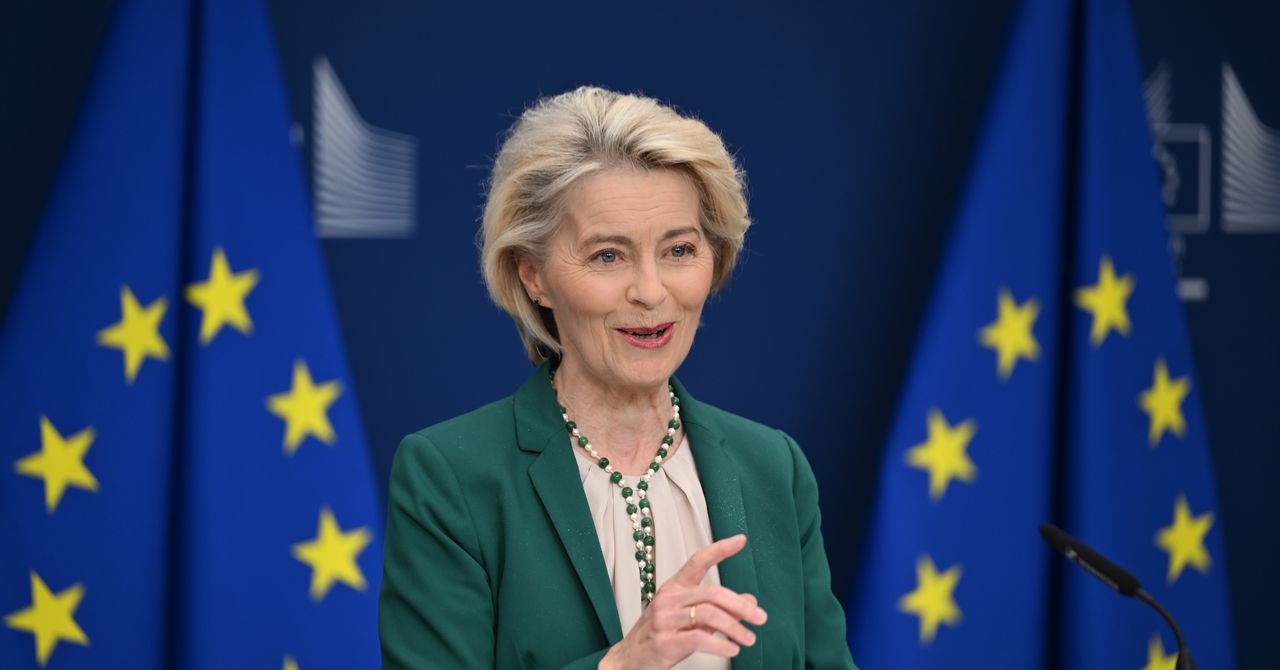
The app works with passports or ID cards, is built to be “completely anonymous” for the people who use it, works on any device (smartphones, tablets, and PCs), and is open source. “Best of all, online platforms can easily rely on our age verification app, so there are no more excuses,” said European Commission president Ursula von der Leyen at a press conference on Wednesday. “Europe offers a free and easy-to-use solution that can protect our children from harmful and illegal content.”
High Expectations
“It is our duty to protect our children in the online world just as we do in the offline world. And to do that effectively, we need a harmonized European approach,” von der Leyen said at Wednesday’s press conference. “And one of the central issues is the question, how can we ensure a technical solution for age verification that is valid throughout Europe? Today, I can announce that we have the answer.”
This answer takes the form of an open source app that any private company can repurpose, as long as it complies with European privacy standards and offers the same technical solution throughout the European Union. The user downloads the app, agrees to the terms and conditions, sets up a pin or biometric access, and proves their age through an electronic identification system, or by showing a passport or ID card (in which case biometric verification is also provided). The app does not store your name, date of birth, ID number, or any other personal information, according to the European Commission—only the fact that you are over a certain age.
After that, when a person using the app wants to access a social network (minimum age: 13), pornographic site (minimum age: 18), or any other age-protected content, if they are logged in from a computer, they need only scan the QR code shown on the site they want to visit. If, on the other hand, the person logs in from a smartphone, the app sends the proof of age directly. The platform does not access the document with which the user proved it in the first place.
Adoption Event
The need to introduce a common system for the entire European Union has been discussed for some time, and according to commission technicians, the technical work is now complete. Of course, it will still be possible to circumvent the system—all it takes is for an adult to lend their phone to a younger friend—but the technological architecture exists, and it will be up to EU member states to decide whether to integrate it into national digital wallets or develop independent apps.
“No More Excuses”
For the app to really be effective, platforms must be obligated to verify the age of their users—that’s where things get tricky. The Digital Services Act, which went into effect in 2024, requires “very large online platforms”—those with more than 45 million monthly users in the European Union—to take concrete steps to mitigate systemic risks related to child protection, with heavy penalties for noncompliance.
“And that’s why Europe has the DSA: to call online platforms to their responsibilities. Because Europe will not tolerate platforms making money at the expense of our children,” European Commission executive vice president Henna Virkkunen told a press conference. She added that after an investigation into TikTok, the European institutions plan to take similar action against Facebook, Instagram, and Snapchat, as well as four porn sites. “Since the platforms do not have adequate age verification tools, we developed the solution ourselves,” he concluded. In short, as von der Leyen also remarked, “there are no more excuses.”
Bare Minimum
So far, this is the European framework that sets the general rules. On this basis, member states can consider more restrictive measures. Italy was among the first to discuss how to regulate the use of social media by minors but has so far not landed on anything concrete. Elsewhere in the EU, France’s Emmanuel Macron has been a trailblazer on the issue, pushing France to discuss a rule to ban social networks for minors under the age of 15 entirely. So far, this measure has received broad political support—but the outcome depends largely on compatibility with the Digital Services Act and the availability of effective age verification systems like the app the European Commission just released.
This article originally appeared on WIRED Italia and has been translated.
Anthropic is moving into a new London office as it seeks to expand its research and commercial footprint in Europe, setting up a scrap between the leading AI labs for talent emerging from British universities.
The company, which opened its first London office in 2023, is moving to the same neighborhood as Google DeepMind, OpenAI, Meta, Wayve, Isomorphic Labs, Synthesia, and various AI research institutions.
Anthropic’s new, 158,000-square-foot office footprint will have space enough for 800 people—four times its current head count—giving it room to potentially outscale OpenAI, which itself recently announced an expansion in London.
“Europe’s largest businesses and fastest-growing startups are choosing Claude, and we’re scaling to match,” says Pip White, head of EMEA North at Anthropic. “The UK combines ambitious enterprises and institutions that understand what’s at stake with AI safety with an exceptional pool of AI talent—we want to be where all of that comes together.
UK government officials had reportedly attempted to coax Anthropic into expanding its presence in London after the company recently fell out with the US administration. Anthropic refused to allow its models to be used in mass surveillance and autonomous weapon systems, leading to an ongoing legal battle between the AI lab and the Pentagon.
As part of the expansion, Anthropic says it will deepen its work with the UK’s AI Security Institute, a government body that this week published a risk evaluation of its latest model, Claude Mythos Preview. According to Politico, the UK government is one of few across Europe to have been granted access to the model, which Anthropic has released to only select parties, citing concerns over the potential for its abuse by cybercriminals.
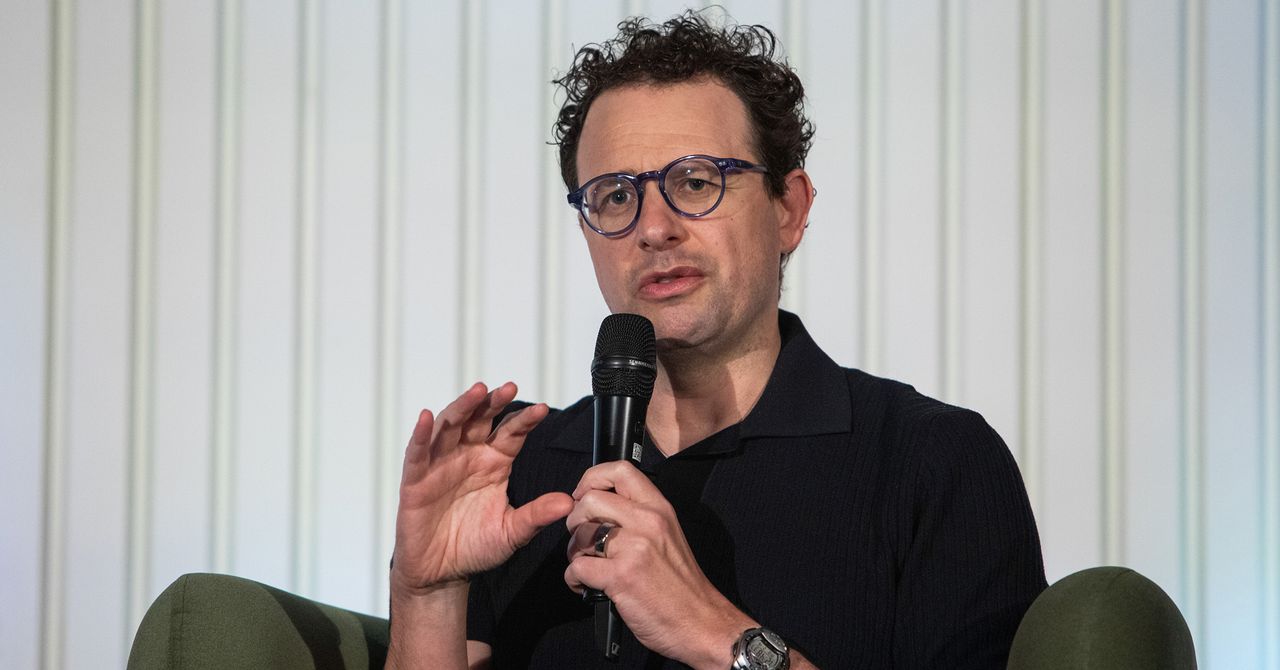
The increasing concentration of AI companies in the same London district is an important step in creating a pathway for research to translate into AI products, says Geraint Rees, vice-provost at University College London, whose campus is around the corner from Anthropic’s new office.
“This cluster didn’t emerge from a planning document. It grew because serious researchers and companies understand that proximity isn’t a nice-to-have,” he said last month, speaking at an event attended by WIRED. “That’s how the innovation system actually works. It’s not a clean, linear transfer from lab to market. It’s messier, richer, more human than that.”
The increasingly long-in-the-tooth Computer Misuse Act (CMA) of 1990 remains an albatross around the neck of British cyber security professionals, and even though the UK government committed last December to reforming it, every minute of delay is holding back the nation’s security innovation, resilience, talent, and ability to defend itself against cyber attacks, campaigners have warned.
Ahead of the National Cyber Security Centre’s (NCSC’s) upcoming CYBERUK conference in Glasgow, the CyberUp Campaign for reform of the Computer Misuse Act (CMA) has published a new report, titled Protections for Cyber Researchers: How the UK is being left behind to maintain pressure on Westminster.
The CMA defines the vague offence of unauthorised access to a computer, which the campaigners want changed because it was written 35 years ago and fails to account for the development of the cyber security profession, and the fact that in the course of their day-to-day work, cyber pros may sometimes need to hack into other systems.
“Cyber attacks are growing in scale, sophistication and severity, with a devastating impact on infrastructure, businesses and charities,” said a CyberUp campaign spokesperson.
“While other countries have moved to refresh their cyber laws in response, the UK’s Computer Misuse Act hasn’t been updated since before the modern internet – hardly the best platform for accelerating our defences into the next decade.”
The group’s report highlights how other nations, Australia, Belgium, France, Germany, Hong Kong, Malta, Portugal, and the USA, have already secured legal protections for cyber professionals that enable them to go about their business without fear of prosecution.
In Portugal – Britain’s oldest formal ally under a treaty dating back to the 14th Century – the government last year published Decreto-Lei 125/2025, implementing the European Union (EU) Network and Information Systems (NIS2) Directive and revising the country’s cyber crime law to ensure that ethical hackers and professional cyber security practitioners working in good faith are both recognised and protected.
Portgual’s laws now accept some elements of cyber work may have to happen without explicit permission or involve unanticipated technical overreach that has a legitimate purpose.
As such, Portugal says that security work undertaken in good faith won’t be punished as long as the researcher fulfills a set of conditions. For example, they can act only to find vulnerabilities and these must be reported immediately, they must avoid taking harmful actions, like conducting DDoS attacks or installing malware, and they must respect the integrity of any data they may find or access and delete it within 10 days once the issue is addressed.
CyberUp said Portugal’s example demonstrates how cyber crime laws can be modernised to legally protect research carried out in the public interest.
“Portugal has demonstrated how to modernise their equivalent law through cyber legislation. We urge the government to follow this example and act swiftly through the Cyber Security and Resilience Bill to achieve meaningful reform, or risk lagging even further behind our peers,” the spokesperson said.
Defence Framework
Working with cyber security experts and legal advisors, the CyberUp campaign has developed its own Defence Framework that would allow cyber professionals to present a statutory defence in court as long as they adhere to the Framework’s four core principles.
- Harm Vs. Benefit: The benefits of the activity must outweigh the potential harms;
- Proportionality: Cyber pros must take all reasonable steps to minimise the risks of their activity;
- Intent: They must act honestly, sincerely, and clearly direct themselves towards improving security;
- Competence: Their qualifications and professional memberships should demonstrate they are suitably equipped to perform cyber security work.
The campaigners say this framework will bring clarity and confidence to the security sector, enabling cyber pros to run essential research tasks without fear of criminal prosecution, helping organisations operate to recognised legal standards, and enabling a more open and collaborative relationship between the cyber sector and the UK government.


2026 NCAA gymnastics championships: Live updates from semifinals

Netflix co-founder Reed Hastings to step down as chairman

N.J. governor: FIFA should pay extra train costs to MetLife for World Cup

-

 Entertainment1 week ago
Queen Elizabeth II emotional message for Archie, Lilibet sparks speculation
-

 Tech1 week ago
Azure customers up in arms over ‘full’ UK South region | Computer Weekly
-

 Tech1 week ago
As the Strait of Hormuz Reopens, Global Shipping Will Take Months to Recover
-

 Fashion1 week ago
CII submits 20-pt agenda to Indian govt to back firms hit by Iran war
-

 Tech1 week ago
This AI Button Wearable From Ex-Apple Engineers Looks Like an iPod Shuffle
-

 Politics7 days ago
Indian airlines hit hardest after Dubai limits foreign flights until May 31
-

 Entertainment4 days ago
Palace left in shock as Prince William cancels grand ceremony
-

 Politics6 days ago
Chinese, Taiwanese will unite, Xi tells Taiwan opposition leader