

Sports
The NFL’s best players at every position: Barnwell names his annual All-Pro teams


With one week to go in the 2025 NFL season, I’m ready to name my first- and second-team All-Pros. There are a few races that are particularly tight, and my pick at running back changed after what I saw in Week 17, but nobody’s going to fly up the charts from out of nowhere to be a first-team All-Pro in Week 18. All these players already established themselves as elite performers long before the final week of the season.
This is my own All-Pro team based on the tape I’ve watched and the numbers I’ve crunched this season, as opposed to a prediction of who will actually be on those teams when they’re announced later in January. Different organizations name the teams in their own ways, so I’m just going to lean into my own format. I’m naming 11 players on each side of the ball, with three wideouts and three cornerbacks. I’m picking two offensive tackles and two guards without regard for which side of the line they play. And I’m willing to choose two safeties who play primarily in the box, in part because I’ve seen one of those safeties excel as something close to a true free safety role in years past and feel very confident he could play at a high level there if needed. I also have three special teams players.
Subscribe: ‘The Bill Barnwell Show’
One big difference for this team versus the Pro Bowl teams that were just announced is that I really care about player availability. As good as he is, there’s no universe where I’m ever considering Joe Alt for this team, given that he played just four full games and a handful of snaps in two others this season. This is a roster designed to represent the most productive and impactful players of 2025 as opposed to the best guys on any individual snap.
Missing one or even two games over the course of a full season isn’t too harmful, but once players start missing three or more, we’re talking about a significant gap in their value compared with similarly productive players who have been on the field for the entire campaign. As players miss more and more time, the bar they need to hit in terms of dominating their competition rises. Keep that in mind if your favorite player doesn’t land where you expect here. Let’s begin at quarterback.
Jump to:
QB | RB | WR | TE | OT | G | C
Edge | DT | LB | CB | S | K | P | RT

Quarterback

When I did my deep dive into the MVP race several weeks ago, I started with a clear mind and no strong feelings. I was surprised to find that so many of the factors I considered favored Maye, and I left that analysis with the Patriots starter as my favorite unless (or perhaps until) Matthew Stafford clearly knocked him from the top of the rankings.
Since then, Maye’s Patriots lost 35-31 to the Bills on a day on which he threw for only 155 yards, although he did run for two touchdowns to help keep things close. Stafford’s Rams lost to the Seahawks in a game where the offense scored 37 points and the veteran QB threw for 457 yards on 49 attempts. He did that without Davante Adams, which made me lean a little more toward Stafford, who unquestionably has a more talented receiving corps with everyone healthy than Maye does in New England.
But Maye responded by producing the greatest game of the QBR era. Facing the Jets on Sunday, Maye went 19-of-21 for 256 yards and five touchdown passes, no picks and one sack before spending much of the second half on ice. If you’re concerned about the quality of opposition Maye has faced, well, beating the Jets won’t do much for you. But Total QBR is opponent adjusted, and Maye’s 99.8 mark is the best performance any quarterback has posted in a start going back through 2007. Seems pretty good to me.
Two other things popped up since writing that column that push me toward Maye. One is catch rate over expectation (CROE), a receiver stat from NFL Next Gen Stats. Using a model to estimate the likelihood of a ball being caught given the locations of the receiver and nearby defenders and various other factors, it can be a good way to begin estimating how much a receiver is doing in an offense relative to what an average receiver would do in the same attack. Typically, the best receivers in football rank among the league leaders in CROE and its sister stat, receiving yards over expectation (RYOE).
There are six receivers who have run 300 or more routes this season with a CROE at least 10% better than average. Two of them are the obvious first-team All-Pros in Puka Nacua and Jaxon Smith-Njigba. Jake Ferguson is fifth, and George Pickens is just outside of that top six, a testament to what Dak Prescott can do for you at quarterback. The other three guys in the top six are all Patriots. Kayshon Boutte (plus-23.5% CROE), Stefon Diggs (plus-15.8%) and Mack Hollins (plus-10.2%) are all running what would comfortably be the highest catch rates over expectation of their respective careers. Three receivers in the top six is a Maye stat.
A reader also sent in a question and asked how the two quarterbacks have fared in games against common opponents. Both Maye and Stafford have gone up against the NFC South (Panthers, Saints, Buccaneers and Falcons), the Ravens and the Titans. Here’s how they’ve played in those games:
I stand roughly where I did three weeks ago — with everyone else beyond the top two ruled out of the race. This is Maye vs. Stafford. Last time I wrote about them, I had a very slight lean toward the Patriots standout. Right now, with one week of regular-season football to go, Maye seems like the clear choice as MVP.
Second team: Matthew Stafford, Los Angeles Rams
Running back

This isn’t an easy race to decide, either. Buffalo’s James Cook III leads the NFL in rushing, and it’s so much fun to watch his vision create running lanes other backs simply wouldn’t see at the second and third level. He has also fumbled six times, which erodes a lot of his impact. Derrick Henry just carried the Ravens to a critical victory, but he has fumbled four times, including critical fourth-quarter turnovers in losses to the Bills and Lions. Four is better than six, but the fumble against the Bills might cost the Ravens their playoff spot when things are said and done. Christian McCaffrey, meanwhile, leads all backs in yards from scrimmage, but the Niners’ lead back is averaging 3.9 yards per carry, and that’s a tough pill to swallow when so many of the league’s best RBs are up over 5 yards per attempt this season.
For most of the season, the easy pick was Jonathan Taylor, who was off to a historic start as the Colts dominated early in the season. As the year wore on, both Taylor and the Colts’ offense cooled off. Taylor leads all running backs in yards after first contact (2.6 per rush) and touchdowns (20), and he ranks among the league leaders in just about everything. But he hasn’t been efficient as a receiver, and his consistency as a runner has faded under heavy volume down the stretch. Taylor generated 194 rush yards over expectation (RYOE) during the first eight games of the season but just 26 RYOE since then, per Next Gen Stats.
In a close race between a handful of backs, though, Robinson’s performance on Monday night was just enough to vault him ahead of the pack. He was already a viable selection heading into the game against the Rams, but going for 195 yards on the ground and scoring twice against one of the league’s best defenses was a statement performance for Robinson. It also restored him to the league lead in yards from scrimmage, where he holds a 186-yard advantage on McCaffrey across 51 fewer touches.
0:43
Graziano: Colts will see what Riley Leonard can give them in Week 18
Dan Graziano and Mike Greenberg discuss the Colts’ decision to give Riley Leonard the start for Week 18.
I’m not sure any RB has been more fun to watch with the ball in his hands this season. The explosiveness and big-play ability Robinson exhibited at Texas had been surprisingly difficult to access during his first two seasons in the NFL, but Robinson has been able to reel off big plays throughout 2025. He and Taylor are the only players in the league with 80-plus-yard touchdown runs this season, and they each have two.
Robinson has been incredibly efficient as a receiver, which helped decide this race. The third-year back is averaging a league-best 2.1 yards per route run this season. The only player with more receptions and receiving yards is McCaffrey, who hasn’t been as efficient as a runner. The vast majority of that performance has come out of the backfield, where it’s even more difficult to produce receiver-level efficiency rates, given how often running backs are running checkdown routes that aren’t really part of the progression. Robinson has turned nearly 24% of his targets out of the backfield into first downs, the highest rate for any back over the past three seasons.
There are hiccups. Robinson has fumbled four times, which hurts his value with EPA-derived statistics. He has been really disappointing as a pass blocker this season, a project for the 23-year-old to work on this offseason. And Taylor has had fewer negatives. But Robinson has just been so spectacular and fun to watch that I find it difficult to pick anybody else.
Second team: Jonathan Taylor, Indianapolis Colts
Wide receiver

If you’re sick of hearing me complain about how tough these races are, well, the top two spots at wide receiver were the easiest picks on the board. Smith-Njigba has been a one-man show for the Seahawks in the passing game this season, where the likes of Cooper Kupp and Rashid Shaheed haven’t been able to make consistent impacts. Smith-Njigba currently has more than 44% of the receiving yards produced by the Seattle offense this season, the highest percentage since Brandon Marshall racked up more than 45% of Chicago’s market share at receiver in 2012.
Everybody knows the ball’s going to JSN. Nobody has shown any consistent ability to stop him throughout a game this year, though.

A special season from a special player. Nacua is the most efficient receiver in football, averaging a league-best 3.9 yards per route run. He leads the NFL in receiving yards over expectation (434) and is second in yards after catch over expectation behind the next guy on this list, per Next Gen Stats. Targets thrown to Nacua have generated 105.9 EPA — 19 EPA ahead of any other receiver in the league.
The only player with more EPA in a single receiving season in the Next Gen Stats era, ironically enough, is Cooper Kupp from his 2021 campaign with these Rams. Nacua’s behind only by virtue of missing a game-plus with an ankle injury, and he still has Week 18 to catch up. And none of this covers what Nacua does as a blocker, where he has been essential for the Rams.

The top two spots were gimmes. The third wideout spot, though, is a real competition. Stefon Diggs has been incredibly efficient, but he has run only 22 routes per game in New England. Drake London has missed too much time with injuries. Amon-Ra St. Brown has had uncharacteristic problems with drops throughout the season. Ja’Marr Chase has plenty of targets, but owing perhaps to inconsistent quarterback play, he is averaging just 11.2 yards per catch. Plus, his success rate and big-play rate are both down considerably from where they were a year ago.
So I went instead with Pickens, who has been the perfect fit for what the Cowboys needed as an outside receiver next to CeeDee Lamb for Dak Prescott. Pickens had consistently run higher-than-expected catch rates in Pittsburgh, but playing with subpar quarterbacks in run-first offenses, it was unclear whether all of that would translate to Dallas.
It did. Pickens’ expected catch rate rose, but so did his actual catch rate. Among wide receivers with 300-plus routes run this season, Pickens ranks sixth in the league in catch rate over expectation, third in receiving yards over expectation (trailing only my two other first-team All-Pros) and first in yards after catch over expectation (199 YACOE), per NGS. Generating loads of YACOE as a downfield receiver isn’t easy, and it’s a testament to how good Pickens has been at both bringing in contested catches and creating once he has the ball in his hands.
The only receivers generating more EPA per route run this year than Pickens are Nacua, Smith-Njigba and Diggs. Pickens has benefited from playing with Prescott, of course, but he has also been such an obvious and significant upgrade on the various wideouts the Cowboys have run out at the X spot over the past few seasons. It has been easy to question many of Jerry Jones’ trades over the past couple of years, but landing Pickens for third- and fifth-round picks was a coup for the Cowboys.
Second team: Ja’Marr Chase, Cincinnati Bengals; Nico Collins, Houston Texans; Chris Olave, New Orleans Saints
Tight end

Another easy pick here. Would-be rivals such as Brock Bowers and George Kittle missed significant time with injuries, and McBride answered the bell week after week for the Cardinals. His 1,174 receiving yards place him more than 300 ahead of second-place Kyle Pitts Sr., and although that yardage figure obviously owes some sort of debt to a staggering 161 targets, McBride was able to get open enough to command that sort of target share and dropped just one ball all season.
The goal-line forcefield that seemed to pester McBride also disappeared after Kyler Murray‘s foot injury, as McBride’s 11 touchdowns are one away from doubling his prior career total of six, gathered across three seasons.
Second team: Tyler Warren, Indianapolis Colts
Offensive tackle
The offensive line awards this year are trickier than ever before. In the introduction, I mentioned that player availability matters, and how I’m going to really find it difficult to include players who have missed more than a couple of games when others have been on the field for the entire season. I’ve applied that standard in the past, and it has hurt players such as Lane Johnson, who might be the best offensive lineman on the planet when he’s on the field but also usually misses a handful of games each season along the way.
Well, in 2025, just about every single offensive tackle who has a real case for being among the elite players at the position missed action. Chargers star Rashawn Slater missed the entire season with a ruptured patellar tendon, and teammate Joe Alt will end up missing 11 full games and most of two others with ankle injuries. Running through a few of the league’s top tackles and their snap percentages (and what that translates to in terms of missed games over a full season), you can see just how difficult it has been to get the best linemen onto the field this season:
If this were simply identifying the best linemen on any individual snap this season, I’d probably go with Andrew Thomas at left tackle and Johnson at right tackle. But if we’re picking the most productive or impactful tackles in the league over the full season, I can’t include them.

Of all the players to stay healthy for the entire season! (Well, almost.) Williams routinely misses a couple of games each year and plays for a 49ers team that has been ransacked by injuries all season, but the future Hall of Famer had been on the field for every game before suffering a hamstring injury on the Brock Purdy pick-six against the Bears on Sunday night. It’s unclear whether he’ll be able to return for the Week 18 divisional decider against the Seahawks.
Williams’ steady presence has been one of the reasons the 49ers have been able to survive despite all the injuries on offense this season. The Niners have had to play multiple starters at left guard next to him, and Williams spends more time on an island than most NFL tackles, but the 37-year-old still has the quickness and footwork to handle just about anybody in the league one-on-one. There were only two moments when Williams looked a step slow this season, and they were courtesy of superstars on the other side of the ball, via a Danielle Hunter spin move against the Texans and a Myles Garrett teleportation to the interior for a sack against the Browns.

I’m not sure there’s a more underrated offensive lineman in the league. Once a liability for the Broncos at left tackle, Bolles has rounded into form and consistently rates as one of the most reliable and effective pass blockers in the league. According to NFL Next Gen Stats, Bolles has allowed just one sack all season. Just 6.2% of his one-on-one blocks have resulted in pressures, the second-lowest rate in the NFL. And Bolles is doing that playing in front of Bo Nix, who has a habit of extending plays and/or choosing to scramble to places no lineman can prepare to protect.
Bolles was 13th in the league in run block win rate among tackles who played the majority of their team’s snaps this season. The 33-year-old benefited from playing on one of the league’s best lines (and one of its healthiest before center Luke Wattenberg went down with a shoulder injury), but Bolles has been entirely capable of handling some of the best edge rushers in football this season. He has also missed a grand total of just seven snaps all season, and that’s a difference-maker.
Second team: Laremy Tunsil, Washington Commanders; Dion Dawkins, Buffalo Bills
Offensive guard

Nelson was an easy pick on the interior. As the focal point of Indy’s diverse rushing scheme, his ability to overwhelm opposing defensive linemen at the point of attack is valuable enough, but he also has been essential as a pulling guard to take out defenders at the second and even third levels of the defense at different points this season. The Colts didn’t have much trouble replacing Ryan Kelly and Will Fries when they signed with the Vikings this offseason; there’s no way Indy could have been as productive on the ground this season without Nelson.
2:06
Rod Woodson expects a close game between Ravens and Steelers
NFL Hall of Fame cornerback Rod Woodson joins Rich Eisen to preview the winner-take-all matchup between the Ravens and the Steelers.

The most important and reliable part of Chicago’s resurgent run game this season, Thuney was every bit the player the Bears hoped to acquire when they sent a fourth-round pick to the Chiefs this offseason. He ranks fourth in the league in run block win rate and leads all guards in pass block win rate, all while continuing his habit of virtually never coming off the field. Thuney has missed just five snaps all season.
Thuney has the league’s lowest quick pressure rate and is one of two guards who played more than 400 pass-blocking snaps without allowing a single sack this season, per Next Gen Stats. The other one, of course, was Nelson.
Second team: Kevin Dotson, Los Angeles Rams; Tyler Smith, Dallas Cowboys
Center
Like Indianapolis’ offense with Nelson, the Dolphins’ rushing attack simply doesn’t work without Brewer’s ability to get on the edge for all of the pin/pull and other outside run concepts Miami wants to run. Watch Miami’s run game closely and you’ll see Brewer reaching defensive tackles on zone rushes with ease and blocking linebackers like Jamien Sherwood and Frankie Luvu for yards at a time. Here’s Brewer locking up Derwin James Jr. on a counter concept for a De’Von Achane 49-yard touchdown.
ACHANE IS GONE.
LACvsMIA on CBS/Paramount+https://t.co/HkKw7uXVnt pic.twitter.com/HIVmB5BtyH
— NFL (@NFL) October 12, 2025
With Tyreek Hill out and Tua Tagovailoa‘s effectiveness waning before being benched, the Dolphins needed to rely on their run game to survive for much of the season. That run game ran through Brewer.
Second team: Tyler Linderbaum, Baltimore Ravens
Edge rusher

The easiest pick on the entire roster. We’ll see if Garrett sets the single-season sack record against the Bengals next week, but even if he doesn’t get there, we’re witnessing one of the great seasons in NFL history by a defender at any position. Garrett’s going to lead the league in just about every meaningful pass rush category, especially after we adjust for the fact the Browns have faced the third-fewest pass attempts of any defense this season. He has thrown in 12 tackles for loss against the run, second most behind Maxx Crosby.
I’ll talk more about his season next week in my seasonlong awards column, but there isn’t much justification required here.

There’s a much bigger group of candidates for the second spot at edge rusher, even after Micah Parsons‘ torn ACL ended his chances of landing the first-team All-Pro nod. I kept finding reasons to lean toward Anderson, who has continued to improve across his three pro seasons. In 2025, his missed tackle rate improved past league-average, and he has set career highs in sacks (12) and knockdowns (23) with a game to go.
Anderson’s even better than those figures if we use the data from Next Gen Stats. He has turned 8.3% of his pass-rush snaps into quick pressures this season, trailing only Nik Bonitto and Abdul Carter. Anderson gets chipped or double-teamed more than either player, and I think he’s a little better against the run than Bonitto, who was Anderson’s closest competition here. According to the Next Gen Stats models, Anderson’s pressure rate is 6.5% better than what an average edge rusher would have accomplished in the same situations, which is the best mark in the league. He has also generated four turnovers with pressures this season, which is second behind Jared Verse.
Second team: Nik Bonitto, Denver Broncos; Aidan Hutchinson, Detroit Lions
Defensive tackle

Although Simmons missed two games and most of a third with a hamstring injury, he has been sufficiently dominant to qualify for All-Pro honors. He was a one-man pressure factory this season. Simmons leads all defensive tackles in pressure rate (13.5%), quick quarterback pressures (22), quick pressure rate (6.2%) and pressure rate against double-teams (11.2%) — all while playing on a team that didn’t have a significant second pass-rush threat to worry about elsewhere up front, especially after Dre’Mont Jones was traded to the Ravens at midseason. Simmons’ 16 tackles for loss lead all defensive tackles.
In terms of volume, though, nobody has been on quarterbacks more often this season than Allen. He leads all players with 45 quarterback knockdowns this season, seven hits ahead of Garrett. Even if that number’s a little inflated by some hits on quarterbacks as the ball’s on the way out, Allen leads all defensive tackles with 57 pressures, and his 14 quick pressures are third at the position behind Simmons and Chris Jones. (Yes, Jones is still great.)
Allen has a lot of help on what might be the league’s best defensive line, but if there’s one player up front the Broncos couldn’t afford to lose, it would be Allen. Bonitto and Jonathon Cooper are excellent at getting off quickly and going around the edge to squeeze opposing QBs, but Allen’s just completely unblockable at times on the interior, which helps funnel quarterbacks to those speedy edge rushers.
Second team: Kobie Turner, Los Angeles Rams; Leonard Williams, Seattle Seahawks
Linebacker
I’m not sure there are many 7-9 teams in league history with two first-team All-Pros, but Brewer and Brooks both deserve the recognition. No player has made a higher share of his team’s tackles this season than Brooks, who has 17.5% of Miami’s tackles. That’s the third-highest rate for any defender in any season since 2016, when Bobby Wagner made 19.5% of Seattle’s tackles.
Racking up tackles doesn’t mean much if you’re just on the field all the time for a bad defense and tackling guys 15 yards downfield, but Brooks has made 20 tackles short of the sticks on third and fourth down, the most of any player in the NFL. His 13 tackles for loss are second in the league among off-ball linebackers behind Eric Wilson, who is having the same sort of out-of-nowhere season we’ve seen from De’Vondre Campbell and Zack Baun in recent years and also deserved serious consideration. Brooks has produced stuffs for no gain or a loss on 5.6% of run plays, the highest rate in the league for any full-season linebacker. And Brooks has chipped in with 3.5 sacks as a blitzer.
Dumped by the Rams and traded away after six weeks by the Titans a year ago, Jones has been a perfect fit in Seattle under Mike Macdonald. He has picked off five passes this season, tying him with Devin Lloyd (who was just a hair behind Jones on my ballot) for the league lead among linebackers. Jones has allowed a 53.7 passer rating in coverage this season, the third-best mark in the league at any position. He has also made 16 tackles stopping players short of a third- or fourth-down conversion — tied for fourth in the NFL.
Second team: Devin Lloyd, Jacksonville Jaguars; Jack Campbell, Detroit Lions
Cornerback
This was another position where injuries had a real impact. For my money, the three best cornerbacks in football in terms of being able to line up against anybody and play either man or zone coverage while tackling well are Pat Surtain II of the Broncos, Christian Gonzalez of the Patriots and Devon Witherspoon of the Seahawks. But Surtain missed 3½ games with a pectoral injury, Gonzalez missed three games to start the year with a hamstring problem, and Witherspoon was out for five games during the first half with a recurring knee ailment.
They’ve all been great when they’ve been on the field this season, but missing that much time hurts when so many great players have been on the field all year. I have to leave Witherspoon off by virtue of missing so much action. Surtain had some trouble at times against the Colts and Chargers early in the season, and although he has been great since returning from the pectoral injury, penalties are still an issue for the reigning Defensive Player of the Year (nine flags for 109 yards, including five pass interference calls). That’s just enough to bounce him down to the second team.
In terms of cumulative impact, I’d say Stingley has been the best cornerback in football in 2025. He has played all 16 games so far, which means something relative to the competition. Playing behind an elite pass rush helps, of course, but Stingley’s even great on extended plays and scramble drills. He has allowed a scarcely believable 49.4 passer rating in coverage this season, the best mark in football among full-time players. The Texans don’t play man as often as many other teams, but Stingley’s as good in his role as anybody in the league.

The Eagles, on the other hand, play man at the third-highest rate in the NFL. And Mitchell has already emerged as a shutdown guy on his side of the field. If you’ve watched Eagles games all season, you’ve probably noticed how often teams are going out of their way to target the guys who aren’t Mitchell and Cooper DeJean in coverage.
Most of the targets Mitchell sees are low-percentage prayers from quarterbacks. He’s allowing the third-best completion percentage (43.8%) on targets of any cornerback this season, trailing only Stingley and Donte Jackson, who earned a second-team nod. His 67.5% success rate in coverage is the best mark in the NFL among outside corners. And Mitchell also tackles better than the vast majority of starting corners, as his 6.3% missed tackle rate ranks 10th in the league at the position.
It was between Gonzalez and Surtain for the final spot on the first team, and I narrowly preferred the Patriots standout. The Pats have played less man than they did over the prior two seasons, and I’m not sure Gonzalez was even as good this year as he was during what was a wildly underrated 2024 campaign, but he was still comfortably playing at a star level.
Gonzalez has posted a 63.2% success rate in coverage this season, the fifth-best mark among regular starters. Targets in his direction have generated 7.2 fewer catches than expected, which is third in the league. He has also posted a better missed tackle rate than Surtain (who didn’t miss a single tackle in 2024) while taking six fewer penalties. It’s going to be fun watching Gonzalez battle for the title of best cornerback in the AFC with Stingley on an annual basis over the next few seasons.
Second team: Pat Surtain II, Denver Broncos; Donte Jackson, Los Angeles Chargers; Jaycee Horn, Carolina Panthers
Safety

What a nightmare for opposing offensive coordinators. James is an absolute menace around the line of scrimmage for Chargers DC Jesse Minter, where he’s capable of singlehandedly blowing up run plays and becomes a serious problem for teams as both a designed pass rusher and green dog blitzer. His sack (2) and TFL (6) totals are down from 2025, but James has intercepted three passes, including the Gardner Minshew pick that knocked the Chiefs out of the postseason in the AFC. James is allowing a career-best 59.6 passer rating in coverage, and his physicality dictates so much of what the Chargers can do schematically with light boxes against the run.

Hamilton’s versatility has been essential for the Ravens. Last year, the Ravens salvaged what had been a frustrating defense by moving Hamilton into a deep-lying role, and they fielded one of the best defenses in the NFL from that point forward. This year? With the defense struggling to start the season, coordinator Zach Orr moved Hamilton back into the box, where he has had a James-like impact around the line of scrimmage. You’re not really supposed to be able to play both of those roles at an All-Pro level. Hamilton does.
Watching him just shrug off offensive linemen who outweigh him by more than 100 pounds to make tackles on run plays is just remarkable. He hasn’t been in coverage as often as in years past, but Hamilton has been effective when called on to take on tight ends and slot receivers this season, too. His presence has been absolutely essential on a Ravens team that has faced uncertainty, inconsistent play and injuries from much of its front seven. Second team: Jessie Bates III, Atlanta Falcons; Talanoa Hufanga, Denver Broncos Brandon Aubrey gets deserved plaudits as the league’s best kicker on a weekly basis, but Reichard has actually been slightly better this season per advanced metrics. He has attempted eight fewer field goals than Aubrey, but Reichard has gone 30-for-32, whereas Aubrey is 35-for-40. Even with the slightly reduced volume, Reichard has made 6.7 more field goals than expected (per NGS), compared with 6.5 for Aubrey, as his average field goal make has been from a yard further out. Reichard has also been perfect on extra points. Vikings fans endured about a decade of frustrating kickers, but Reichard has broken that trend. Second team: Brandon Aubrey, Dallas Cowboys Per the Puntalytics EPA-based model, Dickson has been the best punter in the league this season on a per-punt basis. The Sydney-born punter is only around the middle of the pack in terms of average gross and net yards per punt, but just 35.3% of his punts have been returnable this season, a figure only Mitch Wishnowsky of the Bills and Austin McNamara of the Jets have been able to top. Dickson’s ability to place his punts has made a difference there, as just 13.7% of his punts have gone to the middle of the field, the lowest rate in the league for regular punters. The only real argument I can make against him is that the Seahawks just haven’t needed Dickson to punt all that often; he has averaged just 3.2 punts per game this season. Second team: Austin McNamara, New York Jets Dike has very high highs and very low lows. On one hand, he might be one of the worst blocking wide receivers on screens I’ve ever seen. On the other? He’s a spectacular return man. Tennessee had truly wretched special teams in 2024, but the arrival of John Fassel and the selection of Dike in the fourth round has transformed the Titans’ return units. Dike leads all regular punt returners in yards per return (17.7) and is second behind Marcus Jones in punt return yards over expectation (Next Gen Stats). Both Dike and Jones took two punts to the house this season, but Dike gets the nod by virtue of his excellent work on kickoff returns, where he is second in the NFL behind KaVontae Turpin in kick return yards over expectation. Second team: Marcus Jones, New England PatriotsKicker

Punter
Returner
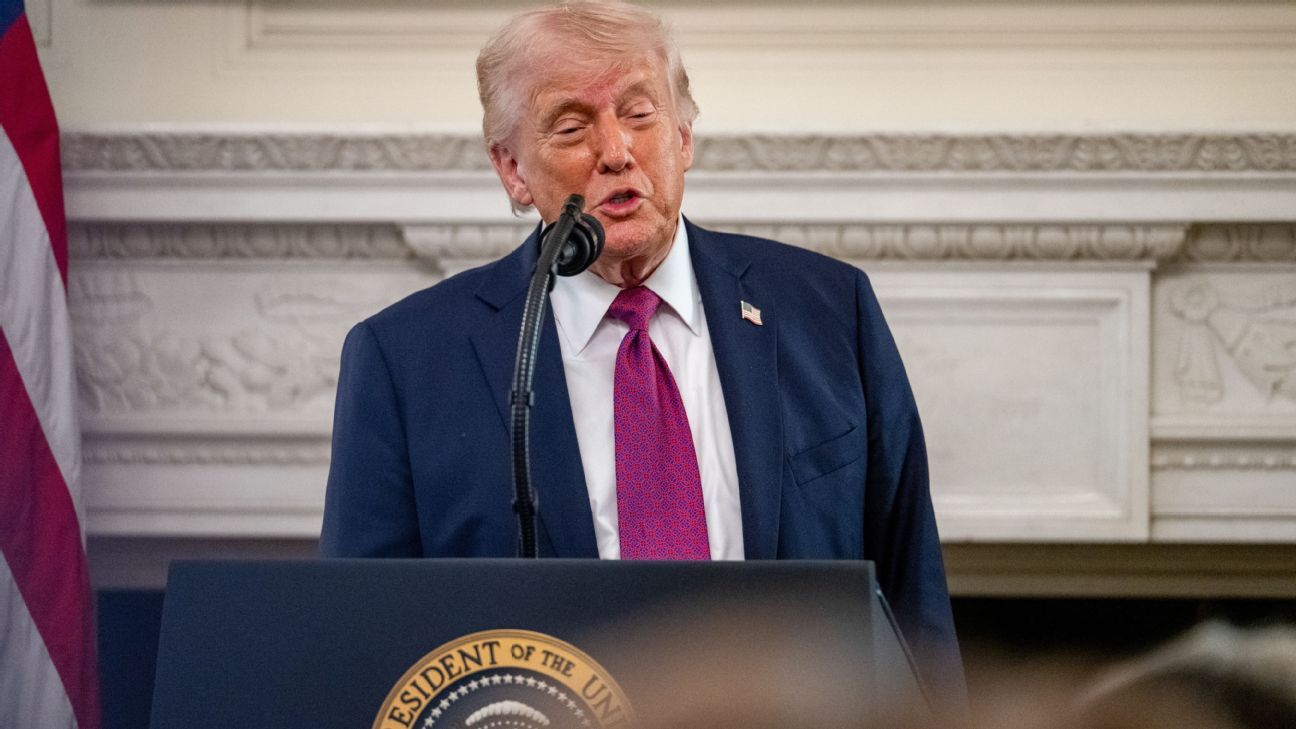
WASHINGTON — President Donald Trump on Tuesday repeated his call for Congress to pass legislation that would rein in college sports at a time athletes are allowed to move freely from school to school and command salaries that put athletic departments in financial peril.
Trump’s remarks came at a White House event honoring some 100 athletes from seven teams that won NCAA championships in 2025.
Trump this month signed an executive order that would limit eligibility to five years, allow one transfer without penalty for undergraduates, stop pay-for-play schemes and build in protections for women’s and Olympic sports.
Aspects of the executive order might not withstand legal scrutiny, which is why Trump and some college sports stakeholders are asking for federal legislation that would codify restrictions and grant the NCAA an antitrust exemption to enforce rules.
Dozens of athletes have challenged NCAA eligibility rules with the hope of extending their college careers and, in turn, their ability to earn money through name, image and likeness deals. He said it’s unfair for athletes right out of high school to compete against 28- or 29-year-olds.
“It’s a very precarious position the courts have left us in,” Trump said, adding that the 2025 settlement of House v. the NCAA created a professional model that has led to financial instability for colleges. “And now it’s a total and complete mess. But we’re going to get it fixed up and we’ve got fantastic people doing it. So we need now Congress to act to clear up the confusion created by the courts and institute permanent reforms to protect college sports at every level, especially some sports.”
The national championship teams honored were Oklahoma State in men’s golf, Texas A&M in women’s volleyball, Wake Forest in men’s tennis, Georgia in women’s tennis, Youngstown State in women’s bowling, Florida State in women’s soccer and West Virginia in mixed rifle.
“Seventy-five percent of Olympians competing for Team USA played as college athletes,” Trump said. “If we don’t straighten out this, we’re not going to have much of an Olympic team because you have so many of these sports, especially certain sports where it’s like the minor leagues, call it the major leagues, whatever you want. But we’ve trained unbelievable athletes to go in and win the gold medal. Without college sports and without your ability to go into college sports and compete and learn how to play and get better, we’re not going to have much of an Olympic team anymore.”
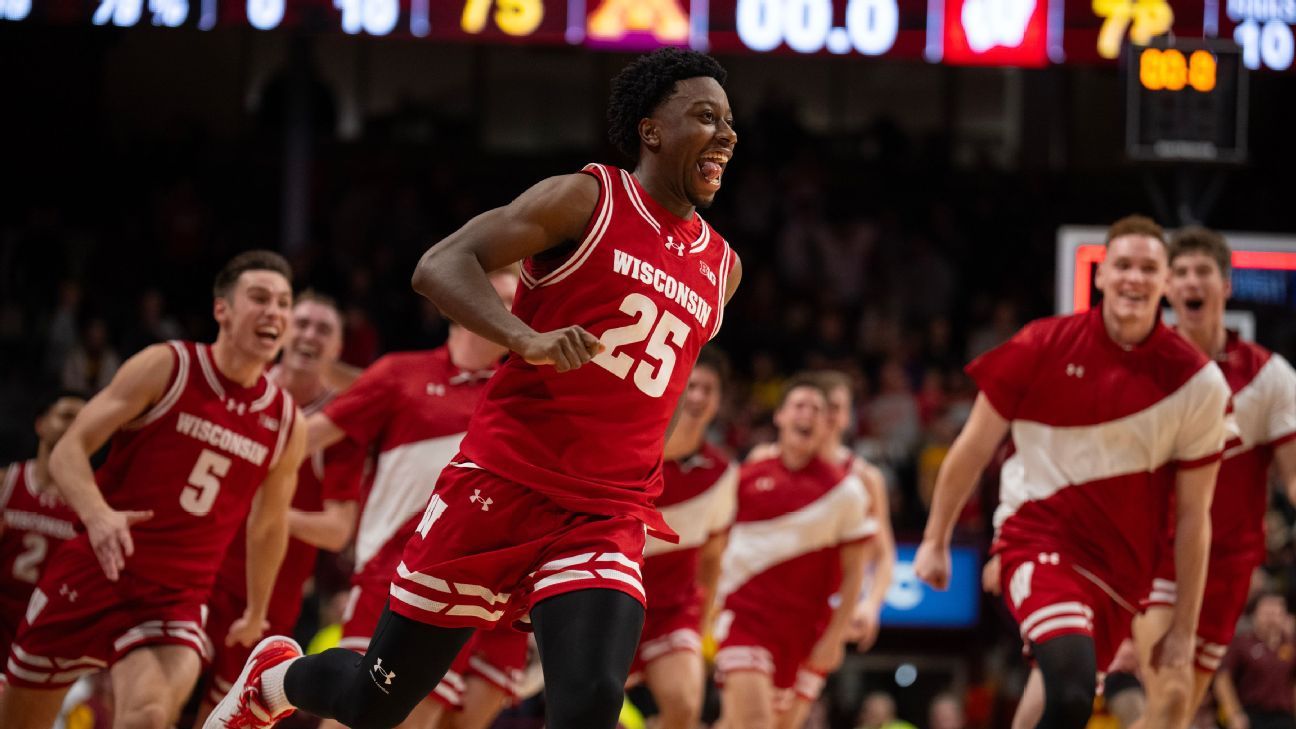
Wisconsin transfer John Blackwell has committed to Duke, he told ESPN on Tuesday.
Blackwell, who visited Duke on Monday, was the best guard to enter the transfer portal this spring.
“It just felt right,” Blackwell told ESPN. “It felt like the right situation for me. I just connected with Coach [Jon Scheyer] on a different level. We built a connection in these past weeks of just talking to him and him selling why Duke is the right spot for me. Me taking this visit was just confirmation on why I should be at Duke.”
Blackwell, a 6-foot-4 guard, earned third-team All-Big Ten honors this past season after averaging a career-high 19.1 points, 5.1 rebounds and 2.3 assists, shooting nearly 39% from 3-point range.
He was at his best in the postseason. Blackwell had 34 points and 10 rebounds in the third round of the Big Ten tournament against Washington, following it with 31 points on 9-for-17 shooting in an overtime win over Illinois. While Wisconsin was upset by 12-seed High Point in the first round of the men’s NCAA tournament, Blackwell finished with 22 points and 10 rebounds against the Panthers.
Blackwell, who is represented by Todd Ramasar and Alexis Liatsos at Life Sports Agency, will have the opportunity to carry that momentum over to Duke.
“Their pitch to me was, come here, have freedom,” Blackwell said. “You can come here and be a draft pick, and that’s always my dream. Come here and help us win a national championship. Those are just things I love to hear. I love the campus, I love the people surrounding Duke. That’s why I made my choice to be a Blue Devil.”
Blackwell, who is still going through the NBA draft process, is joining a backcourt that includes returnees Caleb Foster (8.3 PPG) and Cayden Boozer (7.7 PPG), as well as five-star recruit Deron Rippey Jr. The junior guard said when he entered the portal that he wants to show more on-ball responsibility, meaning Scheyer will have plenty of options as playmakers next season.
“They have four PGs. I would consider myself a point guard,” Blackwell said. “We’re just going to push each other everyday. [When you] have a deep backcourt like we’re going to have, it’s going to be a matchup nightmare for teams. I’m just so excited to play with those guys and challenge those guys. And they challenge me every single day.”
Scheyer has been reloading his roster since last month’s Elite Eight loss to UConn. Projected top-five pick Cameron Boozer is out the door, with projected first-rounder Isaiah Evans expected to follow. Maliq Brown is out of eligibility and freshman Nikolas Khamenia entered the portal and transferred to UConn.
But Duke received positive news on Monday with the return of honorable mention All-ACC big man Patrick Ngongba II, while Cayden Boozer, Foster and potentially Dame Sarr are also likely to return to Durham.
The Blue Devils are also bringing in the nation’s top-ranked recruiting class, led by three top-25 seniors, and added Belmont transfer Drew Scharnowski this past weekend.
But Scheyer desperately needed a high-level scorer to round out his roster, an experienced bucket-getter to lead the offense. And he landed the best one on the market in Blackwell.
“Their track record with producing pros definitely played a part in it,” he said. “Not so much with them producing pros, but them developing pros. I don’t think at any other school, there’s only a few, where you can get that certain level of development. That’s major for me.”
NEWYou can now listen to Fox News articles!
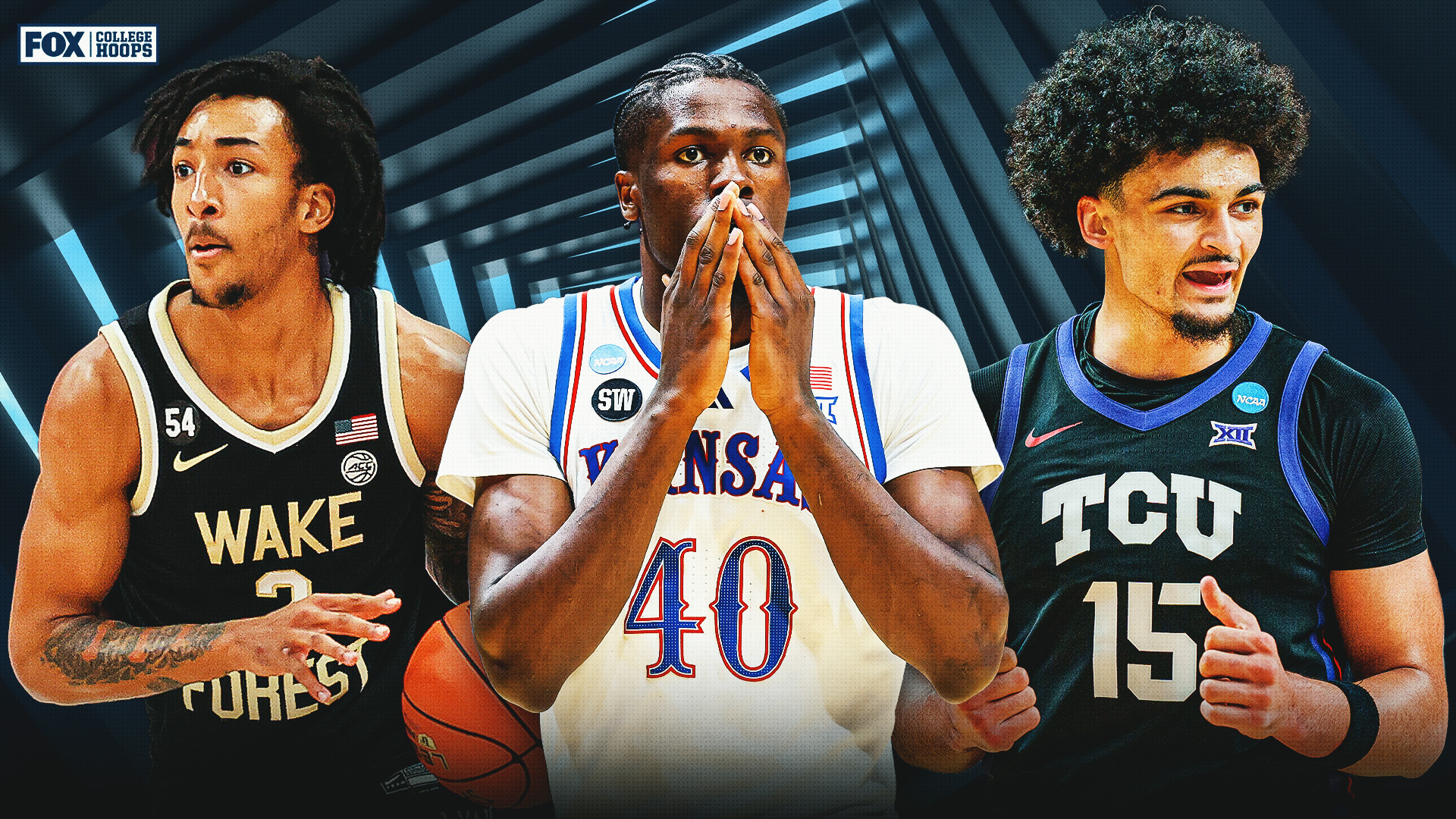
Shortly after the maize and blue confetti fell in celebration of Michigan’s win over UConn in the national championship game, college basketball’s transfer portal was officially opened.
According to reports, over 2,000 Division I men’s basketball players have already entered their names into the portal, which will be open for two weeks, from April 7 to April 21.
It’s a deep and talented pool of transfers who will have a significant impact on the outcome of the 2026-27 college basketball season.
We ranked the top 20 transfers to keep an eye on over the next two weeks as transfer decisions unfold.
Burton is a dual-threat scoring guard. He led the ACC in scoring with 21.3 points per game as a sophomore and then followed that up by averaging 18.5 points per game during his junior year at Notre Dame. After three seasons with the Fighting Irish, Burton enters the portal with one year of eligibility remaining.
Update: Burton has committed to play for Indiana.
Freeman is a budding star who can score at all three levels. He plays with a smoothness to his game, averaging 16.5 points and 7.2 rebounds per game en route to earning honorable mention All-ACC honors. He was a former five-star recruit in the 2024 high school class, but he has battled injuries throughout his first two seasons at Syracuse. Freeman has two years of eligibility remaining.
Update: Freeman has committed to play for St. John’s
Sherrell is a physical presence with a strong motor on the glass. He averaged 11.1 points and 6.2 rebounds in 23.9 minutes per game as a sophomore at Alabama. In a system that emphasized high-volume 3-point shooting, his full skill set wasn’t on display. With two years of eligibility remaining, he could emerge as a do-it-all forward in a different role.
Update: Sherrell has committed to play for Indiana.
Diop is an athletic big man, and at 7-foot-1, he’s a rim-protecting presence and a capable lob threat. He averaged 13.6 points and 2.1 blocks per game in his freshman season at Arizona State. He was born in Senegal and came to the United States from Spain before last season. At 21 years old, he has more experience than most rising sophomores.
Lewis is a dynamic guard whose game is built on getting into the lane and creating for himself and his teammates. One of the best finishers in the nation, he averaged 12.2 points and 5.3 assists per game while leading Villanova to the NCAA Tournament. Lewis has three years of eligibility remaining but has also entered his name into NBA Draft consideration and the transfer portal.
Update: Lewis has committed to play for Miami.
Cyril is an imposing paint presence on both sides of the ball. He’s an elite rim-protector and efficient pick-and-roll partner. He averaged 9.3 points and 2.2 blocks per game during his sophomore season at Georgia, while only playing 21.2 minutes per game. There’s room for a breakout if the playing time increases, and Cyril has two years of eligibility remaining to prove that.
Update: Cyril has committed to play for Miami (Fla.).
Nik Khamenia was one of five freshman who played heavy minutes for Duke this past season. (Photo by Mitchell Layton/Getty Images)
Khamenia is a versatile wing and former top-20 recruit whose role was limited on a loaded Duke roster as a freshman. He averaged 5.7 points and 3.3 rebounds in 19.8 minutes per game. With expanded opportunity, he’s a strong candidate to make a major leap as a sophomore.
Update: Khamenia has committed to play for UConn.
Hill is another elite-level shot maker, overcoming his 6-foot-3 stature with a decisive dribble and high-arcing release. He left his mark on the 2026 NCAA Tournament, knocking down a game-winning shot to lift No. 11 seed VCU over No. 6 seed North Carolina in the first round. Hill averaged 15.0 points per game, shooting 37% from 3-point range en route to earning A-10 Sixth Man of the Year honors. He provided an offensive punch off the bench for the Rams but is certainly a starting caliber player at the high-major level with two years of eligibility remaining.
Update: Hill has committed to play for Tennessee.
Byrd is a standout on both ends of the floor. He withdrew his name from the NBA Draft last year and returned to San Diego State, where he averaged 10.4 points and 4.7 assists per game along with 1.2 blocks and 1.9 steals per contest. He was one of the top defenders in the nation this past season, earning Mountain West Defensive Player of the Year honors.
Update: Byrd has committed to play for Providence.
Johnson is another go-to scoring guard. He separates himself with his ability to facilitate and initiate. He averaged 16.9 points and 3.0 assists per game, leading Colorado in scoring as a freshman while coming off the bench for the first half of the season. With three years of eligibility remaining, Johnson could emerge as the face of a program and the focal point offensively.
Update: Johnson has committed to play for Texas.
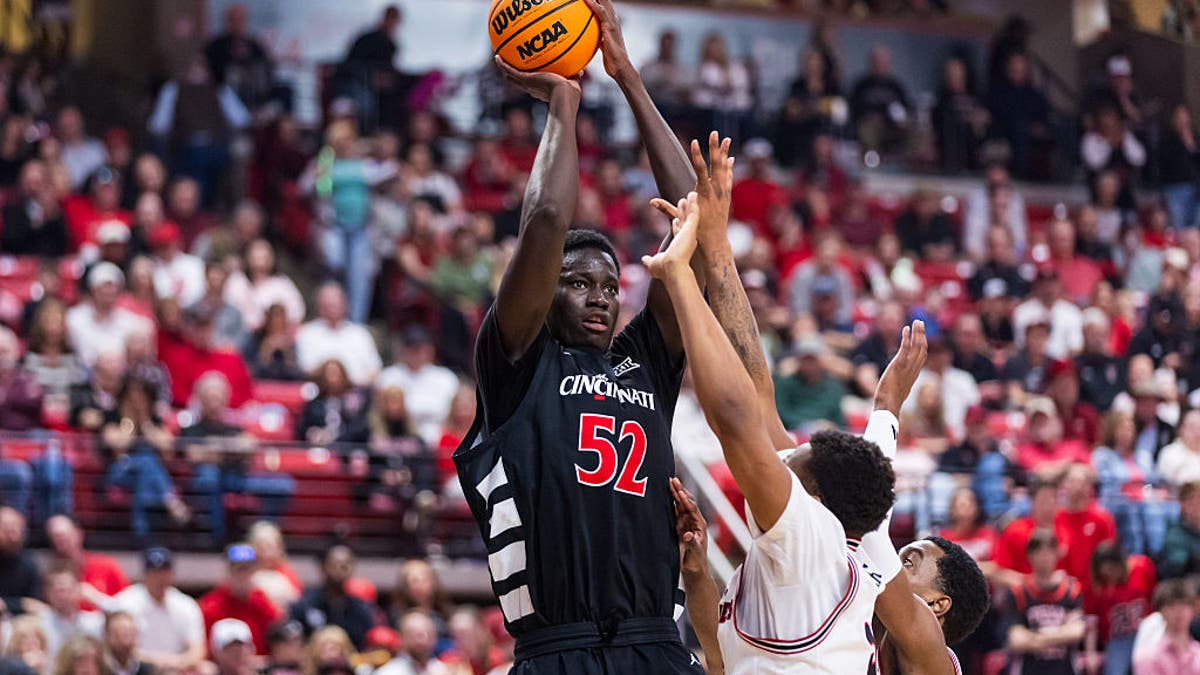
Moustapha Thiam was a significant part of Cincinnati’s late-season surge, averaging 17.7 points over the final nine games. (Photo by John E. Moore III/Getty Images)
Thiam is a crafty big man with a traditional back-to-the-basket game. He’s also an athletically-gifted defender, averaging a Big 12-best 2.6 blocks per game as a freshman at UCF and later helped Cincinnati finish 10th nationally in KenPom defensive efficiency. Entering his junior year, he’s a candidate to break out at his third program.
Vaaks is an elite perimeter shooter with good size, standing at 6-foot-7, which will allow him to consistently get his shot off no matter what level he plays at. He averaged 15.8 points per game while shooting 35% from 3-point range as a freshman at Providence. He started 14 of the final 15 games of the season, increasing his numbers to 18.0 points per game.
Update: Vaaks has committed to play for Illinois.
Shelstad is an offensive engine, creating for himself at all three levels while also facilitating for his teammates. His endless range, blinding speed and timely decision-making makes up for his size (6-foot). He earned All-Big Ten honors as a sophomore but only played 12 games during his junior year at Oregon before sustaining a season-ending hand injury. He averaged 15.6 points and 4.9 assists per game for the Ducks.
Update: Shelstad has committed to play for Louisville.
Murauskas is a three-level scorer. He uses his height to score inside, but is also a talented perimeter shooter both off the catch and dribble. He averaged 18.4 points and 7.6 rebounds per game in his junior season at Saint Mary’s. Murauskas started his college career at Arizona, then played two seasons with the Gaels, entering the portal after head coach Randy Bennett left for Arizona State.
Haggerty is a high-level shot taker and maker, averaging 23.6 points per game on 48.9% shooting at Kansas State this past season. He previously led the American Conference in scoring at Memphis in 2024–25.
Update: Haggerty has committed to play for Texas A&M.
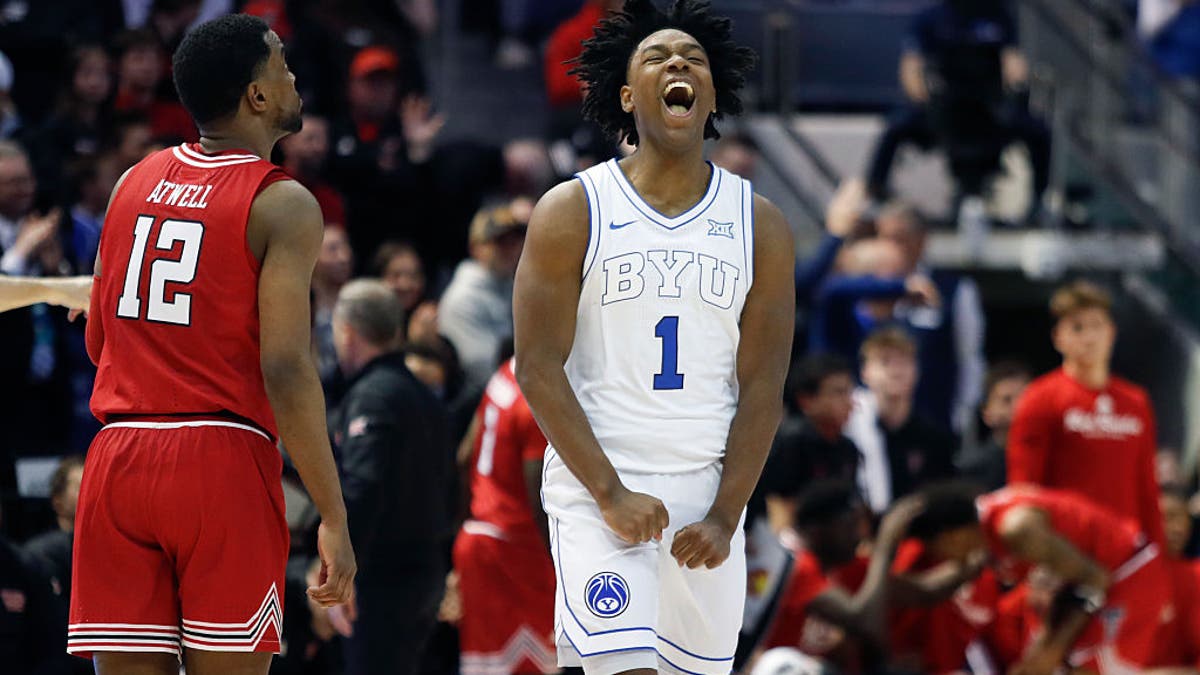
Robert Wright III has led two programs to the NCAA Tournament, and will seek a third school in the NCAA transfer portal. (Photo by Chris Gardner/Getty Images)
Wright plays a downhill, attacking style, always looking to penetrate the lane with his dribble to create for himself and his teammates. He averaged 18.1 points and 4.6 assists per game for BYU during his sophomore season. He also improved as a shooter, increasing his 3-point percentage from 35.2% to 41.0%. It will be Wright’s second consecutive offseason entering the transfer portal, as he went from Baylor to BYU and now will play for a third school in three years.
Update: Wright has returned to play for BYU.
Punch is a steady interior presence on both sides of the ball, with an especially-high IQ on offense. At 6-foot-7, 245 pounds, and without a 3-point shot in his arsenal, he’s undersized and might not fit every system. However, he averaged 14.1 points and 6.8 rebounds per game in his sophomore season at TCU.
Update: Punch has committed to play for Texas.
Harris averaged 21.4 points and 6.5 rebounds per game during his sophomore season at Wake Forest. He thrives in the mid-range, shooting 55.5% from inside the arc, but still has room to improve from the outside. Harris can be the lead scorer on a high-major team with two years of eligibility remaining.
Blackwell averaged 19.1 points per game during his junior season at Wisconsin. In his three seasons in Madison, the Badgers were unable to advance past the first weekend of the NCAA Tournament, so Blackwell is seeking a place to compete for his final season of eligibility.
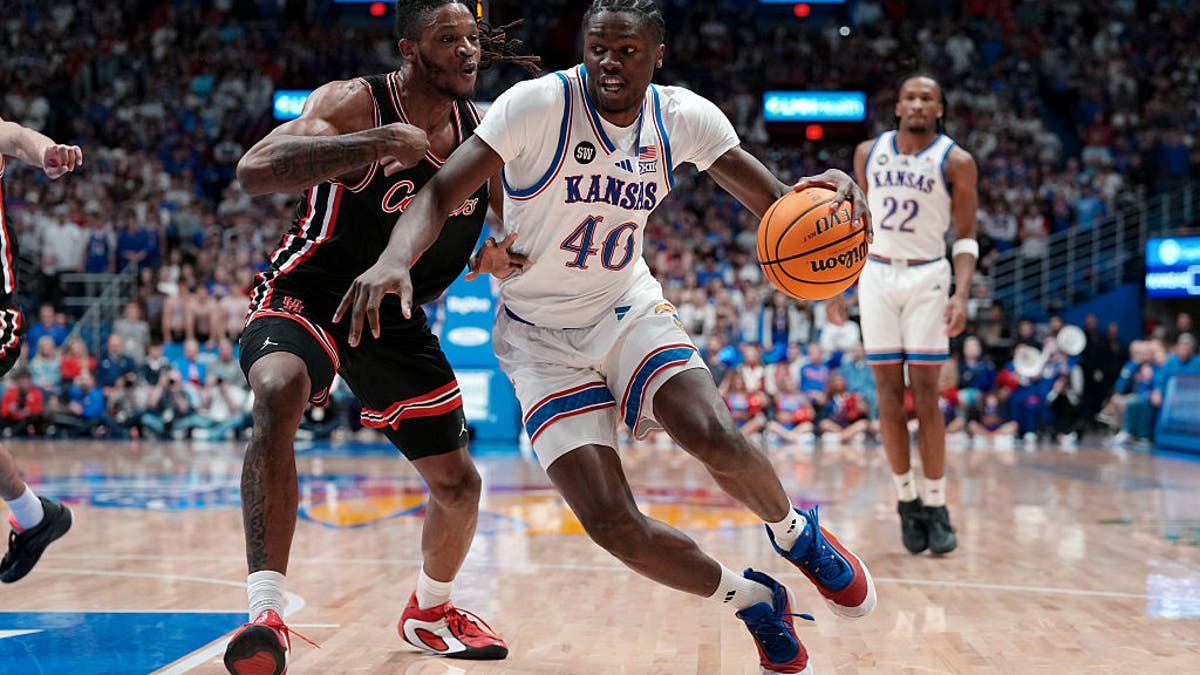
Flory Bidunga won Big 12 Defensive Player of the Year in his sophomore season at Kansas. (Photo by Ed Zurga/Getty Images)
Bidunga averaged 13.3 points and 2.6 blocks per game during his sophomore season at Kansas. His rim-protection prowess earned him Big 12 Defensive Player of the Year honors and a spot on the all-conference team. Bidunga entered his name into the NBA Draft, while keeping his portal options open.
Update: Bidunga has committed to play for Louisville.


Trump repeats call for Congress to rein in college sports

I was left with an £8,000 vet bill when my insurer cancelled my pet policy

Reese Witherspoon breaks silence after AI support controversy

-

 Fashion6 days ago
France’s LVMH Q1 revenue falls 6%, shows resilience amid Iran war
-

 Sports1 week ago
The case for Man United’s Fernandes as Premier League’s best
-

 Entertainment1 week ago
Palace left in shock as Prince William cancels grand ceremony
-
 Business1 week ago
UK could adopt EU single market rules under new legislation
-

 Entertainment6 days ago
Is Claude down? Here’s why users are seeing errors
-

 Fashion1 week ago
Energy emerges as biggest cost driver in textile margins
-
 Business1 week ago
Delta Air Lines unveils first new Delta One suite in premium cabin arms race
-

 Fashion1 week ago
Asia claims largest share of markets on Kearney FDI Confidence Index