

Sports
NHL’s holiday on ice amid balmy Miami’s swaying palm trees

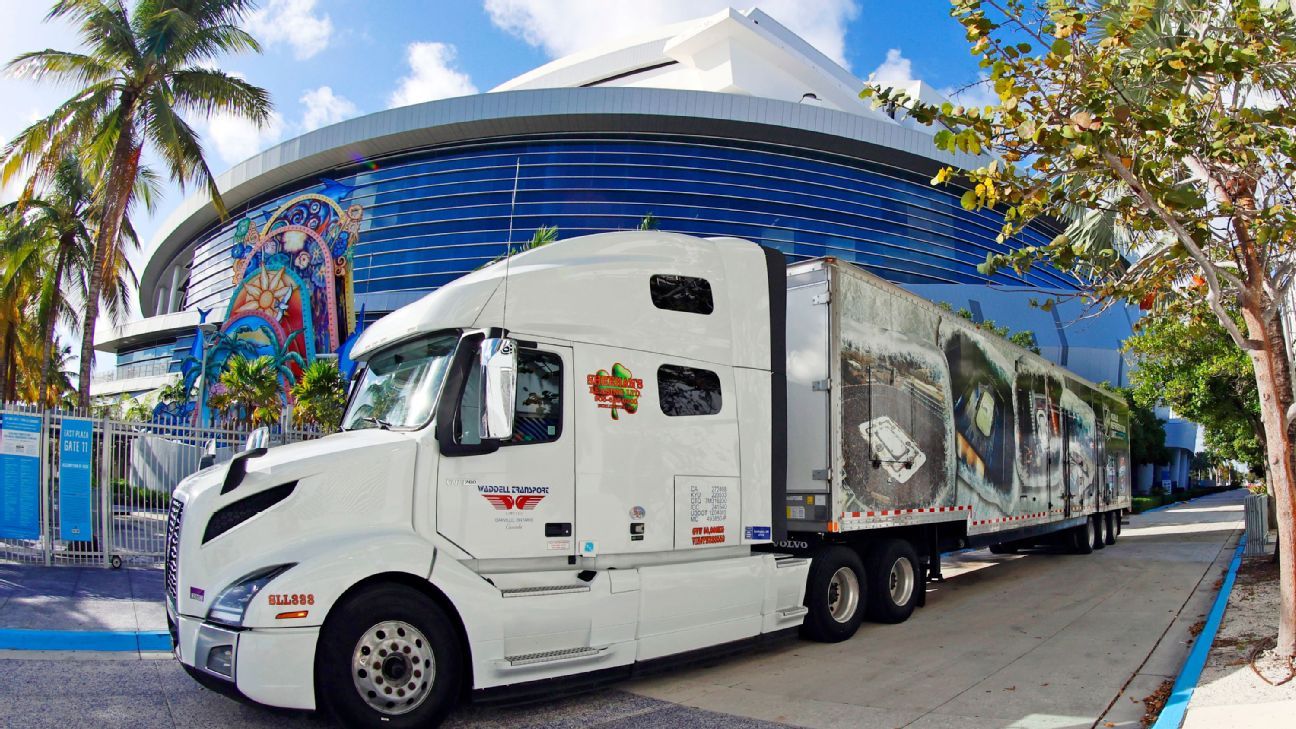
WHEN THE MIAMI MARLINS made a bid to host the NHL’s annual Winter Classic at their stadium, LoanDepot Park, they knew they would have to overcome one major obstacle in pitching the idea: Florida’s warm and sunny weather. Rather than ignore the obvious hurdle of hosting the league’s signature outdoor winter hockey event in the tropics, the team decided to go all in on the theme and submitted a proposal entitled “Miami Ice,” a play on the hit 1980s TV show “Miami Vice.”
“We’re not shy of the fact that this is in South Florida. I think that’s what makes this unique and novel,” said Anthony Favata, vice president of operations and events for the Marlins. “The vibrancy of the colors of South Beach, of the palm trees, and this juxtaposition of warm weather versus winter. So, we’re very much leaning into that.”
The big question was whether South Florida’s balmy weather and professional-quality ice hockey could peacefully coexist.
After years of discussions and multiple visits to LoanDepot Park, the league awarded the 2026 Winter Classic to the Marlins, confident that engineers could build an outdoor hockey rink in sunny Miami where the average temperature in January hovers around 70 degrees Fahrenheit.
Miami will likely have the warmest temperature at the 8 p.m. ET puck drop in the history of the Winter Classic, where the average temperature for all previous sites at puck drop was 33 degrees, but the league and Marlins say they have a plan to ensure the ice will be ready to go on game day. The game will air on TNT.
To build the rink, NHL engineers planned to use multiple generators, two 18-wheeler coolant trucks, approximately 20,000 gallons of water and round-the-clock care starting in mid-December. Compared to other outdoor rinks they’ve built in much colder climates, they said, this Miami build was easier to plan and execute.
The idea to hold a Winter Classic in Florida started years ago, according to Steve Mayer, president of NHL events and content. League officials first considered hosting an all-Florida franchise matchup between the Tampa Bay Lightning and Florida Panthers. Ultimately, officials said they decided two games were better than one and awarded the Winter Classic to the Panthers, who will play the New York Rangers in Miami on Friday, and the Stadium Series to the Lightning, who will play the Boston Bruins at Raymond James Stadium in Tampa on Feb. 1.
Mayer described it with a “Field of Dreams” analogy. “This is an incredible sports story where you can go into a place that has never really participated [in hockey], never really been exposed to a sport, and then build it and they will come,” Mayer said, adding that filling a single arena would be an achievement. “And now we’re filling two stadiums that are huge, just full of Panther fans and Lightning fans.”
Mayer called Florida the new “hotbed of hockey.” A Florida team has played in the last six Stanley Cup Final series. The Panthers are the reigning back-to-back champions, having won in 2024 and 2025. The Lightning won back-to-back titles in 2020 and 2021. Additionally, league officials say youth hockey participation rates had increased by 212% since the NHL first expanded into Florida in the 1990s, and for the seventh straight season, there are at least eight Florida-born players playing in the league. Fifteen years ago, there had never been more than two players in the same season from the state.
LOANDEPOT PARK’S retractable roof, which will help control the conditions until game day, is a major reason why Florida’s heat isn’t such a big concern, event planners told ESPN.
“The greatest enemy of the ice is wind and sun,” said Jorge Pinoncély, of Industrial Frigo, a winter entertainment company that has built more than 500 outdoor ice rinks in the U.S. and is unaffiliated with the NHL.
The evening start time means direct sunlight won’t be a concern once the roof is retracted. But Pinoncély cautioned that wind could be an issue.
University of Miami atmospheric sciences professor Paquita Zuidema likened the effects of wind on an ice rink to a block of ice sitting in a backyard.
“The ice will be constantly cooling the air above it,” helping keep the surface temperature low, Zuidema said. But wind “will keep removing that cold pool of air. So the ice will need to work harder to cool off that air layer.”
The optimum temperature for ice level — the pocket of air above the ice and inside the glass — on game day is approximately 60 degrees, said Derek King, the NHL’s vice president of facilities and hockey operations.
“Inside the glass is really important. We know, though, that we don’t have a lot of control over that,” he said. “So we’ll make that [ice] sheet as cold as we can to kind of control that area, and then we’ll monitor our temperatures.”
The league refined the process of building a rink with each of the 43 outdoor games held since 2003. From start to finish, it takes two weeks and about 100 people to create the Winter Classic’s on-field build out of the hockey rink, but only 24 for the ice crew according to King.
Work began as soon as the NHL’s two 18-wheeler mobile refrigeration units arrived at LoanDepot Park from Canada, where they are stored. In cold-weather builds such as Chicago or Minneapolis, the NHL typically needs just one mobile refrigeration unit, but for Miami the league needed two.
Workers ran pipes that carried a mixture of 40% glycol and 60% water from the refrigeration trucks to the baseball field. At the same time, they prepped the field by covering approximately 80% of it with an armored subfloor before building a stage for the rink. Staff used the closed roof to help keep the indoor temperature controlled to 60 degrees.
With the foundation complete, workers laid down aluminum panels that connect to the pipes channeling the glycol mix. That mix has a freezing temperature lower than water and allows the metal plates to get colder than the 32 degrees needed to freeze water.
It typically takes four to five days to lay the pipes and build the foundation, rink and boards, according to King. Next comes a process where workers use ice and water to fill gaps — much like grouting between tiles — to create the smoothest-possible surface.
From there, teams finally begin to make the ice by slowly spraying the rink with water over the course of several days, gradually building the sheet of ice to get to an eventual game-time thickness of 2 to 2.5 inches and a surface temperature of 25 degrees.
During this process, they paint the rink white and add logos and lines before the top layer of ice is added.
Once completed in Miami, the Panthers and Rangers got practice time. The league planned to use any remaining time left to work out any kinks and make sure the ice was ready for Friday’s game day.
BY “TAKING MOTHER NATURE out of the equation,” King said, the build can be easier compared to colder venues such as Nashville in 2022, when rain created more than 4 inches of ice by game day, or during the 2025 Stadium Series in Columbus, where wind and snow interrupted the build.
But warmer venues aren’t hazard-free. Six days before the 2020 Winter Classic at the Cotton Bowl in Dallas, heavy rain and warm weather melted the ice, forcing workers to restart the layering process.
When the league finally opens the roof in Miami, King said his team will be prepared to adapt to weather conditions.
“We just need to look at how we deal with the ice on game day. Are we going to limit the amount of time we’re going to flood? Are we going to shave off more ice and kind of deal with what we know we can deal with?” King said. “So control stuff we can control and really let Mother Nature set in.”
But King admits there was one unusual challenge for his team ahead of the warm weather build: what to wear.
“We’re not all bundled up in heavy coats and stuff like that, trying to stay warm,” said King, who is based in Canada and looked forward to the T-shirt weather of Florida. “We’ve all had to kind of rethink our outfitting for this build because we’re going to be in Miami.”

WASHINGTON — President Donald Trump on Tuesday repeated his call for Congress to pass legislation that would rein in college sports at a time athletes are allowed to move freely from school to school and command salaries that put athletic departments in financial peril.
Trump’s remarks came at a White House event honoring some 100 athletes from seven teams that won NCAA championships in 2025.
Trump this month signed an executive order that would limit eligibility to five years, allow one transfer without penalty for undergraduates, stop pay-for-play schemes and build in protections for women’s and Olympic sports.
Aspects of the executive order might not withstand legal scrutiny, which is why Trump and some college sports stakeholders are asking for federal legislation that would codify restrictions and grant the NCAA an antitrust exemption to enforce rules.
Dozens of athletes have challenged NCAA eligibility rules with the hope of extending their college careers and, in turn, their ability to earn money through name, image and likeness deals. He said it’s unfair for athletes right out of high school to compete against 28- or 29-year-olds.
“It’s a very precarious position the courts have left us in,” Trump said, adding that the 2025 settlement of House v. the NCAA created a professional model that has led to financial instability for colleges. “And now it’s a total and complete mess. But we’re going to get it fixed up and we’ve got fantastic people doing it. So we need now Congress to act to clear up the confusion created by the courts and institute permanent reforms to protect college sports at every level, especially some sports.”
The national championship teams honored were Oklahoma State in men’s golf, Texas A&M in women’s volleyball, Wake Forest in men’s tennis, Georgia in women’s tennis, Youngstown State in women’s bowling, Florida State in women’s soccer and West Virginia in mixed rifle.
“Seventy-five percent of Olympians competing for Team USA played as college athletes,” Trump said. “If we don’t straighten out this, we’re not going to have much of an Olympic team because you have so many of these sports, especially certain sports where it’s like the minor leagues, call it the major leagues, whatever you want. But we’ve trained unbelievable athletes to go in and win the gold medal. Without college sports and without your ability to go into college sports and compete and learn how to play and get better, we’re not going to have much of an Olympic team anymore.”
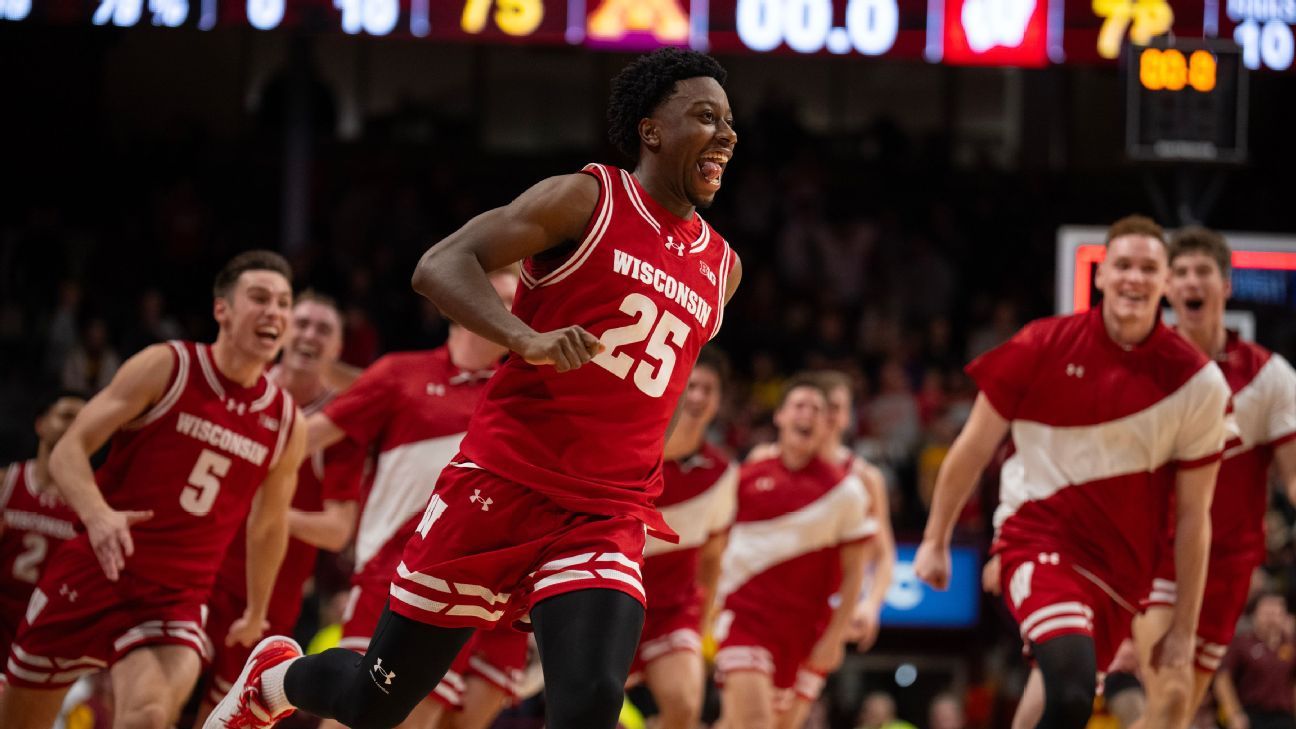
Wisconsin transfer John Blackwell has committed to Duke, he told ESPN on Tuesday.
Blackwell, who visited Duke on Monday, was the best guard to enter the transfer portal this spring.
“It just felt right,” Blackwell told ESPN. “It felt like the right situation for me. I just connected with Coach [Jon Scheyer] on a different level. We built a connection in these past weeks of just talking to him and him selling why Duke is the right spot for me. Me taking this visit was just confirmation on why I should be at Duke.”
Blackwell, a 6-foot-4 guard, earned third-team All-Big Ten honors this past season after averaging a career-high 19.1 points, 5.1 rebounds and 2.3 assists, shooting nearly 39% from 3-point range.
He was at his best in the postseason. Blackwell had 34 points and 10 rebounds in the third round of the Big Ten tournament against Washington, following it with 31 points on 9-for-17 shooting in an overtime win over Illinois. While Wisconsin was upset by 12-seed High Point in the first round of the men’s NCAA tournament, Blackwell finished with 22 points and 10 rebounds against the Panthers.
Blackwell, who is represented by Todd Ramasar and Alexis Liatsos at Life Sports Agency, will have the opportunity to carry that momentum over to Duke.
“Their pitch to me was, come here, have freedom,” Blackwell said. “You can come here and be a draft pick, and that’s always my dream. Come here and help us win a national championship. Those are just things I love to hear. I love the campus, I love the people surrounding Duke. That’s why I made my choice to be a Blue Devil.”
Blackwell, who is still going through the NBA draft process, is joining a backcourt that includes returnees Caleb Foster (8.3 PPG) and Cayden Boozer (7.7 PPG), as well as five-star recruit Deron Rippey Jr. The junior guard said when he entered the portal that he wants to show more on-ball responsibility, meaning Scheyer will have plenty of options as playmakers next season.
“They have four PGs. I would consider myself a point guard,” Blackwell said. “We’re just going to push each other everyday. [When you] have a deep backcourt like we’re going to have, it’s going to be a matchup nightmare for teams. I’m just so excited to play with those guys and challenge those guys. And they challenge me every single day.”
Scheyer has been reloading his roster since last month’s Elite Eight loss to UConn. Projected top-five pick Cameron Boozer is out the door, with projected first-rounder Isaiah Evans expected to follow. Maliq Brown is out of eligibility and freshman Nikolas Khamenia entered the portal and transferred to UConn.
But Duke received positive news on Monday with the return of honorable mention All-ACC big man Patrick Ngongba II, while Cayden Boozer, Foster and potentially Dame Sarr are also likely to return to Durham.
The Blue Devils are also bringing in the nation’s top-ranked recruiting class, led by three top-25 seniors, and added Belmont transfer Drew Scharnowski this past weekend.
But Scheyer desperately needed a high-level scorer to round out his roster, an experienced bucket-getter to lead the offense. And he landed the best one on the market in Blackwell.
“Their track record with producing pros definitely played a part in it,” he said. “Not so much with them producing pros, but them developing pros. I don’t think at any other school, there’s only a few, where you can get that certain level of development. That’s major for me.”
NEWYou can now listen to Fox News articles!
Shortly after the maize and blue confetti fell in celebration of Michigan’s win over UConn in the national championship game, college basketball’s transfer portal was officially opened.
According to reports, over 2,000 Division I men’s basketball players have already entered their names into the portal, which will be open for two weeks, from April 7 to April 21.
It’s a deep and talented pool of transfers who will have a significant impact on the outcome of the 2026-27 college basketball season.
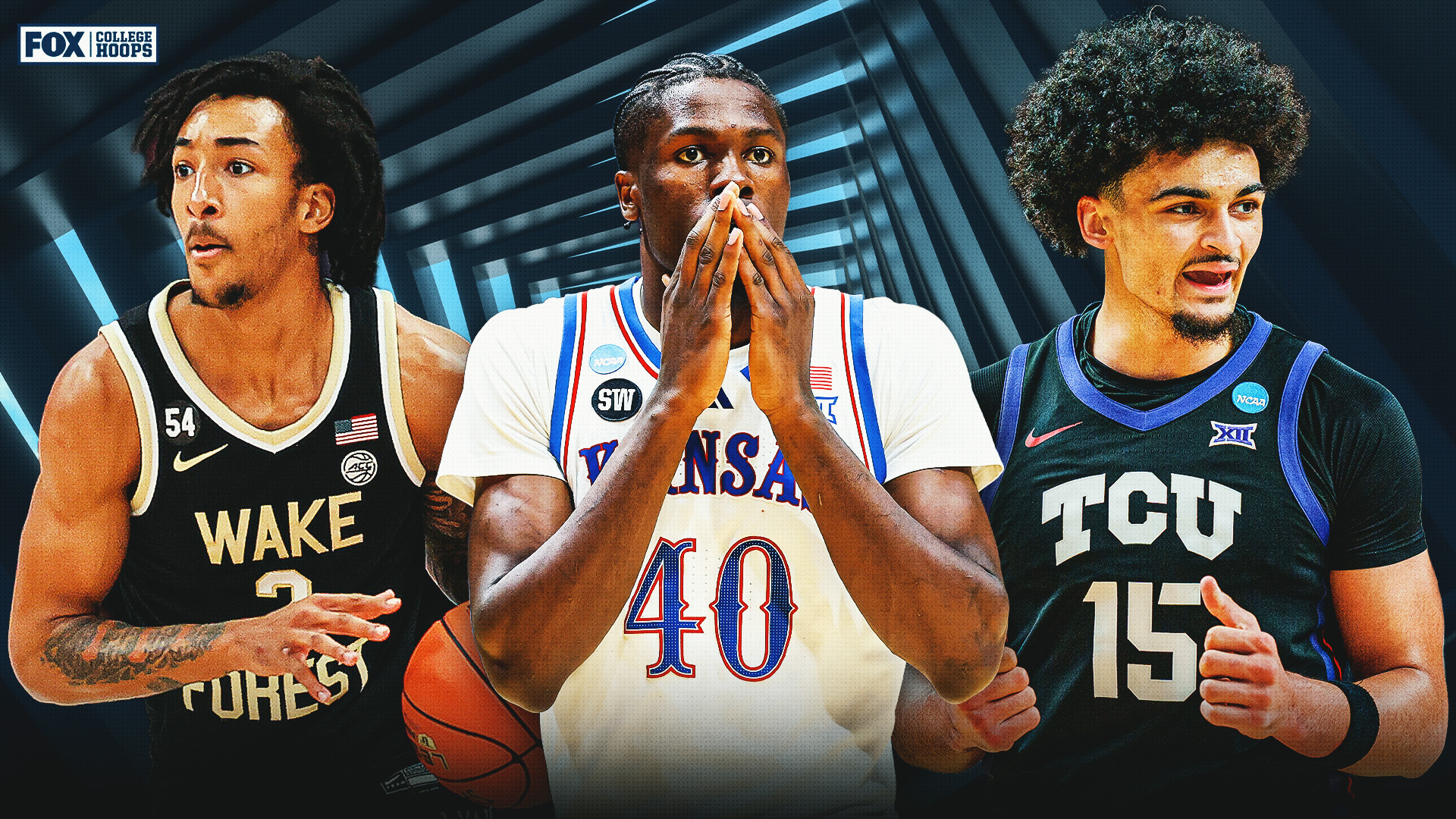
We ranked the top 20 transfers to keep an eye on over the next two weeks as transfer decisions unfold.
Burton is a dual-threat scoring guard. He led the ACC in scoring with 21.3 points per game as a sophomore and then followed that up by averaging 18.5 points per game during his junior year at Notre Dame. After three seasons with the Fighting Irish, Burton enters the portal with one year of eligibility remaining.
Update: Burton has committed to play for Indiana.
Freeman is a budding star who can score at all three levels. He plays with a smoothness to his game, averaging 16.5 points and 7.2 rebounds per game en route to earning honorable mention All-ACC honors. He was a former five-star recruit in the 2024 high school class, but he has battled injuries throughout his first two seasons at Syracuse. Freeman has two years of eligibility remaining.
Update: Freeman has committed to play for St. John’s
Sherrell is a physical presence with a strong motor on the glass. He averaged 11.1 points and 6.2 rebounds in 23.9 minutes per game as a sophomore at Alabama. In a system that emphasized high-volume 3-point shooting, his full skill set wasn’t on display. With two years of eligibility remaining, he could emerge as a do-it-all forward in a different role.
Update: Sherrell has committed to play for Indiana.
Diop is an athletic big man, and at 7-foot-1, he’s a rim-protecting presence and a capable lob threat. He averaged 13.6 points and 2.1 blocks per game in his freshman season at Arizona State. He was born in Senegal and came to the United States from Spain before last season. At 21 years old, he has more experience than most rising sophomores.
Lewis is a dynamic guard whose game is built on getting into the lane and creating for himself and his teammates. One of the best finishers in the nation, he averaged 12.2 points and 5.3 assists per game while leading Villanova to the NCAA Tournament. Lewis has three years of eligibility remaining but has also entered his name into NBA Draft consideration and the transfer portal.
Update: Lewis has committed to play for Miami.
Cyril is an imposing paint presence on both sides of the ball. He’s an elite rim-protector and efficient pick-and-roll partner. He averaged 9.3 points and 2.2 blocks per game during his sophomore season at Georgia, while only playing 21.2 minutes per game. There’s room for a breakout if the playing time increases, and Cyril has two years of eligibility remaining to prove that.
Update: Cyril has committed to play for Miami (Fla.).
Nik Khamenia was one of five freshman who played heavy minutes for Duke this past season. (Photo by Mitchell Layton/Getty Images)
Khamenia is a versatile wing and former top-20 recruit whose role was limited on a loaded Duke roster as a freshman. He averaged 5.7 points and 3.3 rebounds in 19.8 minutes per game. With expanded opportunity, he’s a strong candidate to make a major leap as a sophomore.
Update: Khamenia has committed to play for UConn.
Hill is another elite-level shot maker, overcoming his 6-foot-3 stature with a decisive dribble and high-arcing release. He left his mark on the 2026 NCAA Tournament, knocking down a game-winning shot to lift No. 11 seed VCU over No. 6 seed North Carolina in the first round. Hill averaged 15.0 points per game, shooting 37% from 3-point range en route to earning A-10 Sixth Man of the Year honors. He provided an offensive punch off the bench for the Rams but is certainly a starting caliber player at the high-major level with two years of eligibility remaining.
Update: Hill has committed to play for Tennessee.
Byrd is a standout on both ends of the floor. He withdrew his name from the NBA Draft last year and returned to San Diego State, where he averaged 10.4 points and 4.7 assists per game along with 1.2 blocks and 1.9 steals per contest. He was one of the top defenders in the nation this past season, earning Mountain West Defensive Player of the Year honors.
Update: Byrd has committed to play for Providence.
Johnson is another go-to scoring guard. He separates himself with his ability to facilitate and initiate. He averaged 16.9 points and 3.0 assists per game, leading Colorado in scoring as a freshman while coming off the bench for the first half of the season. With three years of eligibility remaining, Johnson could emerge as the face of a program and the focal point offensively.
Update: Johnson has committed to play for Texas.
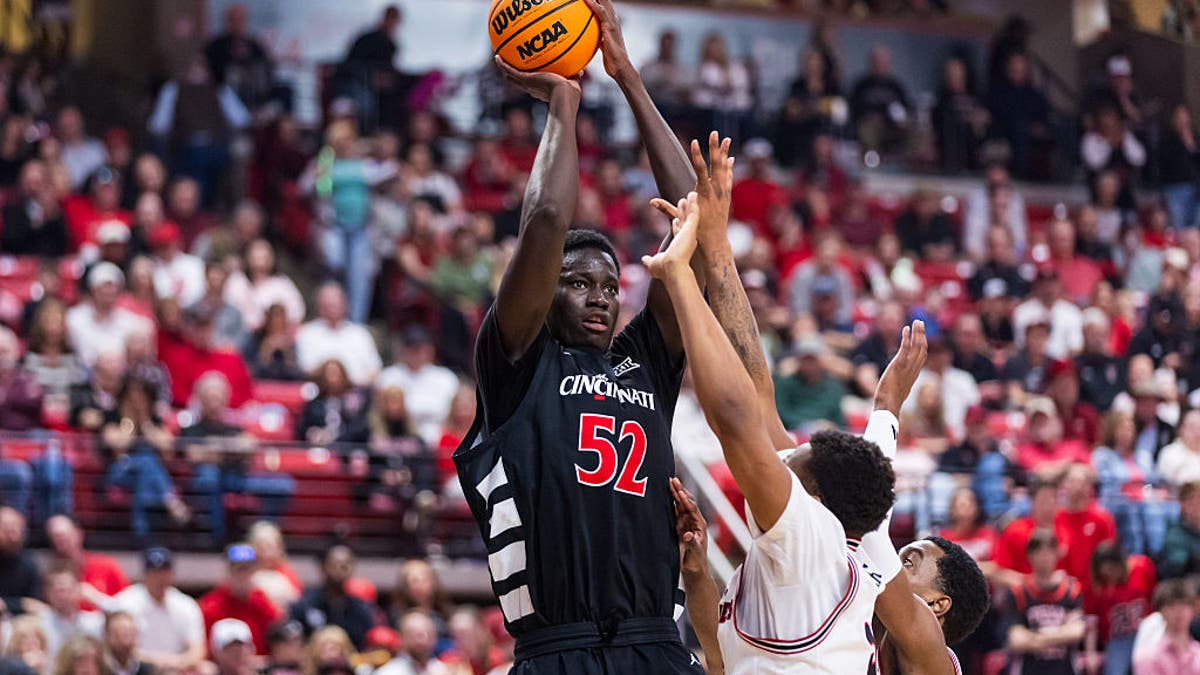
Moustapha Thiam was a significant part of Cincinnati’s late-season surge, averaging 17.7 points over the final nine games. (Photo by John E. Moore III/Getty Images)
Thiam is a crafty big man with a traditional back-to-the-basket game. He’s also an athletically-gifted defender, averaging a Big 12-best 2.6 blocks per game as a freshman at UCF and later helped Cincinnati finish 10th nationally in KenPom defensive efficiency. Entering his junior year, he’s a candidate to break out at his third program.
Vaaks is an elite perimeter shooter with good size, standing at 6-foot-7, which will allow him to consistently get his shot off no matter what level he plays at. He averaged 15.8 points per game while shooting 35% from 3-point range as a freshman at Providence. He started 14 of the final 15 games of the season, increasing his numbers to 18.0 points per game.
Update: Vaaks has committed to play for Illinois.
Shelstad is an offensive engine, creating for himself at all three levels while also facilitating for his teammates. His endless range, blinding speed and timely decision-making makes up for his size (6-foot). He earned All-Big Ten honors as a sophomore but only played 12 games during his junior year at Oregon before sustaining a season-ending hand injury. He averaged 15.6 points and 4.9 assists per game for the Ducks.
Update: Shelstad has committed to play for Louisville.
Murauskas is a three-level scorer. He uses his height to score inside, but is also a talented perimeter shooter both off the catch and dribble. He averaged 18.4 points and 7.6 rebounds per game in his junior season at Saint Mary’s. Murauskas started his college career at Arizona, then played two seasons with the Gaels, entering the portal after head coach Randy Bennett left for Arizona State.
Haggerty is a high-level shot taker and maker, averaging 23.6 points per game on 48.9% shooting at Kansas State this past season. He previously led the American Conference in scoring at Memphis in 2024–25.
Update: Haggerty has committed to play for Texas A&M.
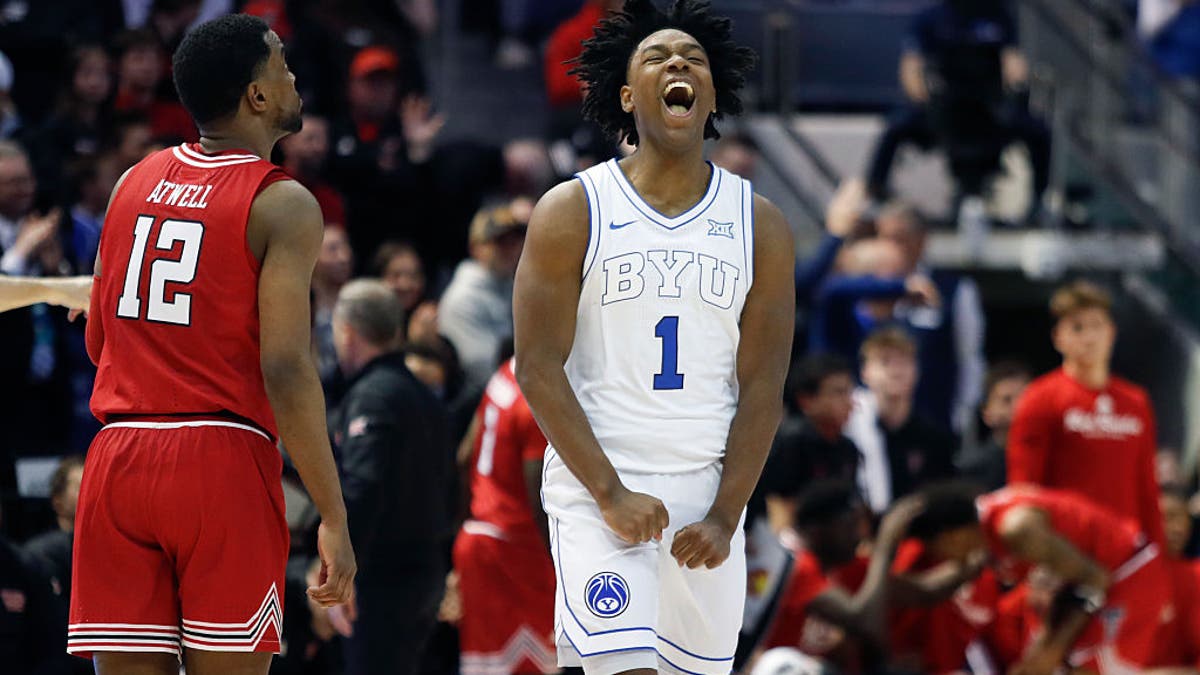
Robert Wright III has led two programs to the NCAA Tournament, and will seek a third school in the NCAA transfer portal. (Photo by Chris Gardner/Getty Images)
Wright plays a downhill, attacking style, always looking to penetrate the lane with his dribble to create for himself and his teammates. He averaged 18.1 points and 4.6 assists per game for BYU during his sophomore season. He also improved as a shooter, increasing his 3-point percentage from 35.2% to 41.0%. It will be Wright’s second consecutive offseason entering the transfer portal, as he went from Baylor to BYU and now will play for a third school in three years.
Update: Wright has returned to play for BYU.
Punch is a steady interior presence on both sides of the ball, with an especially-high IQ on offense. At 6-foot-7, 245 pounds, and without a 3-point shot in his arsenal, he’s undersized and might not fit every system. However, he averaged 14.1 points and 6.8 rebounds per game in his sophomore season at TCU.
Update: Punch has committed to play for Texas.
Harris averaged 21.4 points and 6.5 rebounds per game during his sophomore season at Wake Forest. He thrives in the mid-range, shooting 55.5% from inside the arc, but still has room to improve from the outside. Harris can be the lead scorer on a high-major team with two years of eligibility remaining.
Blackwell averaged 19.1 points per game during his junior season at Wisconsin. In his three seasons in Madison, the Badgers were unable to advance past the first weekend of the NCAA Tournament, so Blackwell is seeking a place to compete for his final season of eligibility.
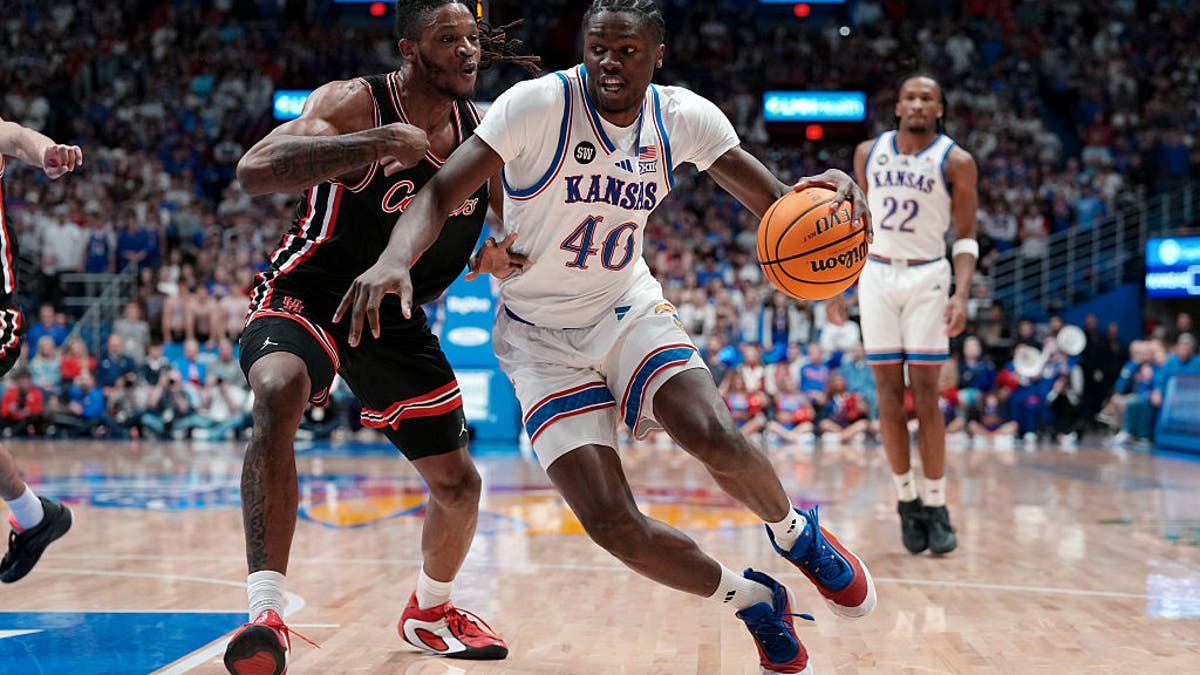
Flory Bidunga won Big 12 Defensive Player of the Year in his sophomore season at Kansas. (Photo by Ed Zurga/Getty Images)
Bidunga averaged 13.3 points and 2.6 blocks per game during his sophomore season at Kansas. His rim-protection prowess earned him Big 12 Defensive Player of the Year honors and a spot on the all-conference team. Bidunga entered his name into the NBA Draft, while keeping his portal options open.
Update: Bidunga has committed to play for Louisville.


Trump repeats call for Congress to rein in college sports

I was left with an £8,000 vet bill when my insurer cancelled my pet policy

Reese Witherspoon breaks silence after AI support controversy

-

 Fashion6 days ago
France’s LVMH Q1 revenue falls 6%, shows resilience amid Iran war
-

 Sports1 week ago
The case for Man United’s Fernandes as Premier League’s best
-

 Entertainment1 week ago
Palace left in shock as Prince William cancels grand ceremony
-
 Business1 week ago
UK could adopt EU single market rules under new legislation
-

 Entertainment6 days ago
Is Claude down? Here’s why users are seeing errors
-

 Fashion1 week ago
Energy emerges as biggest cost driver in textile margins
-
 Business1 week ago
Delta Air Lines unveils first new Delta One suite in premium cabin arms race
-

 Fashion1 week ago
Asia claims largest share of markets on Kearney FDI Confidence Index