

Business
Behind the mesh curtain: Why airline class wars will intensify in 2026


Planes line up on the tarmac at LaGuardia Airport on November 10, 2025 in New York City.
Spencer Platt | Getty Images News | Getty Images
From Spirit Airlines‘ fight for survival to American Airlines‘ planned glow-up, from new international routes and brand-new airport lounges to stingier frequent flyer policies, class divides in the sky will intensify in 2026.
Airlines went into 2025 upbeat: Delta Air Lines CEO Ed Bastian forecast a record year for the century-old carrier. But concerns about President Donald Trump’s trade war, skittish consumers and an oversupply of domestic seats brought U.S. airfare down and weighed on industry profits.
“It’s the airline version of the K-shaped economy. Monetize the top of the K and minimize the shortfall at the bottom,” said Robert Mann, who has worked at several airlines and is president of aviation consulting firm R.W. Mann & Co.
Now, the leaders of the country’s biggest airlines are putting even more focus on customers who will pay extra for their tickets in exchange for a little more space or other perks like earlier boarding and access to never-sufficient overhead bin space.
The view into American Airlines first-class cabin on a Boeing 737.
Leslie Josephs/CNBC
They still face continued problems, like a shortage of air traffic controllers and aging infrastructure. Despite billions of additional federal spending to fix some of the problems, major improvements will take years.
Mann said airlines need to do more to improve reliability. U.S. carriers had a 77% on-time rate, according to the Department of Transportation, which defines on-time as arrival within 15 minutes of the schedule.
“When the flight is late or canceled, it doesn’t matter if you’re at the top of the K or the bottom of the K,” he said.
Here’s how the next year is shaping up for the airline industry:
Winners take (almost) all
Through the first nine months of the year, Delta and United Airlines accounted for nearly all of U.S. airline profits.
It’s an industry divide that’s been brewing for years, further fueled by a surge in costs and shifting consumer tastes as wealthier travelers have increased their share of overall spending.
While the economy has been resilient for the most part, any weakening in 2026 could have an outsize effect on more price-sensitive consumers and, therefore, airlines that are more exposed to coach-class domestic travel, like lower-cost carriers.
Those airlines have been making moves of their own. JetBlue Airways, for example, has been shifting its focus to more profitable routes and premium seats. It plans to debut a domestic business class in mid-2026 with seats up at the front of the cabin that are roomier but not quite as elaborate as its top-tier lie-flat Mint suites.
Stable fares
Airfare will likely remain steady next year over 2025, according to an American Express Global Business Travel forecast in mid-November.
Demand has rebounded after dropping during a record-long government shutdown, but it’s not clear whether 2026 will be a blockbuster.
Southwest Airlines CEO Bob Jordan told CNBC in December that the “first quarter looks strong” but that “it’s hard to say,” whether it will be better than a year ago.
Whither Spirit
Struggling budget travel icon Spirit Airlines is in its second bankruptcy in less than a year after a court-blocked acquisition by JetBlue, an engine grounding, a surge in costs and other problems, raising questions about its ability to survive.
Industry insiders and airline analysts have said the yellow-plane airline will have to make much bigger moves with this bankruptcy.
“We do not expect it to remain a standalone company this time next year, with a merger or Chapter 7 outcome likely to drive upside to our earnings forecast,” said a Raymond James note on Dec. 19.
Analysts expect that merger partner would be Frontier Airlines, the fellow budget airline that has attempted to combine with Spirit repeatedly since 2022, but it’s not clear whether the two sides will reach a deal. Spirit said earlier this month that it’s in “active negotiations” for a stand-alone reorganization or a transaction. Frontier and Spirit declined to comment further.
Southwest transformed
Southwest’s preparing for a major change in 2026. The airline’s decades-long cattle call will end on Jan. 27 when assigned seating begins.
It’s coming off a slew of changes it already put into place last year. It debuted extra legroom seats that command higher prices and started charging many customers to check bags for the first time, a service that brought in more than $7 billion for its U.S. rivals in 2024, the last full year of available data, according to the Transportation Department.
The carrier’s stock is the top gainer of U.S. passenger airlines. Southwest shares rose nearly 23% in 2025 compared with the NYSE Arca Airline Index’s 5% advance, and beat out profit leaders Delta and United as well as the broader market.
Investors have been bullish on the company’s transformation to a more traditional, segmented airline, which has been sped along by a stake from activist investor Elliott Investment Management.
American makeover
American is expanding its lounges and launching a fleet of Airbus 321XLR planes in 2026 as it aims to catch up in the luxury travel boom. Free inflight Wi-Fi is also coming for loyalty program members starting in January, American said last spring.
The airline already made more minor changes, like adding Lavazza coffee for all its passengers and Champagne Bollinger for its top-tier lounges and cabins, to uplift its brand as well, but it has a long path to reach Delta’s and United’s profitability.
American Airlines and Delta planes on the tarmac at LaGuardia Airport (LGA) in the Queens borough of New York, US, on Friday, Nov. 7, 2025.
Michael Nagle | Bloomberg | Getty Images
Just before Christmas, American also announced that it will no longer award customers on its no-frills basic economy tickets with frequent flyer miles, following a similar move by Delta several years ago.
American hasn’t yet announced changes to its elite status requirements for 2027, but the carrier is under pressure because Delta and United have said they will hold status thresholds steady.
The airline is also making some changes that aim to improve reliability, recently announcing it will increase so-called banks, or clusters of flights at its largest hub, Dallas Fort Worth International Airport, from nine to 13.
American also said it is testing out two electronic gates there, where passengers on narrow-body domestic flights scan their own boarding passes, in hopes of getting travelers on planes faster, and in September, it said it will remove bag sizers from gates.






Citigroup initiated its coverage of Pine Labs with a buy rating and a target price of Rs 235. Analysts said that India’s payments fintech is on a monetization improvement trajectory, with leading players increasingly entrenched in respective core areas of leadership. While product, services and distribution build-outs into comprehensive plays will continue across the fintech ecosystem, large players don’t face significant disruption risks owing to: Across-the-board profitability push; rising regulatory costs and compliance requirements; and stickiness borne out of integration into enterprise business workflows. Further, while consumer payments have seen flux in competitive positioning in the past decade, there have been relatively fewer changes in positioning and leadership within segments in merchant payments.BoFA Securities has initiated its coverage of Groww (Billionbrains Garage Ventures) with a buy rating and a target price of Rs 235. Analysts said Groww is well positioned to capitalize on India’s retail investing tailwinds and they expect compounded annual growth rate (CAGR) for revenue at 30% over FY26-FY28. The company produces best-in-class profitability with further upside from operating leverage. Analysts have valued Groww at 39x FY28E price-to-earnings. They, however, said that the near-term risks for the stock are a weak capital market performance and the expiry of the six-month lock-in of shares post-IPO.Elara Capital initiated its coverage of Jindal Saw with a buy rating and a target price of Rs 280. Analysts said earnings recovery is expected over FY27–FY28, driven by water, and oil & gas demand. The company’s order book is at an all-time high, indicating strong visibility. They also feel Jal Jeevan Mission spending revival to drive domestic pipe demand, while the global pipeline capex is supported by energy security concerns. Analysts also pointed out that exports are rising, with diversification reducing dependence on domestic capex. The company’s capacity expansion to support margins and operating leverage. They feel the stock’s valuations are attractive, with rerating potential driven by execution and growth.Jefferies has downgraded Indus Towers to underperform from buy with a target price cut to Rs 375 from Rs 530. Analysts downgrade the stock due to site-renewal risks bunched up over second half of 2026 (H2CY26) and first half of 2027 (H1CY27) which could impact revenues and growth. Elevated capex levels due to higher growth and maintenance capex which will impact earnings growth as well free cash flow and payouts. They cut Indus Towers’ revenue and profit after tax (PAT) estimates by 2-6% to factor renewal risks post which stock offers 3% EPS growth and a 4% yield. They said risks on growth outlook should weigh on re-rating potential too.Kotak Institutional Equities has a buy on Ujjivan SFB with a target price of Rs 72. Analysts said that the RBI has returned Ujjivan SFB’s application for a universal bank license, citing need for further loan portfolio diversification. While the outcome is clearly not favourable, the regulator has flagged no concerns relating to governance, compliance or operational soundness. Analysts said their investment thesis did not factor in any benefit from a potential transition to a universal bank. Hence, they maintained a buy but remained watchful of any sharp changes in asset mix strategy in response to RBI’s feedback.(Disclaimer: Recommendations and views on the stock market, other asset classes or personal finance management tips given by experts are their own. These opinions do not represent the views of The Times of India)

The better-than-expected GDP data comes as Asian countries have been hit hard by the impact of the conflict.
Source link
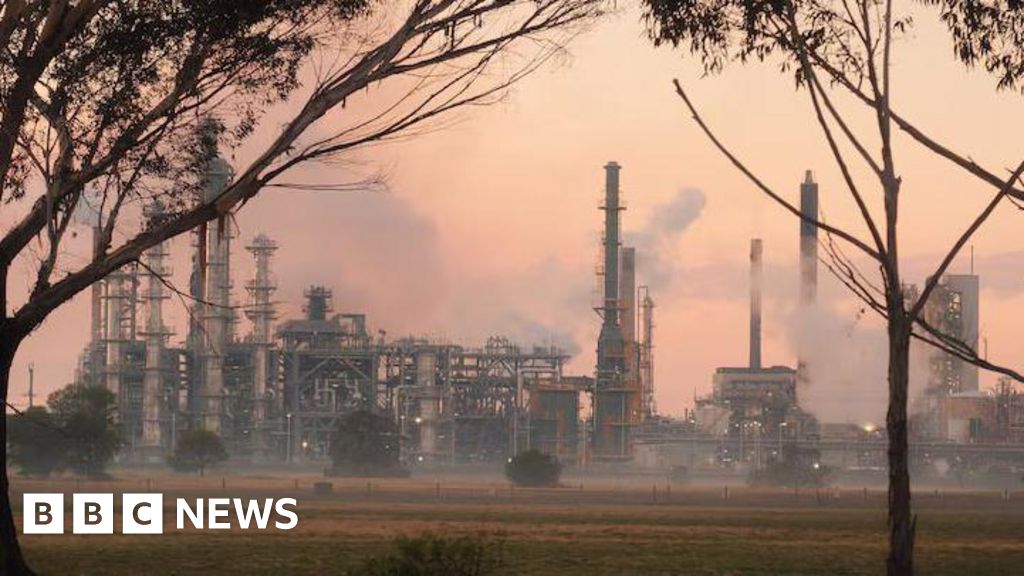
The fire has deepened fears over the nation’s petrol supplies amid a global crunch.
Source link


Switzerland’s apparel imports grow double-digit in Jan–Feb 2026

No vote after NCAA urges further study of age eligibility changes to college sports

Taylor Swift on bond with Dakota Johnson: ‘Curious’

-

 Fashion1 week ago
India’s exports face reset as EU links trade to carbon metrics: EY
-

 Entertainment1 week ago
Lamar Odom shocking response to Khloé Kardashian account of his overdose
-

 Entertainment1 week ago
Queen Elizabeth II emotional message for Archie, Lilibet sparks speculation
-

 Tech1 week ago
Azure customers up in arms over ‘full’ UK South region | Computer Weekly
-

 Tech1 week ago
As the Strait of Hormuz Reopens, Global Shipping Will Take Months to Recover
-

 Fashion1 week ago
CII submits 20-pt agenda to Indian govt to back firms hit by Iran war
-

 Tech7 days ago
This AI Button Wearable From Ex-Apple Engineers Looks Like an iPod Shuffle
-

 Politics6 days ago
Indian airlines hit hardest after Dubai limits foreign flights until May 31