

Business
US-Israel-Iran War: Strait Of Hormuz, A Global Oil Transit Chokepoint, Hit? Will It Impact India?

Last Updated:
US-Israel-Iran War And Strait Of Hormuz: How has the conflict impacted the traffic in the global oil shipping lane? What does it mean for India and the world? News18 explains




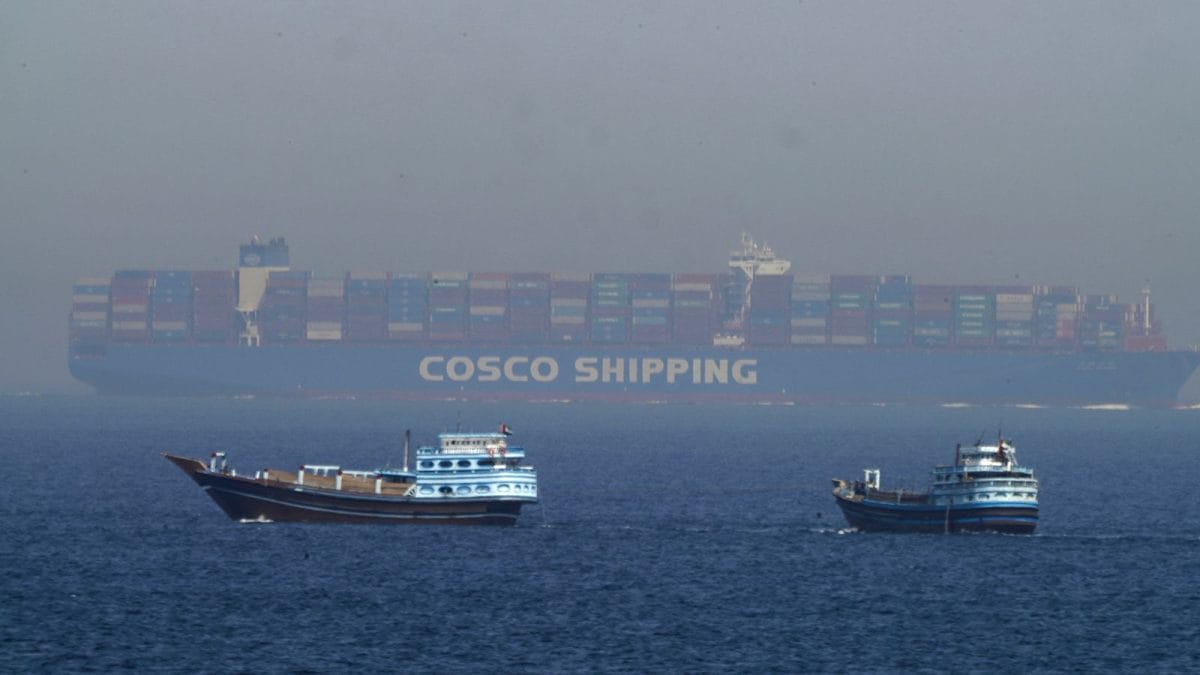
Two traditional dhows sail by a large container ship in the Strait of Hormuz. (AP)
The Strait of Hormuz is currently the focus of a severe global crisis. Following joint Israeli-United States strikes on Iran on February 28, the Islamic Revolutionary Guard Corps (IRGC) has reportedly closed the waterway to all maritime traffic.
Where is it? How was the conflict impacted the traffic? What does it mean for India and the world? News18 explains
Where is the Strait of Hormuz?
It is a narrow, strategically vital waterway in the Middle East that serves as the only sea passage from the Persian Gulf to the open ocean.
It links the Persian Gulf (to the west) with the Gulf of Oman and the Arabian Sea (to the southeast).
Bordering Countries
North Coast: Iran
South Coast: The Musandam Peninsula (an exclave of Oman) and the United Arab Emirates
It is about 21 to 33 miles (33–54 km) wide at its narrowest point. Due to the narrowness, ships must use two-mile-wide lanes (one inbound, one outbound) separated by a two-mile buffer zone to prevent collisions.
Major islands within or near the strait include Qeshm, Hormuz, Larak, and Hengam, most of which are controlled by Iran.
Key Oil Shipping Lane: Why the Strait of Hormuz matters
The Strait of Hormuz is the world’s most critical oil chokepoint. It connects the Persian Gulf with the Gulf of Oman and the Arabian Sea. It is approximately 21 miles (33 km) wide at its narrowest point.
It handles approximately 20% of global oil consumption (around 20 million barrels per day) and 20-25% of the world’s liquefied natural gas (LNG), primarily from Qatar. Over 80% of the oil passing through the strait is destined for Asia, with China, India, Japan, and South Korea being the primary importers.
Alternative routes are limited and cannot fully compensate for a total closure of the strait.
Saudi Arabia can divert up to 5 million barrels per day via its East-West Pipeline to the Red Sea. The UAE operates the Habshan-Fujairah pipeline, which can carry roughly 1.5 million barrels per day directly to the Gulf of Oman. Iraq has a pipeline through Turkey, but it primarily handles crude from northern fields.
How has the US-Israel-Iran conflict hit the Strait Of Hormuz?
While Iran has not issued a formal legal confirmation of a total blockade, vessels in the region are receiving VHF radio transmissions from the IRGC stating that “no ship is allowed to pass”.
The U.S. has surged naval assets to the region, including the USS Gerald R. Ford and the USS Abraham Lincoln, in what is described as the largest deployment since 2003.
The impact
Forecasts for Brent crude have already been hiked toward $100 per barrel due to supply chain risks.
At least three Pakistani ships operated by the Pakistan National Shipping Corporation were reportedly stopped by Iran on March 1.
Ship traffic has plummeted, with many tankers staying in port or turning back, though some continue to transit at their own risk.
BREAKING:Iran has attacked the Palau-flagged oil tanker Skylight as it was passinf through the Strait of Hormuz right off the coast of Oman.
4 sailors wounded in the attack. The entire crew has been evacuated. pic.twitter.com/wDX5X2czq6
— Visegrád 24 (@visegrad24) March 1, 2026
Attack reported
A Palau-flagged oil tanker, Skylight, was reportedly attacked while transiting through the Strait of Hormuz near the coast of Oman, amid escalating tensions in the region. According to reports circulating on social media, the vessel was struck while passing through the strategic waterway, triggering a fire onboard. Visuals shared online show thick plumes of black smoke rising from the tanker, with flames visible near the deck. Initial reports claim that four sailors were injured in the attack. The entire crew has since been evacuated from the vessel. The extent of the damage to the tanker remains unclear
What does it mean for India?
India is facing a high-stakes energy and economic crisis due to the reported closure of the Strait of Hormuz by Iran. India is the world’s third-largest oil consumer and is uniquely vulnerable because its dependence on this specific route has actually increased in early 2026, say experts.
Approximately 50% of India’s total crude oil imports (around 2.6 million barrels per day) pass through the Strait. This volume primarily comes from Iraq, Saudi Arabia, the UAE, and Kuwait.
India is even more vulnerable in terms of LPG (Cooking Gas), as it imports almost 100% of its LPG through this chokepoint. A sustained closure would immediately threaten the Pradhan Mantri Ujjwala Yojana and domestic household energy.
About 60% of India’s Liquefied Natural Gas imports, mainly from Qatar and the UAE, transit the Strait. Every $1 increase in the price of oil adds roughly $2 billion to India’s annual import bill.
Rising fuel costs are expected to spike domestic inflation, potentially forcing the Reserve Bank of India (RBI) to keep interest rates high. The increased demand for dollars to pay for costlier oil is also putting downward pressure on the Indian Rupee (INR), according to analysts.
Beyond energy, over 13% of India’s non-oil exports (worth $47.6 billion) to Gulf nations are at risk due to shipping disruptions.
India has enough crude oil in its Strategic Petroleum Reserves (SPR) and commercial stocks to last about 10–15 days, plus another 7–10 days of finished fuel inventories. While India had recently reduced its intake of Russian oil, officials have indicated they may pivot back to Moscow if Middle Eastern supplies remain blocked, though transit from Russia takes nearly 30 days compared to 5 days from the Gulf, according to reports.
The Ministry of External Affairs has activated contingency plans for the possible evacuation of the 9–10 million Indians living in the Gulf region through Operation Sindhu-II.
External Affairs Minister S. Jaishankar is currently engaging in “shuttle diplomacy,” calling for restraint from both Iran and Israel while emphasizing the respect of sovereignty and territorial integrity.
With Agency Inputs
March 01, 2026, 18:10 IST
Read More



Tesco Pet Insurance, who provided the cover, says “the cost of claims is one of a number of factors that can affect the price of a policy at renewal” and also noted Tilly’s age had been reflected in the quote. It says the couple had a more comprehensive policy, which typically costs more than basic levels of cover, and that alternative options were presented to Fawcett and Neild.
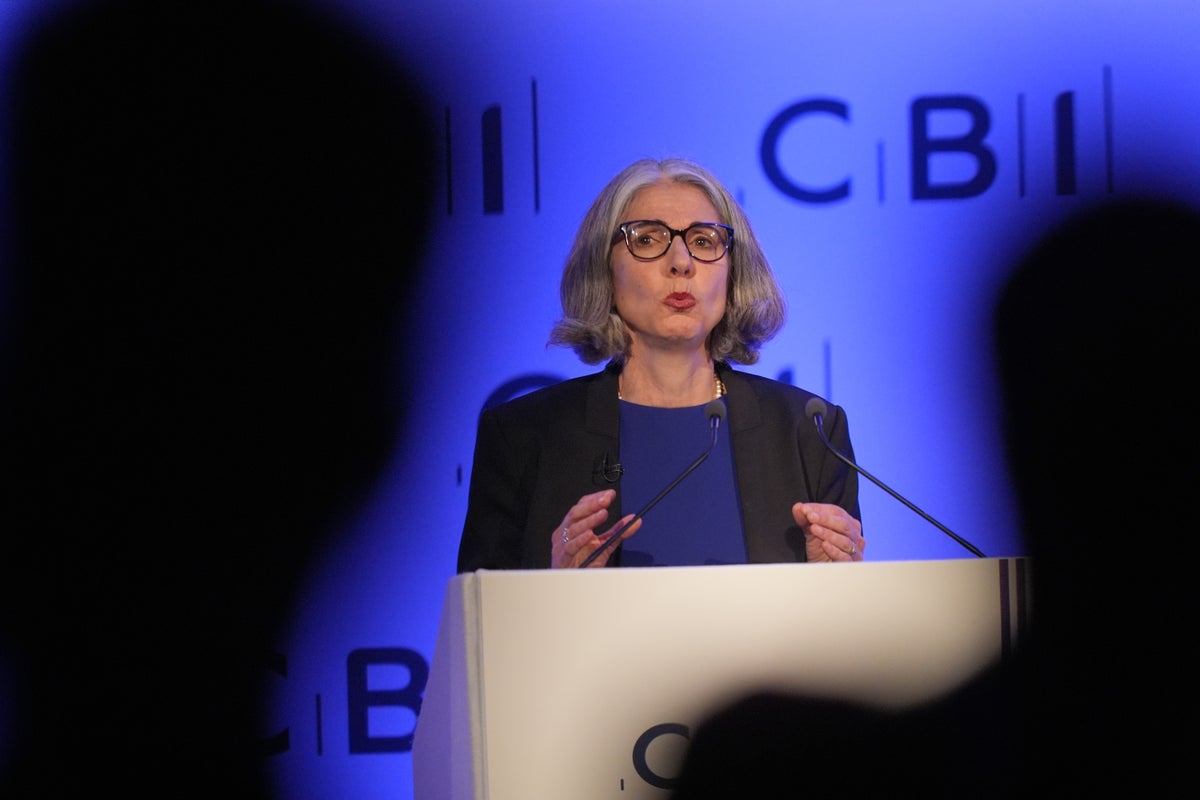
The UK must not “cut ourselves off” from trade opportunities in China despite security and business risks, the head of the Confederation for British Industry has warned.
CBI chief Rain Newton-Smith highlighted that British businesses see increased trade with Chinese firms as an opportunity to drive growth.
Her remarks came as business leaders were questioned by MPs on Parliament’s Business and Trade Select Committee regarding the UK’s economic relationship with China.
Last December, Prime Minister Sir Keir Starmer admitted China poses security threats to the UK but urged for greater business ties.
Ms Newton-Smith, chief executive of one of the UK’s largest business groups, was positive about the Government’s engagement with China.
“You can’t have a growth strategy without a strategy for China,” she said.
“China has the biggest contribution to global growth, is the third largest trading partner, and the world’s largest consumer market.
“The UK is second largest exporter of trade and services.
“We are mindful as all businesses are of security risks but it is really important that we have a strategy towards China.
“This Government has increased the economic engagement with China and including business within this does help us as a country.”
She added: “If we think about the future economy, there is a huge market in China and I think we mustn’t cut ourselves off from some of the opportunities there, even if in some areas there are difficult conversations and negotiations that need to be had.”
Peter Burnett, chief executive of the China-Britain Business Council, told the committee: “There are risks associated with technology advancement, AI, industrial development that they need to assess.
“Increasingly you will find them saying that they need to engage more in China to understand those risks and to develop some of the technologies along some of those risks themselves.”
Business
Trump says he’d be disappointed if Fed pick doesn’t cut rates; Warsh vows to be ‘independent actor’ – The Times of India
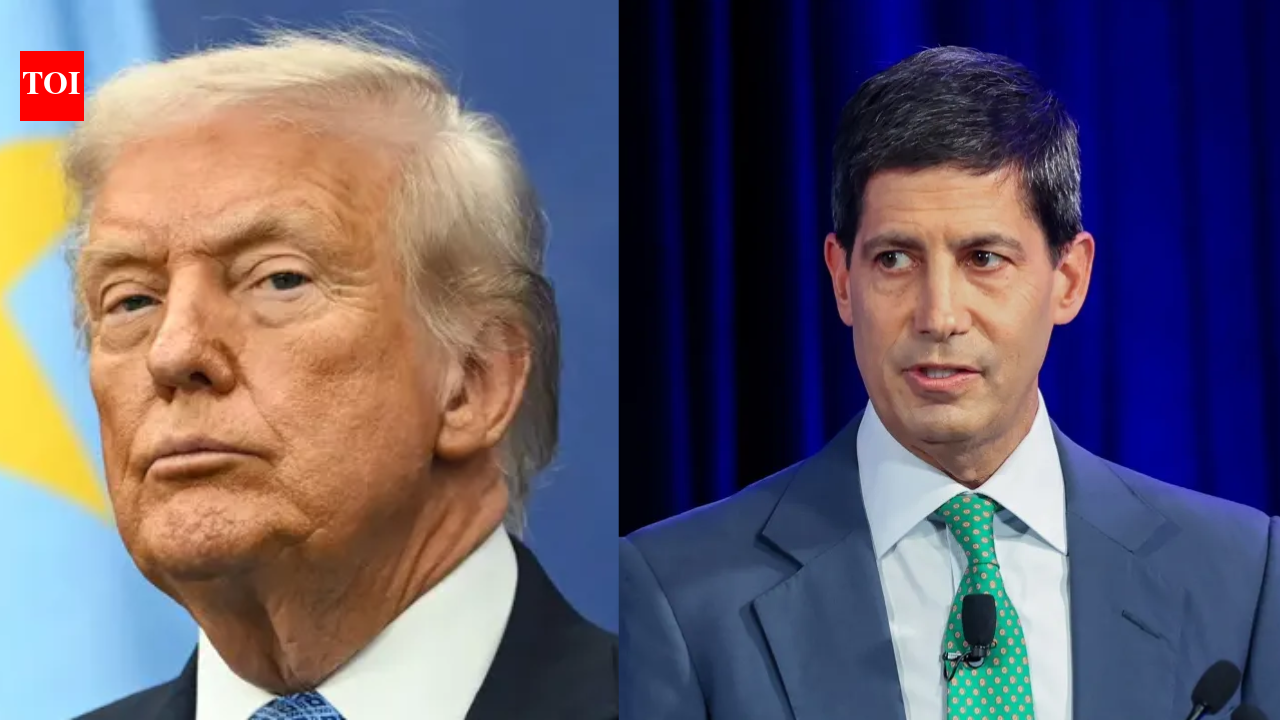
US President Donald Trump on Tuesday said he would be disappointed if his nominee for Federal Reserve chair, Kevin Warsh, does not cut interest rates right away after taking office if confirmed by the Senate. Trump, during an interview with CNBC’s “Squawk Box,” also said “we have to find out” about the construction costs of the new Federal Reserve building.Warsh, a former Federal Reserve official and financier, is currently facing Senate confirmation hearings where he has stressed his independence from political pressure.“The president never once asked me to commit to any particular interest rate decision, and nor would I agree to it if he had,” Kevin Warsh said under questioning by the Senate Banking Committee, as quoted by LA Times. “I will be an independent actor if confirmed as chair of the Federal Reserve.”Warsh told lawmakers that fighting inflation would be one of his main priorities if confirmed.“Congress tasked the Fed with the mission to ensure price stability, without excuse or equivocation, argument or anguish,” Warsh said. “Inflation is a choice, and the Fed must take responsibility for it.”The comments come as investors closely watch his confirmation hearing, with inflation remaining at 3.3% annually and global tensions, including the war in Iran pushing up gas prices, adding pressure on the economy. Higher inflation typically leads the Federal Reserve to keep interest rates steady or raise them rather than cut them, as rate changes affect mortgages, auto loans, and business borrowing.Democrats on the Senate Banking Committee accused Warsh of shifting his stance on interest rates over time, supporting higher rates under Democratic presidents and lower rates during Trump’s presidency.Warsh, if confirmed, would take over at a time when inflation pressures make it difficult for the Federal Reserve to cut rates, even as Trump continues to push for lower borrowing costs. Trump has repeatedly urged rate cuts and has long clashed with current Fed chair Jerome Powell over monetary policy. Powell has also been the subject of a Department of Justice criminal probe after refusing Trump’s requests for faster rate cuts. Trump told CNBC that he does not plan to pressure the Justice Department to end that probe.


Blake Lively reveals what she lost due to Justin Baldoni’s smear campaign

Trump repeats call for Congress to rein in college sports

Eli Manning fires back amid debate comparing ex-Giants star to Falcons great Matt Ryan

-

 Fashion6 days ago
France’s LVMH Q1 revenue falls 6%, shows resilience amid Iran war
-

 Sports1 week ago
The case for Man United’s Fernandes as Premier League’s best
-

 Entertainment1 week ago
Palace left in shock as Prince William cancels grand ceremony
-
 Business1 week ago
UK could adopt EU single market rules under new legislation
-

 Entertainment6 days ago
Is Claude down? Here’s why users are seeing errors
-

 Fashion1 week ago
Energy emerges as biggest cost driver in textile margins
-
 Business1 week ago
Delta Air Lines unveils first new Delta One suite in premium cabin arms race
-

 Fashion1 week ago
Asia claims largest share of markets on Kearney FDI Confidence Index