

Fashion
US researchers replace harmful chemicals with eco-friendly cottonseed

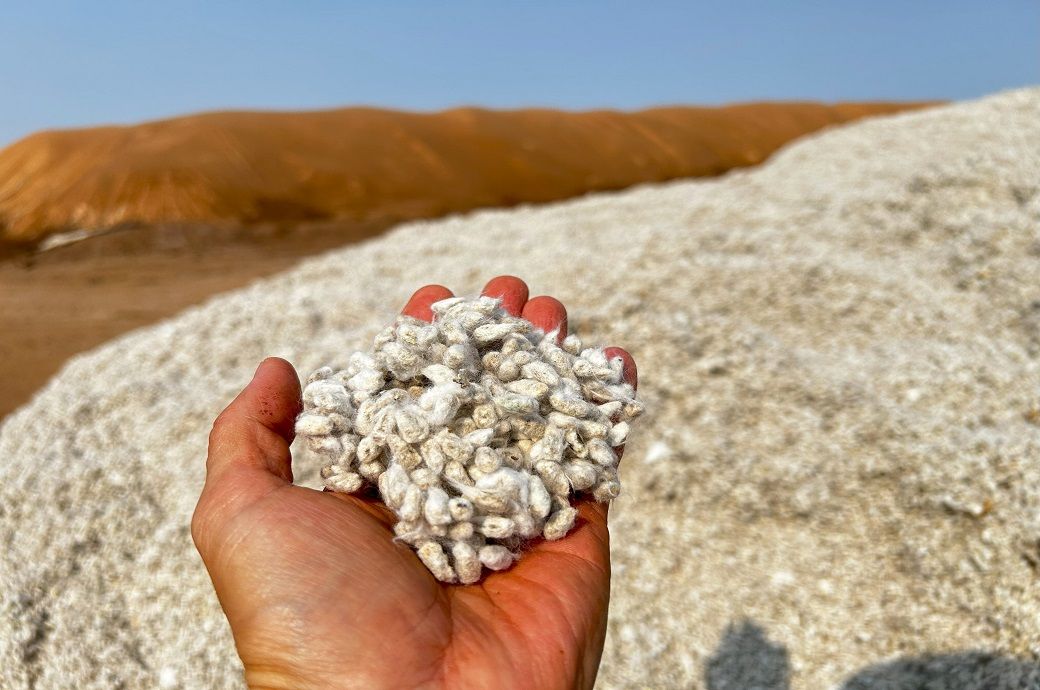
The process for harvesting cotton and creating fabric for textiles includes collecting the wispy cellulose fibres of the cotton boll, removing the cotton seeds interspersed in the fibres, spinning the cotton into yarn, weaving the yarn into fabric and then finishing the fabric with a variety of chemicals that alter its physical properties — for example, making it softer or wrinkle resistant.
Researchers at North Carolina State University have developed a sustainable method using cottonseed oil to finish cotton fabrics—offering a safer alternative to harmful chemicals like formaldehyde and PFAS.
These methods aim to make fabrics smooth and durable without compromising environmental or human health.
Graduate student Taylor Kanipe presented the findings at the ACS Fall 2025 meeting.
Formaldehyde-based resins have traditionally been used as a fabric finishing agent. The sticky resin easily binds to cotton’s cellulose fibres, forming chemical bridges to make the long cellulose fibres resistant to wrinkling or stretching. While formaldehyde is cheap, easy to use and highly reactive, at high concentrations it is considered a Class 1 carcinogen. Formaldehyde can also cause skin and respiratory irritation.?Fluorine-
To eliminate the need for formaldehyde-based resins and PFAS in cotton fabric finishing, a group led by Richard Venditti, a professor of forest biomaterials, paper science and engineering at NC State, set out to create a green alternative by chemically altering seed oil from the cotton plant itself. Drawing on previous research at NC State, Kanipe, Venditti and colleagues took advantage of specific chemical properties in cottonseed oil to insert epoxy groups along the long carbon chains that make up the oil molecules. The epoxide group allows epoxidised cottonseed oil (ECSO) molecules to create strong chemical bonds with the cellulose fibres in cotton fabric and with each other, forming a polymer and making the fabric hydrophobic. The epoxy groups also create oil molecule bridges between the cellulose fibres, making the fabric resistant to wrinkling.
In addition to fabric finishing, ECSO could provide a use for the cottonseed oil harvested along with the cotton fibers, making it as inexpensive, easy to use and effective as formaldehyde resins.
“Epoxidised vegetable oils have a range of applications,” Kanipe explains. “While native cottonseed oil lacks the reactivity of formaldehyde-based resins, this simple epoxidation process produces a safer, more user-friendly alternative for applications like durable press finishes.”
The researchers weighed and chemically analyzed the ECSO-treated fabric using a type of infrared spectroscopy to ensure the ECSO molecules had successfully bonded to the fabric’s surface. To evaluate the finished fabric’s water repellent qualities, the researchers used a high-speed camera to measure the contact angle at which water droplets would interact with the cotton surface. The larger the angle between the water droplet and the surface of the fabric, the greater the water resistance. Untreated fabric showed no contact angle (in other words, the water was fully absorbed into the fabric), while ECSO-treated fabric showed a contact angle of 125 degrees, indicating a significant increase in water-repelling ability.
Future studies will measure additional performance factors in ECSO-treated cotton fabric, including tear strength, durability and wrinkle resistance. The team’s goal is to create a process of treating cotton with an ECSO water emulsion, a green process that does not require hazardous finishing substances.
“If we can achieve our goal of changing the properties of the cotton fabric — making it anti-wrinkle, anti-staining and water-resistant — using a water-based process, we’ll have a green process for putting a bio-based material onto cotton as a replacement for formaldehyde- and PFAS-based finishes,” says Venditti.
This research was funded by Cotton Incorporated and an Agriculture and Food Research Initiative from the US Department of Agriculture’s National Institute of Food and Agriculture.
Fibre2Fashion News Desk (RR)









The call came at a national consultation in Dhaka on the draft Bangladesh National Strategy on Circular Economy for the sector.
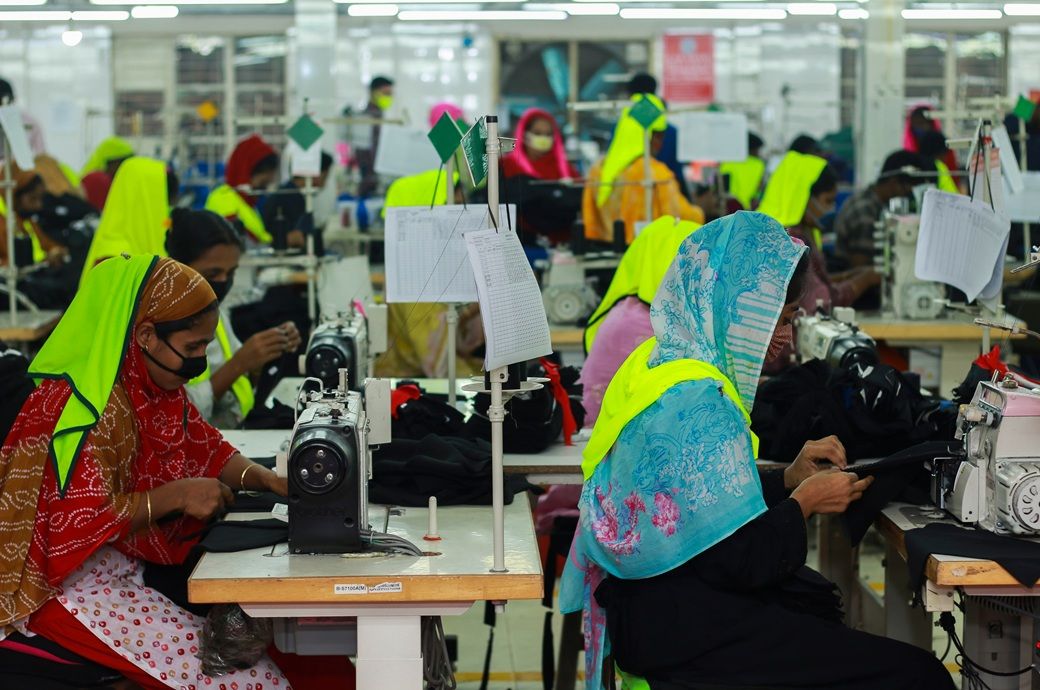
Bangladesh government officials, industry leaders and sustainability experts recently called for finalising a national circular economy strategy for the textile and RMG sector as that is essential to protect competitiveness in the global apparel market.
They emphasised the need to embed circular practices across the entire value chain while improving transparency and building institutional capacity.
The event was organised by the United Nations Industrial Development Organisation (UNIDO) and the country’s Ministry of Commerce, in collaboration with Chatham House, under the Switch to Circular Economy Value Chains (SWITCH2CE) project, co-funded by the European Union (EU) and Finland.
SWITCH2CE project partner Chatham House worked with two leading national research organisations in Bangladesh to conduct two policy level research, and lessons from the pilot projects outlined future steps to foster a national circular textile strategy for Bangladesh, a release from SWITCH2CE said.
Through SWITCH2CE, technical support has been provided by Chatham House and a diverse network of partners, including international brands, research institutions, and financing organisations, working alongside local industry actors and technology providers.
Participants emphasised the need to embed circular practices across the entire value chain—from design and production to waste recycling—while improving transparency and building institutional capacity.
They emphasised policy recommendations to formalise and scale circular approaches across the entire value chain—from design and production to textile waste recycling—while improving traceability and building institutional and financial capacity.
Discussions also addressed challenges in blended fiber recycling, transparent supply chains, and the need for coordinated efforts to build a sustainable textile ecosystem by adopting a national circular strategy.
Fibre2Fashion News Desk (DS)
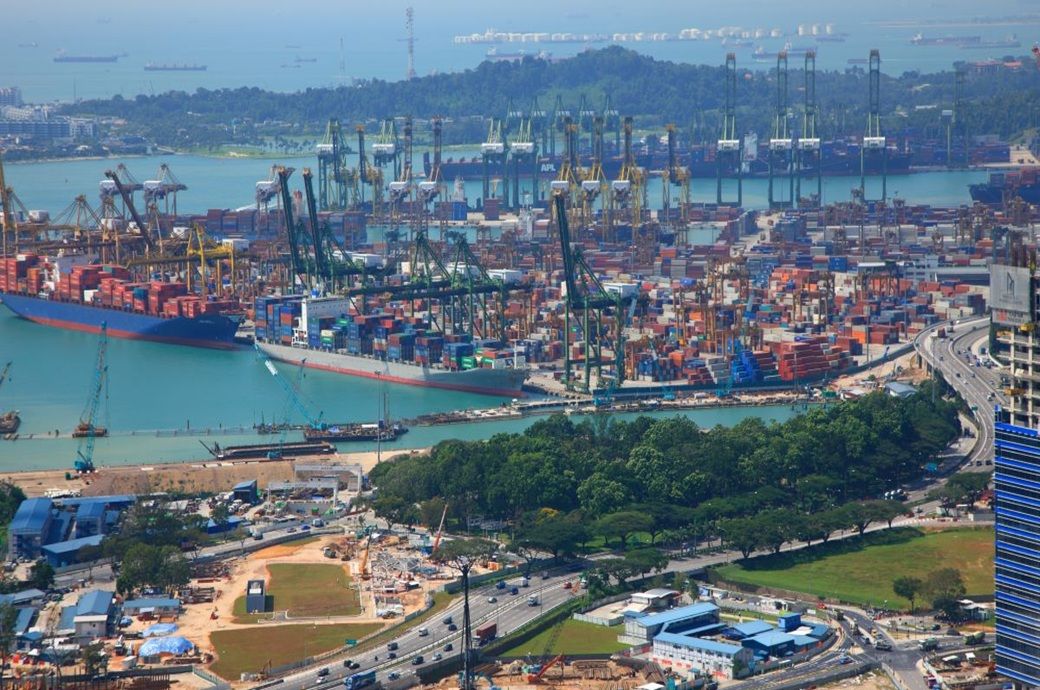
Singapore, one of the world’s most connected and efficient port hubs, offers a platform for testing and deploying innovations in areas such as cleaner fuels and digital technologies. UNCTAD complements this with global reach, policy expertise and hands-on support to developing countries.
UNCTAD and the Maritime and Port Authority of Singapore have launched a partnership to support the transition toward more sustainable, resilient and inclusive maritime transport systems.
They will promote adoption of alternative fuels and digital solutions across ports and shipping networks.
Efforts will focus on approaches that can be adapted to different national contexts.
Under the agreement, the partners will promote adoption of alternative fuels and digital solutions across ports and shipping networks. Efforts will focus on approaches that can be adapted to different national contexts, alongside knowledge-sharing in sustainable finance, digital innovation and workforce development.
“This partnership brings together Singapore’s operational excellence and UNCTAD’s global development expertise,” said Pedro Manuel Moreno, acting secretary general of UNCTAD.
“It will help accelerate a maritime transition that is not only greener and more efficient, but also resilient and inclusive—while contributing to global discussions at the UN Global Supply Chain Forum 2026,” he noted.
As pressure mounts to decarbonise ports, they face a complex balancing act: reducing emissions while keeping trade flowing efficiently and competitively, according to the UNCTAD, which recently said that challenge is turning more urgent as global supply chains navigate renewed uncertainty.
Recent tensions affecting key maritime chokepoints, including the Strait of Hormuz, have highlighted the risks of continued reliance on fossil fuels in global shipping. Volatility in energy markets and disruptions to shipping routes are reinforcing the case for alternative fuels and more resilient port infrastructure, UNCTAD said in a release.
A central priority of the partnership is ensuring that the maritime transition is inclusive.
Developing countries, many of which depend heavily on maritime trade, often face constraints in financing, technology and skills. The initiative will support these countries through training, advisory services and institutional strengthening.
Building on UNCTAD’s long-standing work with port communities, the partnership aims at improving port performance, strengthening connectivity and enhancing preparedness for disruptions.
The initiative will also contribute to preparations for the 2nd UN Global Supply Chain Forum taking place in late 2026, where policymakers, industry leaders and international organizations will address the future of trade logistics and resilience.
Fibre2Fashion News Desk (DS)

Describing the closure of the vital shipping route as a ‘structural rupture’ in global energy trade, the ERIA issue paper said member countries of the Association of Southeast Asian Nations (ASEAN), including Cambodia, are particularly exposed due to their heavy reliance on imported energy.
The Strait of Hormuz disruption is a systemic shock threatening Southeast Asia’s energy security and economic stability, a report by Economic Research Institute for ASEAN and East Asia said.
Flagging cascading impacts across key sectors beyond energy markets, it cautioned that these combined pressures could lead to slower economic growth, rising inflation and financial instability across the region.
The ASEAN region imports about two-thirds of its crude oil, with some like Cambodia, Singapore and the Philippines almost entirely dependent on external supplies. This dependence, combined with concentrated sourcing from the Middle East, makes ASEAN highly vulnerable to prolonged supply disruptions, the report noted.
Flagging cascading impacts across key sectors beyond energy markets, it cautioned that these combined pressures could lead to slower economic growth, rising inflation and financial instability across the region.
Higher import bills are expected to widen current account deficits, while currency volatility and capital outflows may further strain economies, it said.
The situation also poses risks to migrant workers in the Middle East, potentially affecting remittances that many ASEAN households depend on, it observed.
As fragmented national responses are insufficient to address such a complex crisis, ERIA called for stronger regional coordination, arguing that unilateral actions like stockpiling or subsidy policies could worsen supply shortages and increase competition among countries.
To strengthen resilience, the report outlined several strategic recommendations. These include developing indigenous energy resources such as biofuels, expanding regional energy trade and enhancing infrastructure through initiatives like the ASEAN Power Grid and Trans-ASEAN Gas Pipeline.
It also called for the creation of shared strategic reserves and coordinated stockpiling mechanisms to ensure more stable access to energy during crises.
ERIA also stressed on the importance of diversifying supply sources, accelerating renewable energy deployment and improving energy efficiency.
The Hormuz disruption is a ‘stress test’ for ASEAN’s economic and energy systems, and long-term resilience will depend on deeper regional integration, coordinated policymaking and a shift towards a more secure and diversified energy architecture, the report concluded.
Fibre2Fashion News Desk (DS)


This Ambitious Laptop Doesn’t Leave Much Room for Your Hands

Shell strikes £12.1 billion deal to buy Canadian energy firm

Match officials announced for HBL PSL 11 qualifier – SUCH TV

-

 Sports1 week ago
NCAA men’s gymnastics championship: All-time winners list
-

 Sports1 week ago
WWE WrestleMania 42 Night 2: Live match results and analysis
-

 Fashion1 week ago
UK’s Sosandar returns to profitability amid robust FY26 performance
-

 Politics1 week ago
UK’s Starmer seeks to deflect blame over Mandelson appointment
-
 Business1 week ago
No fuel shortage: Govt assures 100% domestic LPG, PNG, CNG supply amid Hormuz energy crunch – The Times of India
-

 Entertainment1 week ago
Lee Anderson, Zarah Sultana kicked out of UK Parliament for calling PM ‘liar’
-
 Business1 week ago
How Trump’s psychedelics executive order could unlock stalled cannabis reform
-
 Business7 days ago
Us-India Trade Talks: US–India trade deal: Where do talks stand & what to expect – explained – The Times of India