

Sports
‘Head coach’ vs ‘manager’: Why job title matters for Chelsea, Man United

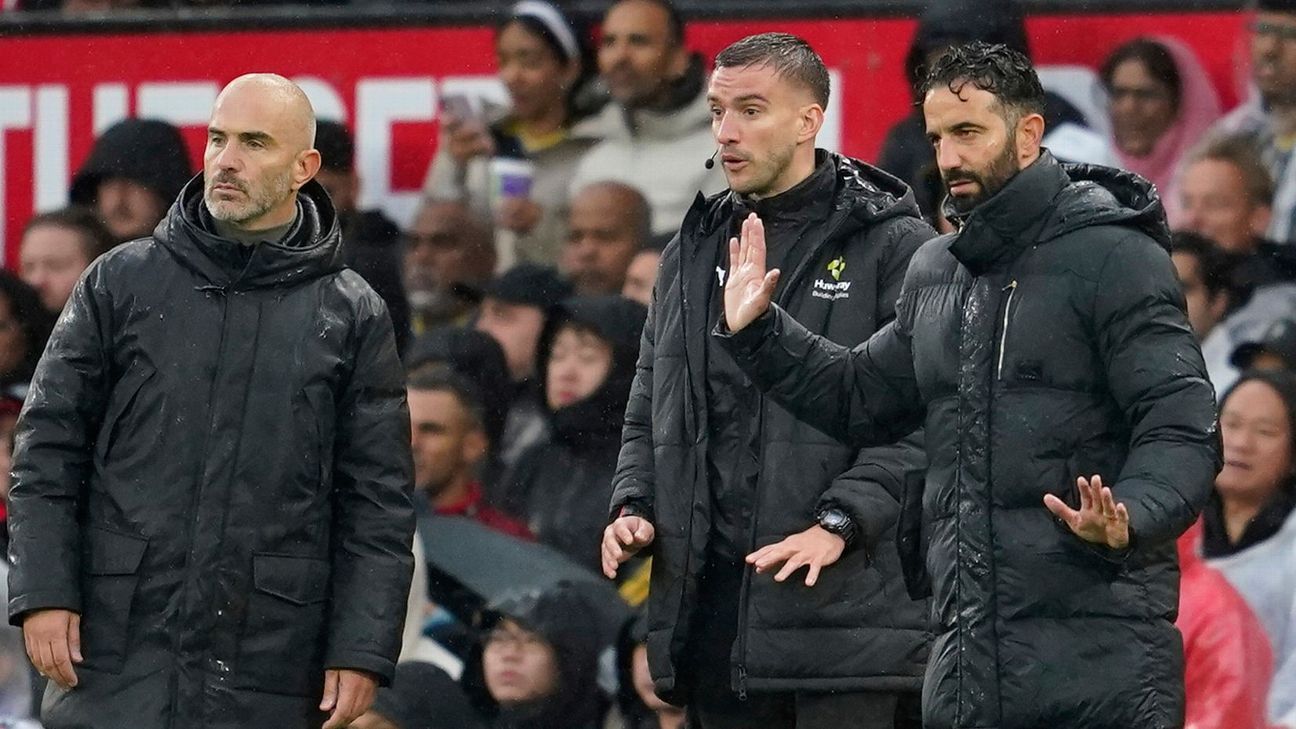
Who would be a football manager? Well, as it turns out, in the Premier League the answer is an increasing number of head coaches.
The difference between the job titles of “manager” and “head coach” may seem mere semantics at first glance, but events at Manchester United and Chelsea this month point to deeper structural problems that many clubs are now grappling with.
Both Ruben Amorim and Enzo Maresca chose to go public with frustrations they deemed as unnecessary interference from the infrastructure around them.
Maresca went first. In mid-December, after a routine 2-0 home win over Everton, which should have calmed the mood around Stamford Bridge, Maresca opted instead to ignite a fire by declaring the buildup “the worst 48 hours” of his tenure due to “a lack of support.”
– Why did Man United, Chelsea, Madrid all sack managers? It’s about culture
– How Man United chose Carrick as head coach: A no-fuss, loyal, safe option
– Real Madrid fired Xabi Alonso after 233 days. Where did it all go wrong?
His working relationship with senior figures at the club quickly eroded, and Chelsea parted company with Maresca just 19 days later. We will never know for certain, but perhaps Amorim, increasingly disgruntled at United, was inspired by those events in west London.
The following day, Amorim hinted at internal issues at a prematch news conference before facing Leeds United and, after that game, launched a full-scale assault on his bosses, insisting he joined United to “be the manager, not the head coach.” Amorim was sacked the following morning.
Chelsea have since doubled down on their existing head coach model by appointing Liam Rosenior as Maresca’s successor, not least because of his experience working for the club’s owners, BlueCo, at their sister team, Strasbourg of France’s Ligue 1.
United’s next move seems less certain after they installed Michael Carrick as an interim boss before making a permanent appointment in the summer.
The club still appears stuck at a crossroads created by legendary manager Sir Alex Ferguson’s departure in 2013, just as Arsenal were when Arsène Wenger left in 2018. They were the two most prominent exponents of the old model, which dictated that control comes at all costs for a manager. But what balance works best in 2026?
What’s the difference between ‘head coach’ and ‘manager’?
2:02
Rosenior: I’m accountable for my players mistakes
Chelsea boss Liam Rosenior refused to criticise Robert Sánchez after errors in the 3-2 Carabao Cup semifinal defeat to Arsenal.
This isn’t a new problem. Ferguson and Wenger once sat on stage together at a League Managers’ Association meeting, opining on how the preeminence they enjoyed was founded on controlling all aspects of their respective clubs. They were becoming increasingly isolated cases.
“The manager is the most important man at the club,” Wenger said. “If not, why do you sack the manager if it doesn’t go well?”
“Very good,” said Ferguson, sitting alongside him, smiling.
Ferguson later praised then-Premier League bosses Alan Curbishley and Kevin Keegan for leaving their posts on “a point of principle,” specifically that West Ham and Newcastle United, respectively, were letting players leave against the wishes of their managers. That was in 2008.
The intervening 18 years have seen the power balance shift steadily away from autonomous managerial figures toward head coaches, who are expected to work within a structure which divides responsibilities, including scouting, recruitment, medical determinations and data analysis among several others. A manager is a visionary to whom everyone must answer. A head coach is more of a prominent cog within a larger machine.
In one clear example of the transformation in thinking, Arsenal appointed nine new department heads around the time of Wenger’s departure in 2018 and trebled the number of operations staff in three years.
Top Premier League clubs routinely arrive at away games with two team buses — the expanded support staff no longer fit onto one bus with the playing squad. Club doctors Stephen Lewis (Chelsea) and Zaf Iqbal (Arsenal) were even listed on the official teamsheet for Wednesday’s Carabao Cup semifinal first-leg clash at Stamford Bridge.
Where the boundaries are drawn for each member of this infrastructure is where the tension usually lies for a head coach.
Today, there are only five Premier League clubs employing someone whose official job title is ‘manager’: Arsenal, Everton, Manchester City, Crystal Palace and Leeds.
One of those is Mikel Arteta, but he is a unique case. He was appointed as Arsenal head coach in December 2019 — following Unai Emery’s unsuccessful attempt to operate within the club’s post-Wenger model — but then “promoted” to manager in September 2020 after winning the FA Cup a month earlier in a Covid-delayed season.
Arteta revealed last week that the plan to promote him was actually hatched before his Wembley triumph.
“It was in my house,” he said. “They came to me and started to propose the idea of what they thought and the way they wanted to structure the club. That was after probably five, six months in the job.
“They believed that and [I said] ‘this is where I think I can help, this is my vision, this is what I would do, this is how I see this project.’ I presented it, and from there we started all together to start to add value to those ideas.
“I didn’t demand it. I didn’t ask for it, and they believed it was the right thing to do. When you have a leader, which is ownership in this case — Stan [Kroenke] and Josh [Kroenke, representing owners Kroenke Sports Enterprises] — and Josh that is very close to us with clear alignment to all of us what he wants to do, how he wants to create that space for everybody, I think it is very easy to work like this.
“At the end, it is about the relationships and the people that we have from great teams with very different qualities. Sometimes, I have been more on certain things; when there is somebody who is much better than me on that, I let them do it. For me, the title doesn’t really reflect the way we operate daily.”
Although KSE is an American company, well-placed sources within football point to the increase in U.S. ownership — now 22 of the top 44 clubs comprising England’s top two leagues — as a contributing factor. They want their clubs to retain a stable, long-term identity of their own, impervious to the idiosyncrasies of the man in the dugout.
The modern-day trend certainly appears to be clubs seeking to establish an identity based on principles set by their own sporting infrastructure, rather than the shorter-term whims of a manager or head coach who is just passing through. The League Managers’ Association published data last year suggesting the average tenure of a sacked manager is 1.42 years.
But there are signs head coaches are pushing back against this transient existence. Amorim and Maresca took internal tensions public while Tottenham Hotspur captain Cristian Romero broke ranks with an Instagram post that suggested the Spurs hierarchy “only show up when things are going well, to tell a few lies.”
It doesn’t help advocates of the head coach model that Arsenal under Arteta lead the Premier League from Pep Guardiola’s Manchester City and Aston Villa, who named Emery as head coach but whose influence is widely acknowledged to extend far beyond the limitations that title would suggest.
Finding the right fit
1:25
Was the Man United job ‘too big’ for Ruben Amorim?
Julien Laurens explains what went wrong for Ruben Amorim at Manchester United after being sacked following 14 months at the club.
Supporters have protested against Chelsea’s BlueCo owners, who completed their takeover in 2022 and whose methods have frustrated head coaches of high pedigree before Maresca, including Thomas Tuchel and Mauricio Pochettino.
The appointment of Rosenior has emboldened critics, suggesting the owners want a “yes man” as head coach, willing to acquiesce to the specialists who operate separately to his immediate coaching staff.
Predictably, Rosenior pushed back on any such notion when speaking at his first Chelsea news conference.
“Being a head coach, you talk about football systems and tactics,” he said. “[But] that’s 10% of the job. The job is to create spirit, energy, a culture. It doesn’t matter if you’re called a head coach, manager or anything else. The job is the same. My job is to have a team that runs, fights for each other, that plays with spirit and quality. That’s what I’m going to focus on.”
Whatever the rights and wrongs of Chelsea’s strategy — which includes employing five sporting directors, an independent medical team whose advice on player load must be followed and regular technical feedback sessions for the head coach after every game — they know exactly what they want.
Multiple sources told ESPN that BlueCo had quickly identified Rosenior as a leading candidate among a small pool of options, ruling out higher-profile names almost immediately. The belief in their model is resolute and clear.
If anything, control has been tightened. Maresca brought six staff with him from Leicester City. Rosenior has three from Strasbourg — assistant Justin Walker, first-team coach Kalifa Cissé and analyst Ben Warner — while Calum McFarlane was promoted from Chelsea’s under-21s and goalkeeper coach Ben Roberts remains in post. Set-piece coach Bernardo Cueva was appointed independently from Maresca and stayed on. All six of Maresca’s staff left.
There seems to be less clarity at United. Even caretaker boss Darren Fletcher admitting that he called Ferguson for “his blessing” before accepting the temporary position smacked of a club still struggling to emerge from the shadow of its past. They didn’t appoint a director of football and technical director until 2021, and Amorim was the first man in the club’s history to be appointed “head coach” rather than “manager.”
However, club sources have told ESPN that director of football Jason Wilcox sees recruitment falling within his sphere of influence and has said publicly that he can’t help but “interfere” in what the head coach is doing. It is, at least from the outside, a confused picture.
Carrick has brought in two staff members for his five-month stint: ex-England No. 2 Steve Holland and Jonathan Woodgate, who worked under Carrick at Middlesbrough.
‘Manager’ is a title that’s earned
Recruitment is invariably a point of friction. Club sources told ESPN that Maresca wanted a center back last summer after Levi Colwill got injured but was told to find internal solutions.
Conversely, ESPN sources say Arteta fought hard and won a battle to sign Mikel Merino from Real Sociedad in 2024 despite others involved in recruitment casting doubt over his ability and transfer fee.
Tottenham are grappling with their own approach, appointing Fabio Paratici as co-sporting director alongside Johan Lange in October, only for Spurs to confirm on Wednesday that the former will leave next month to join Fiorentina.
Gone are the days when the chief scout — and wider scouting staff that followed — operated as close allies of the manager. Some head coaches now insist on bringing their own trusted recruitment staff, often as part of their initial appointment, because they want specialists who share their way of seeing the game. This guarantees the coach a voice early in the scouting process and keeps them closely involved in the club’s strategic thinking and player selection.
Sources working in recruitment say that even though power has gradually shifted away from the manager or head coach, cases where players are signed without that individual’s involvement remain extremely rare, to the point of being almost unheard of in a top-five league environment.
However, the level of power can change over time. If a sporting director signs off on a run of mediocre transfers, a head coach may use that to push for greater influence over recruitment. Equally, when a head coach is flavour of the month with successful results, some will take the opportunity to gain a greater say in squad building.
What matters initially are the job description and the powers laid out in the contract. Perhaps the conclusion is that head coaches who want to become managers have to go to great lengths to earn it.
Arsenal recognised they needed a cultural overhaul and believed in Arteta to deliver it. Guardiola earned it before he arrived as City’s whole football structure was tailored to lure him to the club. Emery has improved Villa to such a dramatic extent that the case for greater influence was almost impossible to ignore.
Maresca and Amorim chanced their arm and failed. They almost certainly won’t be the last.
Information from ESPN’s Rob Dawson and Tor-Kristian Karlsen contributed to this report.
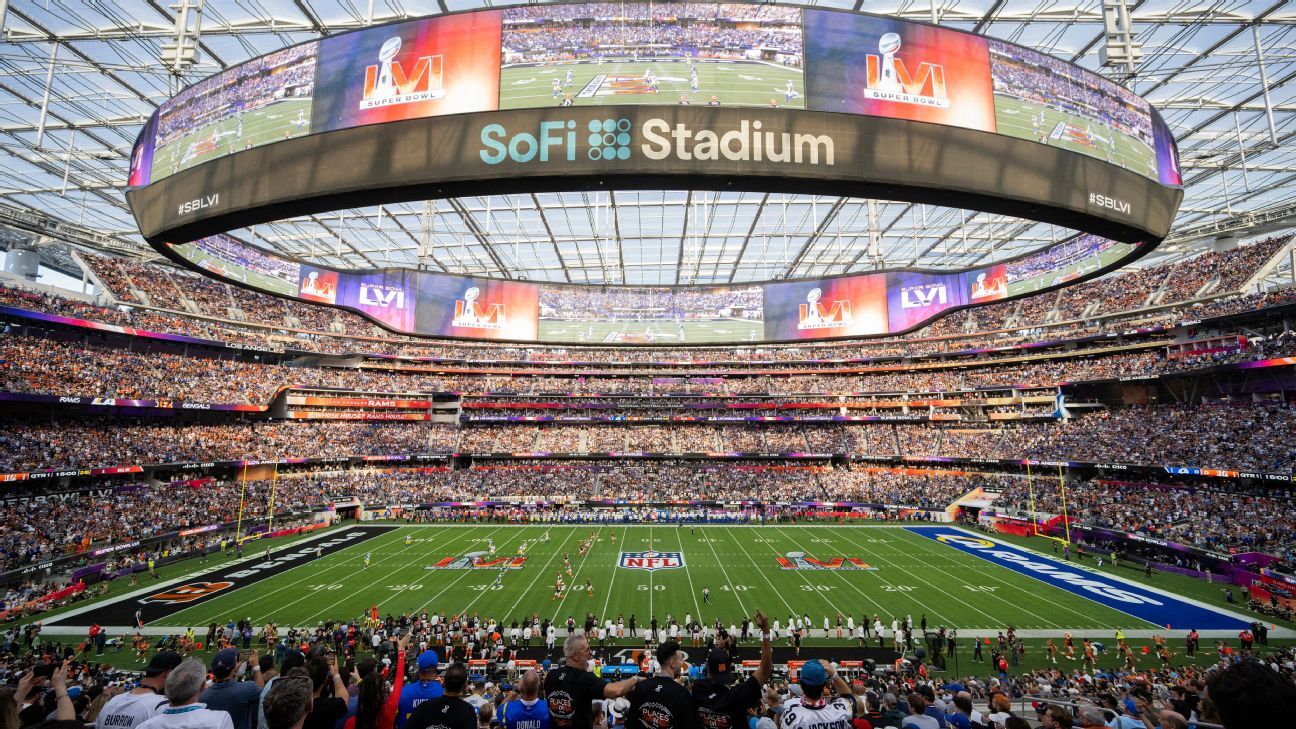
FIFA is putting more World Cup tickets on sale after angering some fans by adding new, more expensive categories.
Soccer’s governing body announced Tuesday it will make more tickets available at 11 a.m. ET Wednesday for all 104 games in Categories 1, 2 and 3 plus the new “front category” pricing it added this month.
The new category sparked online complaints from fans who said they thought the better seats in the categories they had bought tickets for were withheld and they were assigned less favorable locations.
FIFA in December put tickets on sale at prices ranging from $140 for Category 3 in the first round to $8,680 for the final, then raised prices to as much as $10,990 when sales reopened on April 1.
FIFA did not respond to an April 9 request for comment about the new ticket categories it added.
Also Tuesday, The Athletic reported that tickets sales are lagging for the U.S. opener against Paraguay on June 12 at Inglewood, California. It said a document distributed to local organizers dated April 10 said 40,934 tickets had been purchased for the U.S.-Paraguay game and 50,661 for the Iran-New Zealand contest on April 15. FIFA projects SoFi’s World Cup capacity at about 69,650, noting it may change.
FIFA’s December sale priced U.S.-Paraguay tickets at $1,120, $1,940 and $2,735, and Iran-New Zealand seats at $140, $380 and $450.
-
Jeremy Woo
Close
Jeremy Woo
ESPN
- NBA draft analyst and writer
Joined ESPN.com in 2023
Covered the NBA and NBA draft for Sports Illustrated from 2015-2023
Multiple Authors
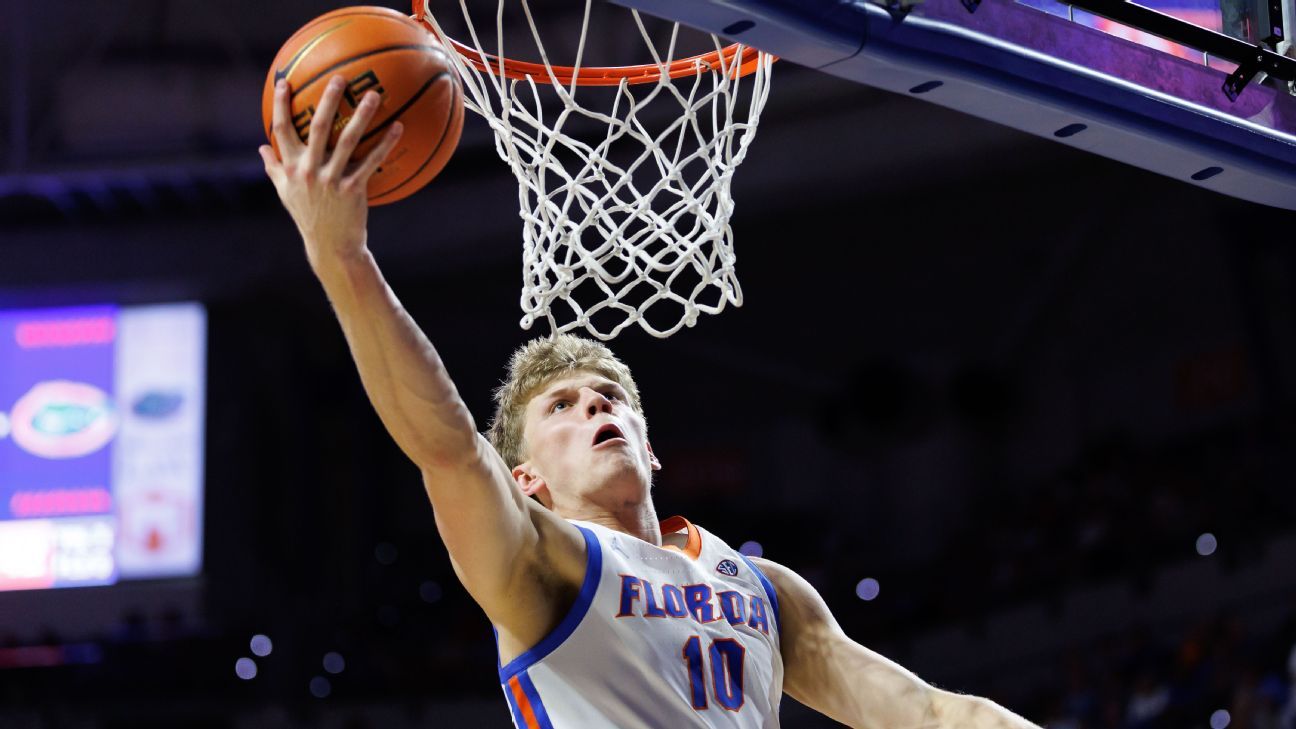
Florida forward Thomas Haugh will return to the Gators for his senior season, he told ESPN on Tuesday, delaying an opportunity as a potential lottery pick and likely cementing Florida as the preseason No. 1 team in men’s college basketball.
Haugh, the No. 13 prospect in ESPN’s Top 100 for the 2026 draft, becomes the highest-ranked prospect to announce his return to college. He is the first player since Michigan State’s Miles Bridges in 2017 to opt for another year of school while projected as an NBA lottery pick.
The 6-foot-9 Pennsylvania native’s decision to return follows the same announcement last week from frontcourt mate Alex Condon, while starting center Rueben Chinyelu announced Monday he’s testing the NBA draft waters but will maintain his college eligibility to return to Florida if he withdraws from the draft.
“Most guys in my position in the draft, it would be a no-brainer to go to the NBA,” Haugh told ESPN. “It’s not just the NIL. It’s a chance to play with my boys. To play for coach [Todd] Golden. To go to the school I love to play for. It was definitely a tougher decision than last year, but it was best for my career and future.”
When the buzzer sounded in Tampa at the end of Florida’s 73-72 second-round loss to 8-seed Iowa, Golden worried that this might have been the last time his national championship-winning frontcourt would play together. Haugh had eyes on the NBA, and Condon and Chinyelu were also weighing NBA options. With the nature of the transfer portal, it was unclear who would be back.
Haugh earned third-team All-America honors and first-team All-SEC honors this past season, averaging 17.1 points and 6.1 rebounds per game, and was tracking comfortably for the middle of the first round. There was no expectation that he’d return.
“I think that lit a fire underneath me,” Haugh said of the NCAA tournament loss. “I [didn’t] want my last memory of Florida basketball to be that.”
“The hardest part was the initial week,” Golden told ESPN. “His mind had been made up, he was going. When the season ended the way it did for us, it was a little bit of a punch in the stomach. Allowed a little more to reflect. Not only on that game, but how the season ended and where we are. That moment allowed for this to happen.”
At their end-of-season meeting, Golden and Haugh joked about him having another year of eligibility. But the idea of Haugh returning for his senior season didn’t appear to have any momentum until Haugh’s family, and agent Aaron Klevan of THE·TEAM, approached Golden and asked what a potential return would look like in terms of situation and compensation.
“They really didn’t need to sell much,” Haugh said. “Coach Golden and the staff did a great job, not pressuring me. They’re my guys. They’re going to text me and call me regardless. They didn’t do much recruiting. I grew up a Florida fan. Tim Tebow. The back-to-back national championships. The 2014 team, I remember. They didn’t really have to sell me.”
While NIL wasn’t the sole factor, Haugh will be among the highest-paid players in college basketball next season. He will earn revenue share compensation similar to what mid-first-round picks are guaranteed, in addition to lucrative true NIL and endorsement deals.
The first-round rookie contract scale is tied to a given year’s salary cap, with guaranteed money tied to each slot 1-30 in descending order of value. In 2025-26, the average Year 1 salary for an NBA rookie picked in the 11-15 range, where Haugh was projected, was $4,309,660 — a number he projects to clear easily this season.
“The unique angle that we were able to drive home to Tommy’s family and Aaron Klevan, this dude has real bottom-line NIL value,” Golden said. “That’s an area right now where elite college athletes have an advantage over mid-tier pros. Tommy Haugh’s legitimate NIL value at Florida is 10-20 times what his NIL value would be on an NBA team next year. Because of the brand awareness at Florida, he will have been here for four years, all of those things along with him returning, our supporters really appreciate the loyalty.”
Financial incentives have broadly changed for all NBA prospects, with college programs now capable of competing against multiyear rookie contracts in the short term. Those market forces, coupled with what NBA executives view as a much thinner draft in 2027, have caused a flood of college players to stay in school without testing the draft waters.
Haugh told ESPN he plans to continue focusing on his 3-point shooting and improving his comfort level playing small forward. There is room for him to improve his current standing with another strong season, particularly with the NBA’s uncertainty around the strength of next year’s incoming freshman class.
“Getting this group of guys back together for one last run, they’re going to have a lot of attention and notoriety, a lot of it deserved,” Golden said. “We’re going to have a ton of pressure, a ton of eyeballs on us this year. But it’s a privilege. Use it to fuel us the right way. Can’t allow it to splinter us. But we’d much rather be the hunted than the hunters. We just have to accept there’s a lot of pressure that comes with that.”
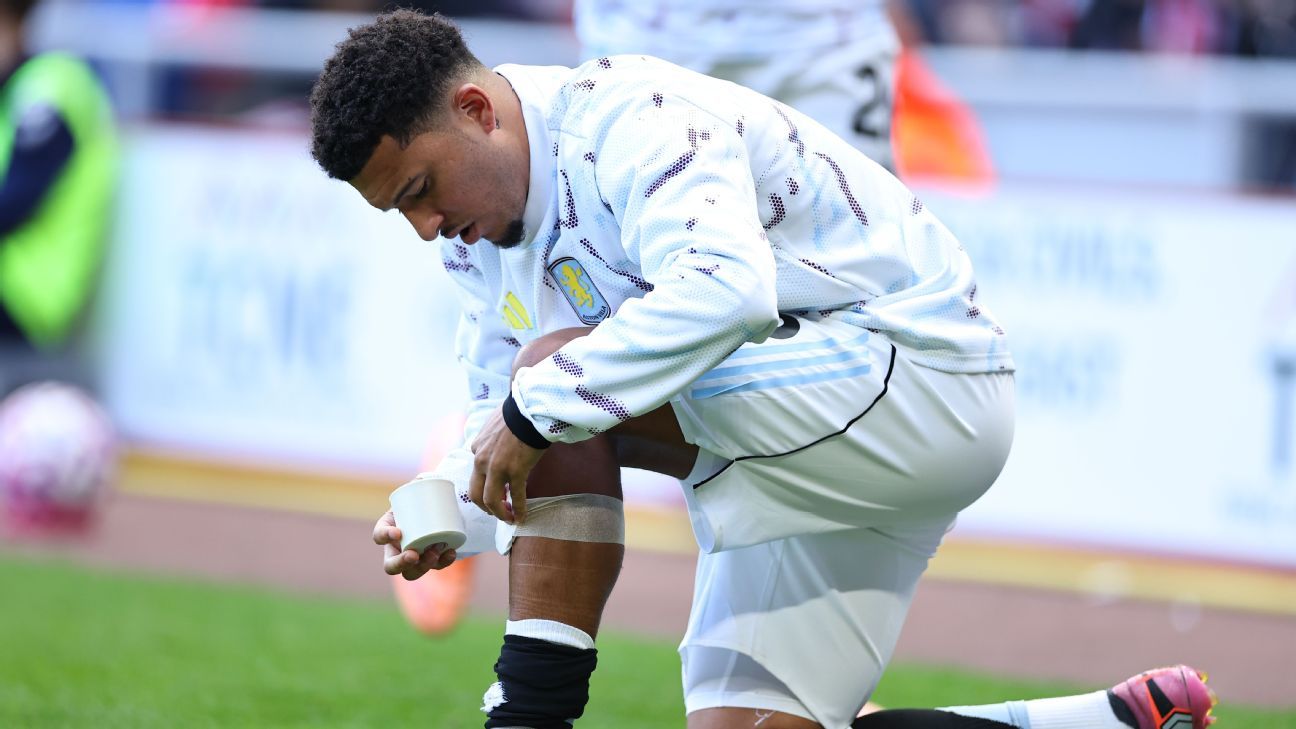
It is an issue that is dividing football, a classic example of one generation questioning the choices of another, but the sight of a former Tottenham and Germany player rolling on the pitch in agony with a severely gashed leg earlier this month might end up changing opinions about the ever-decreasing size of shin guards.
Until recently, shin guards covered the entire shin — sometimes up to 9 inches long — and they were made of foam or rubber with a hard plastic shell. But in recent years, some players have abandoned the protective element completely, wearing only tiny pieces of foam under their socks, and it seems only a matter of time before a serious injury leads to a rethink in what players are wearing.
Lewis Holtby‘s injury, sustained while playing for Dutch team NAC Breda against Fortuna Sittard in the Eredivisie on April 12, looks to have ended the 35-year-old’s season due to the depth of the wound on his left shin following a challenge with an opposition defender. It also led to a blame game centered on Holtby’s shin guards.
“I think it’s ridiculous that the referee [Jeroen Manschot] says something about it,” Breda coach Carl Hoefkens said after the game. “In the tunnel, it was said [by Manschot] that Holtby should just wear shin guards, or better shin guards. The officials also check the shin guards before the match, so it’s their responsibility as well.”
La aparatosa lesión de Lewis Holtby este fin de semana. 😬
Vía ESPNnl/X pic.twitter.com/WgHl4PL5xo
— ESPN Deportes (@ESPNDeportes) April 14, 2026
Breda defender Denis Odoi spoke about Holtby’s “small shin guards” and said “You’re never too old to learn,” when asked about players wearing “normal” shin guards again, while ESPN NL analyst, former Ajax and PSV Eindhoven winger Kenneth Perez, was more critical.
“They [players] are now wearing those tiny things, or basically toilet paper, just to have something there,” Perez said. “I have absolutely no sympathy for injuries that result from that.
“As a club, you can simply say: We require our players to wear proper shin guards.”
Watch any top-level fixture this season and you’re likely to see players with socks rolled down almost to their ankles — Everton‘s Jack Grealish and Tyler Dibling wear them low, covering tiny shin guards. Others have their socks just below the knee, but still sport shin guards half the size of a cellphone, as shown by Burnley midfielder Marcus Edwards during a game against West Ham in February. Arsenal forward Bukayo Saka has spoken this season about his preference for tiny shin guards — “I’m a fan of them; I don’t like big shin pads” — though Liverpool defender Virgil van Dijk harbors a more cautious approach to protecting his lower leg.
“If you get kicked on your shin and your shin pad is that size of an AirPod, then obviously that’s a big problem,” Van Dijk said.
Brighton forward Danny Welbeck has said that his younger teammates ridicule his old-school shin guards — “They say to me ‘Your shinnies are massive,’ but you need a bit more safety, you know?” — but just like Saka, Fulham winger Alex Iwobi prefers the small, lightweight guards because “I just don’t like having something heavy on my shin.”
Former England and Liverpool forward Peter Crouch regularly raises the shin guard issue on his podcast, That “Peter Crouch Podcast,” under the light-hearted “Make Shin Pads Great Again” banner, with Fulham midfielder Harry Wilson saying this season that some of his teammates “cut up the sponge you get from the physio and use that.”
If a high-profile player sustains this type of injury thanks to tiny shin guards, the kind of injury that forces them to miss the World Cup or that happens on the biggest stage this summer — the debate about the shrinking move towards smaller pads will likely increase in volume.
The trend toward smaller shin guards — and away from larger models that would also include ankle protectors — is rooted in many things, including the game becoming less physical with fewer tackles and players wanting to feel as light as possible to boost their sprinting speed. But it is also a result of a change in the Laws of the Game in July 2024 when IFAB (the International Football Association Board) amended the rule covering shin guards (Law 4) to place the responsibility on the player rather than the match officials to ensure sufficient shin protection was worn.
Prior to the change, the responsibility was on referees to police the rule, but many were being ignored by players and clubs and then criticized — or even sometimes challenged in court — for failing to impose the rules if a player was subsequently injured. But the Law remains vague and open to interpretation. There is no minimum size required, only that the shin guards are “covered entirely by the socks, are made of suitable material (rubber, plastic or similar substances) and provide a reasonable degree of protection.”
“The reason we changed the Law was because it is impossible to legislate and say a shin pad must be a certain size,” David Elleray, IFAB technical director and former Premier League referee told ESPN. “So two years ago, we put the responsibility on the players that they should wear something which they believe protects them.
“The challenge we had was partly legal. If we left the responsibility with the referees and the referees said, “Okay, that shin guard is okay,” then the player got injured, the player might decide to take action. So we put that very firmly in the court of the players and the coaches, and for young players, the parents.”
The change of the Law has led to players placing speed and aesthetics — many dislike the bulk of larger shin pads — above safety, however, and Elleray admits it has not led to a sensible approach by players and clubs.
“We [IFAB] had hoped, or expected, that they would take a responsible attitude to it, but there was one recently [Marcus Edwards] that was almost like a sticking plaster,” Elleray said. “The pressure needs to go on the individual players, the coaches and the clubs to make sure their players are protected because it’s impossible to legislate for.”
Former leading referee Pierluigi Collina, now the Chair of the FIFA referees’ committee, has urged players to be more mindful of their well-being when choosing their shin guards. “At the end of the day, the shin pad rule is for their own safety,” Collina told ESPN. “So they should care of what is really safe for them.”
But as shocking as Holtby’s injury was, it perhaps generated such attention because of the rarity of such incidents. Broken legs and deep cuts and gashes seem less prevalent despite the reduction in shin pad sizes, with muscle tears and ligament injuries to ankle and knee more likely to sideline a player.
The argument put forward by those who favor small shin guards is that players no longer suffer serious impact injuries, and that might be a valid point. In a recent example of a bad impact injury, Liverpool’s Alexander Isak was wearing small — but not tiny — shin guards when he suffered a fractured leg in a challenge with Tottenham’s Micky van de Ven last December, but it would be difficult to argue that larger shin pads would have diminished the severity of Isak’s injury.
Sources at the Professional Footballers’ Association (PFA) have told ESPN that “primary decisions around safety are taken by players in consultation with their club and medical teams” and that players ultimately “feel comfortable with different shapes and sizes of shin pads.” There is certainly no drive within the game to force players to re-think the protection being offered by their shin pads.
Football trends have changed since larger and heavier shin pads were the go-to model for top players. The Umbro Armadillo, which was manufactured during the early-2000s, was a large plastic guard with ankle protectors and was worn by Michael Owen and Alan Shearer, while Brazil forward Ronaldo wore Nike’s T90 model. Both designs were significantly larger, heavier and stronger than the pads now being preferred.
Today’s younger players prefer small, lightweight pads and the shifting trend led two brothers — Kaizer Chiefs midfielder Ethan Chislett and Zack, who plays for UAE-based Palm City — to develop their brand of Joga shinpads, which are tiny, much lighter and softer than traditional shin guards. The Joga Shinpad Sleeve, worn by Chelsea‘s João Pedro, is a cellphone-sized soft pad within a fabric sleeve that’s worn to cover the shin. Everton midfielder Grealish wears Joga’s Breathe pads that measure just 6 centimeters x 10 centimeters (2 inches x 4 inches).
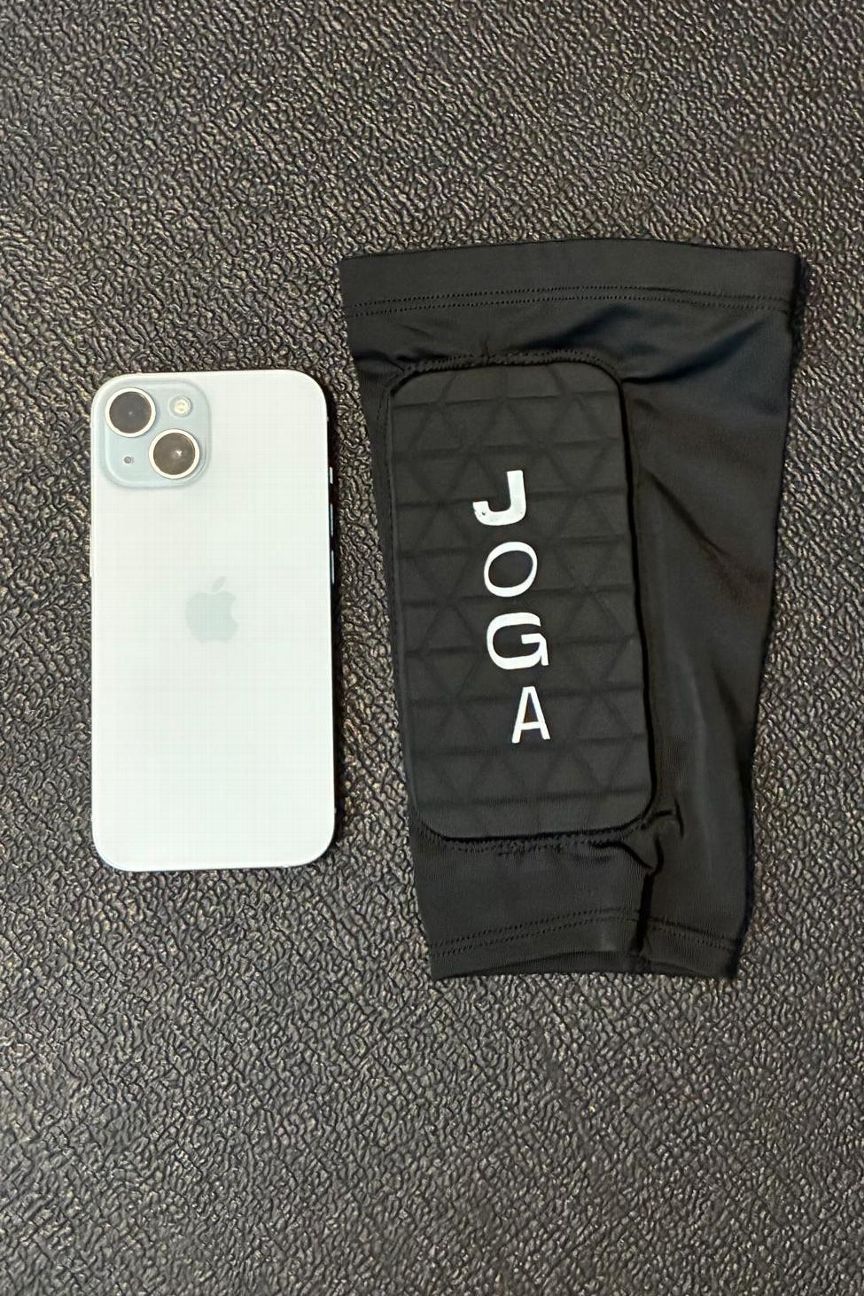
“We were the first ones to make a mini shin pad that you could buy,” Zack Chislett told ESPN. “I was playing nonleague at the time, my brother Ethan was playing for AFC Wimbledon, and we noticed that pads were getting smaller and smaller, but there was no-one giving players an option to buy them. They were just using anything they could find in the physio’s bag, so the demand was obviously there.”
But why do young players want their shin guards to be so small and lacking in protection?
“When you’re training the whole week without shin pads and you then put the big pad on, sometimes with ankle pads, on a Saturday, it doesn’t feel natural like when you’re training,” Zack said. “Some players will feel better with the big shin pad, but a lot of the younger, more attacking players don’t feel that way and they don’t want to feel as restricted when they go on the pitch.
“And the game has changed, 100%. The tackles aren’t coming in like they used to, it isn’t as aggressive or as physical. I’m 23, and players of my generation just don’t want to wear big shin pads — it would be like wearing old, heavy leather boots. It just isn’t going to happen.”
The likes of Welbeck and Van Dijk are being usurped by players such as Saka, Iwobi, Grealish and Joao Pedro when it comes to the size and protective elements of their shin pads.
Perhaps Holtby’s injury will prompt some players to think about the risks of playing without suitable protection and a high-profile injury at this summer’s World Cup could also lead to FIFA imposing stricter guidelines on what can, and can’t, be worn by players. But right now, footballers are putting risk to one side in favour of speed and freedom of movement, so shin pads could get smaller and smaller.


FIFA to put more World Cup tickets on sale for all games

OpenAI Beefs Up ChatGPT’s Image Generation Model
Britain ‘mustn’t cut ourselves off from China trade opportunities’, CBI chief warns

-

 Fashion5 days ago
France’s LVMH Q1 revenue falls 6%, shows resilience amid Iran war
-

 Sports1 week ago
The case for Man United’s Fernandes as Premier League’s best
-

 Entertainment1 week ago
Palace left in shock as Prince William cancels grand ceremony
-
 Business1 week ago
UK could adopt EU single market rules under new legislation
-

 Entertainment6 days ago
Is Claude down? Here’s why users are seeing errors
-

 Fashion1 week ago
Energy emerges as biggest cost driver in textile margins
-
 Business1 week ago
Delta Air Lines unveils first new Delta One suite in premium cabin arms race
-

 Fashion1 week ago
Asia claims largest share of markets on Kearney FDI Confidence Index