

Politics
India-US trade deal stalled after Modi did not call Trump, says official

- Trump warns tariffs will rise unless Russian oil imports are curbed.
- Indian rupee hits record low on US tariff pressure.
- India seeks mid-range tariff rate; Lutnick says offer has expired.
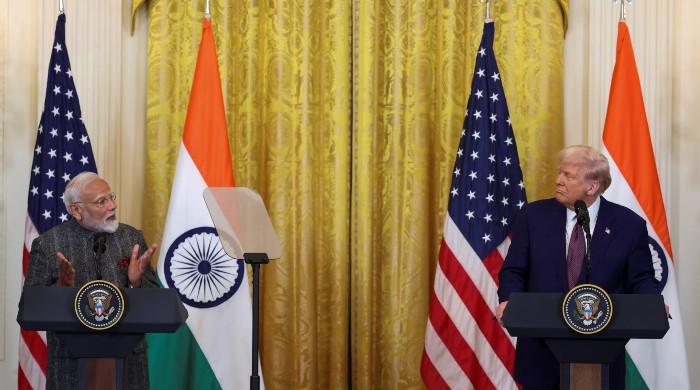
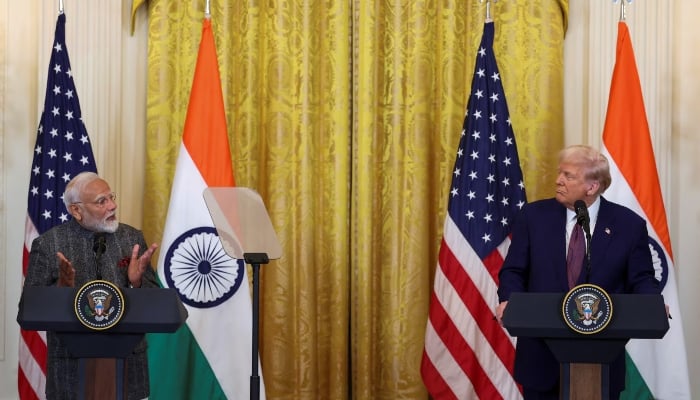
NEW DELHI: India’s trade pact with the United States was delayed because Prime Minister Narendra Modi did not make a telephone call to President Donald Trump to close a deal they were negotiating, US Commerce Secretary Howard Lutnick said on Friday.
The trade talks fell apart last year and Trump doubled tariffs on Indian goods in August to 50%, the world’s highest rate, including a levy of 25% in retaliation for India’s purchases of Russian oil.
“It’s all set up and you have got to have Modi call the President. And they were uncomfortable doing it,” Lutnick said in an interview on the All-In podcast, a US show by four venture capitalists that focuses on business and technology.
“So Modi didn’t call.”
The comments came after Trump stepped up the pressure for talks with a warning this week that tariffs could rise further unless India curbs its Russian oil imports.
That step pushed the Indian rupee to a record low and spooked investors waiting for progress in two-way negotiations for a trade deal that remains elusive.
India still seeks a tariff rate between Washington’s offers to Britain and Vietnam that had formerly been agreed but the offer has expired, Lutnick added.
India’s trade ministry did not immediately respond to an e-mailed request for comment on Lutnick’s remarks.
New Delhi and Washington were very close to a trade deal last year but a communication breakdown led to the collapse of any potential pact, Reuters reported.
It cited an Indian government official involved in the talks as saying that Modi could not have called Trump, for fear that a one-sided conversation would put him on the spot.
- US diplomats in Caracas to discuss reopening embassy: officials
- Venezuela says it would reciprocate by sending delegation to US.
- Trump urges US oil giants to repair Venezuela’s energy industry.
Venezuela said Friday it had launched talks with the United States on restoring diplomatic ties, days after US forces deposed Nicolas Maduro as its president.
It was the latest sign of cooperation following the leftist leader’s capture and US President Donald Trump’s claim to be “in charge” of the South American country.
Officials said US diplomats were in Caracas to discuss reopening the country’s embassy, while in Washington Trump met with oil companies over his plans to access Venezuela’s huge crude reserves.
The government of interim President Delcy Rodriguez “has decided to initiate an exploratory diplomatic process with the government of the United States of America, aimed at re-establishing diplomatic missions in both countries,” Foreign Minister Yvan Gil said in a statement.
John McNamara, the top US diplomat in neighbouring Colombia, and other personnel “travelled to Caracas to conduct an initial assessment for a potential phased resumption of operations,” a US official said on customary condition of anonymity.
Venezuela said it would reciprocate by sending a delegation to Washington.
Rodriguez, in a statement, condemned “the serious, criminal, illegal and illegitimate attack” by the United States and vowed: “Venezuela will continue to confront this aggression through the diplomatic route.”
Trump vows oil investments
Trump said earlier Friday that he had called off a second wave of attacks on Venezuela due to the prisoner releases.
The US president had suggested he might use force again to get his way in Venezuela, which has the world’s largest proven oil reserves.
At a White House meeting on Friday, he pressed top oil executives to invest in Venezuela’s reserves, but was met with a cautious reception — with ExxonMobil chief executive Darren Woods dismissing the country as “uninvestable” without sweeping reforms.
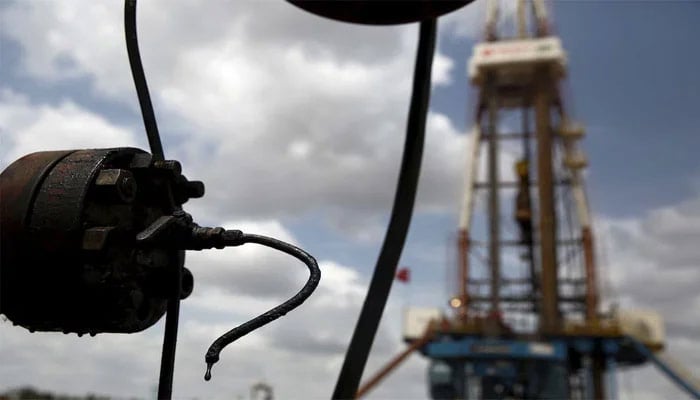
Trump said foreign firms had enjoyed no meaningful protections under Maduro, “but now you have total security. It’s a whole different Venezuela.”
He also stressed that the companies would deal only with Washington, not Caracas, when exploiting Venezuela’s oil resources.
Trump earlier said that oil companies promised to invest $100 billion in Venezuela, whose oil infrastructure is creaky after years of mismanagement and sanctions.
He had earlier announced a plan for the United States to sell between 30 million and 50 million barrels of Venezuelan crude, with the money to be used at his discretion.
He promised any funds sent to Caracas would be used to buy only US-made products.
In the meantime, Washington has maintained maritime pressure on oil tankers in the Caribbean, where it seized a fifth tanker carrying Venezuelan crude — oil that would be sold, Trump said.
State-owned oil company PDVSA confirmed in a statement that one vessel was returning to Venezuelan waters, describing it as the “first successful joint operation” with Washington.
Prisoners’ release
Anxious relatives waited outside Venezuelan jails for a glimpse of their loved ones as the authorities began releasing political prisoners — a move Washington claimed credit for.
“When I heard the news, I broke down,” said Dilsia Caro, 50, waiting for the release of her husband Noel Flores, who was jailed for criticising Maduro.
Venezuela began releasing prisoners on Thursday in the first such gesture since US forces removed and detained Maduro in the deadly January 3 raid.
Trump told Fox News he would meet next week with Venezuelan opposition leader Maria Corina Machado, whom he earlier brushed aside as lacking the “respect” to lead Venezuela.
Exiled Venezuelan opposition figurehead Edmundo Gonzalez Urrutia said that any democratic transition in the country must recognise his claim to victory in the 2024 presidential elections.
Maduro was proclaimed the winner of the vote, but his re-election was widely seen as fraudulent.
Gonzalez was hoping for the release of his son-in-law, who was detained a year ago in Caracas.
Protests in Caracas
Maduro was seized in a US special forces raid accompanied by airstrikes, operations that left 100 people dead, according to Caracas.
US forces took Maduro and his wife Cilia Flores to New York to face trial on drug-trafficking and other charges.
Rodriguez insisted Thursday her country was “not subordinate or subjugated” despite her pledge to cooperate with Trump.
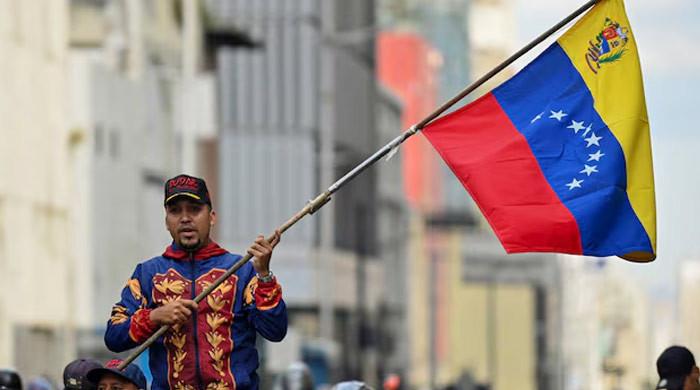
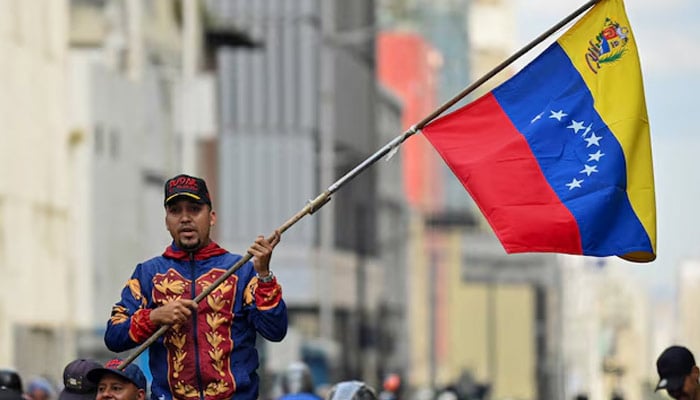
Angry protesters rallied in the streets of Caracas on Friday, demanding Maduro’s release in the latest of a daily series of demonstrations.
“We don’t have to give one little drop of oil to Trump after all that he has done to us,” said one protester, Josefina Castro, 70, a member of a civil activists’ group.
“Our Venezuelan brothers died (in the attack), and that hurts.”
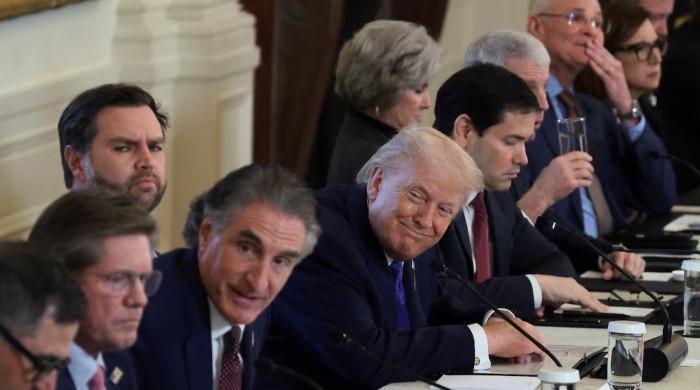
WASHINGTON: US President Donald Trump met with executives from some of the world’s largest oil companies at the White House on Friday to discuss Venezuela, saying he wants them to invest $100 billion in the country to vastly expand its production.
Trump has named oil as the priority for his strategy for the South American nation after US forces seized its leader Nicolas Maduro in an overnight raid on its capital January 3.
“American companies will have the opportunity to rebuild Venezuela’s rotting energy infrastructure and eventually increase oil production to levels never, ever seen before,” Trump said at the opening of the meeting.
He was flanked by top executives from Exxon Mobil, ConocoPhillips, Chevron Corp and others.
“We’re going to be making the decision as to which oil companies are going to go in,” the Republican president said.
He praised an agreement with Venezuela’s interim leaders to provide 50 million barrels of crude oil to the US, where numerous refineries are specially equipped to refine it. Trump said he expects such deliveries to continue indefinitely.
“One of the things the United States gets out of this will be even lower energy prices,” he said.
US forces have continued to apprehend Venezuelan oil tankers at sea to enforce an embargo. The fifth such seizure was announced on Friday.
Trump administration officials have said they need to control Venezuela’s oil sales and revenues indefinitely to ensure the country acts in America’s interests, including by reducing corruption and drug trafficking.
Some Democratic lawmakers have criticised this approach as extortion. Industry analysts have also warned about political instability as the country treads a fine line between denouncing Maduro’s capture and appeasing the US
“Uninvestible”
Companies including Chevron, Vitol and Trafigura are competing for US licenses to market Venezuela’s existing crude oil, but oil majors are hesitant to commit to big, longer-term investments in Venezuela due to high costs and political instability.
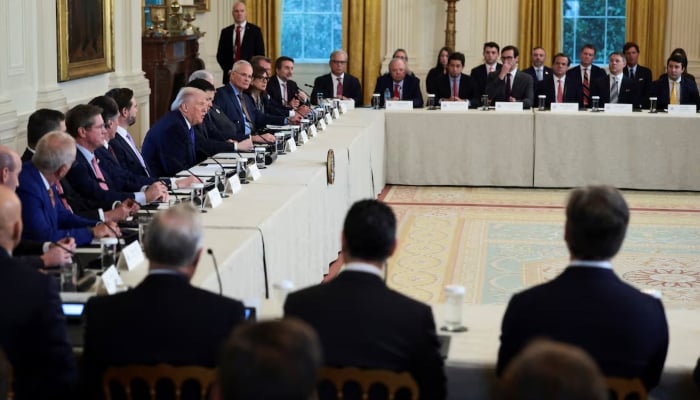
Exxon CEO Darren Woods said at the White House meeting that the company sees Venezuela as currently “uninvestable” and needs to see significant changes to return there
“We’ve had our assets seized there twice, and so you can imagine to re-enter a third time would require some pretty significant changes,” he said.
“We’re confident that with this administration and President Trump, working hand in hand with the Venezuelan government, that those changes can be put in place,” he said.
Exxon and ConocoPhillips departed Venezuela nearly 20 years ago after their assets were nationalised.
Chevron Vice Chairman Mark Nelson said the company is committed to investments in Venezuela. Chevron the only US oil major still operating in the country.
Several smaller independents and private equity-backed players were also invited to the meeting, including some with links to Colorado, home state of Energy Secretary Chris Wright. Many of those executives praised Trump for his policies on Venezuela, and said they were prepared to invest in the country and market its oil.
Decades of underinvestment have eroded production in Venezuela, an OPEC member that boasts the world’s largest oil reserves but accounts for only about 1% of global supply.
Venezuela pumped as much as 3.5 million barrels per day in the 1970s, more than triple current levels.
Trump said at the meeting that the US would guarantee the physical and financial security of oil companies investing in Venezuela, but did not provide details.
On Friday morning, Energy Secretary Chris Wright said in an interview on Fox News ahead of the White House talks that there is “a real possibility” the US could use its Export-Import Bank to help fund large oil projects in Venezuela. This could reduce financial risks for companies that decide to invest there.
Trump added the ongoing discussions with oil companies are aimed at securing commitments.
“We have to get them to invest and then we have to get their money back as quickly as we can,” Trump said. “And then we can divvy it all up between Venezuela, the United States, and them. I think it’s simple. I think the formula is simple.”
- “We’re not going to have Russia or China as a neighbour,” says Trump.
- Trump says US must acquire Greenland, despite its military presence.
- US discussing various plans to bring Greenland under control.
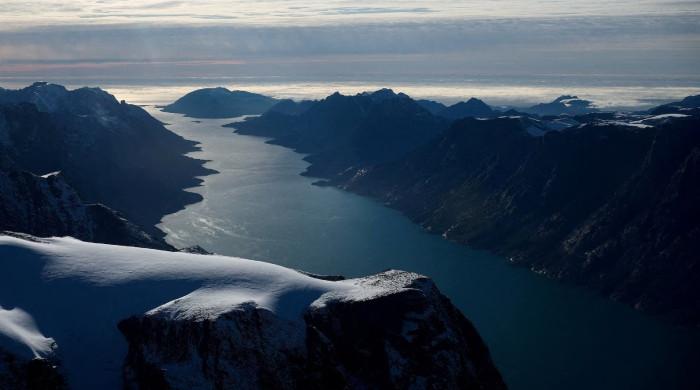
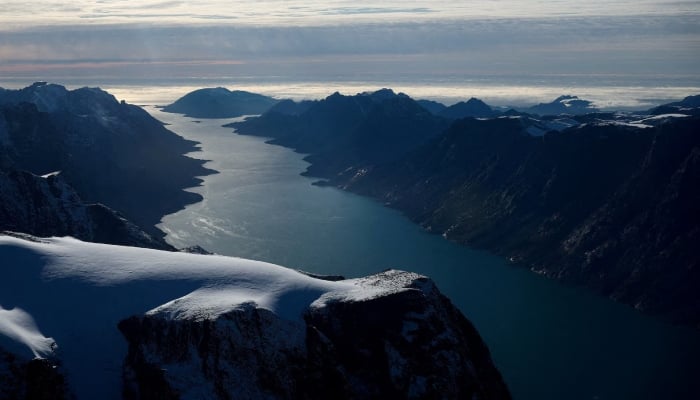
The US needs to own Greenland to prevent Russia or China from occupying it in the future, President Donald Trump said on Friday.
“We are going to do something on Greenland whether they like it or not. Because if we don’t do it, Russia or China will take over Greenland, and we’re not going to have Russia or China as a neighbour,” Trump told reporters at the White House while meeting with oil company executives.
Trump said the US must acquire Greenland, even though it already has a military presence on the island under a 1951 agreement, because such deals are not enough to guarantee Greenland’s defence. The island of 57,000 people is an autonomous territory of the Kingdom of Denmark.
“You defend ownership. You don’t defend leases. And we’ll have to defend Greenland. If we don’t do it, China or Russia will,” Trump said.
Trump and White House officials have been discussing various plans to bring Greenland under US control, including potential use of the US military and lump sum payments to Greenlanders as part of a bid to convince them to secede from Denmark and potentially join the US.
Leaders in Copenhagen and throughout Europe have reacted with disdain in recent days to comments by Trump and other White House officials asserting their right to Greenland. The US and Denmark are NATO allies bound by a mutual defense agreement.
On Tuesday, France, Germany, Italy, Poland, Spain, Britain and Denmark issued a joint statement, saying only Greenland and Denmark can decide matters regarding their relations.


What Is Core-and-Satellite Strategy And How Can It Help Investors Navigate Market Volatility?

Ella Purnell teases Lucy’s dark turn in ‘Fallout’ season 2

Venezuela says in talks with US to restore diplomatic ties

-

 Entertainment3 days ago
Does new US food pyramid put too much steak on your plate?
-
 Politics3 days ago
UK says provided assistance in US-led tanker seizure
-

 Sports5 days ago
VAR review: Why was Wirtz onside in Premier League, offside in Europe?
-
 Politics5 days ago
China’s birth-rate push sputters as couples stay child-free
-
 Sports5 days ago
FACI invites applications for 2026 chess development project | The Express Tribune
-

 Sports5 days ago
Steelers escape Ravens’ late push, win AFC North title
-
 Business5 days ago
Aldi’s Christmas sales rise to £1.65bn
-

 Entertainment2 days ago
Why did Nick Reiner’s lawyer Alan Jackson withdraw from case?