

Fashion
Recycling Europe Textiles calls for compulsory recycled content in textiles products in Europe from 2028

By
Portugal Textil
Translated by
Nicola Mira
Published
January 9, 2026
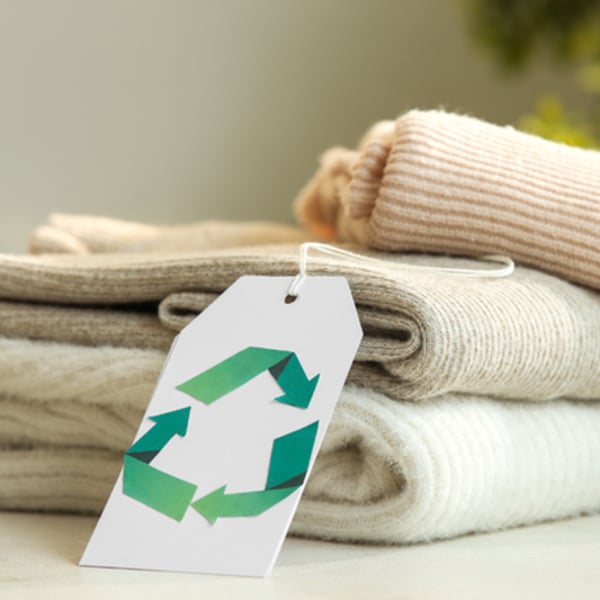
Recycling Europe Textiles (RET), the European association representing the textiles reuse and recycling sector, has urged the EU Commission to introduce ecodesign rules mandating the presence of at least 10% of recycled fibre content in textile products from 2028.
RET believes that the forthcoming European regulation on ecodesign for textile products is a decisive opportunity to accelerate the industry’s transition to a truly circular model. In a position statement published on January 7, the organisation underlined that introducing mandatory recycled-content requirements is essential to strengthen the recycling industry and respond to the growing pressure on textile-waste collection and treatment systems in Europe.
According to RET, the sector currently faces a critical juncture, characterised by an excess of low-quality textile waste, weak demand for recycled fibres, and funding constraints. The situation is likely to worsen as the separate collection of used textiles became mandatory in Europe in January 2025, and given the growing consumption of apparel products driven by the ultra-fast-fashion phenomenon. Without clear market signals, RET warned, increasing volumes of used textiles risk being incinerated or sent to landfill, rather than reutilised to make new products.
To reverse this cycle, RET is advocating a strict, targeted definition of ‘recycled content’ that prioritises post-consumer textile waste generated in Europe, excludes open-loop sources such as PET bottles, and discourages the generation of industrial textile waste. The aim is to promote genuine fibre-to-fibre circularity and ensure that recycling efforts focus on the main textile-waste stream in the European market.
Targets-wise, RET is proposing the progressive introduction of mandatory recycled-content requirements for textile products, starting with a company-portfolio-level approach and moving to product-level targets from 2030. The proposals stipulate a minimum of 10% of recycled fibres by 2028, 15% by 2030, and 30% by 2035, with a growing share sourced from European post-consumer waste. These targets, according to RET, would send clear predictive signals to the market, creating steady demand for recycled fibres and unlocking investment in new sorting and recycling technologies.
Another mainstay of RET’s position is the need for robust and credible verification systems. The association supports a hybrid model combining chain-of-custody systems, mass-balance methodologies and greater traceability, especially at the collection and sorting stages. In this context, the EU’s Digital Product Passport is regarded as a key tool for strengthening transparency, as it requires clear information on the amount, type and origin of the recycled content incorporated into textile products.
“Mandatory recycled-content targets are among the most effective policy instruments for transforming the European textile industry. By promoting genuine fibre-to-fibre circularity, the European Union can reduce resource extraction, boost innovation and recycling capacity, and support a resilient and competitive European textile recycling sector,” concluded RET.
This article is an automatic translation.
Click here to read the original article.












CBP is developing the Consolidated Administration and Processing of Entries (CAPE) functionality within the Automated Commercial Environment (ACE) to streamline the submission and processing of valid refund requests for duties imposed under the International Emergency Economic Powers Act (IEEPA), as authorised by court order or applicable law.
US Customs and Border Protection will launch on April 20 an electronic system that importers can use to claim tariff refunds authorised by court order or applicable law.
Phase 1 will be limited to certain unliquidated entries and certain entries within 80 days of liquidation.
Refunds will be issued within 60-90 days of the Consolidated Administration and Processing of Entries declaration getting accepted.
Phase 1 will be limited to certain unliquidated entries and certain entries within 80 days of liquidation.
CAPE is designed to consolidate refunds of IEEPA duties including interest rather than processing refunds on an entry-by-entry basis.
CBP plans to implement CAPE through a phased development approach, adding more functionality in subsequent phases for more complicated scenarios, it said in a release.
Valid IEEPA refunds will generally be issued within 60-90 days following acceptance of the CAPE declaration, unless a compliance concern requires further CBP review.
However, certain scenarios, such as entries that are extended, suspended or under review, and warehouse entries, will maintain their liquidation status with validated refunds issued at liquidation.
Fibre2Fashion News Desk (DS)

Named in honor of Gap Inc. co-founder Doris Fisher, the program reflects her legacy of creativity, curiosity, and belief in people. It also builds on Gap Inc.’s commitment to helping bridge the opportunity gap by creating stronger connections between education and careers in the fashion industry.
Gap Inc., led by Richard Dickson, has launched The Doris Fisher Creators Program with the Fashion Institute of Technology to mentor students in fashion careers.
Starting Fall 2026, the programme will offer structured mentorship, industry exposure, and networking for select students, honouring Doris Fisher and strengthening pathways from education to careers.
“Gap Inc. is a house of iconic American brands guided by our purpose — to bridge gaps to create a better world. That includes bridging the opportunity gap. FIT embodies that same spirit, bringing education and industry together to unlock talent and expand what’s possible. We’re committed to opening doors, investing in emerging creatives, and building meaningful pathways into this industry for the next generation,” said Dickson.
The Doris Fisher Creators Program will connect FIT students with Gap Inc. leaders and creatives through a structured mentorship experience designed to provide exposure to the business of fashion, industry insights, and meaningful professional connection.
The program will launch in Fall 2026 and run through the academic year, and the inaugural cohort will include students from select disciplines, including Fashion Design, Graphic Design (Apparel), and Fabric Styling.
“Supporting emerging talent is a core expression of Gap Inc.’s purpose in action. Through initiatives such as The Doris Fisher Creators Program — alongside This Way ONward, the Rotational Management Program, and our broader internship and mentorship efforts — the company continues to bridge the opportunity gap for young people looking to start meaningful careers in fashion and retail,” added Amy Thompson, Chief People Officer at Gap Inc.
“We are incredibly proud to be the first public college to partner with Gap Inc. on this groundbreaking mentorship program. This remarkable opportunity with one of the world’s most iconic brands will support 30 talented FIT students over the next year, placing them at the intersection of innovation and impact,” said Jason S. Schupbach, president of FIT.
A benefit for the FIT Foundation, this year’s FIT Annual Gala honored Gap Inc. President & CEO Richard Dickson and was attended by distinguished guests and alumni including Ciara, Aloe Blacc, Zac Posen, Bob Fisher and others.
The FIT Foundation provided scholarships totaling more than $3 million in 2025.
Note: The headline, insights, and image of this press release may have been refined by the Fibre2Fashion staff; the rest of the content remains unchanged.
Fibre2Fashion News Desk (RM)

The increase was driven largely by energy prices, as declines in regulated and non-regulated energy products eased significantly. In contrast, inflation in services slowed, Istat said in a press release.
Italy’s inflation rose to 1.7 per cent year on year in March 2026, driven by higher energy, according to Istat. Monthly inflation stood at 0.5 per cent.
Core inflation eased to 1.9 per cent, while services inflation slowed.
The HICP increased 1.6 per cent annually, with lower-income households experiencing relatively smaller price rises than higher-spending groups.
Core inflation, which excludes energy and unprocessed food, moderated to 1.9 per cent from 2.4 per cent, while inflation excluding energy eased to 2.1 per cent.
On a yearly basis, goods prices rose 0.8 per cent compared with a slight decline in the previous month, while services inflation slowed to 2.8 per cent from 3.6 per cent. This narrowed the inflation gap between services and goods.
On a monthly basis, the rise in the index was mainly led by increases in regulated energy prices, up 8.5 per cent, and non-regulated energy prices, up 5 per cent, along with gains transport services.
The harmonised index of consumer prices (HICP) rose 1.7 per cent MoM and 1.6 per cent YoY, slightly above the earlier estimate. In the first quarter, inflation remained lower for households with weaker spending capacity compared with higher-spending households.
Fibre2Fashion News Desk (SG)


Trump administration in advanced talks for a rescue package for Spirit Airlines, source says

US CBP to soon launch electronic system for importers to claim refunds

Anne Hathaway shares major news about ‘Princess Diaries 3’

-

 Fashion6 days ago
France’s LVMH Q1 revenue falls 6%, shows resilience amid Iran war
-

 Entertainment7 days ago
Is Claude down? Here’s why users are seeing errors
-

 Sports1 week ago
PSL 11: Peshawar Zalmi win toss, opt to field first against Quetta Gladiators
-

 Tech1 week ago
The Deepfake Nudes Crisis in Schools Is Much Worse Than You Thought
-

 Tech1 week ago
Human-machine teaming dives underwater
-

 Tech1 week ago
Bremont Is Sending a Watch to the Moon’s Surface
-
 Business1 week ago
BP sees ‘exceptional’ oil trading result as Iran war sends crude costs soaring
-

 Fashion1 week ago
What no one is saying about the 2026 apparel slowdown