Connect with us

Business

Rs 9 Crore In 20 Years! ‘Average’ Techie Shares Investment Journey

Published

on

Rs 9 Crore In 20 Years! ‘Average’ Techie Shares Investment Journey


Last Updated:

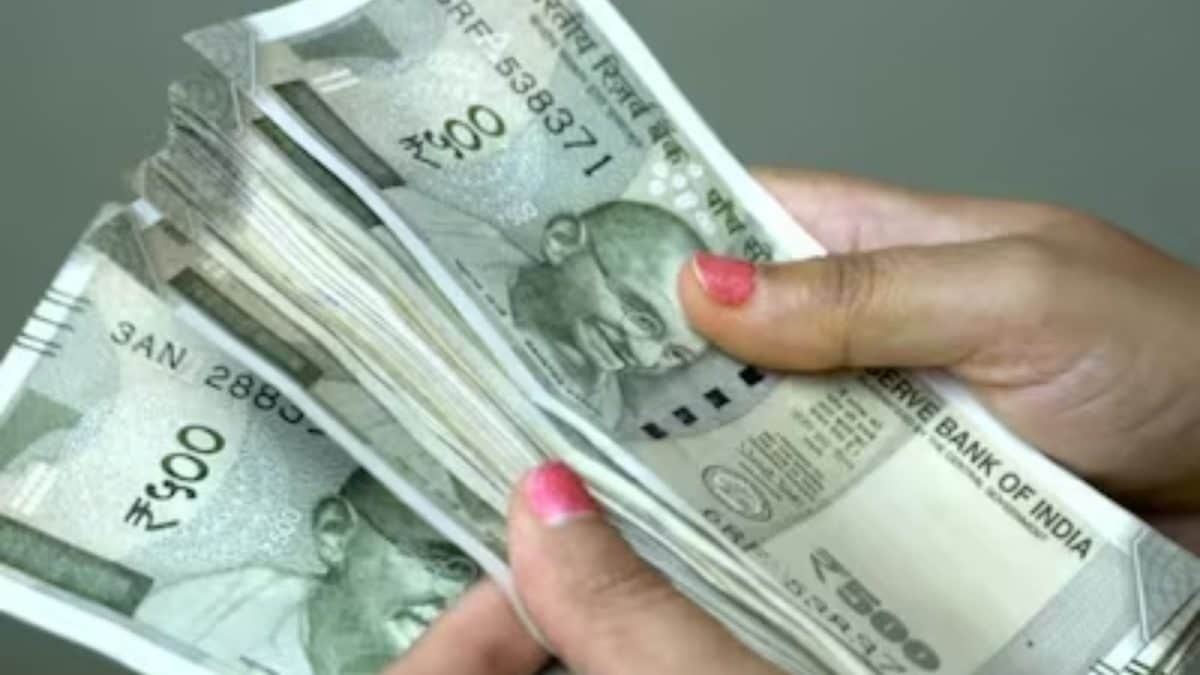
An Indian IT professional built Rs 9 crore in 20 years via disciplined equity and mutual fund investing, earning praise for his financial freedom story./

By 2026, his annual salary had grown to about Rs 65 lakh, while his investment portfolio had swelled to nearly Rs 9 crore.

By 2026, his annual salary had grown to about Rs 65 lakh, while his investment portfolio had swelled to nearly Rs 9 crore.

Whether salaried employees or business owners, most Indians worry about how to build a financial cushion for life after retirement. While many continue to favour conservative investment options, a recent post by an IT professional on Reddit has struck a chord online, offering a compelling counter-narrative built on discipline and long-term investing.

The now-viral post details how the engineer accumulated a corpus of nearly Rs 9 crore over two decades, without inherited wealth, overseas income, stock options or windfall gains from real estate. Describing himself as an “average guy working in IT industry”, the 47-year-old said he began his career in 2005 with an annual salary of Rs 3 lakh and no investment portfolio to speak of.

According to the post, the professional invested in equities from the very beginning of his career, avoided fixed deposits, lived frugally and consistently channelled a significant portion of his income into stocks and mutual funds. He was the sole earning member of a family of five throughout this period. “No onsite/dollar earnings though travelled to multiple countries from company/self,” he wrote, adding that his approach remained unchanged even as his income rose over the years.

By 2026, his annual salary had grown to about Rs 65 lakh, while his investment portfolio had swelled to nearly Rs 9 crore. Of this, around Rs 8 crore is invested directly in equities and about Rs 1 crore in mutual funds. He claims his portfolio has delivered an average annual return, or XIRR, of roughly 21%, an exceptional figure by market standards.

“No ESOP. Salary is pre-tax. Each year there was some extra bonus/awards as usual,” he further wrote, saying that he was the only earning member in a family of five.

The IT professional attributed his success largely to the power of compounding. “This is pure compounding with 21% XIRR. The magic happens after 10-15 years. I still hold many shares for decade,” he wrote. He also noted that he invested his annual bonuses in the market and now earns close to Rs 6 lakh a year in dividends from his equity holdings.

The post has drawn widespread praise on social media, with users calling it a rare and honest account amid stories dominated by overseas earnings and startup windfalls. “21 percent XIRR is insane, can you please guide us on this,” one user commented.

Another wrote, “A true story of a common Indian IT professional. Thanks for keeping it real.” Yet another said the post stood out because it showed that financial freedom is possible in India through disciplined spending and long-term investing.

Click here to add News18 as your preferred news source on Google.

Follow News18 on Google. Join the fun, play games on News18. Stay updated with all the latest business news, including market trendsstock updatestax, IPO, banking finance, real estate, savings and investments. To Get in-depth analysis, expert opinions, and real-time updates. Also Download the News18 App to stay updated.
News business Rs 9 Crore In 20 Years! ‘Average’ Techie Shares Investment Journey
Disclaimer: Comments reflect users’ views, not News18’s. Please keep discussions respectful and constructive. Abusive, defamatory, or illegal comments will be removed. News18 may disable any comment at its discretion. By posting, you agree to our Terms of Use and Privacy Policy.

Read More


Source link

Business

Indias Net Direct Tax Collections In FY26 Rise, Grow 8.82% To Rs 18.38 Lakh Crore Till Jan 11

Published

on

Indias Net Direct Tax Collections In FY26 Rise, Grow 8.82% To Rs 18.38 Lakh Crore Till Jan 11


New Delhi: India’s net direct tax collections for the financial year 2025–26 recorded strong growth of 8.82%, reaching Rs 18.38 lakh crore as of January 11, 2026, compared with Rs 16.89 lakh crore collected during the same period last year, according to official data released by the Income Tax Department on Monday.

Gross direct tax collections stood at Rs 21.50 lakh crore, marking a 4.14% increase over the Rs 20.64 lakh crore collected in the corresponding period of FY25. Corporate tax collections rose modestly to Rs 10.47 lakh crore, while non-corporate tax collections—which include taxes paid by individuals and other entities—increased to Rs 10.58 lakh crore.

Refunds issued during the period declined sharply by 16.92% to Rs 3.12 lakh crore from Rs 3.75 lakh crore in the previous year, contributing to higher net collections. Net corporate tax collections rose to Rs 8.63 lakh crore, while net non-corporate tax collections increased significantly to Rs 9.30 lakh crore. Securities Transaction Tax (STT) collections remained stable at around Rs 44,867 crore, while collections from other taxes were marginal during the period.

Add Zee News as a Preferred Source


The Union Budget 2026 will be presented on February 1. Earlier, in an email interview with ANI, Sonal Badhan, Economist at Bank of Baroda, said the Union Budget 2026 is likely to target 8.5–9% growth next year and increase capital expenditure to Rs 12–12.2 lakh crore.

“We expect the government to meet its fiscal deficit target of 4.4% for FY26. For next year, we estimate the deficit ratio will be lowered by 30–40 basis points to 4–4.1%. Capital expenditure allocation will be of key interest. In the ongoing fiscal year, the government has already met around 60% of the budgeted target till November 2025,” the BoB economist said.


Source link

Continue Reading

Business

Trump’s credit card rate cap plan has unclear path, ‘devastating’ risks, bank insiders say

Published

on

Trump’s credit card rate cap plan has unclear path, ‘devastating’ risks, bank insiders say


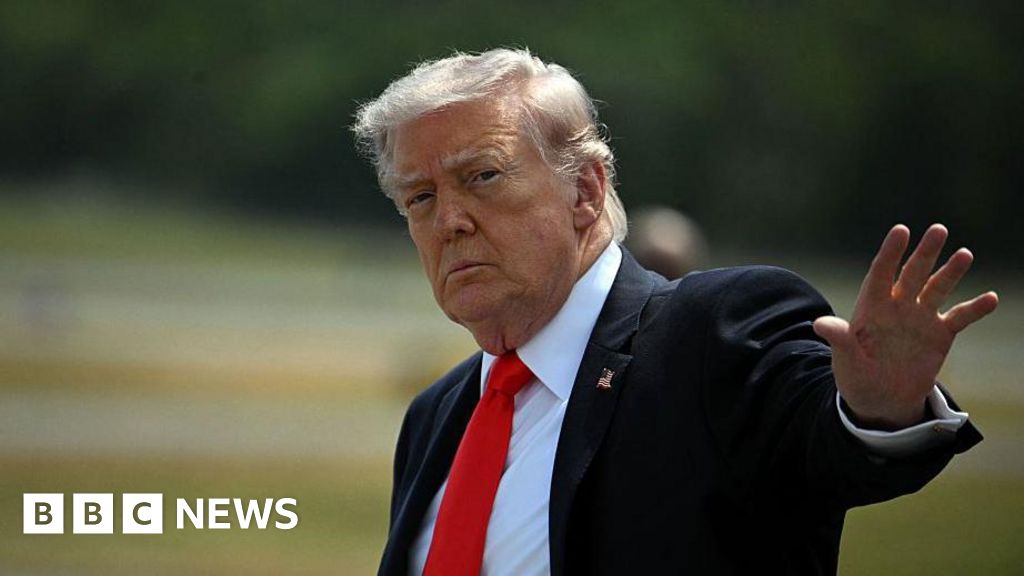
Bank executives were sent scrambling over the weekend after President Donald Trump declared late Friday that American credit card companies would be subject to a 10% cap on the interest rate they can charge customers.

The move sent shares of large banks including Citigroup, JPMorgan Chase, Wells Fargo and Bank of America down between 1% and 4% in early trading Monday. Companies more tightly tethered to the card industry, like Visa, Mastercard and American Express, also fell. Capital One, whose loan book is mostly from credit cards, sank nearly 7%.

Trump proposed a one-year cap on interest rates starting Jan. 20. While it’s unclear exactly how that would be enforced, the industry’s message is clear: the plan would bring unintended consequences for consumers and the American economy.

The move would make large swaths of the credit card industry unprofitable, especially tied to customers with less-than-ideal credit profiles, according to banks and analysts. The average credit card rate nationally is 19.7% as of this month, according to a weekly survey from Bankrate.com, while rates for subprime borrowers and store-specific cards are even higher.

Rather than offer loss-making products to consumers, the industry would simply stop offering access to customers with subprime credit, along with a slew of other changes around card programs including scaling back rewards, insiders say. Consumers would either spend less or rely on other forms of unsecured debt, many of which carry even higher interest rates than credit cards, they say.

“We cannot offer products at a loss; there’s no scenario where we would take our entire portfolio to 10%,” said a person with knowledge of the operations of a large bank, who asked to remain anonymous to speak candidly. “It’s not a stretch to suggest this will very quickly tank the economy.”

The drag on the economy from less spending could be more acute for airlines, retailers and restaurants, which would have to make up for lost card revenues by “potentially raising pricing” on their services, KBW analysts led by Sanjay Sakhrani and Chris McGratty said in a Jan. 11 research note.

The industry’s trade groups issued a joint statement late Friday making their case.

“Evidence shows that a 10% interest rate cap would reduce credit availability and be devastating for millions of American families and small business owners who rely on and value their credit cards, the very consumers this proposal intends to help,” the trade groups said.

(L-R) Wells Fargo CEO and President Charles Scharf, Brian Bank of America Chairman and CEO Thomas Moynihan, JPMorgan Chase Chairman and CEO Jamie Dimon, Citigroup CEO Jane Fraser, State Street CEO Ronald OÕHanley, BNY Mellon CEO Robin Vince, Goldman Sachs CEO David Solomon and Morgan Stanley CEO James Gorman, testify during a Wall Street oversight hearing by the Senate Banking, Housing, and Urban Affairs committee on Capitol Hill in Washington, DC, December 6, 2023.

Saul Loeb | AFP | Getty Images

‘Opening bid?’

This isn’t the industry’s first time contending with possible price controls. A bill was introduced last year from Sen. Josh Hawley of Missouri and Sen. Bernie Sanders of Vermont that would limit card APRs at 10% for five years.

While that bill is stalled in Congress, a study looking at the Missouri market from the Electronic Payments Coalition found that a 10% cap on rates would mean that more than 80% of card accounts would lose access. Most accounts with credit scores below 740 would be shut, the study claimed.

Complicating matters, it is unclear to bankers how Trump’s rate cap would take place.

The most straightforward approach, through legislation in Congress, isn’t possible by the proposed Jan. 20 start date, said Tobin Marcus, head of U.S. policy at Wolfe Research.

Other enforcement means, through banking regulators including the Consumer Financial Protection Bureau, are also possible. But the Trump administration has repeatedly tried to shutter that agency, and the industry has had a successful run at defeating CFPB rules in federal courts.

“I’m not aware of an authority that they can use to do this unilaterally in any kind of a sweeping way,” Marcus said. “As far as I can tell, telling them they have until Jan. 20 is an attempt to create pressure and have them do it voluntarily.”

While the exact mechanism that Trump can use to enforce an interest rate cap is unclear, card issuers now face the risk that rates could be headed lower in some form of negotiated compromise with the government, KBW’s McGratty said in an interview.

“Is 10% an opening bid?” he said. “There’s a long distance between 10% and what companies charge today.”

Americans had a collective $1.23 trillion in credit card debt as of the third quarter last year, according to data from the Federal Reserve Bank of New York. Balances have been climbing as many Americans spent down the savings they’d built up during the global coronavirus pandemic.

Correction: This story has been updated to correct the spelling of Capital One.


Source link

Continue Reading

Business

Boeing 737 MAX lawsuits: Second US trial opens over 2019 Ethiopian Airlines crash; Canadian family presses damages claim – The Times of India

Published

on

Boeing 737 MAX lawsuits: Second US trial opens over 2019 Ethiopian Airlines crash; Canadian family presses damages claim – The Times of India


A US federal court in Chicago on Monday began hearing a second damages trial against Boeing over the fatal 2019 crash of an Ethiopian Airlines 737 MAX aircraft, as a Canadian plaintiff sought compensation for the loss of multiple family members in the tragedy.The case has been filed by Manant Vaidya, whose sister Kosha Vaidya and parents Pannagesh and Hansini Vaidya were among the 157 people killed when Ethiopian Airlines Flight 302 crashed in March 2019. Vaidya also lost his brother-in-law and two young nieces in the incident, AP reported.Jury selection in the case is expected to begin on Monday, with opening statements likely on Tuesday afternoon or Wednesday, according to court proceedings.“It is hard to believe that my entire family was wiped out in an instant incident in such a horrific way,” Vaidya said in a statement published on the website of his attorneys at Clifford Law Firm. “I still cry and my wife, Hiral, still cries when we think of the horror of the last moments of our loved ones’ lives.”The Vaidya family, which lived in Canada, was travelling to Kenya, the homeland of Kosha Vaidya, at the time of the crash.Relatives of Vaidya’s brother-in-law and nieces had filed a separate lawsuit against Boeing, which was settled out of court in July 2025.The Ethiopian Airlines crash followed a similar fatal accident involving a Lion Air 737 MAX aircraft in Indonesia in October 2018. Together, the two crashes claimed 346 lives and led to the worldwide grounding of the 737 MAX fleet. Investigations linked both incidents to the aircraft’s Maneuvering Characteristics Augmentation System (MCAS), a flight-stabilising software.Boeing has acknowledged responsibility for the crashes and issued apologies to the victims’ families.“Boeing is deeply sorry for the losses suffered by the families,” a company spokesperson said, adding that the company is committed to “fully and fairly compensate” the victims and has “accepted legal responsibility for the accidents.”“While we have resolved the vast majority of these claims through settlements, families are also entitled to pursue their claims through damages trials in court, and we respect their right to do so,” the spokesperson said.The trial comes weeks after a US jury in the same Chicago courthouse ordered Boeing to pay $28.45 million in damages to the family of an Indian victim of the 2019 Ethiopian Airlines crash.


Source link

Continue Reading

Trending