

Business
New Birmingham-Manchester rail line planned by Government

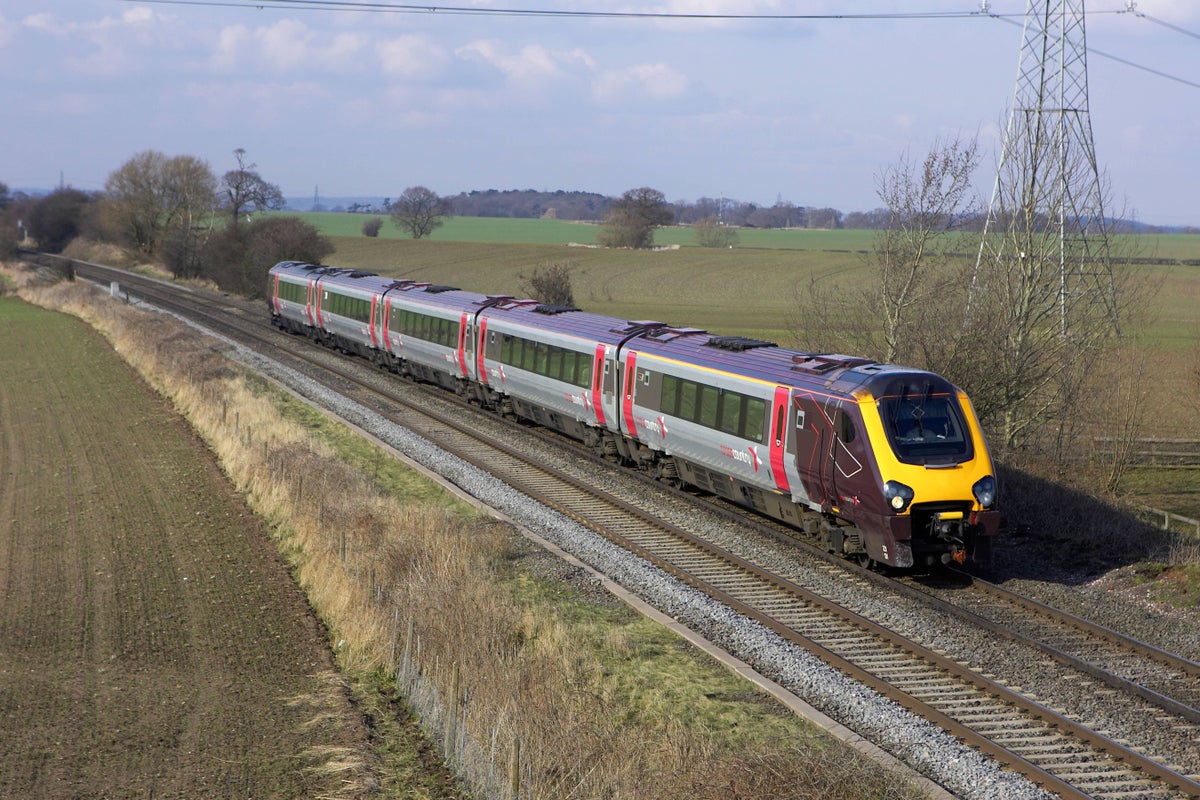
The Government has announced its intention to build a new railway line between Birmingham and Manchester.
A previous plan to extend HS2 between the cities was scrapped by Rishi Sunak’s Conservative government in October 2023 to save money.
The Treasury said it wants a new Birmingham-Manchester rail line but that it would not be “a reinstatement of HS2”.
No timescale was provided on when it would be built.
Land between Manchester and Birmingham previously obtained for HS2 will be held onto while the project is developed.
A new line would ease pressure on the West Coast Main Line.
The Treasury said the new line would not be open until after the completion of Northern Powerhouse Rail (NPR), a scheme to boost east-west rail connections across northern England.
Prime Minister Sir Keir Starmer said the Government was “rolling up its sleeves” to deliver NPR.
The first phase of the programme would improve connections on existing lines in the 2030s on the following routes: between Sheffield and Leeds; between Leeds and York; and between Leeds and Bradford.
It was chosen as the opening stage of the scheme as it does not require major new land acquisitions.
A second phase of NPR would involve a new route between Liverpool and Manchester via Manchester airport and Warrington, using a combination of new and existing lines.
The third and final phase involved better connections eastwards from Manchester to Leeds, Bradford, Sheffield and York.
There is money for a new station for Bradford.
Regular services would run on to Newcastle via Darlington and Durham, and Chester for North Wales connections.
Development work would also be taken forward on reopening the Leamside Line, a 21-mile route between Pelaw, Gateshead, and Tursdale, County Durham, which was closed in 1964.
The Treasury said a “funding cap” of £45 billion would be set for NPR, although this could be topped up by local contributions, such as through increased revenue from business rates.
An initial £1.1 billion for development and design work would be available to enable the creation of a “detailed delivery plan which will include timings”, the Treasury said.
Sir Keir said: “Over and over again, people in northern communities, from Liverpool and Manchester to York and Newcastle have been let down by broken promises.
“This cycle has to end. No more paying lip service to the potential of the North, but backing it to the hilt.
“That’s why this Government is rolling up its sleeves to deliver real, lasting change for millions of people through Northern Powerhouse Rail: a major new rail network across the North that will deliver faster, more frequent services.”
NPR is the focus of the Government’s wider Northern Growth Strategy, which will be published in spring and aims to provide better jobs, more homes and increased investment in the region.
Chancellor Rachel Reeves said: “If economic growth is the challenge, investment and renewal is the solution.
“That’s why we’re reversing years of chronic underinvestment in the North.
“Our transformative plans will create jobs, build homes and unlock opportunities for businesses to invest.”
Andy Burnham, Mayor of Greater Manchester, said: “Finally, we have a Government with an ambitious vision for the North, firm commitment to Northern Powerhouse Rail and an openness to an underground station in Manchester city centre.”
He added: “Today marks a significant step forward for Greater Manchester.
“We’ll now work at pace to prove the case for an underground station and work up detailed designs for the route between Liverpool and Manchester.”
Steve Rotheram, Mayor of the Liverpool City Region, said: “After more than a decade of dither, delay and broken promises, this is the start of a new era, with a genuinely strategic approach and a Government finally backing Northern Powerhouse Rail in full.
“This is the kind of ambition we’ve been crying out for.”
But the Conservatives accused the Government of “watering down” Northern Powerhouse Rail, saying ministers had “put back any plans to actually deliver it and rewritten timetables on the fly”.
Shadow rail minister Jerome Mayhew said: “Labour lurch from review to review, deadline to deadline, with no grip on costs, no clarity on scope and no courage to make decisions, exemplified nowhere clearer than the hatchet job of Great British Railways.
“Northern Powerhouse Rail could have been transformational, empowering regional growth and regeneration. Under Labour it risks becoming a permanent mirage that is endlessly redesigned, downgraded and never delivered.”
The war in the Middle East has brought renewed attention to Britain’s vulnerability to energy price shocks.
Source link
Business
Gadkari urges shift to 100% ethanol blending, flags energy security and import risks – The Times of India
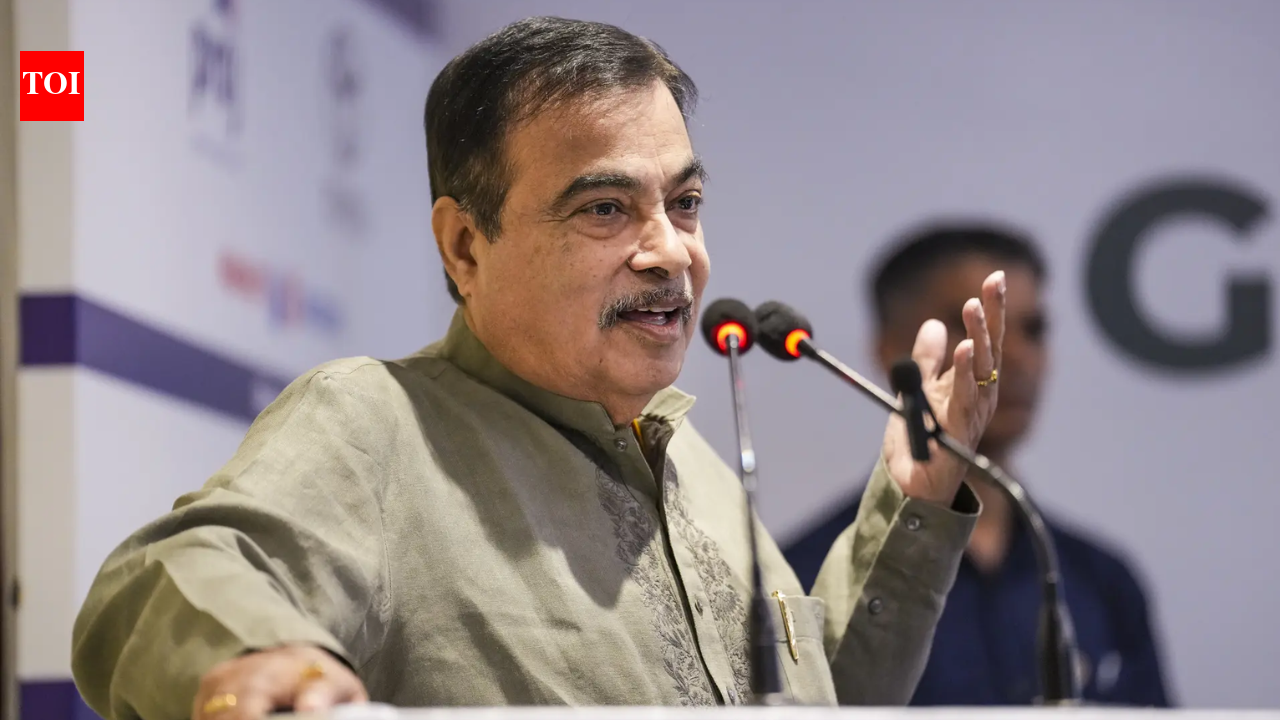
India should aim for 100 per cent ethanol blending in the near future to strengthen energy self-reliance, road transport and highways minister Nitin Gadkari said on Tuesday. He said that vulnerabilities in oil supplies due to the ongoing crisis in West Asia have made it essential for the country to reduce dependence on imports.Speaking at the Indian Federation of Green Energy’s Green Transport Conclave, Gadkari said, “In the near future, India should aspire to achieve 100 per cent ethanol blending… Today, we are facing an energy crisis due to the war in West Asia, so it is necessary for us to become self-reliant in the energy sector,” as quoted by PTI.India currently allows vehicles to run on E20 petrol, which contains 20 per cent ethanol, with minor engine modifications to avoid corrosion and related issues. In 2023, PM Modi launched petrol blended with 20 per cent ethanol. Countries such as Brazil have already achieved 100 per cent ethanol blending.Gadkari noted that India imports 87 per cent of its oil requirements, adding, “We import fossil fuels worth Rs 22 lakh crore, which is also causing pollution… so we need to work on increasing production of alternative fuel and bio-fuel.”On future energy solutions, he stressed the importance of green hydrogen but pointed out challenges in cost and transport. “Transport of hydrogen fuel is a problem. Also, we need to produce 1 kg of hydrogen at $1 dollar, to make India an exporter of energy,” he said, adding that hydrogen production from waste should be explored.The minister also emphasised the role of a circular economy in generating employment opportunities. While calling for reduced reliance on petrol and diesel vehicles, he clarified, “But we can not force people to stop buying petrol and diesel vehicles.”Addressing concerns about E20 fuel, Gadkari said the petroleum sector is lobbying against the move. He also urged automobile manufacturers to prioritise quality over cost to expand into new markets.Last year, Gadkari dismissed criticism against E20 (ethanol-blended petrol), saying a “paid” social media campaign is being run to “target me politically.” He said Society of Indian Automobile Manufacturers and Automotive Research Association of India have shared their findings on ethanol blending in petrol. He added that India’s ethanol programme has benefited farmers, noting that ethanol made from maize has helped them get better prices and led to gains of Rs 45,000 crore.
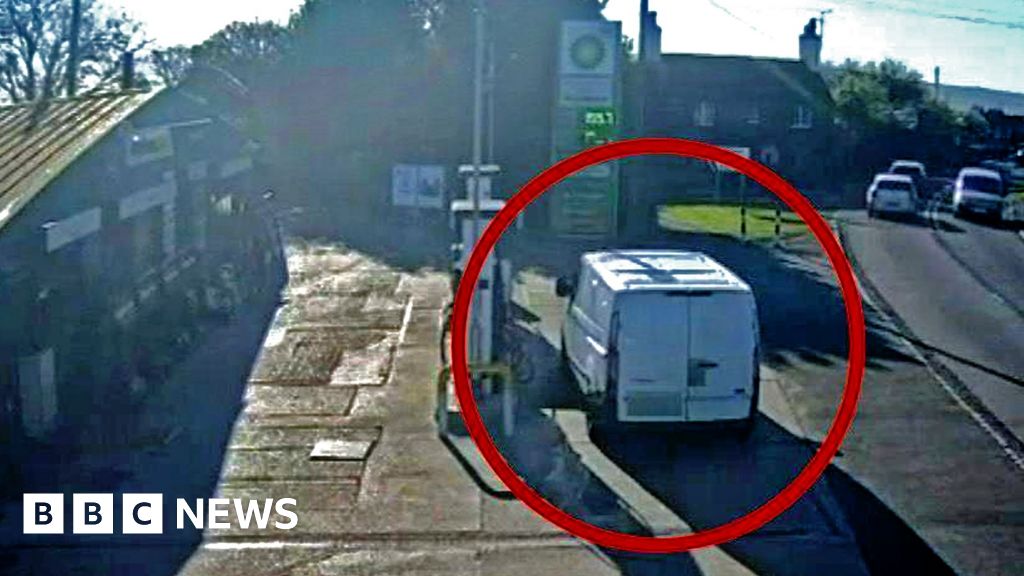
One petrol retailer says he is experiencing about five drive-offs a week at each forecourt, costing him thousands.
Source link


Matarazzo celebrates Real Sociedad Copa title: ‘Just the beginning’

Germany firms raise investment plans, uncertainty persists: ifo

Jennifer Lopez and Will Smith viral dating claims raise big questions

-

 Fashion5 days ago
France’s LVMH Q1 revenue falls 6%, shows resilience amid Iran war
-

 Sports1 week ago
The case for Man United’s Fernandes as Premier League’s best
-

 Entertainment1 week ago
Palace left in shock as Prince William cancels grand ceremony
-
 Business1 week ago
UK could adopt EU single market rules under new legislation
-

 Entertainment6 days ago
Is Claude down? Here’s why users are seeing errors
-

 Fashion1 week ago
Energy emerges as biggest cost driver in textile margins
-
 Business1 week ago
Delta Air Lines unveils first new Delta One suite in premium cabin arms race
-

 Fashion1 week ago
Asia claims largest share of markets on Kearney FDI Confidence Index