

Business
New Birmingham-Manchester rail line planned by Government

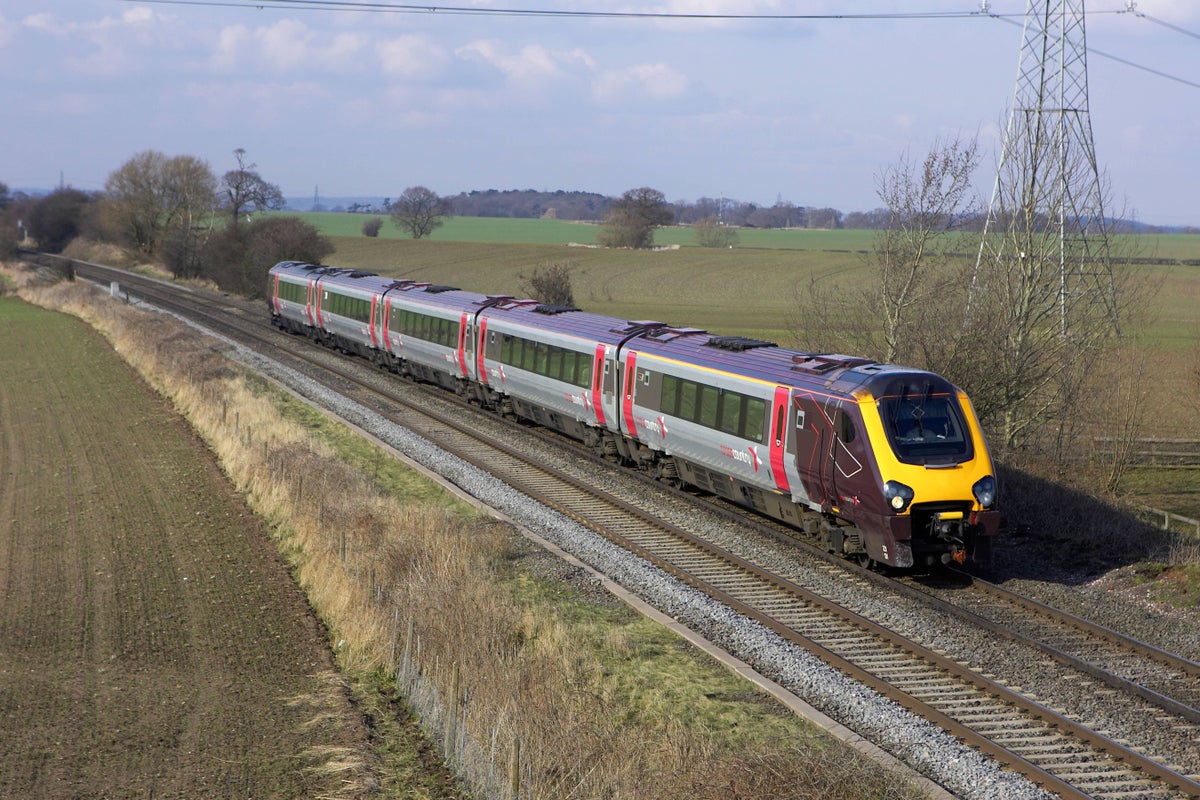
The Government has announced its intention to build a new railway line between Birmingham and Manchester.
A previous plan to extend HS2 between the cities was scrapped by Rishi Sunak’s Conservative government in October 2023 to save money.
The Treasury said it wants a new Birmingham-Manchester rail line but that it would not be “a reinstatement of HS2”.
No timescale was provided on when it would be built.
Land between Manchester and Birmingham previously obtained for HS2 will be held onto while the project is developed.
A new line would ease pressure on the West Coast Main Line.
The Treasury said the new line would not be open until after the completion of Northern Powerhouse Rail (NPR), a scheme to boost east-west rail connections across northern England.
Prime Minister Sir Keir Starmer said the Government was “rolling up its sleeves” to deliver NPR.
The first phase of the programme would improve connections on existing lines in the 2030s on the following routes: between Sheffield and Leeds; between Leeds and York; and between Leeds and Bradford.
It was chosen as the opening stage of the scheme as it does not require major new land acquisitions.
A second phase of NPR would involve a new route between Liverpool and Manchester via Manchester airport and Warrington, using a combination of new and existing lines.
The third and final phase involved better connections eastwards from Manchester to Leeds, Bradford, Sheffield and York.
There is money for a new station for Bradford.
Regular services would run on to Newcastle via Darlington and Durham, and Chester for North Wales connections.
Development work would also be taken forward on reopening the Leamside Line, a 21-mile route between Pelaw, Gateshead, and Tursdale, County Durham, which was closed in 1964.
The Treasury said a “funding cap” of £45 billion would be set for NPR, although this could be topped up by local contributions, such as through increased revenue from business rates.
An initial £1.1 billion for development and design work would be available to enable the creation of a “detailed delivery plan which will include timings”, the Treasury said.
Sir Keir said: “Over and over again, people in northern communities, from Liverpool and Manchester to York and Newcastle have been let down by broken promises.
“This cycle has to end. No more paying lip service to the potential of the North, but backing it to the hilt.
“That’s why this Government is rolling up its sleeves to deliver real, lasting change for millions of people through Northern Powerhouse Rail: a major new rail network across the North that will deliver faster, more frequent services.”
NPR is the focus of the Government’s wider Northern Growth Strategy, which will be published in spring and aims to provide better jobs, more homes and increased investment in the region.
Chancellor Rachel Reeves said: “If economic growth is the challenge, investment and renewal is the solution.
“That’s why we’re reversing years of chronic underinvestment in the North.
“Our transformative plans will create jobs, build homes and unlock opportunities for businesses to invest.”
Andy Burnham, Mayor of Greater Manchester, said: “Finally, we have a Government with an ambitious vision for the North, firm commitment to Northern Powerhouse Rail and an openness to an underground station in Manchester city centre.”
He added: “Today marks a significant step forward for Greater Manchester.
“We’ll now work at pace to prove the case for an underground station and work up detailed designs for the route between Liverpool and Manchester.”
Steve Rotheram, Mayor of the Liverpool City Region, said: “After more than a decade of dither, delay and broken promises, this is the start of a new era, with a genuinely strategic approach and a Government finally backing Northern Powerhouse Rail in full.
“This is the kind of ambition we’ve been crying out for.”
But the Conservatives accused the Government of “watering down” Northern Powerhouse Rail, saying ministers had “put back any plans to actually deliver it and rewritten timetables on the fly”.
Shadow rail minister Jerome Mayhew said: “Labour lurch from review to review, deadline to deadline, with no grip on costs, no clarity on scope and no courage to make decisions, exemplified nowhere clearer than the hatchet job of Great British Railways.
“Northern Powerhouse Rail could have been transformational, empowering regional growth and regeneration. Under Labour it risks becoming a permanent mirage that is endlessly redesigned, downgraded and never delivered.”
Business
Billions to be paid! US starts refund process for Trump tariffs: Can Indian exporters claim? – The Times of India
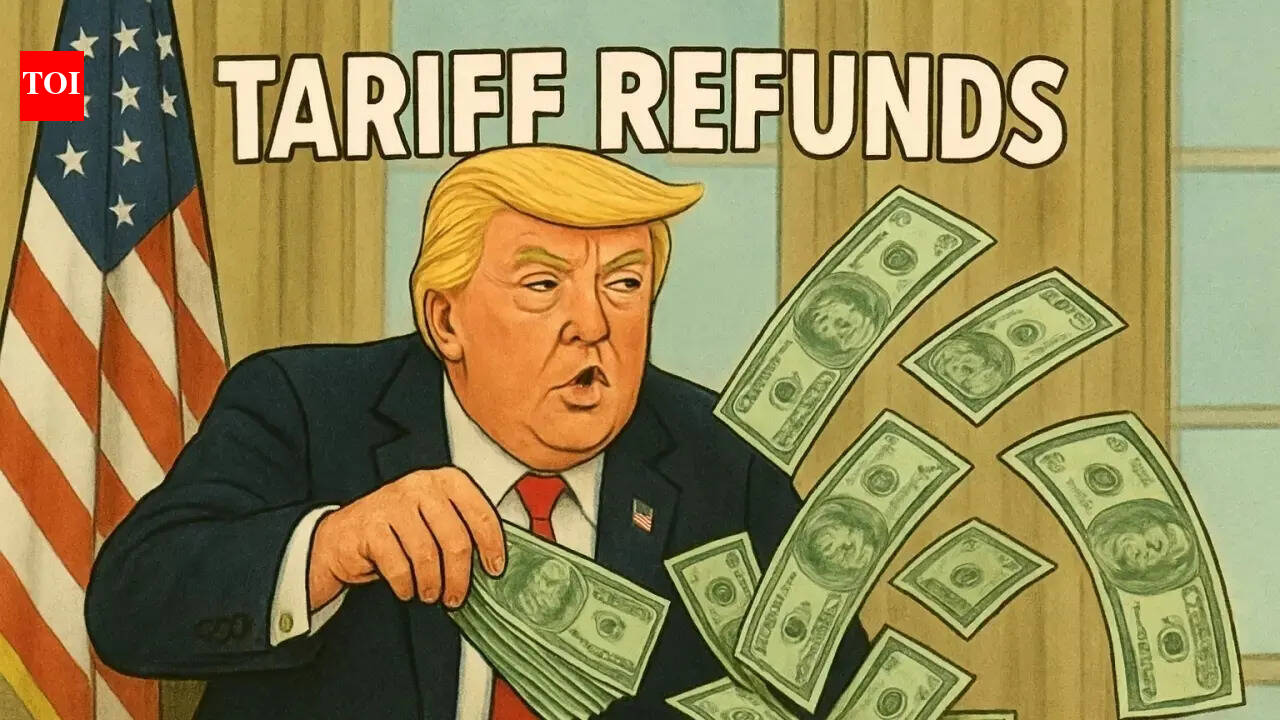
The US government has rolled out a system to facilitate refunds of over $166 billion from tariffs introduced by Donald Trump and later invalidated by the US Supreme Court. In February, the court struck down a broad set of reciprocal tariffs, delivering a significant setback to a central pillar of Trump’s economic agenda and paving the way for repayments.On Monday, US Customs and Border Protection announced that the first phase of its refund-processing platform is now operational, allowing importers and customs brokers to begin filing claims to recover the duties they had paid.The agency had earlier estimated in March that more than 330,000 importers may qualify for reimbursements on duties or deposits linked to over 53 million shipments. In its initial rollout, the platform covers about $127 billion in duty payments eligible for electronic refunds.
Tariff refunds What US Customs and Border Protection has said
The process to return reciprocal tariff payments starts on April 20 through a newly launched online platform, CAPE (Consolidated Administration and Processing of Entries), operated by US Customs and Border Protection.This move follows a February 20, 2026 judgment by the US Supreme Court, which ruled that tariffs introduced by Donald Trump were unlawful. The court found that these duties had been imposed under the International Emergency Economic Powers Act without adequate legal backing.Also Read | Iran has closed Strait of Hormuz completely: What does this mean for India’s crude oil, LPG, LNG supplies?The tariffs impacted a wide range of exports from countries including India. To receive repayments, importers in the US are required to submit claims which include shipment details, applicable tariff classifications and proof of payment. Once approved, these refunds along with interest are expected to be processed within 60 to 90 days. Eligibility is limited to those who originally paid the tariffs, primarily US importers and businesses.The total amount to be refunded is estimated at around $166 billion, with nearly $12 billion tied to Indian goods.The tariff structure began at 10% on April 2, 2025, before escalating quickly. Duties on Indian goods increased to 25% by August 7, 2025, and further to 50% by August 28, remaining at that level until early February 2026. On February 6, 2026, rates were lowered to 18% following negotiations. However, the Supreme Court’s ruling later that month nullified the entire regime, effectively rendering the tariffs void and paving the way for refunds.
What it means for India
Exporters and end consumers are not permitted to file claims directly, although some companies, such as FedEx, may opt to pass on the refunded amounts at their discretion.According to Global Trade Research Initiative (GTRI), around 53% of India’s shipments to the US, which largely comprises textiles and apparel, were subject to higher tariffs. This makes them the largest contributors to the refund pool. Of the nearly $12 billion tied to Indian exports, textiles and apparel are estimated to account for around $4 billion, followed by engineering goods with a similar share and chemicals contributing about $2 billion, while other sectors make up the remainder.However, what is important to understand is that these refunds will not flow directly to Indian exporters. The payments are meant only for US importers who bore the tariff burden.Also Read | Explained: On way to 4th largest, how India slipped to 6th rank & what it means for 3rd largest economy dream“Payments go only to US importers, and exporters have no legal right to claim them. Indian exporters, therefore, have no direct legal route to claim refunds,” explains Ajay Srivastava, founder of GTRI.Hence, any potential recovery of these refunds will depend on commercial discussions. Exporters will need to actively engage with their US counterparts to negotiate a share of the refunded duties, particularly in cases where earlier pricing factored in tariff costs. GTRI explains that this can be done by reopening contracts, adding rebate-sharing clauses, asking for price revisions or credit notes, and using invoices and tariff data to show how costs were absorbed. “Exporters with stronger bargaining power, especially in textiles and engineering goods, may secure better terms in future orders,” the think tank says.Industry bodies such as the Apparel Export Promotion Council, Engineering Export Promotion Council of India and Chemexcil can also assist exporters with guidance on contract renegotiation and sector-specific approaches, it adds.
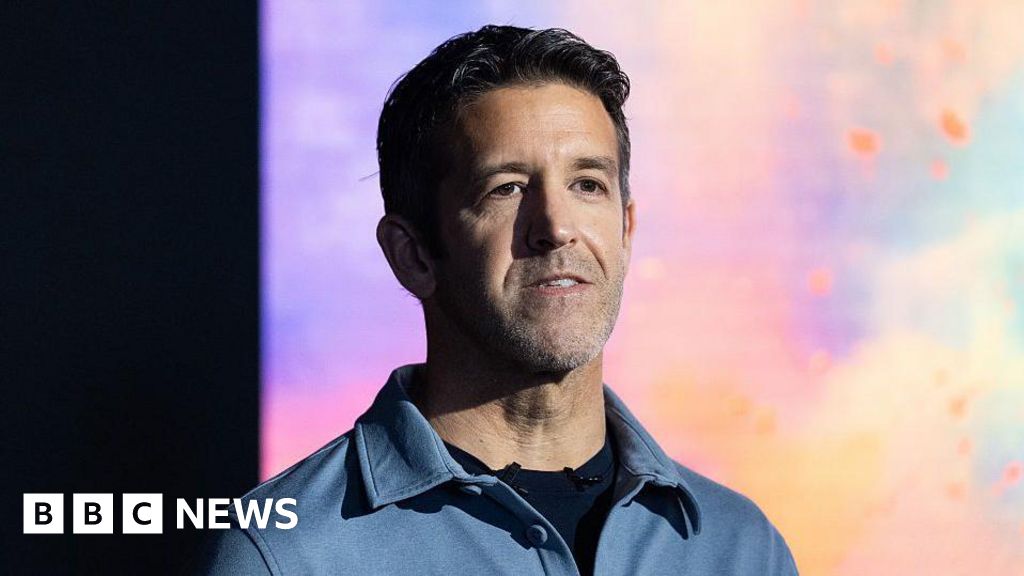
John Ternus will take over running the technology giant as Cook steps up to become executive chairman.
Source link
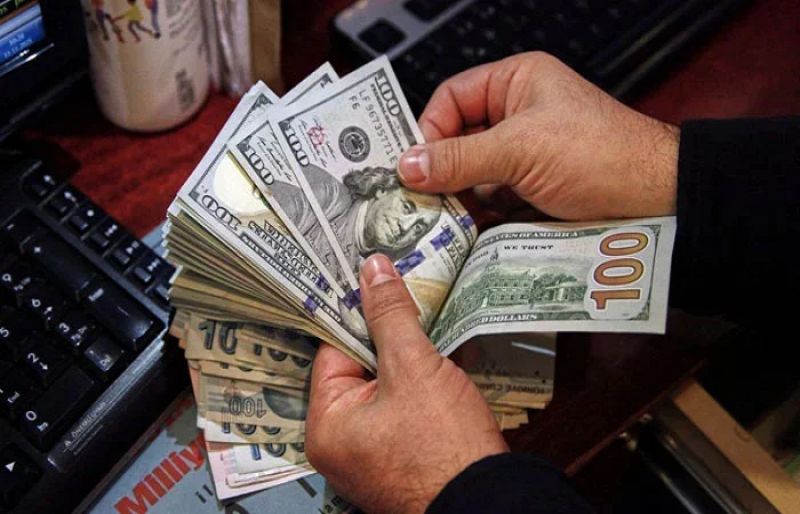
The State Bank of Pakistan (SBP) has received $1 billion from the Ministry of Finance of the Kingdom of Saudi Arabia, marking the second tranche of a $3 billion deposit agreed recently, the central bank said on Tuesday.
According to the statement issued by the central bank, the second tranche was received with a value date of April 20, 2026.
The first tranche of $2 billion had already been received on April 15, 2026, bringing the total inflows under the arrangement to $3 billion.
The development comes days after Prime Minister Shehbaz Sharif’s visit to Saudi Arabia, where he engaged in diplomatic efforts aimed at promoting regional peace.
During his visit, the premier met Crown Prince Mohammed bin Salman in Jeddah and expressed appreciation for the Kingdom’s continued support for Pakistan’s economic stability. He also conveyed solidarity with Saudi Arabia in light of recent regional developments.
Earlier on April 16, Finance Minister Muhammad Aurangzeb had announced that Saudi Arabia would provide $3 billion in additional financial support, with disbursement expected shortly.
He also noted that Riyadh had extended the tenure of its existing $5 billion deposit, removing the earlier annual rollover requirement.
The Saudi funding has strengthened Pakistan’s external position as it repaid $2 billion in debt to the United Arab Emirates (UAE).
The amount was kept with the central banks as a safe deposit.
Saudi Arabia has been a key financial partner for Pakistan, having provided support packages during previous economic challenges, including a $6 billion assistance programme in 2018 comprising deposits and oil facility arrangements.


War-linked energy shock pushing inflation higher in Europe: IMF expert

Scam messages offering ships safe transit through Hormuz, warns security firm
Billions to be paid! US starts refund process for Trump tariffs: Can Indian exporters claim? – The Times of India

-

 Fashion5 days ago
France’s LVMH Q1 revenue falls 6%, shows resilience amid Iran war
-

 Sports1 week ago
The case for Man United’s Fernandes as Premier League’s best
-

 Entertainment1 week ago
Palace left in shock as Prince William cancels grand ceremony
-
 Business1 week ago
UK could adopt EU single market rules under new legislation
-

 Entertainment6 days ago
Is Claude down? Here’s why users are seeing errors
-

 Fashion1 week ago
Energy emerges as biggest cost driver in textile margins
-
 Business1 week ago
Delta Air Lines unveils first new Delta One suite in premium cabin arms race
-

 Tech1 week ago
A Lot of Shops Won’t Fix Electric Bikes. Here’s Why