

Fashion
Asics launches global ‘Move Your Body, Move Your Mind’ campaign


Published
January 14, 2026
Japanese activewear brand Asics has unveiled its new global brand campaign ‘Move Your Body, Move Your Mind’ that tunes into the motivation that tends to kickstart New Year fitness ambitions.
Accompanied by a reimagined version of The Beach Boys’ timeless hit ‘Good Vibrations’ the campaign reinforces Asics’ “75-year commitment to the transformative power of movement for physical and mental wellbeing”.
The campaign launches with running and tennis-focused films highlighting how a run or match can positively lift our mood and transform the world around us.
The campaign launches across digital, social, broadcast, and retail channels in key markets worldwide and will be supported by community activations “that encourage people to experience the uplifting power of movement firsthand”.
And if we needed any further motivation, Asics’ commitment to movement for body and mind is backed by extensive research, including studies showing that even 15 minutes of exercise may lift our mental state.
Gary Raucher, Global head of Marketing at the brand, said: “For over 75 years, Asics has been committed to helping more people move so they can feel better. It’s the reason we were founded and why we’re called Asics – an acronym for Anima Sana In Corpore Sano, or Sound Mind in a Sound Body. This campaign brings our founding principle to life in a way that inspires everyone to experience the uplifting power of movement, because when you move your body, you move your mind.”
Copyright © 2026 FashionNetwork.com All rights reserved.












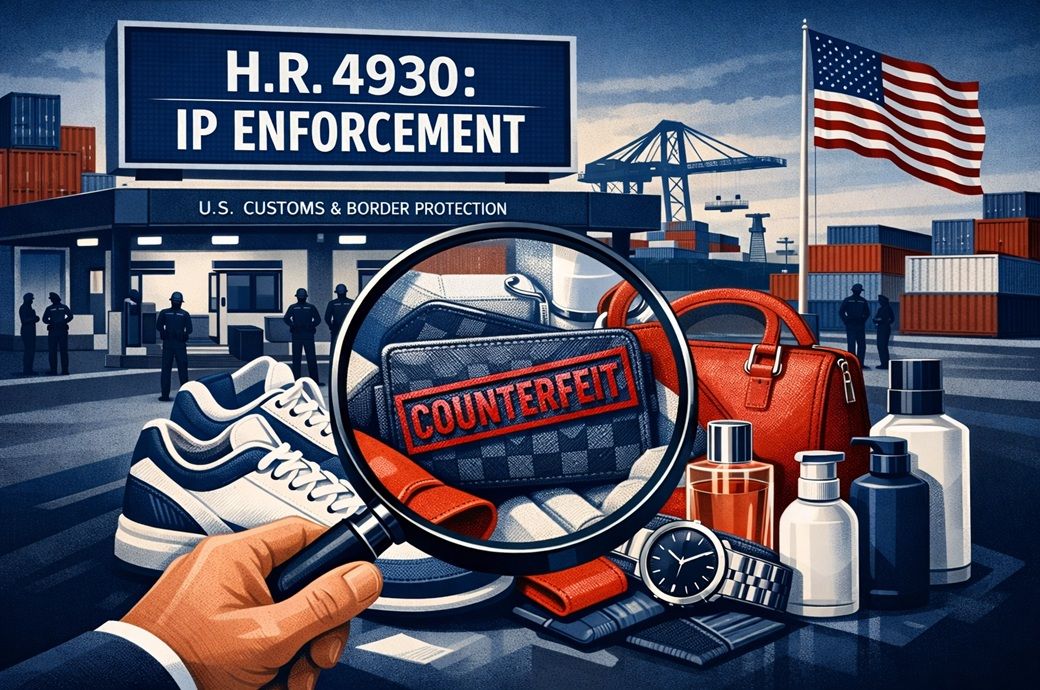
The piece of legislation, aimed at addressing long-standing challenges to the enforcement of intellectual property rights (IPR) at US borders, was reported with unanimous, bipartisan support from the House Ways and Means Committee.
AAFA along with 18 other trade bodies recently wrote to Congressional leadership in the US House of Representatives seeking support to move HR 4930 forward in the legislative process.
The piece of legislation, aimed at addressing long-standing challenges to the enforcement of IPR at US borders, was reported with unanimous, bipartisan support from the House Ways and Means Committee.
“We encourage you to move swiftly in bringing the bill to the Floor,” the letter noted.
In fiscal 2023-2024, US Customs & Border Protection (CBP) seized over 32 million counterfeit and pirated items, valued in excess of $5 billion, across more than 300 ports of entry, the letter noted.
“More disconcerting though is the rate at which those figures are increasing. In just the past five years, the number of illicit goods seized by CBP has more than doubled, while the value of those goods has grown by more than 400 per cent,” the letter said.
“The cost of this criminal trafficking cannot be measured in dollars alone though, but in the injuries caused by often dangerous fakes that put consumers’ health and safety at risk, in diminished investments to drive the next wave of innovation by American businesses, in jobs lost
to unfair competition, and increasingly, by the threats such products pose to our national security,” the letter said.
The overwhelming volume of trade passing through U.S. ports, and the speed at which it moves, presents a significant obstacle to effective border enforcement, it noted.
While Congress has expressed a clear desire in recent years for greater partnership between the public and private sectors on these issues, CBP has raised concerns over both the scope of its authority to share information with, and to seek assistance from, its partners in the private sector in carrying out its IP enforcement mission, it said.
HR 4930 clarifies and expands the agency’s authority, offering practical tools to safeguard consumers and legitimate businesses.
“It is essential that CBP has the ability to work with relevant stakeholders throughout the supply chain, both to avoid the siloing of information that has often hindered the agency’s efficiency, and to ensure that the private sector can offer effective and timely assistance on matters of trade enforcement, thereby ensuring that bad actors and trade cheats are held accountable,” the letter added.
The trade associations which signed the letter include Baby Safety Alliance, International AntiCounterfeiting Coalition, International Intellectual Property Association, Personal Care Products Council and Transnational Alliance to Combat Illicit Trade.
Fibre2Fashion News Desk (DS)

This marks the first comprehensive revision in decades, with the last fee increases recorded in 1998 for trademarks, 2016 for designs, and 2018 for patents. The IPO stated that the changes aim to address a 32 per cent rise in inflation since 2016 while supporting continued investment in digital systems and services.
The UK IPO has increased fees for trademarks, designs and patents from April 1, 2026 under new rules, marking the first major revision in years.
The move reflects a 32 per cent rise in inflation since 2016 and aims to support continued investment in digital systems and services, with transitional provisions applicable for certain filings and payments.
The updated fees apply to all applications and payments made on or after April 1, 2026. Transitional provisions have also been outlined for certain cases. For designs, deferred registration requests submitted from April 1 onwards will be subject to the new fees, even if the original application was filed earlier.
For trademarks, applicants using the permitted period of grace may still be eligible to pay the previous fee, provided the application was filed before April 1 and any outstanding payment is completed within the IPO’s deadline.
Separately, UKFT has submitted industry feedback to the IPO regarding the UK’s updated Design Framework, which is expected to be announced later this year.
Fibre2Fashion News Desk (JP)

The 2026 apparel slowdown signals a structural reset rather than a cyclical dip, with fragmented demand and weaker pricing power reshaping growth.
Rising input costs and inventory build-up are compressing margins, while cautious consumer spending and supply chain risks prolong a low-growth, high-complexity phase.
Export demand remains inconsistent, limiting visibility for manufacturers.
Source link

[CinePlex360] Please moderate: “Lamar Odom shockin

Caitlin Clark’s newest Fever teammate has dramatic history with superstar

Nicolas Cage set to return to ‘Longlegs’ franchise with new movie

-

 Fashion1 week ago
India’s exports face reset as EU links trade to carbon metrics: EY
-

 Tech6 days ago
As the Strait of Hormuz Reopens, Global Shipping Will Take Months to Recover
-

 Entertainment7 days ago
Queen Elizabeth II emotional message for Archie, Lilibet sparks speculation
-

 Tech7 days ago
Azure customers up in arms over ‘full’ UK South region | Computer Weekly
-

 Entertainment1 week ago
Lamar Odom shocking response to Khloé Kardashian account of his overdose
-

 Fashion7 days ago
CII submits 20-pt agenda to Indian govt to back firms hit by Iran war
-

 Tech6 days ago
This AI Button Wearable From Ex-Apple Engineers Looks Like an iPod Shuffle
-

 Tech1 week ago
A Single Strike Won’t Shut Off the Gulf’s Desalination System