

Fashion
North India cotton yarn prices steady amid slow demand

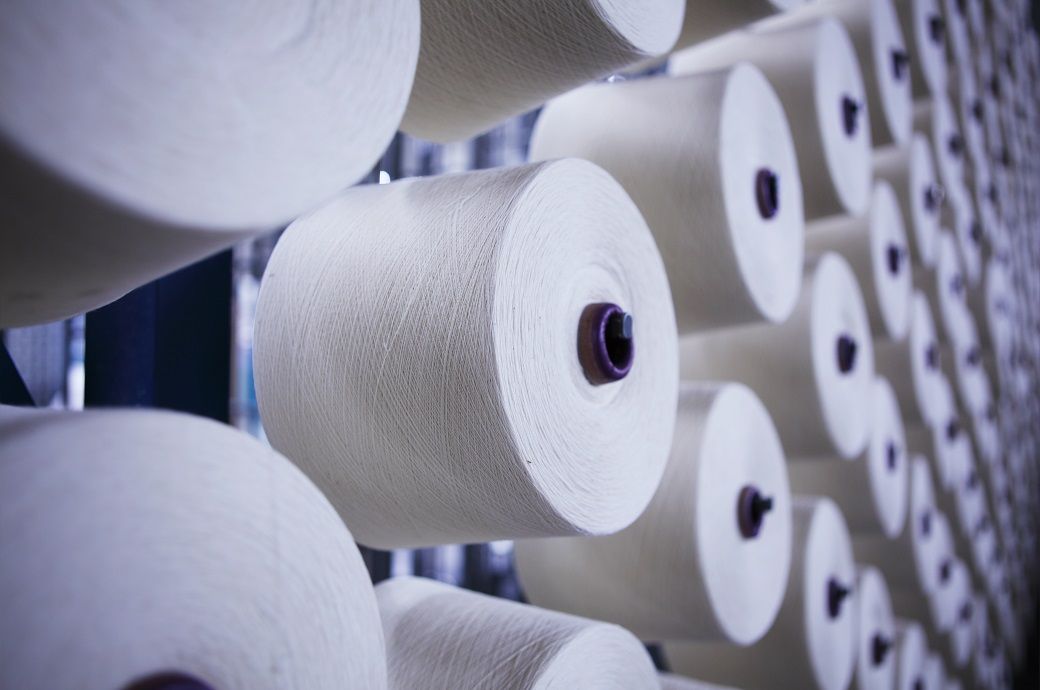
The Ludhiana market witnessed stability in cotton yarn prices following last week’s increase, amid cautious buying sentiment. A trader told Fibre*Fashion, “Buyers were buying cotton yarn with cautious approach as global trade uncertainty is looming after failed talks between the US and Iran. Local garment demand remained supportive for the trade.”
In Ludhiana, ** count cotton combed yarn was sold at ****;***–*** (~$*.**–*.**) per kg (inclusive of GST); ** and ** count combed yarn were traded at ****;***–*** (~$*.**–*.**) per kg and ****;***–*** (~$*.**–*.**) per kg, respectively; and carded yarn of ** count was noted at ****;***–*** (~$*.**–*.**) per kg today, according to trade sources.












Cost pressures, though no longer accelerating, remain elevated. Firms continue to report difficulties in recruitment, while a significant proportion expect to raise prices in the coming months.
UK business confidence remains subdued and investment intentions are weak, the BCC Quarterly Economic Survey for Q1 2026 shows.
Cost pressures, though no longer accelerating, remain elevated.
Firms continue to report difficulties in recruitment, while a significant proportion expect to raise prices in the coming months.
Firms are not reporting crisis conditions, but neither are they signalling momentum.
The QES did not register a sudden collapse. Instead, it showed a long plateau of hesitation. Investment balances weakened and remained weak. Confidence drifted rather than fell. Firms delayed decisions. The signal was not panic but paralysis, a BCC release noted.
Firms are not reporting crisis conditions. But neither are they signalling momentum. The British economy appears to be operating below potential, with limited resilience to absorb further shocks.
The nature of the next shock will determine how these indicators move, and how severe the impact will be, the BCC feels.
An escalation of conflict in Iran would most likely transmit through energy prices and global supply chains. If so, the QES would be expected to register a familiar pattern: rising input costs, increased price expectations, and a renewed squeeze on margins. Confidence could weaken further, particularly if financial markets react sharply. Investment, already subdued, may be delayed again.
The risk is not simply the shock itself, but the accumulation of shocks and their long-term economic consequences. Over the past decade, UK businesses have had little time to rebuild buffers. Each episode—uncertainty, shutdown, inflation, volatility—has left its mark. The latest QES shows an economy that has adapted, but not fully recovered.
The latest data does not yet show a new earthquake, but does reveal some very shaky ground, BCC added.
Fibre2Fashion News Desk (DS)

Geopolitical shocks have replaced cyclical disruptions, eroding long-standing buyer–supplier stability and forcing risk-averse sourcing decisions.
Exporters face demand compression as buyers cut volumes and stagger orders amid price and currency uncertainty.
Supply chain disruptions and logistics constraints are weakening capacity utilisation and seasonal order flows.
Source link

Gas price growth expectations surged sharply to 9.4 per cent, the highest since March 2022, signalling renewed pressure on household budgets, the Federal Reserve Bank of New York said in a press release.
US households expect higher near-term inflation, with one-year expectations rising to 3.4 per cent, driven by a sharp spike in gas price outlook to 9.4 per cent.
While job-finding prospects improved, unemployment concerns increased.
Household sentiment weakened amid rising spending expectations and stable income growth, with greater uncertainty and pessimism about future financial conditions.
The labour market sentiment showed mixed signals. Job-finding expectations improved, but concerns about unemployment rose, with the probability of higher joblessness climbing to 43.5 per cent, the highest since April 2025. The likelihood of job loss also increased marginally.
Household financial sentiment weakened, as more respondents reported deteriorating current and future financial conditions. While income growth expectations remained steady at 2.9 per cent, spending expectations rose slightly to 5.1 per cent, indicating persistent cost pressures.
Credit access perceptions improved compared to a year ago, though expectations for future availability worsened. Meanwhile, inflation uncertainty increased across all horizons, reflecting growing economic unease among US households.
Fibre2Fashion News Desk (SG)


UK biz confidence subdued, investment intentions weak in Q1 2026: BCC

War disruption hits exports: 20-year clients turn elsewhere

Pacers’ Tyrese Haliburton talks shingles battle as he recovers from torn Achilles

-

 Fashion1 week ago
India’s exports face reset as EU links trade to carbon metrics: EY
-

 Tech6 days ago
As the Strait of Hormuz Reopens, Global Shipping Will Take Months to Recover
-

 Entertainment6 days ago
Queen Elizabeth II emotional message for Archie, Lilibet sparks speculation
-

 Tech6 days ago
Azure customers up in arms over ‘full’ UK South region | Computer Weekly
-

 Entertainment1 week ago
Lamar Odom shocking response to Khloé Kardashian account of his overdose
-

 Sports1 week ago
With Messi goal, Inter Miami open new stadium with dream moment
-

 Tech5 days ago
This AI Button Wearable From Ex-Apple Engineers Looks Like an iPod Shuffle
-

 Fashion6 days ago
CII submits 20-pt agenda to Indian govt to back firms hit by Iran war