

Tech
Microsoft DCU uses UK courts to hunt down cyber criminals | Computer Weekly


In its first ever major legal action outside the United States, Microsoft’s Digital Crimes Unit (DCU) has disrupted cyber crime-as-a-service network RedVDS – whose subscribers have cheated their victims out of millions of pounds – after obtaining separate court orders in the UK and Florida.
The DCU turned to the British legal system because the malicious infrastructure used to run RedVDS was hosted by a UK-based provider. A great number of victims of RedVDS users, well over 7,500, are also located in the UK, it said.
“Cyber crime today is powered by shared infrastructure, which means disrupting individual attackers is not enough. Through this coordinated action, Microsoft has disrupted RedVDS’s operations, including seizing two domains that host the RedVDS marketplace and customer portal, while also laying the groundwork to identify the individuals behind them,” said Microsoft DCU assistant general counsel, Stephen Masada.
The takedown operation drew Europol’s European Cybercrime Centre (EC3), with further support provided by the German authorities through the Central Office for Combating Internet Crime (ZIT) at the Public Prosecutor’s Office in the city of Frankfurt-am-Main, and the Criminal Police Office for the state of Brandenburg.
At the time of writing, the RedVDS website states that its domain has been seized by Microsoft.
Industrialised fraud
The RedDVS cyber criminal service charged as little as $24 (£18) per month to provide digital fraudsters with access to disposable virtual computers used to scale fraud operations cheaply and securely.
The DCU believes RedVDS users have compromised more than 191,000 organisations worldwide since September 2025 and netted over $40m in the US alone, with prominent victims including Alabama-based H2-Pharma, a supplier of allergy, cancer and mental health medications, which lost $7.3m; and Florida-based Gatehouse Dock Condominium Association, which was tricked out of $500,000 it had set aside for repairs to its members’ homes.
The service was used for a wide range of cyber criminal activity, including running phishing campaigns, hosting malicious infrastructure and facilitating fraud. It was often used alongside generative AI (GenAI) tools to help identify more targets quicker, generate more convincing lures, and in some cases to manipulate video footage or clone voices.
However, where RedVDS appeared to excel was in supporting business email compromise (BEC) where cyber criminals impersonate trusted individuals to send payments to accounts they control.
In particular, its users targeted the real estate sector, compromising the accounts of estate agents, escrow agents or title companies. The DCU believes that as many as 9,000 customers in the real estate industry, most in Australia and Canada, were affected by this activity to some degree.
Masada said the DCU’s latest action built on ongoing efforts to disrupt fraud and scam infrastructure via both legal and technical actions, and through global collaboration.
“It marks the 35th civil action targeting cyber crime infrastructure by Microsoft’s Digital Crimes Unit, underscoring a sustained strategy to go beyond individual takedowns and dismantle the services that criminals rely on to operate and scale,” he said.
“As services like RedVDS continue to emerge, Microsoft will keep working with partners across sectors and borders to identify and disrupt the infrastructure behind cyber-enabled fraud, making it harder for criminals to profit and easier for people and organisations to stay safe online.”
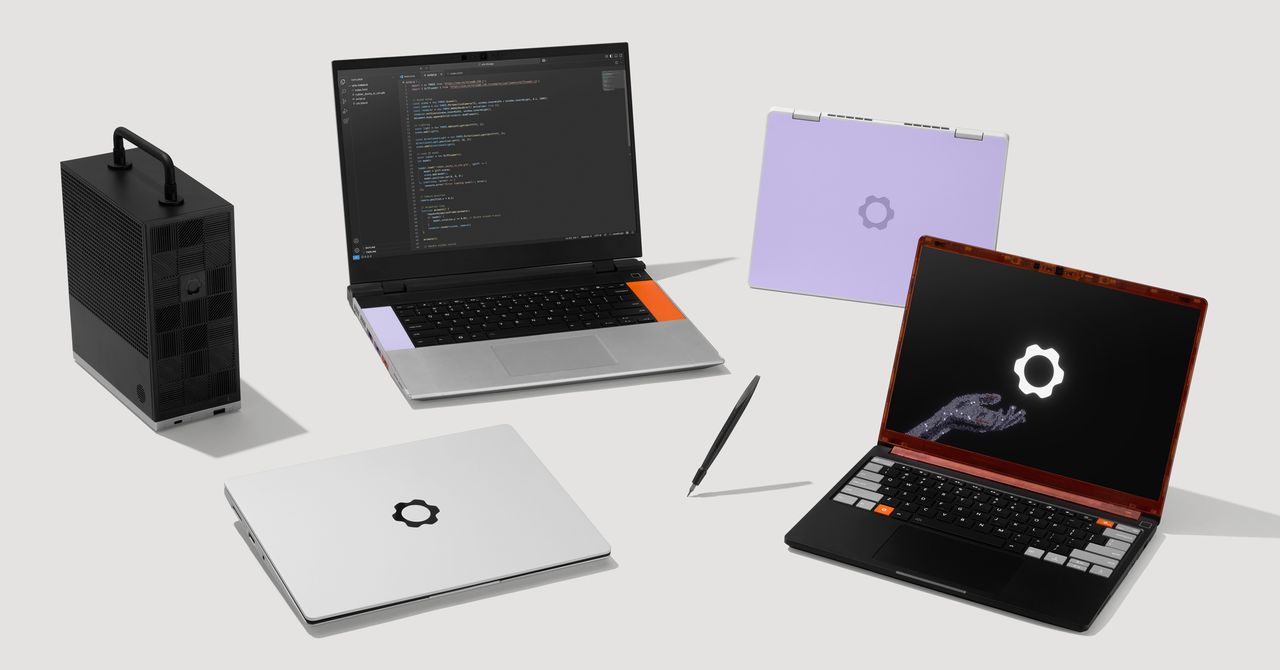
Framework, the company that makes laptops designed for optimal repairability, announced a new version of its main product, a 13-inch screen laptop. It’s called the Framework Laptop 13 Pro, and it has far better battery life, a touchscreen, a haptic touchpad, and is fitted with Intel processors.
At an event in San Francisco today, Framework CEO Nirav Patel showed off the company’s new tech, opening with a joke about making Framework AI—something the company is very much not doing. Framework’s whole thing, after all, is aiming to give users control over the physical tech they use.
“That industry is fighting for you to own nothing, and they own everything,” Patel said about the AI industry. “We’re fighting for a future where you can own everything and be free.”
Framework used the event to detail other updates coming to its 16-inch laptop. It also showed off previews of an official developer kit and a wireless keyboard for controlling your rig from the couch.
Framework 13 Pro
As the name implies, the 13 Pro is a step up from the company’s last version, the Framework 13. It’s also pricier, starting at $1,199 for a DIY Edition that requires assembling the computer yourself. Pre-built units start at $1,499 but can be upgraded with more features. Framework says it will start shipping the 13 Pro in June.
Framework’s signature move for its products is the ability to take the thing apart. The 13 Pro is made with that ethos in mind, so its parts can be easily swapped out, upgraded, or replaced. Four Thunderbolt 4 interfaces let you pick which ports (USB-C, HDMI, etc.) you want and then choose where to place them. Framework says it planned the laptop with cross-generation compatibility in mind, so current Framebook 13 laptop owners will be able to use new 13 Pro parts like the mainboard, display, and battery, and put them into their existing machine.
The big changes in the guts of the 13 Pro come from Framework’s shift away from using an AMD processor to Intel’s Core Ultra Series 3 processors, which Framework described in its press release as “just insanely efficient.” That efficiency, along with a bigger battery, translates to more than 20 hours of battery life while streaming 4K Netflix videos, at least that’s the claim. That’s almost 12 hours longer than the Framework 13.

Courtesy of Framework

Courtesy of Framework

OpenAI launched a new image generation AI model on Tuesday, dubbed ChatGPT Images 2.0. This model can generate more than one image from a single prompt, like an entire study booklet, as well as output text, including in non-English languages, like Chinese and Hindi. This release is available globally for ChatGPT and Codex users, with a more powerful version available for paying subscribers.
When any major AI company releases a new image model, it can revive interest and boost usage, especially if social media users adopt a meme-able trend, transforming images of themselves. Last year, Google’s launch of the Nano Banana model was a major moment for the company, especially when users started posting hyperrealistic figurines of themselves online. Earlier this year, ChatGPT Images made waves on social media as users shared AI-generated caricatures.
What’s Different?
Since the new model can tap into ChatGPT’s “reasoning” capabilities, Images 2.0 can search the internet for recent information and generate more than one image at a time. In essence, the bot can use additional steps to output more thorough generations from a single prompt. Images 2.0 also has a more recent knowledge cutoff date: December 2025.
This also means that outputs from the new model are more granular. For example, I generated an infographic with San Francisco’s weather forecast for the next day, as well as activities worth doing. The image ChatGPT generated included accurate weather details for the rainy day, along with accurate-looking drawings of the Ferry Building, Castro Theater, Painted Ladies houses, and Transamerica Pyramid.
Additionally, Images 2.0 is more customizable for users who want unique aspect ratios for image outputs. The new model can generate images, ranging from 3:1 wide to 1:3 tall, and users can adjust the image’s size as part of their prompt to the AI tool.
First Impressions
After a few hours of generating images with the new model, I was generally impressed with the text rendering capabilities, in English at least. Not that long ago, image outputs featuring text, from any of the major models, often included numerous malformed characters or words with errant extra letters. ChatGPT struggled to label images accurately two years prior, so the cleaner, more complex outputs from Images 2.0 are a sign of continued improvement. Google has also focused on improving image outputs featuring text in its recent iterations of Nano Banana.


No doubt looking to find some breathing space after the hubbub of Watches and Wonders last week, TAG Heuer has dropped an update to its 2025 revamped collection of the brand’s iconic plastic-cased 1980s watch, the “Formula 1.”
The five new pieces are called the “pastel collection” by TAG, and all are built on the same solar-powered Formula 1 Solargraph 38 mm that launched in March last year. Two models feature a sandblasted stainless steel case, while the remaining three have cases made from TAG’s proprietary bio-polamide plastic, Polylight.
It’s these Polylight versions that, for WIRED, are the stars of the new mini collection. Coming in pastel blue, beige, and pink, and sporting case-matching rubber straps and bidirectional-rotating Polylight bezels, they reference classic F1 designs that made the line iconic in the first place.

The stainless steel models have a 3-link sandblasted steel bracelet and either a “pastel green” or “lavender blue” dial with matching Polylight bezels. The dials on both watches also see eight diamonds replace the circular hour markers. TAG says these models add “a touch of refinement for those seeking sophistication,” but considering these “luxury” F1s will retail at $2,800, as opposed to the already punchy $1,950 full Polylight versions, our pick is most definitely the plastic pieces.
Not only do these blue, beige, and pink versions pleasingly hark back to vintage F1 designs—though now 38 mm in size instead of the original 35 mm—but also, just like all F1 Solargraphs, they come equipped with screw-down crowns and casebacks, making for 100 meters of water resistance and ensuring these will serve well as dive and sports watches. My recommendation? Go for the pink, it looks superb on the wrist. The beige is a very close second.



Museum heist mystery ends as Romania’s 2,500-year-old Golden Helmet returns home

Ranking the Top 20 Players in the Men’s College Basketball Transfer Portal

NATO jets intercept Russian bombers over Baltic Sea

-

 Fashion6 days ago
France’s LVMH Q1 revenue falls 6%, shows resilience amid Iran war
-

 Sports1 week ago
The case for Man United’s Fernandes as Premier League’s best
-

 Entertainment1 week ago
Palace left in shock as Prince William cancels grand ceremony
-
 Business1 week ago
UK could adopt EU single market rules under new legislation
-

 Entertainment6 days ago
Is Claude down? Here’s why users are seeing errors
-

 Fashion1 week ago
Energy emerges as biggest cost driver in textile margins
-
 Business1 week ago
Delta Air Lines unveils first new Delta One suite in premium cabin arms race
-

 Fashion1 week ago
Asia claims largest share of markets on Kearney FDI Confidence Index