

Business
Why export revival hinges on digital trade | The Express Tribune


5G and Pakistan Single Window can unlock exports only if manual processes are eliminated end to end
KARACHI:
Pakistan is one of the least open economies in the world. Its lack of participation in international trading activities has resulted in volatility and economic instability, keeping the economy hostage to regular balance-of-payments crises and mounting debt-related challenges.
Exports of goods from Pakistan have consistently remained below 11% of GDP. This lack of exports stifles the inflow of much-needed dollars, creating pressure on foreign exchange reserves. Furthermore, policies involving exchange rate management and restrictions on the flow of dollars impede the ability of businesses to participate in international trading activities.
One of the challenges often highlighted by businesses seeking to increase their export footprint is the lack of digitalisation in international trading practices, particularly when it comes to fulfilling financial obligations and building business-to-business relationships necessary to expand exports. The digitalisation of procedures, processes and activities involving international trade will become even more crucial with the advent of 5G technologies in Pakistan, creating new frontiers of possibility for traders. With the spectrum auction likely to take place next month, it is imperative to ensure that international traders receive meaningful benefits from these new avenues.
One key development in the digitalisation of trade procedures and processes is the Pakistan Single Window (PSW). Pakistan’s score in the UN Global Survey on Digital and Sustainable Trade Facilitation increased from 55.9% in 2021 to 74.2% in 2025, with the most significant improvement in the category of “paperless trade”. PSW has integrated more than 70 government agencies into a single platform, replacing the need for manual “no objection certificates” with digital data exchange.
Electronic import forms and the Electronic Form-E have been replaced by real-time data exchanges between participating banks and the PSW system, as information on traders, trading documents and financial instruments can now be shared electronically rather than manually. PSW also incorporates API-based digital handshakes that allow integration across borders and has improved transparency in international trading procedures and processes.
Although PSW has made significant strides in digitalising key customs procedures and bringing several government agencies dealing with internationalised firms onto its platform, there remains a growing need to ensure exporters have access to a fully digital environment that eliminates reliance on manual documentation.
It is imperative to enhance B2B cross-border payments, provide a comprehensive digital freight booking system, and develop financial platforms involving loans or factoring and stronger connectivity with fintech platforms to increase overall effectiveness. An enhanced digital marketplace, integrated with the single window and designed to connect traders with overseas partners, would allow exporters not only to sell products but also to establish buyer credibility, offering immense benefits to traders.
When digital activities break down due to the persistence of manual procedures that create delays and lags, they form a “digital island” in a sea of analogue processes. It is therefore essential to ensure that digitalisation genuinely benefits traders by eliminating all manual procedures that inhibit growth. The use of APIs that plug into digital platforms can accelerate digitalisation, expanding this island and ensuring international traders benefit from a wider array of services.
5G technologies will revolutionise industries by enhancing technological capabilities to improve manufacturing and supply chain efficiencies. They are designed to strengthen industrial control systems and enable industries to digitalise physical operations, reducing delays caused by manual processes. Enhanced broadband communication, reduced latency and higher connection density will enable the development of smart ports, smart cities, smart industries and smart agriculture. The benefits will extend across all sectors as they become digitally connected, with international trade standing to gain significantly.
The upcoming auction will include six frequency bands that can substantially improve port operations and cargo handling. Karachi Port and Port Qasim, for instance, can further reduce reliance on manual operations and human intervention. Automated cranes and remote inspections, enabled by advanced 5G capabilities, can eliminate delays for exporters and facilitate digital customs clearance with minimal human interaction. Improved mobile communications will also allow cargo and freight to be tracked more effectively, enabling traders to prepare in advance for arrivals, reducing time delays and costs.
Advanced ports around the world already deploy 5G technologies to improve efficiency and reduce congestion. Cranes in ports across China, Rotterdam and elsewhere are operated remotely with near-zero accidents. Data systems used in digitally operated ports can be integrated with single window platforms to provide real-time information to traders and government agencies. International best practices also include the standardisation of digital documents, as seen in Singapore, allowing interoperability across compliant global systems.
Gateway layers that respect data sovereignty, such as those used across Asean countries, enable cross-border sharing of trade documents. Networked trading platforms that allow private-sector applications to be hosted within government trade portals can further create a one-stop shop for international traders.
There are numerous examples of how digital trading platforms can evolve into game-changing networks for international traders, ensuring minimal costs and avoiding delays in documentation while providing real-time visibility over the movement of goods across borders and within domestic markets. If the government is to achieve its target of $60 billion in exports over the next four years, it is imperative that Pakistani exporters are fully empowered to take advantage of the opportunities offered by comprehensive digitalisation.
THE WRITER IS AN ASSISTANT PROFESSOR OF ECONOMICS AND A RESEARCH FELLOW AT CBER, INSTITUTE OF BUSINESS ADMINISTRATION, KARACHI. HE ALSO CHAIRS THE ECONOMIC ADVISORY GROUP





Business
Top stocks to buy today: Stock recommendations for April 24, 2026 – check list – The Times of India

Stock market recommendations: Bharat Electronics, and Colgate-Palmolive (India) have been recommended as the top stocks to buy today (April 24, 2026) by Bajaj Broking Research. Take a look at the target prices and expected returns:Bharat ElectronicsBuy in the range of ₹ 440.00-450.00
The stock is in structural up trend forming higher high and higher low in all time frame signaling strength and continuation of the uptrend. The entire up move of the last 8 months is in a rising channel as can be seen in the chart highlighting sustained demand at an elevated level.On the smaller time frame, the stock is at the cusp of generating a breakout above the bullish Flag like formation as post a sharp up move in the first 3 weeks of April the stock went into a consolidation phase in the last four sessions. It is seen resuming up move and is at the cusp of generating a breakout above the bullish Flag formation highlighting continuation of the up move and offers fresh entry opportunity.We expect the stock to extend the up move and head towards 495 levels in the coming months being the confluence of the 123.6% external retracement of the previous decline 473 – 400 and the upper band of the rising channel of the last 8 months.Colgate-Palmolive (India)Buy in the range of 2120-2160
The share price of Colgate-Palmolive has generated a breakout above bullish Flag pattern signaling continuation of the up move and offers fresh entry opportunity.We expect the stock to head higher towards 2330 levels in the coming months being the measuring implication of the bullish flag breakout.The daily 14 periods RSI is in buy mode thus supports the positive bias in the stock.(Disclaimer: Recommendations and views on the stock market, other asset classes or personal finance management tips given by experts are their own. These opinions do not represent the views of The Times of India)
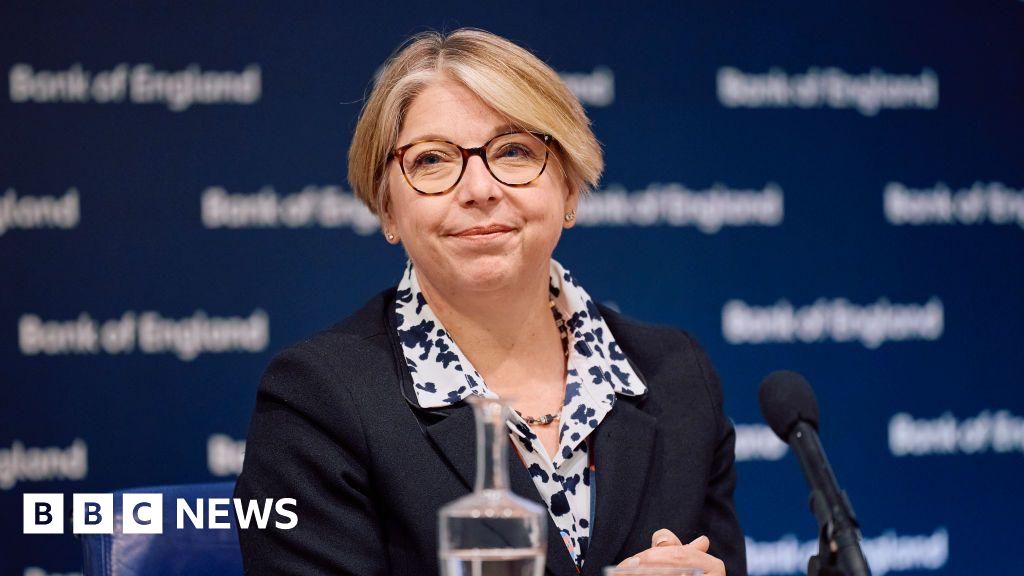
It is unusual for a senior figure at the Bank to be so forthright on market movements.
Source link

Consumer confidence has fallen for the third consecutive month amid household “jitters” over rapid price rises, figures show.
GfK’s long-running consumer confidence index fell four points to minus 25 in April, following falls of two points and three points in March and February respectively.
The deepening concern was driven by perceptions of the UK economy, with a six-point slide in confidence for the next 12 months to minus 43, its lowest level since February 2023.
Confidence in personal finances over the coming year fell five points to minus four – one point lower than this time last year.
The major purchase index – an indicator of confidence in buying big ticket items – held steady, albeit at minus 18 but one point better than last April.
The only measure to improve was the savings index – often an indication that households are concerned about their finances and looking to build contingency funds – which is up five points to 32.
Neil Bellamy, consumer insights director at GfK, said: “Consumers really do have the jitters now.
“It is a year since we last saw a monthly drop of this size, and we have to go back to October 2023 to find the last time consumer confidence was lower.
“Everyone is grappling with rapid price rises, especially at the fuel pumps, which are taking a dent out of household budgets, and people know further price hikes are coming.
“Consumer confidence is deteriorating sharply, with fuel prices and threats of more energy price increases acting as constant reminders of inflation.
“While the Gulf crisis is intensifying pressures, much of the current strain reflects earlier domestic cost increases.
“How long can all this disruption and pain continue?”


Vietnam-India seminar boosts textile, leather ties

22 India-backed terrorists killed in Khyber intelligence-based operation, says ISPR

Former Giants co-owner Steve Tisch seen in team’s draft room

-

 Fashion1 week ago
France’s LVMH Q1 revenue falls 6%, shows resilience amid Iran war
-

 Entertainment1 week ago
Is Claude down? Here’s why users are seeing errors
-

 Sports1 week ago
PSL 11: Peshawar Zalmi win toss, opt to field first against Quetta Gladiators
-

 Tech1 week ago
The Deepfake Nudes Crisis in Schools Is Much Worse Than You Thought
-
 Business1 week ago
Standard Life buys rival in £2b deal to create savings giant
-

 Tech1 week ago
CYBERUK ’26: UK lagging on legal protections for cyber pros | Computer Weekly
-

 Fashion1 week ago
Raymond unveils luxury Chairman’s Collection Store in Mumbai
-

 Sports4 days ago
NCAA men’s gymnastics championship: All-time winners list