

Business
Why export revival hinges on digital trade | The Express Tribune


5G and Pakistan Single Window can unlock exports only if manual processes are eliminated end to end
KARACHI:
Pakistan is one of the least open economies in the world. Its lack of participation in international trading activities has resulted in volatility and economic instability, keeping the economy hostage to regular balance-of-payments crises and mounting debt-related challenges.
Exports of goods from Pakistan have consistently remained below 11% of GDP. This lack of exports stifles the inflow of much-needed dollars, creating pressure on foreign exchange reserves. Furthermore, policies involving exchange rate management and restrictions on the flow of dollars impede the ability of businesses to participate in international trading activities.
One of the challenges often highlighted by businesses seeking to increase their export footprint is the lack of digitalisation in international trading practices, particularly when it comes to fulfilling financial obligations and building business-to-business relationships necessary to expand exports. The digitalisation of procedures, processes and activities involving international trade will become even more crucial with the advent of 5G technologies in Pakistan, creating new frontiers of possibility for traders. With the spectrum auction likely to take place next month, it is imperative to ensure that international traders receive meaningful benefits from these new avenues.
One key development in the digitalisation of trade procedures and processes is the Pakistan Single Window (PSW). Pakistan’s score in the UN Global Survey on Digital and Sustainable Trade Facilitation increased from 55.9% in 2021 to 74.2% in 2025, with the most significant improvement in the category of “paperless trade”. PSW has integrated more than 70 government agencies into a single platform, replacing the need for manual “no objection certificates” with digital data exchange.
Electronic import forms and the Electronic Form-E have been replaced by real-time data exchanges between participating banks and the PSW system, as information on traders, trading documents and financial instruments can now be shared electronically rather than manually. PSW also incorporates API-based digital handshakes that allow integration across borders and has improved transparency in international trading procedures and processes.
Although PSW has made significant strides in digitalising key customs procedures and bringing several government agencies dealing with internationalised firms onto its platform, there remains a growing need to ensure exporters have access to a fully digital environment that eliminates reliance on manual documentation.
It is imperative to enhance B2B cross-border payments, provide a comprehensive digital freight booking system, and develop financial platforms involving loans or factoring and stronger connectivity with fintech platforms to increase overall effectiveness. An enhanced digital marketplace, integrated with the single window and designed to connect traders with overseas partners, would allow exporters not only to sell products but also to establish buyer credibility, offering immense benefits to traders.
When digital activities break down due to the persistence of manual procedures that create delays and lags, they form a “digital island” in a sea of analogue processes. It is therefore essential to ensure that digitalisation genuinely benefits traders by eliminating all manual procedures that inhibit growth. The use of APIs that plug into digital platforms can accelerate digitalisation, expanding this island and ensuring international traders benefit from a wider array of services.
5G technologies will revolutionise industries by enhancing technological capabilities to improve manufacturing and supply chain efficiencies. They are designed to strengthen industrial control systems and enable industries to digitalise physical operations, reducing delays caused by manual processes. Enhanced broadband communication, reduced latency and higher connection density will enable the development of smart ports, smart cities, smart industries and smart agriculture. The benefits will extend across all sectors as they become digitally connected, with international trade standing to gain significantly.
The upcoming auction will include six frequency bands that can substantially improve port operations and cargo handling. Karachi Port and Port Qasim, for instance, can further reduce reliance on manual operations and human intervention. Automated cranes and remote inspections, enabled by advanced 5G capabilities, can eliminate delays for exporters and facilitate digital customs clearance with minimal human interaction. Improved mobile communications will also allow cargo and freight to be tracked more effectively, enabling traders to prepare in advance for arrivals, reducing time delays and costs.
Advanced ports around the world already deploy 5G technologies to improve efficiency and reduce congestion. Cranes in ports across China, Rotterdam and elsewhere are operated remotely with near-zero accidents. Data systems used in digitally operated ports can be integrated with single window platforms to provide real-time information to traders and government agencies. International best practices also include the standardisation of digital documents, as seen in Singapore, allowing interoperability across compliant global systems.
Gateway layers that respect data sovereignty, such as those used across Asean countries, enable cross-border sharing of trade documents. Networked trading platforms that allow private-sector applications to be hosted within government trade portals can further create a one-stop shop for international traders.
There are numerous examples of how digital trading platforms can evolve into game-changing networks for international traders, ensuring minimal costs and avoiding delays in documentation while providing real-time visibility over the movement of goods across borders and within domestic markets. If the government is to achieve its target of $60 billion in exports over the next four years, it is imperative that Pakistani exporters are fully empowered to take advantage of the opportunities offered by comprehensive digitalisation.
THE WRITER IS AN ASSISTANT PROFESSOR OF ECONOMICS AND A RESEARCH FELLOW AT CBER, INSTITUTE OF BUSINESS ADMINISTRATION, KARACHI. HE ALSO CHAIRS THE ECONOMIC ADVISORY GROUP







People walk past a Nike store in New York City, on April 2, 2025.
Kylie Cooper | Reuters
Nike announced a new round of layoffs Thursday affecting approximately 1,400 employees across the organization, mostly concentrated in its technology department.
In a note from COO Venkatesh Alagirisamy, the company said the layoffs were part of Nike’s broader “Win Now” turnaround strategy aiming to reshape its technology team, modernize its Air manufacturing, move some of its Converse Footwear operations and integrate its materials supply chain work into its footwear and apparel supply chain teams.
“Collectively, these changes will result in a reduction of approximately 1,400 roles in global operations, with the majority in technology,” Alagirisamy wrote. “These reductions are very hard for the teammates directly affected and for the teams around them, too.”
A Nike spokesperson said the layoffs are about better positioning the organization for the current pace of sports and accelerating its growth. The layoffs affect employees across North America, Asia and Europe and represent less than 2% of the company’s total global head count.
“This is not a new direction,” Alagirisamy wrote. “It is the next phase of the work already underway.”
Affected employees will be notified beginning Thursday, Nike added.
CEO Elliott Hill has been working to turn Nike around after years of slumping sales. While Hill has made some initial progress, it’s come with some bumps in the road.
Nike announced 775 job cuts in January, primarily at its U.S.-based distribution centers, due to the company’s work in accelerating its use of automation. At the time, the company said the cuts are part of Nike’s goal to return to “long-term, profitable growth.”
Those layoffs came on top of a round of cuts last summer that affected less than 1% of Nike’s corporate staff as part of the company’s efforts to realign the business.
In its third fiscal quarter earnings report last month, the retailer warned that sales will continue to fall for the rest of the year, primarily led by an anticipated 20% decline in China during the current quarter.
— CNBC’s Jessica Golden contributed to this report.
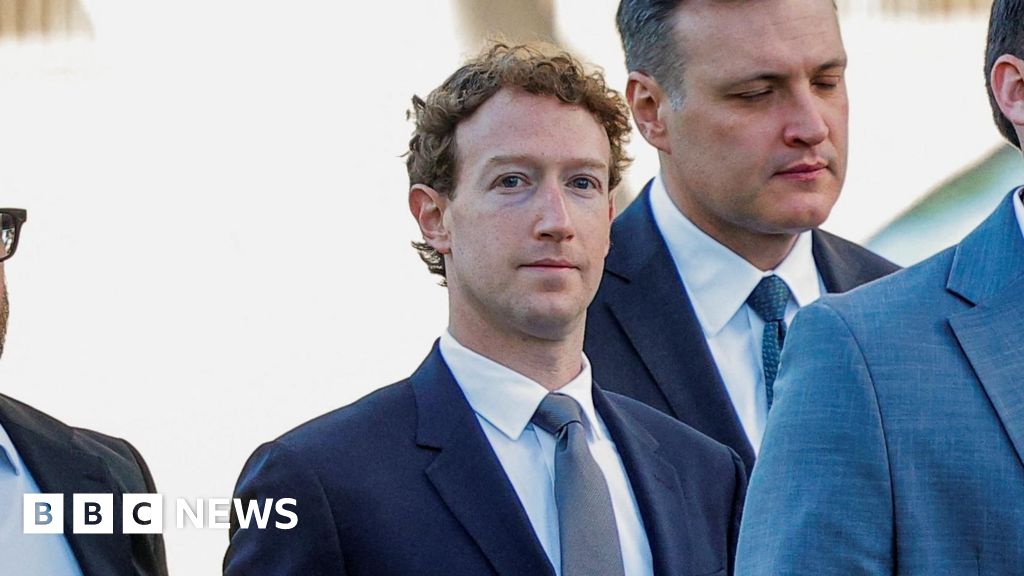
A key reason for the layoffs is Meta’s increased spending in other areas of the company, including AI, for which it will this year spend $135bn (£100bn). This is roughly equal to the amount it has spent on AI in the previous three years combined, according to a person who viewed the memo.
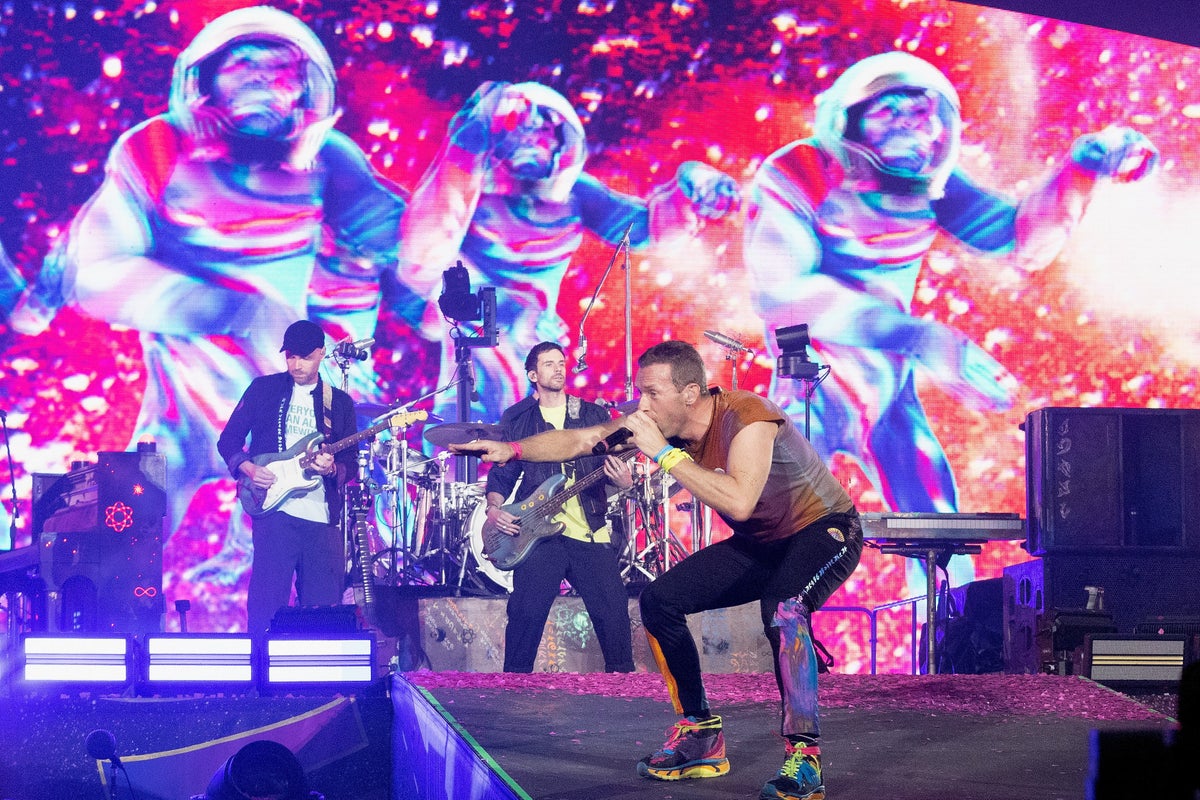
The Government has been urged to stick to its pledge to ban ticket touting amid concerns the policy will be left out of next month’s King’s Speech.
In November, the Government announced that new rules making it illegal to resell tickets for live events for profit would end the “industrial-scale” touting that has caused misery for millions of fans.
Ministers confirmed plans to make it illegal for tickets to concerts, theatre, comedy, sport and other live events to be resold for more than their original cost.
The Labour manifesto promised stronger protections to stop consumers being scammed or priced out of events by touts, who frequently use bots to buy tickets in bulk the moment they go on sale, which they can then sell on for huge mark-ups on secondary ticketing websites.
The proposed rules make it illegal for tickets to be sold at a price above the face value – defined as the original price plus unavoidable fees including service charges.
Service fees will be capped to prevent the price limit being undermined by platforms, which will have a legal duty to monitor and enforce compliance, and individuals will be banned from reselling more tickets than they were entitled to buy in the initial sale.
A host of globally renowned artists have backed the plan, including Radiohead, Dua Lipa and Coldplay.
Following a report in the Guardian that the minister responsible for the policy, Ian Murray, had told music industry groups not to worry if the measure was not part of the King’s Speech on May 13, the Government said it required new primary legislation that it was working to deliver at the earliest opportunity.
A Government spokeswoman said: “Ticket touts are a blight on the live events industry, causing misery for millions of fans.
“We set out decisive plans last year to stamp out touting once and for all, and we are committed to delivering on these for the benefit of fans and industry.”
The music industry and Which? raised concerns about the suggestion of any delay, as sites appeared to show touts selling tickets for the Radio 1 Big Weekend in Sunderland well above the two-ticket limit for buyers and at vastly inflated prices.
Annabella Coldrick, chief executive of the Music Managers Forum, said: “2026 was supposed to mark this Government moving ‘from announcements to action’ but we have little evidence of this to date.
“A ban on ticket touting was one of only two music-related commitments in the Labour manifesto, alongside fixing EU touring.
“These are widely supported, pro-growth measures that will deliver tangible benefits to the British public. However, if ticket resale legislation is not presented in the King’s Speech, it will have the opposite effect and continue to cost those constituents hundreds of millions of pounds a year.
“This Government needs to stand by its promises and get it done.”
Adam Webb, campaign manager at FanFair Alliance, said: “The Government has a big decision to make: will they ‘put fans first’ or not?
“Last November, ministers committed to ‘bold new measures’ to ban online ticket touting and support consumers.
“Enacting these measures should be a no-brainer but, if legislation is not presented in the upcoming King’s Speech, the cycle of industrial-scale exploitation will continue.”
Lisa Webb, consumer law expert at Which?, said: “The Government has promised to put fans first but, if this legislation is not included in the King’s Speech, the only ones celebrating will be the rip-off secondary ticketing websites and online touts.”


Newly Deciphered Sabotage Malware May Have Targeted Iran’s Nuclear Program—and Predates Stuxnet

Italy rejects proposal to replace Iran at 2026 World Cup: ‘You qualify on pitch’

Yankees owner Hal Steinbrenner considering factors before debuting new alternate uniforms: report

-

 Fashion1 week ago
France’s LVMH Q1 revenue falls 6%, shows resilience amid Iran war
-

 Entertainment1 week ago
Is Claude down? Here’s why users are seeing errors
-

 Sports1 week ago
PSL 11: Peshawar Zalmi win toss, opt to field first against Quetta Gladiators
-

 Tech1 week ago
The Deepfake Nudes Crisis in Schools Is Much Worse Than You Thought
-
 Business1 week ago
Standard Life buys rival in £2b deal to create savings giant
-

 Tech1 week ago
CYBERUK ’26: UK lagging on legal protections for cyber pros | Computer Weekly
-

 Fashion1 week ago
Raymond unveils luxury Chairman’s Collection Store in Mumbai
-
 Business1 week ago
PepsiCo earnings beat estimates as North American food business improves