

Sports
VAR review: Did Arsenal deserve penalty for Forest handball?


Video assistant referee causes controversy every week in the Premier League, but how are decisions made and are they correct?
This season, we take a look at the major incidents to examine and explain the process both in terms of VAR protocol and the Laws of the Game.
Andy Davies (@andydaviesref) is a former Select Group referee, with over 12 seasons on the elite list, working across the Premier League and Championship. With extensive experience at the elite level, he has operated within the VAR space in the Premier League and offers a unique insight into the processes, rationale and protocols that are delivered on a Premier League matchday.
Nottingham Forest 0-0 Arsenal
Referee: Michael Oliver
VAR: Darren England
Time: 80 minutes
Incident: Possible penalty for handball
What happened: With the ball running out of play for an Arsenal corner, Nottingham Forest defender Ola Aina seemingly played the ball with his arm in an attempt to keep the ball in play. Within the same movement, Forest teammate Elliot Anderson was equally keen to keep the ball in play, creating contact in the back of Aina as they both played for the same ball.
VAR decision: The referee’s call of no penalty to Arsenal was checked and confirmed by VAR — with it deemed that the ball was played off Aina’s shoulder first, while his arm was also in a natural position.
VAR review: Referee Michael Oliver was completely unsighted of any potential offense in this situation. Therefore, the judgment as to whether this incident was worthy of an on-field review (OFR) was entirely down to VAR Darren England.
For a VAR intervention in this situation, certainly one with no live communication of the incident from the referee, he would need to have absolute evidence, clear of any mitigating circumstances, that an offense has been committed by the Forest player and missed by the refereeing team.
England looked at the replays many times, finally saying that the ball had deflected off Aina’s shoulder and onto his arm, which he also felt was in a natural position for Aina’s movement at that moment.
Equally, the contact on Aina from Anderson would have added to the level of doubt that a clear error had been made. England’s final decision was to complete the check for no penalty review.
Verdict: Despite the rationale offered for a non-intervention by the VAR, the Forest defender can, in my opinion, feel fortunate that this incident did not go to an on-field review and subsequent penalty award.
I agree that the ball deflected off his shoulder and that the contact from Anderson would have had an impact on Aina’s natural balance. However, neither of these considerations was enough to negate the deliberate secondary movement of his arm to play and ultimately control the ball in an attempt to keep the ball in play.
England clearly felt that there were too many “possibles” and not enough “definites” in this incident and therefore didn’t feel it met the criteria for an obvious error — an outcome that will certainly divide opinion.
Manchester United 2-0 Manchester City
Referee: Anthony Taylor
VAR: Craig Pawson
Time: 10 minutes
Incident: Red card challenge
What happened: Manchester United defender Diogo Dalot was late with a challenge on Jérémy Doku, catching the Manchester City attacker high on the knee. The on-field decision from referee Anthony Taylor was a yellow card, confirmed by VAR Craig Pawson.
VAR decision: The referee’s call of yellow card to Dalot for a reckless challenge was checked and confirmed by VAR — with the contact deemed to be glancing and not with excessive force.
Verdict: Without doubt, this will be a major talking point of this derby match — especially as it was just 10 minutes in, and United went on to win the game.
This was a lazy challenge by Dalot. The contact was unnecessarily late, high and across Doku’s knee, all considerations that would have put Pawson in a difficult position when reviewing the challenge so early in a derby game.
The live communication from Taylor, describing the challenge and subsequent level of contact as reckless as opposed to dangerous — understandable from an on-field perspective — would have been Pawson’s starting point in this review process.
Having watched the replays, Pawson would have felt uncomfortable given the nature of the challenge. However, considering the timing of the incident, he would not have felt that the replays offered enough evidence to recommend an on-field review and would have worked hard to make the pictures concur with the on-field decision of yellow card as opposed to red.
I feel for Pawson and understand his rationale in this situation, but I believe a red card would be expected in this incident. The nature of the challenge was dangerous, completely unnecessary and certainly endangered the safety of his opponent.
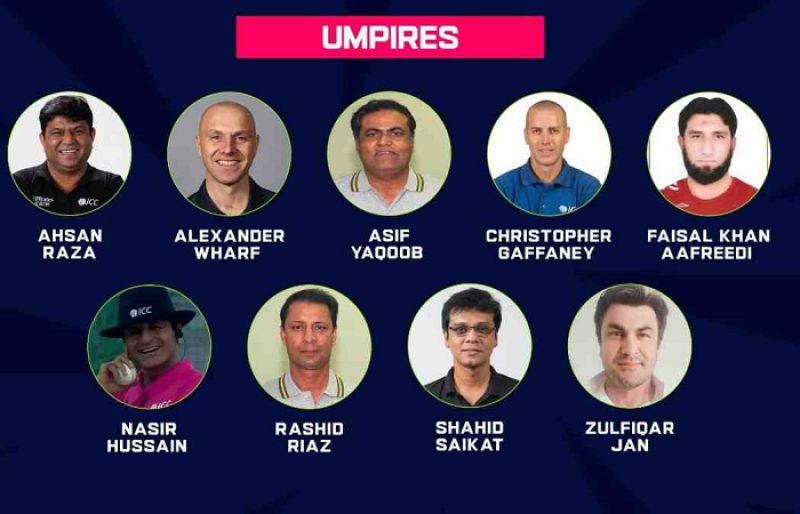
The playing control teams for the April 28 qualifier, April 29 eliminator 1 and May 1 eliminator 2 of the HBL Pakistan Super League 11 have been appointed, the Pakistan Cricket Board announced on Tuesday.
Member of ICC Elite Panel of Match Referees Sir Richard Richardson will lead the playing control team for the qualifier between Peshawar Zalmi and Islamabad United at the National Bank Stadium, Karachi.
Earlier, he made his HBL PSL debut as the match official on April 15 and will bow out for this season, having officiated 10 games.
Christopher Gaffaney of New Zealand will be joined by Alexander Wharf of England as an on-field umpire for the qualifier. Both are part of the ICC Elite Panel of Umpires.
Faisal Khan Aafreedi, ICC International Panel Umpire, will serve as the third Umpire, while PCB’s National Elite Panel Umpire Zulfiqar Jan will be the fourth umpire for the all-important 41st HBL PSL 11 match.
Roshan Mahanama of Sri Lanka will lead the playing control team in both eliminators.
He has the honour of officiating in all 11 HBL PSL seasons, and his tally of games as match referee in the league currently stands at 127.
In the Hyderabad Kingsmen v Multan Sultans eliminator 1 in Lahore, ICC Elite Panel Umpire Shahid Saikat from Bangladesh will join ICC Emerging Panel Umpire Asif Yaqoob as on-field Umpire, while Rashid Riaz Waqar of ICC Emerging Panel of Umpires will be the third Umpire.
Nasir Hussain of ICC International Panel of Umpires will perform duties as the fourth Umpire.
The eliminator 2 on May 1 between the winner of eliminator 1 and the losing team of qualifier will be officiated on-field by ICC Elite Panel Umpires Ahsan Raza and Shahid Saikat, while Asif Yaqoob and Rashid Riaz will carry out the duties of third and fourth Umpire, respectively.
The match officials for the highly anticipated May 3 final will be announced in due course.
NEWYou can now listen to Fox News articles!
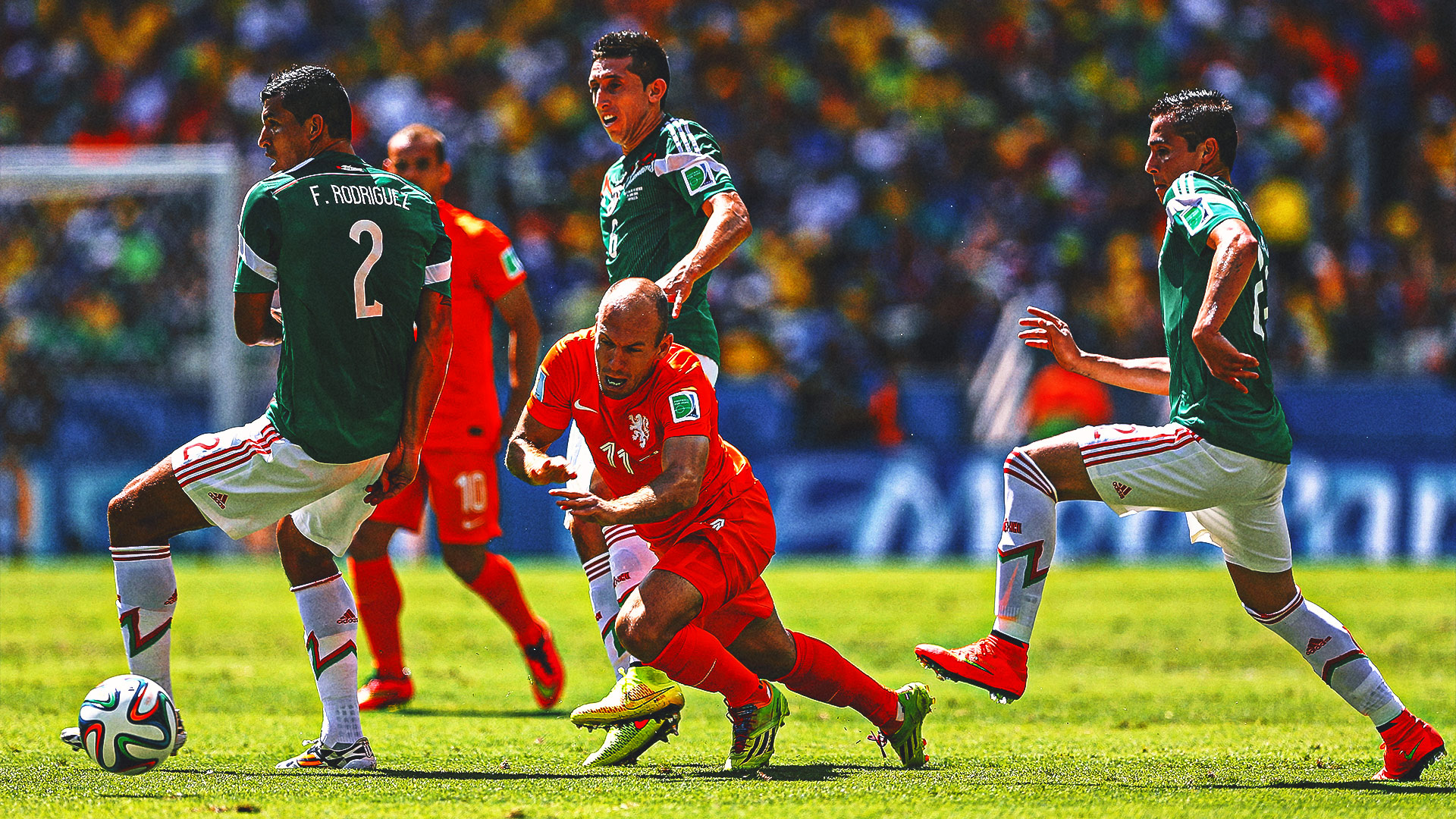
The most pressure-packed scoring opportunity in soccer might be the one where no one is defending: the penalty kick.
A goal is almost certain, so long as you keep a cool head and beat the goalkeeper. Simple enough, right?
But what exactly is a penalty kick, and how is it awarded? Here’s everything you need to know about the penalty kick ahead of the 2026 FIFA World Cup:
What Is A Penalty Kick?
A penalty kick — or “PK” — is a one-on-one duel between a field player and a goalkeeper in which the field player tries to score a direct kick from the penalty spot.
How Is A Penalty Kick Awarded?
A penalty kick is awarded when a player commits a foul — tripping, pushing or a handball — inside the penalty area, which is a large 18-yard box that extends from the goal line into the field of play. The total width of the box is 44 yards.
A penalty can be awarded in the run of play or during a Video Assistant Referee check.
Who Takes The Penalty Kick?
The designated penalty taker is usually predetermined based on a player’s proven ability to score, from the penalty spot or otherwise. For example, Harry Kane, the active leading goalscorer for England, is the designated penalty taker for the Three Lions.
How Far Is The Penalty Spot?
The penalty is 12 yards from the center of the goal line, meaning that there are just 12 yards that separate the penalty taker and the goalkeeper at the time of a penalty kick.
What Are The Rules For The Penalty Taker?
The penalty taker is given freedom to confuse the goalkeeper during their run-up to the kick so long as:
- The penalty taker doesn’t attempt a fake kick or a “feint” while attempting to strike the ball AND
- The penalty doesn’t make contact with the ball more than once during their attempt.
If a penalty taker participates in illegal feinting, they will be cautioned and an indirect free kick will be awarded to the opposing team.
If a penalty taker makes contact with the ball more than once during their attempt and the attempt is successful, the penalty kick will be retaken. If it isn’t, it will be recorded as a miss and play will resume.
What Are The Rules For The Goalkeeper?
The goalkeeper must follow three key rules during a penalty kick: face the kicker, stay between the goalposts and keep at least one foot on or over the goal line until the kick.
If a goalkeeper leaves their line during a penalty attempt and the attempt is unsuccessful, it will be retaken. If the attempt is successful, it will result in a goal.
Additionally, goalkeepers may not touch the goalposts, crossbar or netting as an intimidation tactic. Trash-talking is also not permitted.
How Often Are Penalty Kicks Awarded?
There were 23 penalty kicks awarded at the 2022 FIFA World Cup in Qatar, which was six fewer than in 2018. Argentina led all countries in penalty attempts with five, and its designated penalty taker, Lionel Messi, converted all five attempts.
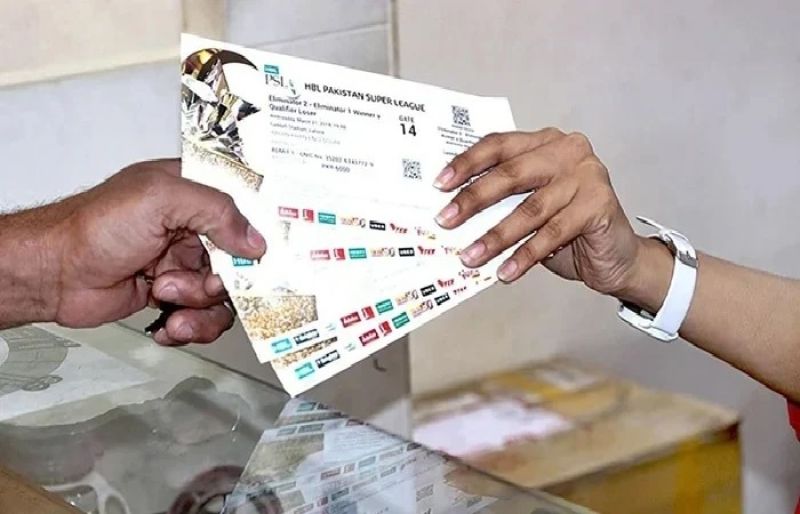
The Pakistan Cricket Board (PCB) has unveiled ticketing information for the Pakistan Super League (PSL) 11 Qualifier between Peshawar Zalmi and Islamabad United, set to take place at Karachi’s National Bank Stadium on Tuesday.
According to the cricket board, E-Tickets for the high-stakes fixture can be purchased from tonight, with prices for all enclosures of the aforementioned venue set at Rs500.
Furthermore, the physical tickets will be available for sale from Tuesday morning and can be bought at the TCS Express Centre at the China Ground situated opposite the venue.
The PCB further advised fans with tickets to reach the stadium “well before the start of play” to avoid any inconvenience. Notably, the coin toss for the Qualifier will take place at 6:30pm as per the Pakistan Standard Time (PST), with the first ball to be bowled at 7pm.
Meanwhile, the ticket details for the remaining two playoffs, set to be played in Lahore, will be announced in due course.
The cricket board announced the ticketing details hours after Prime Minister Shehbaz Sharif granted approval for public attendance in all three playoffs of the ongoing PSL 11.
Taking to X, PCB Chief Mohsin Naqvi said he had a meeting with the premier, during which the cricket board secured his approval for allowing fans in the stadia for the upcoming playoffs of the eight-team tournament.
“Just had a meeting with Prime Minister Shehbaz Sharif, and I’m pleased to share that we have secured his approval for public attendance in all three PSL playoff matches as well,” Naqvi wrote on the microblogging website.


Protesters halt NatWest shareholder meeting as boss defends climate policy

North India cotton yarn prices rise as mills gain pricing power

How does Middle East conflict threaten subsea cables?

-

 Sports1 week ago
NCAA men’s gymnastics championship: All-time winners list
-

 Sports1 week ago
WWE WrestleMania 42 Night 2: Live match results and analysis
-

 Fashion1 week ago
UK’s Sosandar returns to profitability amid robust FY26 performance
-
 Business1 week ago
No fuel shortage: Govt assures 100% domestic LPG, PNG, CNG supply amid Hormuz energy crunch – The Times of India
-

 Politics1 week ago
UK’s Starmer seeks to deflect blame over Mandelson appointment
-

 Entertainment1 week ago
Lee Anderson, Zarah Sultana kicked out of UK Parliament for calling PM ‘liar’
-
 Business1 week ago
How Trump’s psychedelics executive order could unlock stalled cannabis reform
-
 Business7 days ago
Us-India Trade Talks: US–India trade deal: Where do talks stand & what to expect – explained – The Times of India