

Business
Commercial real estate deal-making slows again in November


A version of this article first appeared in the CNBC Property Play newsletter with Diana Olick. Property Play covers new and evolving opportunities for the real estate investor, from individuals to venture capitalists, private equity funds, family offices, institutional investors and large public companies. Sign up to receive future editions, straight to your inbox.
For the second month in a row, heat came out of the commercial real estate market in November.
Transaction volume was 10% lower than November 2024, with just 1,800 deals overall, according to monthly data provided by Moody’s as a media exclusive to CNBC’s Property Play. It tracks the top 50 commercial real estate property sales across the U.S., in core segments of multifamily, office, industrial, retail and hotel.
October was the first month of negative year-over-year transaction volume growth since the post-Fed rate hike recovery began in early 2024, but this was not just a continuation of that trend. November transactions were even lower than November 2020, the first year of the Covid pandemic.
“This stems from the combination of higher-for-longer interest rates, policy uncertainty, a tenuous labor market, and caution on the part of CRE lenders and investors,” said Kevin Fagan, head of CRE capital market research at Moody’s. “However, market liquidity is still selectively open at two-thirds the volume of pre-pandemic, with a concentration in greater scale.”
Investors are leaning toward larger-scale acquisitions and bigger, higher-quality assets. For example, all transaction sizes dropped markedly, during the month, except those sales greater than $100 million, which were 51% higher year over year. That pushed the average deal size in November to $14.2 million, compared with an average of $12 million since the start of 2019. In addition, the majority of assets in the top 50 sales were Class A.
Sector highlights
“The trading this month is consistent with late-cycle barbelling, where there is a focus on durable trends, like demand for housing, logistics, and digital infrastructure,” said Fagan.
Multifamily saw the majority of November deals, recording 20 transactions, followed by office with 11 and industrial with eight.
Fagan noted that among the office deals, there is an “overall loosening,” and the market process for determining the true, fair price has become more efficient, faster and more reliable.
He also said he sees a story emerging around nearly all of the office deals in the top 50, “where the offices are either purchased for mission critical facilities, because they have some specialty use, they are conversion opportunities, or they came with discounted prices.”
Office continued to see some big discount deals, like 114 West 41st St. in New York City, bought by Axonic Capital from Clarion Partners at a 53% discount to the prior sale.
Companies are also increasingly focusing on the most essential office properties. They want more control over where they operate and how much they pay for the real estate, especially given today’s discounted prices.
Examples of that include Novartis buying a large Durham, North Carolina, campus-style facility, First Citizens buying in San Francisco, and Alo Yoga buying and occupying in Beverly Hills, California.
Medical office, which we recently reported on in this newsletter, continues to see outsized activity because of strong demand. It is not included in Moody’s core count but accounted for the top sale of November.
A $7.2 billion medical office portfolio of 296 properties in 34 states was sold by Welltower to a joint venture of Remedy Medical Properties and Kayne Anderson Real Estate. This acquisition makes the partnership the nation’s largest owner of outpatient medical buildings, with 1,104 properties in 44 states, according to a Remedy release.
Big portfolio deals like that were a defining feature of November’s report, accounting for 17 of the top 50 deals, which is an increasing trend in recent years as compared with pre-pandemic, according to Fagan.
Of course data centers, one of the hottest CRE sectors today, had a big November. The second-largest sale of the month, totaling $615 million, involved three industrial properties. SDC Capital Partners purchased 97 acres of land in Leesburg, Virginia, zoned for data center development.


People walk past a Nike store in New York City, on April 2, 2025.
Kylie Cooper | Reuters
Nike announced a new round of layoffs Thursday affecting approximately 1,400 employees across the organization, mostly concentrated in its technology department.
In a note from COO Venkatesh Alagirisamy, the company said the layoffs were part of Nike’s broader “Win Now” turnaround strategy aiming to reshape its technology team, modernize its Air manufacturing, move some of its Converse Footwear operations and integrate its materials supply chain work into its footwear and apparel supply chain teams.
“Collectively, these changes will result in a reduction of approximately 1,400 roles in global operations, with the majority in technology,” Alagirisamy wrote. “These reductions are very hard for the teammates directly affected and for the teams around them, too.”
A Nike spokesperson said the layoffs are about better positioning the organization for the current pace of sports and accelerating its growth. The layoffs affect employees across North America, Asia and Europe and represent less than 2% of the company’s total global head count.
“This is not a new direction,” Alagirisamy wrote. “It is the next phase of the work already underway.”
Affected employees will be notified beginning Thursday, Nike added.
CEO Elliott Hill has been working to turn Nike around after years of slumping sales. While Hill has made some initial progress, it’s come with some bumps in the road.
Nike announced 775 job cuts in January, primarily at its U.S.-based distribution centers, due to the company’s work in accelerating its use of automation. At the time, the company said the cuts are part of Nike’s goal to return to “long-term, profitable growth.”
Those layoffs came on top of a round of cuts last summer that affected less than 1% of Nike’s corporate staff as part of the company’s efforts to realign the business.
In its third fiscal quarter earnings report last month, the retailer warned that sales will continue to fall for the rest of the year, primarily led by an anticipated 20% decline in China during the current quarter.
— CNBC’s Jessica Golden contributed to this report.
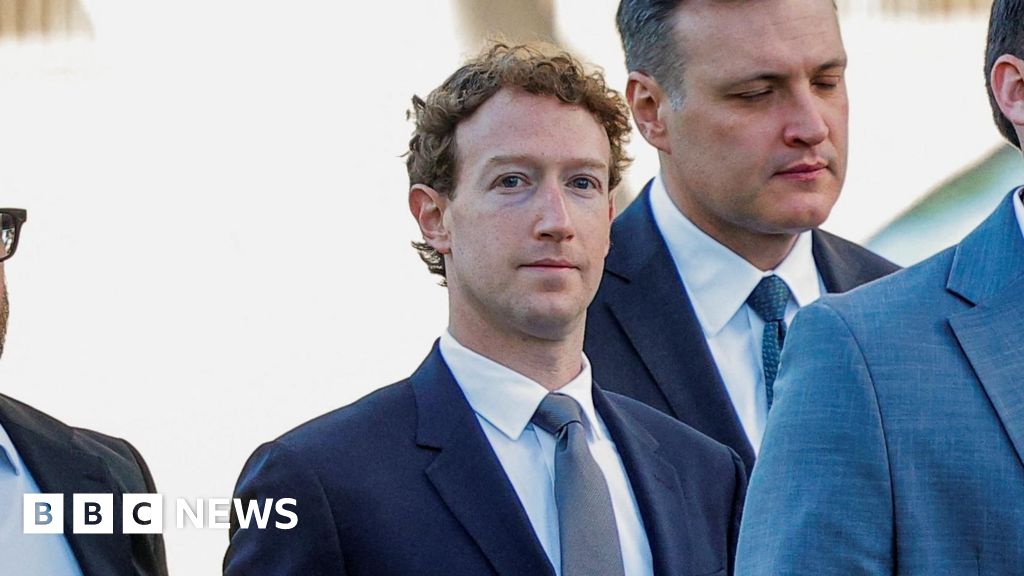
A key reason for the layoffs is Meta’s increased spending in other areas of the company, including AI, for which it will this year spend $135bn (£100bn). This is roughly equal to the amount it has spent on AI in the previous three years combined, according to a person who viewed the memo.

The Government has been urged to stick to its pledge to ban ticket touting amid concerns the policy will be left out of next month’s King’s Speech.
In November, the Government announced that new rules making it illegal to resell tickets for live events for profit would end the “industrial-scale” touting that has caused misery for millions of fans.
Ministers confirmed plans to make it illegal for tickets to concerts, theatre, comedy, sport and other live events to be resold for more than their original cost.
The Labour manifesto promised stronger protections to stop consumers being scammed or priced out of events by touts, who frequently use bots to buy tickets in bulk the moment they go on sale, which they can then sell on for huge mark-ups on secondary ticketing websites.
The proposed rules make it illegal for tickets to be sold at a price above the face value – defined as the original price plus unavoidable fees including service charges.
Service fees will be capped to prevent the price limit being undermined by platforms, which will have a legal duty to monitor and enforce compliance, and individuals will be banned from reselling more tickets than they were entitled to buy in the initial sale.
A host of globally renowned artists have backed the plan, including Radiohead, Dua Lipa and Coldplay.
Following a report in the Guardian that the minister responsible for the policy, Ian Murray, had told music industry groups not to worry if the measure was not part of the King’s Speech on May 13, the Government said it required new primary legislation that it was working to deliver at the earliest opportunity.
A Government spokeswoman said: “Ticket touts are a blight on the live events industry, causing misery for millions of fans.
“We set out decisive plans last year to stamp out touting once and for all, and we are committed to delivering on these for the benefit of fans and industry.”
The music industry and Which? raised concerns about the suggestion of any delay, as sites appeared to show touts selling tickets for the Radio 1 Big Weekend in Sunderland well above the two-ticket limit for buyers and at vastly inflated prices.
Annabella Coldrick, chief executive of the Music Managers Forum, said: “2026 was supposed to mark this Government moving ‘from announcements to action’ but we have little evidence of this to date.
“A ban on ticket touting was one of only two music-related commitments in the Labour manifesto, alongside fixing EU touring.
“These are widely supported, pro-growth measures that will deliver tangible benefits to the British public. However, if ticket resale legislation is not presented in the King’s Speech, it will have the opposite effect and continue to cost those constituents hundreds of millions of pounds a year.
“This Government needs to stand by its promises and get it done.”
Adam Webb, campaign manager at FanFair Alliance, said: “The Government has a big decision to make: will they ‘put fans first’ or not?
“Last November, ministers committed to ‘bold new measures’ to ban online ticket touting and support consumers.
“Enacting these measures should be a no-brainer but, if legislation is not presented in the upcoming King’s Speech, the cycle of industrial-scale exploitation will continue.”
Lisa Webb, consumer law expert at Which?, said: “The Government has promised to put fans first but, if this legislation is not included in the King’s Speech, the only ones celebrating will be the rip-off secondary ticketing websites and online touts.”


Yankees owner Hal Steinbrenner considering factors before debuting new alternate uniforms: report
Nike cuts 1,400 roles in second round of layoffs this year

Rednote Draws a Line Between China and the World

-

 Fashion1 week ago
France’s LVMH Q1 revenue falls 6%, shows resilience amid Iran war
-

 Entertainment1 week ago
Is Claude down? Here’s why users are seeing errors
-

 Sports1 week ago
PSL 11: Peshawar Zalmi win toss, opt to field first against Quetta Gladiators
-

 Tech1 week ago
The Deepfake Nudes Crisis in Schools Is Much Worse Than You Thought
-
 Business1 week ago
Standard Life buys rival in £2b deal to create savings giant
-

 Tech1 week ago
CYBERUK ’26: UK lagging on legal protections for cyber pros | Computer Weekly
-

 Fashion1 week ago
Raymond unveils luxury Chairman’s Collection Store in Mumbai
-
 Business1 week ago
PepsiCo earnings beat estimates as North American food business improves