

Fashion
Represent x Puma in collab return with on- and off-court basketball line

Published
January 20, 2026
Puma is continuing its fruitful fashion-meets-sport collab with UK streetwear brand Represent, this time “rewriting the playbook of basketball-inspired staples”.
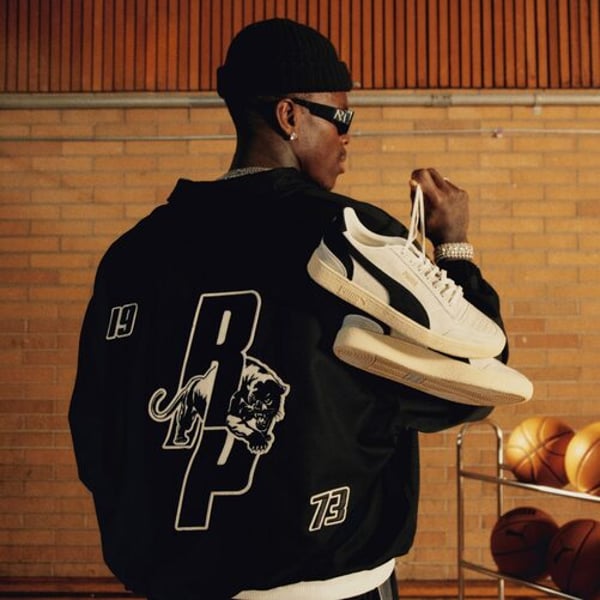
Fusing “Heritage Hoops Energy with Modern Streetwear”, it brings the two brands neatly together with a campaign fronted by German NBA star Dennis Schröder who “embodies the collection’s balanced fusion of court performance and off-court style”.
The “simple yet elevated collection” spans footwear and apparel that’s “highlighted by expressive and detailed cut-and-sew designs”, as well as a fresh interpretation of Puma’s All-Pro Nitro 2 sneaker.
Its “court-ready” Jersey and Shorts debut comes with a newly designed Puma x Represent graphic, featuring mesh construction and contrasting trim “that nods to retro game-day uniforms”.
The range is, of course, accompanied by “courtside essentials” including a Graphic T-Shirt and Hoodie, “pieces that bring bold visual detailing to the championship collaboration”.
A Coach Jacket and accompanying Pants also “comprise comfortable warm-up layers with everyday wearability”.
For footwear, Puma x Represent presents a re-envision All-Pro Nitro 2, a performance design underpinned by “explosive Nitro cushioning and a lightweight Ultraweave upper”. The black and white two-tone colourway is punctuated by subtle logo hits on the heel and tongue.
Complementing one of Puma’s “most modern examples of basketball performance technology”, the collection brings “a touch of ‘80s flair with the low-top Majesty”.
Copyright © 2026 FashionNetwork.com All rights reserved.







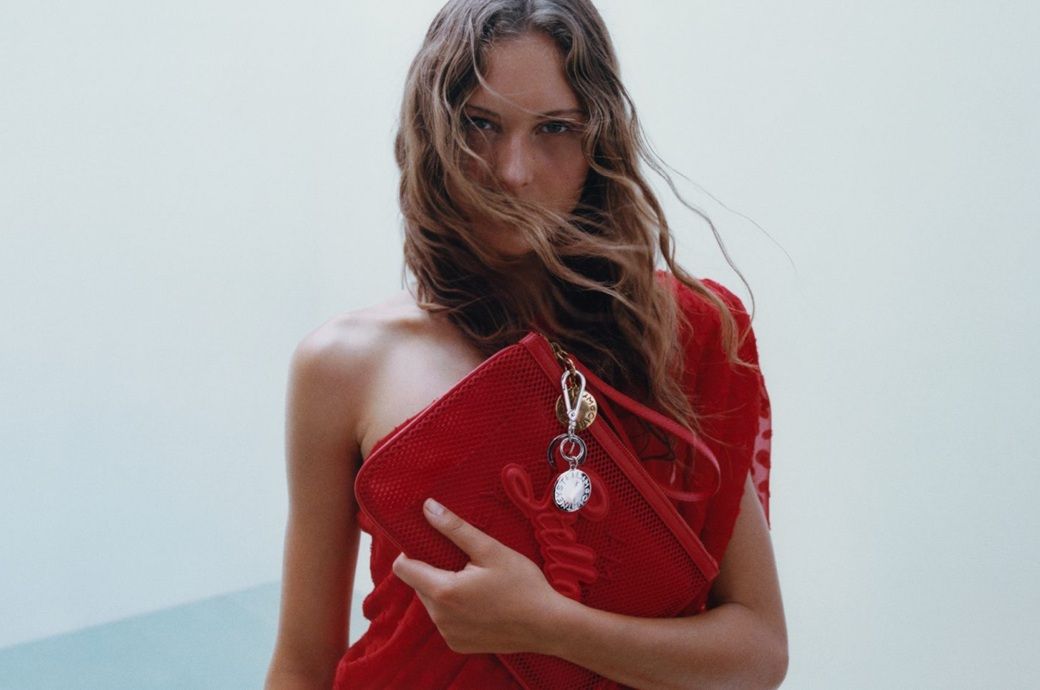
The collection unites past and present, combining beloved current signatures, such as oversized shirting, sweeping trenches and sharp tailoring, with playful iconic hits from McCartney’s early archive, including bejewelled prints and slogan tops.
H&M unveils its new Stella McCartney collaboration, launching May 7, marking 20 years since their first partnership.
Blending archive-inspired designs with modern signatures, the collection features tailored pieces, statement prints and accessories.
With a strong focus on recycled and organic materials, it reflects McCartney’s legacy of innovation, sustainability and timeless style.
“I see this collection as a journey through my fashion history. It is a true mix of current classics and some of my old favourites that showcase my first forays into fashion and the development of my signatures. It’s playful, strong, sparkling, joyful, refined.” Stella McCartney.
Other key items in the collection include rib knitted dresses and tops with McCartney’s signature Falabella chain at the neck, and a long white gown with a cape-like sleeve that loops into the hem, giving the look of a sweeping circle of fabric. Also available are sparkling partywear, separates and denims, as well as mesh dresses and tops in a bold archival cherry-print. Offering an extra dose of nostalgia is a white mini tee embellished with studs reading ‘Rock Royalty’.
The accessories range is strong, and rich in bags. There will be six styles to choose from, including small, branded shoulder bags, giant totes and a timeless chocolate-toned bag with a chain-detail strap. This is one of several pieces in the collection that incorporate the Falabella chain, including necklaces and earrings, crafted in recycled metal in mixed tones, and loafers with chain detailing on the front.
The collection is defined by an approach to materials that prioritizes recycled content, organic cottons, wool certified to the RWS Standard and innovative usage of feedstock for coated materials, such as industrial corn and recycled vegetable oil.
Unveiled today is the collection’s campaign, shot by Sam Rock in London, and starring Renee Rapp, Angelina Kendall and Adwoa Aboah. The mood is playful yet effortless, nostalgic yet forward-thinking. Across the campaign, &Stella becomes the tagline for this special collaboration. Reinterpreted in myriad forms – &Here &Now &Me &You – it becomes a message about connection, care, and a way of being that speaks both this moment, and to the past, present, and future.
“Stella has always had a bold vision for fashion, and this collection tracks her journey from a young, rule-breaking voice to a master of timeless design. Every single piece in the collection is desirable and tells a unique and bold story.” – Ann-Sofie Johansson.
Note: The headline, insights, and image of this press release may have been refined by the Fibre2Fashion staff; the rest of the content remains unchanged.
Fibre2Fashion News Desk (JP)
The Delhi cotton yarn market remained stable, though demand from downstream industries was weak at elevated price levels. Garment demand in both domestic and export markets also remained sluggish. A trader from Delhi market told Fibre*Fashion, “Spinning mills are selling cotton yarn at an additional margin of at least ** per cent. They have a cushion of advance orders from other countries. Mills have export orders for the next *–* months, so they do not need to sell in the domestic market. They are selling cotton yarn domestically at higher prices than export realisations.”
In Delhi, ** count combed knitting yarn was traded at ****;***–*** (~$*.**–*.**) per kg (GST extra), while ** count combed yarn was priced at ****;***–*** (~$*.**–*.**) per kg. Meanwhile, ** count carded yarn was traded at ****;***–*** (~$*.**–*.**) per kg and ** count carded at ****;***–*** (~$*.**–*.**) per kg, according to market sources.

Bangladesh Foreign Minister Khalilur Rahman and EU High Representative and Vice President Kaja Kallas witnessed the initialling. Rahman was accompanied by Prime Minister’s Foreign Affairs Adviser Humayun Kabir.
Bangladesh and the EU have initialled a Partnership and Cooperation Agreement in Brussels.
Dhaka termed it a forward-looking framework to elevate cooperation across political, economic, development and security domains.
Foreign Minister Khalilur Rahman highlighted predictable market access as a priority and expressed Bangladesh’s interest in advancing talks on an FTA and an investment protection pact.
The PCA is a forward-looking framework to elevate cooperation across political, economic, development and security domains, the Bangladesh Foreign Ministry said in a release.
Both sides reaffirmed their commitment to strengthening the longstanding partnership and expanding collaboration on regional and global issues.
They underscored the need to deepen cooperation in trade and investment, migration and mobility, regional collaboration and humanitarian affairs.
Rahman highlighted predictable market access as a priority and expressed Bangladesh’s interest in advancing negotiations on a free trade agreement and an investment protection agreement, according to a domestic news agency.
Rahman also met Belgium’s Deputy Prime Minister and Foreign Minister Maxime Prevot, and both explored opportunities in trade, investment, connectivity, innovation and multilateral cooperation.
They agreed to hold the third Bangladesh-Belgium consultations in Brussels later this year.
Rahman welcomed more engagement by Belgian businesses in logistics, port management, biotechnology, pharmaceuticals, technology and water management.
Fibre2Fashion News Desk (DS)


Jada Pinkett Smith seeks $49K legal fees from Will Smith former friend

Bank of England set to hold interest rates despite Iran war pushing up inflation

Sweden’s H&M & Stella McCartney return with nostalgic 2026 collection

-

 Fashion1 week ago
France’s LVMH Q1 revenue falls 6%, shows resilience amid Iran war
-

 Entertainment1 week ago
Is Claude down? Here’s why users are seeing errors
-

 Sports1 week ago
PSL 11: Peshawar Zalmi win toss, opt to field first against Quetta Gladiators
-

 Tech1 week ago
CYBERUK ’26: UK lagging on legal protections for cyber pros | Computer Weekly
-
 Fashion1 week ago
Raymond unveils luxury Chairman’s Collection Store in Mumbai
-

 Sports5 days ago
WWE WrestleMania 42 Night 2: Live match results and analysis
-
 Business1 week ago
PepsiCo earnings beat estimates as North American food business improves
-

 Sports5 days ago
NCAA men’s gymnastics championship: All-time winners list