

Entertainment
Prince Andrew lands in ‘shocking’ trouble after olive branch from King Charles

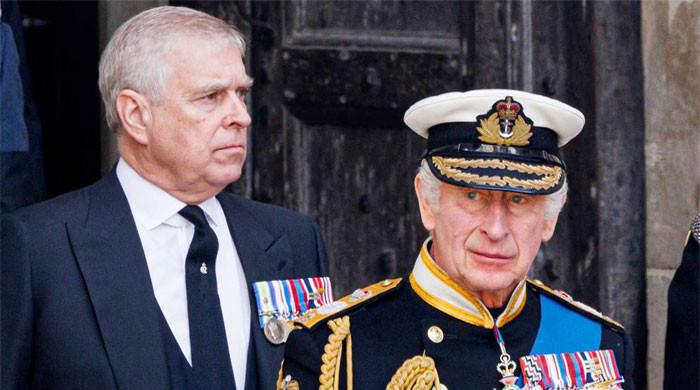
Prince Andrew has reportedly landed in new trouble after the Duke of York received an olive branch from his brother King Charles.
The monarch has apparently offered an olive branch to Andrew by inviting him to Balmoral for summer holidays, and insiders believe it was olive branch in their relationship.
According to a report by the Mirror, Prince Andrew and Sarah Ferguson have joined King Charles for his summer break at Balmoral.
Amid this, Prince Andrew is facing new ‘raw and shocking’ trouble.
The New Idea reported Prince Andrew’s accuser Virginia Roberts Giuffre’s tell-all memoir will be published in October, six months after the author’s death.
The report further says details about Virginia Giuffre’s “raw and shocking” autobiography have been revealed.
Giuffre died aged 41, on April 25, 2025, in Neergabby, Australia.
The insider tells The Sun about the memoir, “This is her ultimate revenge.
“Virginia’s family have seen her maligned in life and in death and they feel very strongly that her whole story should be told.”
It further said Virginia Giuffre’s autobiography will contain “intimate and disturbing” details of her relationship with Prince Andrew.
The New Idea says the book, Nobody’s Girl: A Memoir of Surviving Abuse and Fighting for Justice, will be published by Alfred A Knopf.
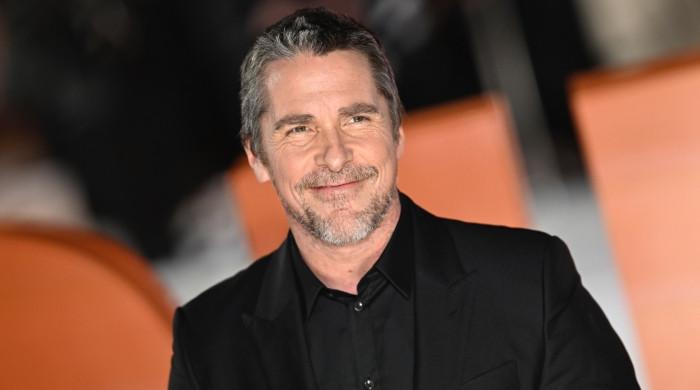
You’d think someone like Christian Bale – an Oscar winner with decades of iconic performances – would spend his downtime watching movies. Turns out… not really.
While attending the New York City premiere of The Bride! On March 3 at The Rose Theater at Jazz at Lincoln Center, the 52-year-old actor made a surprisingly honest confession: he’s actually pretty behind on film watching.
Case in point? He still hasn’t seen Jacob Elordi play Frankenstein in Guillermo del Toro’s upcoming 2025 adaptation of Frankenstein – even though Bale is portraying Frankenstein’s monster himself in The Bride!.
“I hear it’s fantastic,” Bale said.
Then he explained the real reason.
“I just don’t watch that many movies.”
And Elordi’s monster isn’t the only performance he’s missed lately. Bale admitted he also hasn’t seen his The Bride! Co-star Jessie Buckley in Hamnet – a role that’s been generating major awards buzz ahead of the 98th Academy Awards.
“I just know Jessie as The Bride,” he joked.
Buckley, for her part, clearly doesn’t have the same problem keeping up with Blae’s work.
In fact, she’s a full-blown fan.
“I mean, The Fighter, I think, is extraordinary. The Machinist, I mean, I don’t think anybody has created a character like that, that he has,” she said.
Then came the playful compliment every actor probably wishes they’d hear.
“He annoyingly never does a bad performance.”
Buckley added that sharing scenes with Bale raises the bar instantly.
“When you step onto set with Christian, you’re going to work… but I love him dearly.”
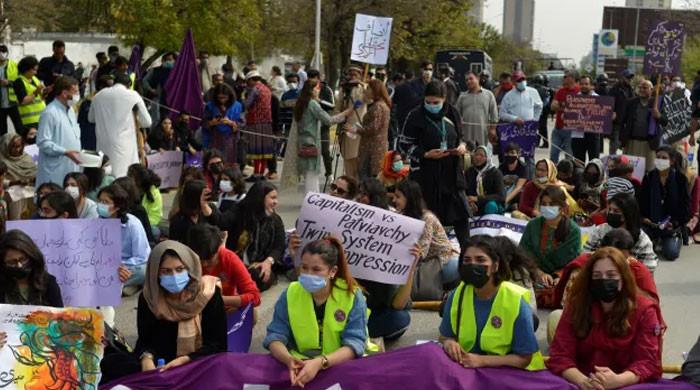
On International Women’s Day 2026, we are reminded that the future of Pakistan and Pakistani women is inseparable from the empowerment of its girls. When we invest in girls, we don’t just change individual lives; we shape the trajectory of economies, societies and nations.
Today, 54 million girls under the age of 18 live in Pakistan, and each day, around 9,200 girls are born into a world where survival, education and protection are far from guaranteed. For too many girls, the journey from vulnerability to opportunity is marked by systemic barriers that begin on day one.
Survival, especially in the early years, is the first barrier.
In Pakistan, 40% of children under five are stunted due to malnutrition, a condition that undermines brain development, weakens immunity and limits lifelong potential. Stunting is linked to nearly three out of four under-five deaths.
Anaemia — affecting over half of adolescent girls and most pregnant women — worsens the consequences of early marriage and pregnancy, increasing the risk of premature and low-birth-weight babies with long-term setbacks for children’s growth and cognitive development. Before many girls ever see the inside of a classroom, their futures are already at risk. The cost of under-investing in maternal and child health is not only measured in lives lost but in potential diminished.
Yet progress is possible. Shabira, a young girl born in Sindh during the devastating 2022 floods, became malnourished and dangerously ill. A mobile health team arrived in her village, screened her and provided essential treatment.
Within two months, her health dramatically improved. Her recovery is proof that timely intervention works. Investing in early childhood health and nutrition is not only lifesaving but also the foundation of human capital and future success.
Once survival is ensured, education becomes the next key to unlocking girls’ futures. Yet, 25 million children in Pakistan remain out of school, half of them are girls, one of the highest rates of educational exclusion in the world.
Even among those who attend, nearly 80% of children cannot read or understand age-appropriate texts by age 10, and many lack opportunities to advance their studies beyond grade 8. This gap reflects entrenched barriers like poverty, gender bias, and underfunded education systems that discourage adolescent girls from attending school.
During a visit to Khyber Pakhtunkhwa, I saw a drawing by an Afghan child: “Let me learn, let me fly”, alongside a white dove of peace. This plea for opportunity resonated deeply as I listened to children, adolescents and parents, all emphasising the central role that education plays in shaping their lives.
Education is not just a right; it is a multiplier. It drives economic growth, creates healthier communities and transforms societies. For Pakistani girls, each additional year of schooling increases their future earnings by up to 10%.
Educated girls marry later, have healthier children, and contribute significantly to their families and communities. Yet, many girls are still denied this fundamental right. Through informal setups, we can expand access to education for those excluded from formal schooling. These flexible, community-based pathways can allow girls to continue their education despite the odds.
But learning alone is not enough. Protection is equally vital.
Nearly one in five girls in Pakistan is married before the age of 18, three times the rate for boys. Early marriage cuts short education, limits economic prospects and traps girls in cycles of poverty.
Adolescence is a critical phase; the right investment can propel girls forward; neglect can leave them permanently behind. Currently, 56% of girls aged 15 to 24 are not in education, employment, or training, a stark contrast to the much lower figure for boys. This disparity represents lost potential at the national level.
The economic case for empowering girls is undeniable. Inclusion is not charity; it is smart economics. As Pakistan’s population is projected to exceed 340 million by 2050, investing in girls is essential to unlocking Pakistan’s demographic dividend. Aligning our policies, budgets and institutions around girls’ health, education and protection is not optional – it is essential for sustainable growth.
Let this decade be remembered not for incremental progress, but for catalytic transformation — systemic, social and sustained. Investing in girls and women is among the most strategic decisions Pakistan can make. It yields returns across generations.
As we mark International Women’s Day, we must move beyond celebration to commitment. The real measure of our resolve will not be in speeches delivered, but in policies enacted, resources allocated, and barriers dismantled. Every girl, regardless of her birthplace or background, deserves the chance to survive, learn, thrive, and lead.
There is reason for hope. Evidence shows that despite systemic barriers, increasing numbers of girls are reaching tertiary education — outperforming expectations and, in many contexts, their male peers. Imagine what would be possible if their potential were matched by equitable investment.
Girls are not born lacking potential; they are born with wings. Too often, it is society that chooses to clip them — through discrimination, neglect and underinvestment. Our task is not to give girls power; it is to remove the barriers that prevent them from using the power they already possess.
The future of Pakistan will be written by the opportunities we choose to create and collectively sustain for girls today. When we give girls the space to soar, we do more than uplift individuals — we elevate a nation.
The writer is the Unicef representative in Pakistan.
Disclaimer: The viewpoints expressed in this piece are the writer’s own and don’t necessarily reflect Geo.tv’s editorial policy.
Originally published in The News

Simon & Schuster
We may receive an affiliate commission from anything you buy from this article.
“CBS Sunday Morning” correspondent David Pogue’s new book, “Apple: The First 50 Years” (to be published March 10 by Simon & Schuster), examines how, in its first half-century, the company founded by Steve Wozniak and Steve Jobs remade the culture – and then, incredibly, remade itself.
Read the excerpt below, and don’t miss David Pogue’s report on the first 50 years of Apple on “CBS Sunday Morning” March 8!
“Apple: The First 50 Years” by David Pogue
Prefer to listen? Audible has a 30-day free trial available right now.
Steve Jobs had been away from the company he founded for 11 years. When he returned on July 6, 1997, Apple had been through three CEOs in four years, and it was in desperate shape.
Morale was at zero. Talented people were leaving in droves. There were too many divisions, too many fiefdoms. At one point, lawyers from two different Apple divisions showed up in the Patent and Trademark Office to sue each other.
The company had no CEO, no strategy, and, Jobs felt strongly, no soul.
Jobs tackled all of it at once. He threw himself fully, relentlessly, exhaustingly, into his nameless and unpaid role. “It was pretty bleak those first six months,” he said. “I was running on vapor.”
He fired most of the board. He drastically simplified the company’s structure. And he slashed the company’s 70 different Mac models down to only four: two laptops and two desktops.
Simon & Schuster 
“There was huge turmoil, because you were killing products that people were working on,” says Eddy Cue, now senior VP of services. “It’s like: ‘We’re gonna go from all these different products for everybody to, like, two? Are you guys crazy?'”
But Jobs was emphatic. A very focused product line, he pointed out, meant that “we could put the A-team on every single one of them.”
Think Different
Jobs discovered that Apple was running 12 different ad campaigns. They weren’t coordinated; in fact, their messages often conflicted.
He wanted to replace them all with a single campaign that would pay tribute to creativity, independence, rebelliousness—the spirit of the old Apple and the new one.
Back in L.A., Chiat/Day creative director Rob Siltanen asked four of his teams to prepare some campaign ideas. They tacked up their ideas on wallboards: photos, pencil sketches, taglines. “But there was one campaign that jumped out at me, and it jumped out in a big way,” he says.
It was an idea for a poster-and-billboard campaign, featuring black-and-white photos of revolutionary people and events: Einstein, Thomas Edison, Gandhi. Above each photo was the striped Apple logo—the only color in the image—and the words “Think Different.”
“There was a purity about that I will never forget,” Jobs said. “I cried in my office as he was showing me the idea.”
Siltanen had always been moved by the monologues in the Robin Williams movie Dead Poets Society—for example, “Despite what anyone might tell you, words and ideas can change the world.”
So when he contemplated how to turn the print ads into a TV ad, Siltanen wrote in his journal: “To the crazy ones. Here’s to the misfits. The rebels. The troublemakers.” And, his favorite part, which he envisioned for the closing: “The people who are crazy enough to believe they can change the world … are the ones who actually do.”
But when Jobs saw the prototype ad, he went ballistic. “I thought you were going to write something like ‘Dead Poets Society’! This is crap!” he shouted at Siltanen. “It’s advertising-agency s***!”
Siltanen, furious and disappointed, told his boss to find someone else to finish the ad; he was done with Jobs.
Then, only 17 days before the ad was supposed to air, Jobs called to say he’d changed his mind. He wanted to proceed with the “crazy ones” script.
The agency now had the idea and Jobs’s blessing. Now came the hard part: securing the rights to use the famous people’s images. Most had never allowed their images to appear in ads.
Jobs plied his own connections. He called the families of John F. Kennedy and Jim Henson himself, and flew to New York to discuss the John Lennon clip with his widow, Yoko Ono. Almost all of his heroes, or their estates, agreed to participate. (Every participant received money and Apple products to donate to their favorite causes.)
The agency hired a parade of L.A. talent to try their hands at the narration: Richard Dreyfuss, Peter Gallagher, Sally Kellerman, and even Phyllis Diller.
Until the last moment, Jobs was torn between the Richard Dreyfuss version and the one he narrated himself. In the end, he went with Dreyfuss’s. “If we go with mine, it’ll become about me,” Jobs said. “And this can’t be about me. It’s about the company.”
On September 28, 1997, the “Think Different” ad debuted on ABC’s The Wonderful World of Disney, which happened to be airing the network premiere of Toy Story—from Pixar, of course.
In 60 seconds, backed by a gentle piano-and-strings theme, the ad presented clips of 17 “crazy ones”: Albert Einstein, Bob Dylan, Martin Luther King Jr., Richard Branson, Buckminster Fuller, Thomas Edison, Pablo Picasso, and so on.
Simon & Schuster 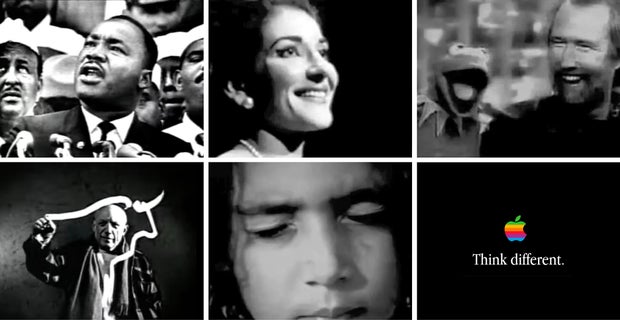
The ad said nothing about computers. It didn’t even show computers (not that Apple had any new computers to show). Furthermore, most people couldn’t identify many of the featured figures. Who would recognize, for example, the faces of Buckminster Fuller, Frank Lloyd Wright, or Martha Graham?
But Chiat/Day considered their obscurity a feature, not a bug. It prompted people to talk about the ad, to replay it, to research it—”Who was that guy?”
What the ad did say is that Apple did have a soul—and it had been there all along. All the fumbling during the Dark Years didn’t count. All the creative people who’d stuck with the Mac knew what they were doing. All the employees who kept the faith should be proud.
The ad was another historic success for Apple and Chiat/Day. It won one advertising award after another, and an Emmy. It was endlessly parodied and imitated. Best of all, as Jobs had hoped, the ad gave everyone at Apple a new sense of pride and hope.
Apple wound up spending $100 million on the campaign, which ran in various forms for five years.
At the San Francisco Macworld Expo in January 1998, only one year into the job, Jobs was nearly unrecognizable in his new mustache and full beard, streaked with gray. This time, his “one more thing” moment at the end of the keynote did not involve a product.
Instead, Jobs took the wraps off an Apple creation most had thought they’d never see again: a profit.
From “Apple: The First 50 Years” by David Pogue. Copyright © 2026 by David Pogue. Excerpted with permission by Simon & Schuster, a division of Simon & Schuster, Inc.
Get the book here:
“Apple: The First 50 Years” by David Pogue
Buy locally from Bookshop.org
For more info:


President Pezeshkian’s gesture to neighbors immediately killed by Trump: Iran FM

Christian Bale makes shocking confession about Jacob Elordi’s ‘Frankenstein’

UFC 326 takeaways: Is this the end of the BMF title?

-

 Sports1 week ago
LPGA legend shares her feelings about US women’s Olympic wins: ‘Gets me really emotional’
-

 Entertainment1 week ago
Pakistan’s semi-final qualification scenario after England defeat New Zealand
-

 Fashion1 week ago
South Korea’s Misto Holdings completes planned leadership transition
-
 Business1 week ago
Greggs to reveal trading amid pressure from cost of living and weight loss drugs
-

 Entertainment1 week ago
Bobby J. Brown, “The Wire” and “Law & Order: SUV” actor, dies of smoke inhalation after reported fire
-
 Business1 week ago
CNBC To Merge TV And Digital News Operations, Nearly A Dozen Jobs To Be Cut: Report
-
 Entertainment1 week ago
What’s new in Pokémon? Every game, update, surprise from 30th anniversary event
-

 Politics1 week ago
Iran launches retaliation against Israel, launches ballistic missiles