

Business
Southwest Airlines forecasts surge in 2026 profits after new seat, bag fees take hold


A Southwest Airlines aircraft parks at Gate B33 while its tail sticks into the sunlight at Boston Logan International Airport in Boston, MA, on December 22, 2025.
Austin DeSisto | Nurphoto | Getty Images
Southwest Airlines on Wednesday forecast a surge in 2026 profits well above analysts’ expectations as the carrier overhauls its half-century-old business model to include new moneymakers like bag fees and seat assignments.
The airline expects to earn at minimum, an adjusted $4 a share this year, exceeding the $3.19 analysts had anticipated, according to estimates from LSEG. It also forecast capacity growth of 2% to 3% compared with 2025, which could almost double last year’s capacity expansion.
“We wanted to give a little more time before we gave the upper bound of this forecast just to let a little more information come in” about the new initiatives, CFO Tom Doxey said in an interview Wednesday. He said travel demand has been strong.
Southwest stock rose more than 5% in post-market trading after the company’s report.
In the first quarter, Southwest said it expects revenue per seat mile to rise 9.5%, above the 8.5% analysts expected. The carrier forecast adjusted earnings of at least 45 cents for the first quarter, above the 33 cents Wall Street projected.
The forecast includes the impact of this week’s winter storm, which CEO Bob Jordan told CNBC’s Phil LeBeau on Thursday will amount to a hit of about $30 million to $40 million.
“Notwithstanding the impact of Winter Storm Fern, 2026 is off to a strong start, driven by the Company’s Customer-focused product offering, operational excellence, and dramatic progress from the transformational initiatives implemented last year,” Jordan said in an earnings release. The sprawling winter storm forced airlines to cancel thousands of flights, though Southwest’s Texas rival American Airlines has especially struggled to recover from the weather impacts.
Here’s how the company performed in fourth quarter compared with Wall Street expectations, according to consensus estimates from LSEG:
- Earnings per share: 58 cents adjusted vs. 58 cents cents expected
- Revenue: $7.44 billion vs. $7.51 billion expected
Southwest has spent much of the past two years making drastic changes to its business model, including ending its open boarding policy and this week moving to assigned seats, which come with upcharges for certain spots, including its new extra legroom section.

Last year, the airline began charging customers to check bags for the first time ever and launched basic economy fares. The policies make the longtime industry standout more like its rivals as the airline faces pressure to improve profits.
“We’re not done,” Doxey said Wednesday about the airline’s initiatives. The carriers’ executives have previously discussed the possibiliyt of other ventures. Jordan said in an interview last month that Southwest is exploring airport lounges.
Southwest’s executives are set to face questions from investors in a call on Thursday morning about the cost of the storm, new revenue streams and growth in profits in the coming years, beyond the sales spike from their debut.
Southwest’s fourth-quarter net income rose almost 24% from a year earlier to $323 million, while revenue rose 7.4% to $7.44 billion. Adjusting for one-time items including a reorganization, Southwest posted earnings of $301 million or 58 cents a share, down from $356 million or 56 cents a share a year earlier.





Two ads promoting British beef and milk have been banned after television presenter and environmental campaigner Chris Packham complained that they misled consumers about the products’ carbon footprints.
Both ads for the Agriculture and Horticulture Development Board’s (AHDB) Let’s Eat Balanced campaign used the carbon footprint of British beef and milk to promote the products, firstly stating: “British beef not only tastes great, but has a carbon footprint that’s half the global average*.”
The asterisk linked to text that stated: “Full lifecycle emissions of CO2 eq (carbon dioxide equivalent) per kg of beef.”
The ad for milk stated: “British milk not only tastes good, but is also produced to world-class standards, and has a carbon footprint a third lower than the global average.”
Packham complained to the Advertising Standards Authority (ASA) that the ads, and specifically the carbon footprint claims, were misleading as they did not reflect the full environmental impact of British meat and dairy.
The AHDB said the ads’ mention of carbon emissions would be understood in relation to the environmental impact of beef and milk that occurred between the “cradle-to-retail” stages.
But the ASA said the average consumer “being reasonably well-informed, observant and circumspect” would understand the claims to apply beyond the retail stage and include actions such as cooking and wastage.
The ASA said: “While we acknowledged the potential difficulties in producing post-retail emissions data, the claims in the ads suggested those emissions were included and we therefore expected the evidence provided to also include them.
“We therefore concluded that the evidence presented was insufficient to support the full life-cycle claims in the ads, which was how the average consumer was likely to interpret them.
“We reminded AHDB that environmental claims should be based on the full life cycle unless the ad stated otherwise.”
AHDB’s director of communications and market development, Will Jackson, said: “Let’s Eat Balanced is doing what it was designed to do, providing clear, factual, evidence-led information about British food, nutrition and farming standards.
“Since the investigation began, we have conducted independent consumer research which found that the majority of respondents interpreted these adverts as relating to the production phase only, from farm to retail.
“This research provides important insight into consumer understanding and supports our belief that consumers were not misled by the information we shared in these two specific adverts.”

BENGALURU: India’s Gen Z workforce is embracing what experts describe as “portfolio careers” – balancing multiple professional identities and income streams simultaneously. New research from LinkedIn shows that 75% of Gen Z entrepreneurs in India now manage multiple income streams, significantly higher than the 62% among Gen X entrepreneurs. The findings point to a growing preference among younger professionals for flexibility, autonomy and diversified sources of income. “We’re also seeing the rise of the ‘portfolio era’, with more professionals creating multiple income streams and redefining what a career can look like. This shift is making entrepreneurship more accessible than ever before,” said LinkedIn India country manager Kumaresh Pattabiraman.Rather than depending on a single full-time role, many professionals are simultaneously building businesses, freelancing, consulting, creating online content and monetising specialised skills through digital platforms. The trend comes amid a broader rise in entrepreneurial activity in India. LinkedIn recorded a 104% year-on-year increase in members adding “Founder” to their profiles – the highest growth among all global markets.AI is also emerging as a major enabler of this shift. The report found that 85% of Gen Z entrepreneurs consider AI and digital tools important to their business operations.

Sam Altman said Elon Musk tried many times for total control of OpenAI, which he’s now suing.
Source link


Will LeBron James retire after current season?

South Korea reviews phased support for Strait of Hormuz security efforts

New Jersey Gov. Mikie Sherrill announces another NJ Transit World Cup ticket cut days after first reduction

-

 Tech1 week ago
DHS Demanded Google Surrender Data on Canadian’s Activity, Location Over Anti-ICE Posts
-
 Business1 week ago
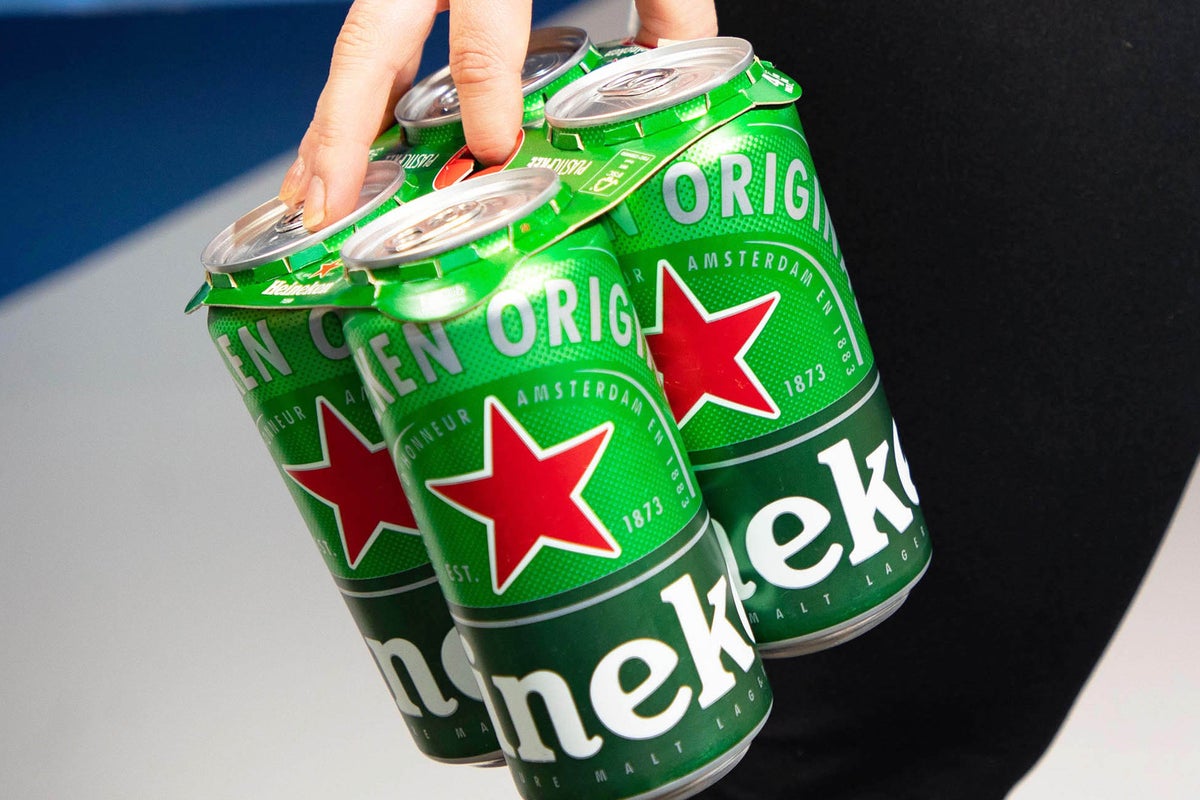
Heineken plans huge investment in hundreds of UK pubs ahead of World Cup
-

 Tech5 days ago
A new frontier: Identity stack evolves for agentic systems | Computer Weekly
-

 Tech4 days ago
‘Orbs,’ ‘Saucers,’ and ‘Flashes’ on the Moon: Pentagon Drops New UFO Files
-

 Sports5 days ago
Shaheen Afridi achieves landmark feat during opening Test against Bangladesh
-
 Business1 week ago
India among most resilient large EMs, better placed for future global shocks; policy reforms & strong buffers help: Moody’s – The Times of India
-

 Tech5 days ago
What Microsoft Executives Really Thought About OpenAI in 2018
-
 Fashion5 days ago
New orders in German manufacturing up 5% MoM in Mar 2026: Destatis