

Sports
Laila Edwards’ historic journey to Team USA, 2026 Olympics

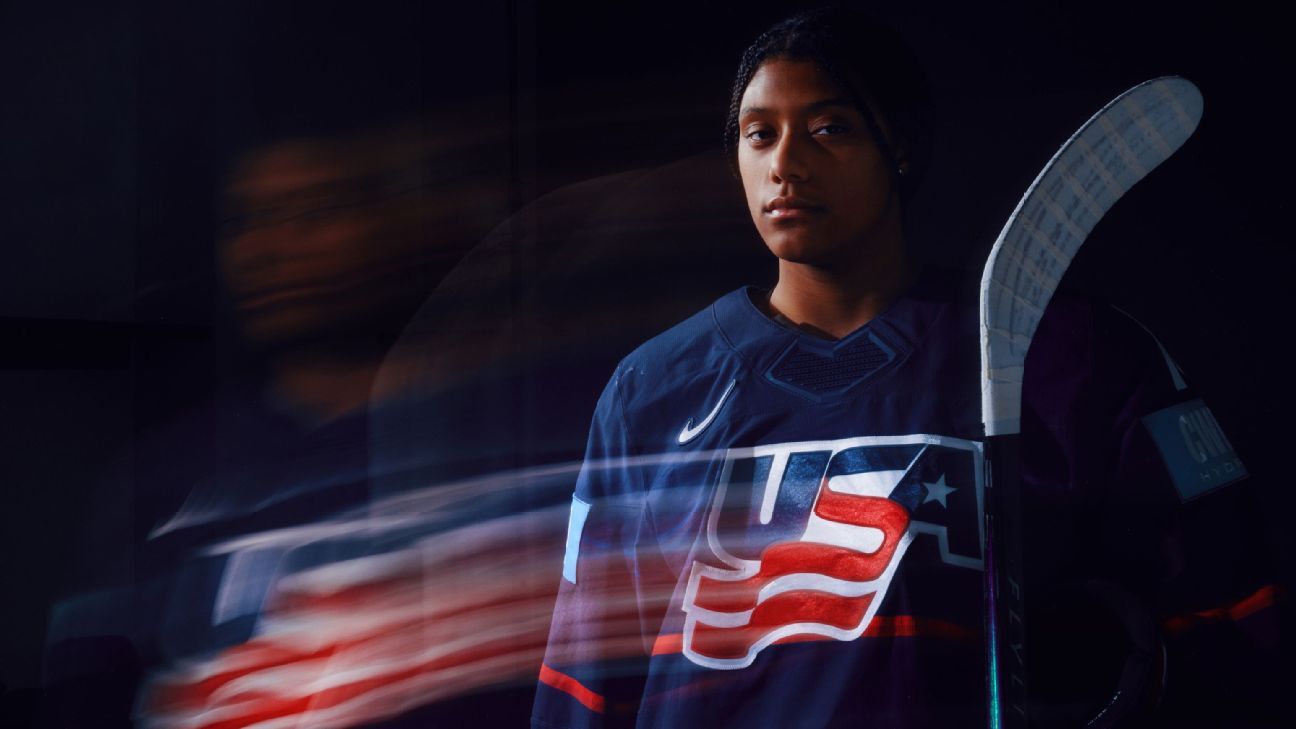
CLEVELAND HEIGHTS, Ohio — You can still see the black puck marks on one of the white walls in the living room of the home where Laila Edwards grew up. They’re behind the gray couch, near a front window. Children’s rollerblades and hockey sticks scraped the floor planks, leaving grooves in the hardwood.
Those indoor games were intense. Her siblings still talk about them. They made Laila play goalie because she was so young, and it seemed like a good idea at the time. Then their little sister started growing and became too much to handle.
Sometimes their parents busted them for playing in the house. But they got away with it.
“After a while, we got used to it,” Laila’s mother, Charone Gray-Edwards, says. “They were scratching up the floors, but they had so much fun. We have a basement, and a lot of times I would come home and be like, ‘Why y’all up here? You got a whole basement. You got a whole outside.'”
Hockey homes are like this, as hockey parents are prone to share in great detail. But what makes this home in Cleveland Heights different is that an Olympian lives here. Wait, scratch that. What makes this home truly unique is that the Olympian who lives here is the first Black woman to play for the U.S. women’s national hockey team and the first Black woman who will play hockey for Team USA at the Olympics.
Edwards, a 6-foot-1 senior forward for Wisconsin, has two national championships with the Badgers and has helped Team USA win two world championship medals. At age 22, she is a rising star who already is on track to become one of the faces of hockey in the United States. Edwards is making a notable move to playing defense for the 2026 Milan Cortina Olympics, where the U.S. will face Czechia in an opening-round game Thursday at the Milano Rho Ice Hockey Arena (10:40 a.m. ET).
Although she already has made history, her accomplishments also have given her perspective.
“I’m extremely, extremely grateful and I can’t even put it into words,” Edwards says. “But there have been plenty of times, especially at the beginning, where I felt overwhelmed. I’m like, ‘What do I do with this? I don’t know. I don’t know what to do. It’s a positive, but how do I turn this into something that’s consistently positive?'”
Edwards and her family understand how much visibility matters. They know that a young Black girl or a child of color might see her on TV during the Olympics — playing in games, appearing in commercials, being interviewed in a studio — and suddenly view hockey in a new way or envision stepping into a world where they haven’t observed many people like themselves.
The Edwardses also recognize the impact it could have on viewers who haven’t seen many, or any, Black people or people of color playing ice hockey.
This happened in early November when the Rivalry Series between Canada and the U.S. came to Cleveland, and children of different ages and ethnic backgrounds clamored around Edwards.
“I have chosen and will continue to choose to embrace it because it is a beautiful thing and it’s a great thing,” Edwards says. “But just to have that ability to be a role model and hear that people are looking up to me — this may sound dramatic, but I think there’s even kids who have told me they are counting on me. I take that with a lot of pride and gratitude. I’ve met parents who have told me that their kids started playing because of me or that their kid still plays because of me.
“I’ve had kids say, ‘You’re my favorite player. You look like me.’ I think that’s so important to have someone at a high stage who looks like you, and it’s even more important that I can succeed at this high stage.”
So, who is Laila Edwards and how did she get here? It started with how those puck marks got on the wall in the living room of her home in Cleveland Heights.
THE NOTION OF playing ice hockey originally felt alien to nearly everyone in the Edwards family. Laila’s mother had heard about the sport once on the news. But her father, Robert Edwards, played as a child growing up in Cleveland Heights during the 1970s and ’80s. He started following the sport when the Cleveland Heights High School boys’ team, which played at the Cleveland Heights Community Center, won conference titles and a state championship.
“I was like real young and I went up to the rink and I saw the high school play and I thought, ‘These guys are awesome,'” Robert Edwards says. “It was the whole everything surrounding the team and everyone there. Then I saw some after-school special about hockey and then I just got this bug.”
He played baseball, football and basketball as a youth, and went on to play Division I baseball at Cleveland State University. He didn’t start playing hockey until he was 12, which put him behind his peers.
“I was able to get decent at [other sports], whereas hockey takes a little more parental involvement,” he says. “I never thought about it in any kind of way because I started so late. …
“It just was because Cleveland Heights was a progressive community. But not all of it was progressive. … It wasn’t like my parents didn’t care. They just weren’t able to advocate.”
That shaped how proactive he would become as a youth hockey parent.
“When my kids started, the two things I took from my own experience that helped me was No. 1, if they are going to play hockey, they are going to learn to skate first,” he says. “And No. 2 was that I was always going to advocate for them.”
The Cleveland Heights Community Center became a powerful bridge for the Edwards family, giving the children a chance to explore the sport in a familiar setting. Bobby, the oldest of the three siblings, played basketball before switching to hockey. Laila joined her older sister, Chayla, on the ice for figure skating. They’d change out of their leotards and tutus and go to a different part of the community center, where they would put on pads and jerseys to play hockey against the boys.
“Robert started taking the kids to ‘Learn How to Skate’ and free skates,” Gray-Edwards says. “He was taking them all the time. I liked that it was keeping them busy and not stuck indoors.
“… We were eventually like, ‘You need to choose between hockey and figure skating.’ I was leaning toward hockey. Figure skating was boring. I thought, ‘If I’m going to be cold, let me be excited and cold.'”
The girls chose hockey, and the weekend activity became a central character in the Edwards’ lives. They’d play in the mornings before school. Whatever advantage Bobby had as the oldest disappeared. His sisters caught up. They were good. But there was something different about how Laila played.
“As kids we played a lot of mini-sticks,” Chayla says. “She was super into that. She’d go outside and we’d have this little pad set up. She’d always be stickhandling, shooting out there.”
Hockey became a way of life.
They watched it on TV every night.
They sang “Chelsea Dagger” because they heard it every time they watched a Chicago Blackhawks game.
They followed Alexander Ovechkin and grew to love his game.
The Washington Capitals drafted Ovechkin with the No. 1 pick in 2004. The Russian’s goals became highlights on “SportsCenter” and on local TV in a city that was more than 50% Black until 2011. He sat courtside at Georgetown men’s basketball games when John Thompson coached and was active with the Fort Dupont Cannons, the continent’s oldest youth hockey program for players of color. He even was featured in an Easterns Motors commercial and sang the jingle, “Easterns Motors, your job your credit.” The NHL’s all-time leading goal scorer became visible to Black audiences far beyond Washington, D.C.
“We taped our sticks the same as Ovechkin,” Bobby says. “We would try to mimic a lot of his stuff in a game. I couldn’t do that, but Laila was able to do it. She would go through her legs. And then there was the time we went to a clinic.”
The clinic had two lines, one for older players to shoot against a goalie their age and one for younger players. But there was a mix-up, and Laila was about to shoot on the older goalie.
The coaches nearly moved her, but Bobby pleaded with them.
“‘She can shoot on this kid. Trust me,'” he recalls telling them. “The move she did on this kid who was probably five years older than her? Boom. Boom. Boom. It’s in the net.”
Bobby smiled at the memory. He says everyone was impressed. Laila got back in line.
The way she played was so effortless, even at that age.
“You would think she wasn’t really doing anything,” Gray-Edwards says. “Then, all of a sudden, [the puck is] on her stick and something is happening. If you look away or you start talking, you’ll miss what she’s doing. It was amazing how she would just be standing on the boards and … then — boom, boom, boom — and it was all over.”
PLAYING HOCKEY AT the Cleveland Heights Community Center gave Edwards and her family the chance to make new friends like Seanna Conway, a girls’ youth hockey coach. They also realized how different their life was compared with some of the families they encountered.
Cleveland Heights is one of the older first-ring suburbs in the city — an upper-middleclass community with historic craftsman homes and walkable neighborhoods. According to the most recent Census data, the Black population is 40.4%.
The Edwardses knew what it meant to be a Black family. To be a Black hockey family meant entering spaces that were different from their previous experiences. Laila learned early that if she was going to play hockey, she probably wasn’t going to see many other players like her.
“Nowadays, I can go about my business. But when I was playing boys’ hockey, it was not the same,” Edwards says. “There were a few times when I’d be called the N-word. That was upsetting. The first time I was called the N-word, Dean, who is Seanna’s husband, was our coach. I got back to the bench and I was crying. He asked me, ‘What’s wrong?’ and I told him what happened.
“He comforted me and was just there for me. It meant a lot. I always remember that. But it took a little bit getting used to. I was like, ‘I didn’t do anything wrong. I was born this way.'”
She and her family also traveled to tournaments far beyond the comforts of the Cleveland Heights Community Center. This meant even more time in spaces where there were few, if any, people who shared their experience.
“Now we’re missing Easter dinner because we’re in Brampton, Canada,” Gray-Edwards says. “I’m now eating Popeye’s instead. I’m asking, ‘Where’s the ham? Where’s the greens? Where’s the macaroni and cheese? What are we doing?’ That’s when life slowly starts to change for all of us.”
There were trade-offs. The family stayed at hotels with pools so the children could play. Those tournament trips replaced family vacations.
Chayla and Laila were good enough to play for teams that traveled to Europe. That meant figuring out the money so both girls could be seen by colleges and prep schools.
“Oh, you have to get passports. Oh, it’s a couple thousand dollars to fly over there,” Gray-Edwards says. “Oh, you still need money to eat while you’re over there. Oh. So, we’re not in Cleveland Heights anymore? We have graduated outside that. OK. Now they want to go to boarding school.
“When I grew up, boarding school was for bad kids. I was like, ‘Why do you want to go to boarding school?'”
Hockey is a predominantly boys’ sport in Ohio. So, unlike girls in Connecticut, Massachusetts, Minnesota and New York, who can stay home while pursuing Division I hockey, most girls in Ohio leave home to further develop their skills.
Edwards says she understood the need to follow the private school route. Chayla was 14 when she left home to play for Shady Side Academy in Pittsburgh. She played for the Shady Side high school program and the Pittsburgh Penguins Elite Girls club, which was in a different league.
Private schools recruit players like college programs do. They are designed to develop and win with top talent. Players learn to grapple with no longer being the best on their respective rosters. They also learn how to live away from home before they go to college.
Bishop Kearney High School, a private school in Rochester, New York, is a four-hour drive from Cleveland. Its girls’ hockey club program was a year old when Kearney, among other schools, recruited Edwards. Kearney had a fighting chance in recruiting Edwards because Kathy Pippy was one of its founders.
Pippy is the head of scouting and senior advisor to the general manager for the Vancouver Goldeneyes in the PWHL. She is one of the most influential figures in girls’ and women’s hockey. Pippy started the Pittsburgh Penguins Elite Girls program that won a pair of USA Hockey national championships. She also has created and organized summer showcases for girls.
“Kathy is still one of Laila’s biggest supporters on and off the ice,” says Cari Coen, the girls’ hockey director at Bishop Kearney. “Kathy Pippy bringing her here was huge.”
Pippy said she wanted to recruit talented players to Kearney. She also wanted to recruit players who didn’t come from traditional programs because they “already had what they needed” while finding prospective players who also valued having a good education.
By this point, Pippy had known the Edwards family for years. They developed trust and she also understood what mattered to them. She knew that their family cared about having a good education, and that they wanted their youngest daughter to have that foundation.
The ability to develop as a player, a person and as a student was what Pippy presented to the Edwardses about why Laila was “an ideal candidate” who should come to Kearney.
“I do think [the Edwards family] trusted me and I do take pride in that,” Pippy says. “I think with all the players now, I mainly get to know them and their families when they are nine, 10 and when they get to the time of getting to high school, I’ve already had a relationship established and they will reach out to me. If BK is right for them, I can help open those doors.”
Edwards was part of a recruiting group in Kearney’s first classes that included her future Wisconsin teammate Caroline Harvey. Those classes laid the foundation for Kearney to become one of the best schools for girls’ hockey. Kearney has five alumni representing Team USA at the Olympics. Altogether, it has eight former players and one former coach who will be in Milan Cortina.
“It wasn’t even about the city of Rochester,” Edwards says. “It was just like, ‘There’s this hockey school that I think should make me better at hockey. I’m gonna do that.’ I didn’t really get out much in the city. It was more so the transition of living on my own and just being away from home. I had to grow up fast for sure. I had to grow up a lot faster than I was.”
Edwards was 13 when she left home for Bishop Kearney, where early on she faced athletes who were up to five years older. She had to adjust to not being the best or most talented player on the roster.
And she was a Black girl living away from home for the first time.
“It’s like you go from that and then you leave to go to the rink and boom, nobody looks like you,” Edwards says. “It’s as soon as you get on the bus for practice.”
Kearney has a diverse student body, and Edwards eventually found community outside hockey. She says she carved out a place where she could be herself. It felt like a second home.
Paul Colontino, president of Bishop Kearney, coached Edwards for two seasons. He described her as kind and mature and said she gained respect from the coaching staff and her teammates.
There were still times, however, when Edwards grew quiet because most of her teammates came from a different socioeconomic world. She said her teammates would talk about things like their Prada bag getting destroyed or their parents getting them a Range Rover for Christmas.
Edwards says at first she felt scared not being around family. She also feared being judged.
Coen said she and Edwards talked about what it meant to be from different backgrounds so Edwards knew she had support from someone who would listen and not judge.
“My fear came from things like, ‘Oh, she’s wearing none of the right trendy styles’ or something because I would just wear my older brother’s hand-me-downs and things like that,” Edwards says. “That’s what I was kind of scared of. But I never received judgment.”
THERE’S A WALL in the Bishop Kearney girls’ hockey dormitory where they measure players’ height. Coen laughed recalling all of Edwards’ markings.
“I remember her being so sore all the time,” Coen says, “because she was just growing.”
Skating is hard enough, but taller players must concentrate on their mechanics or risk issues such as chronic back pain. Edwards, whose father is 6-2, stood 6 feet as a high school senior. That would have tied her with Logan Angers and Lee Stecklein, the second-tallest players currently in the PWHL, according to Elite Prospects. She has grown an inch since then, making her as tall as Abbey Levy, the tallest player in the PWHL.
“Her coming out on a penalty kill as a forward to block a shot and it would scare them just by her height,” Coen says. “She’s almost an extra body of what most average 15- or 16-year-old girls are, right?”
Edwards played forward but moved easily to defense when the team had injuries.
“I instantly had her quarterbacking our power-play unit on defense because I felt this woman has the ability — she was Bobby Orr-ish because she has this ability to stop time,” Colontino says. “She could slow a game down or speed it up at will. It was so cool to watch as a coach and just see how the other nine players would react to her on the ice with what’s happening.”
Coen said moving Edwards to defense essentially means “having four forwards on the ice at all times.”
“She’s a special player and there aren’t many like her. It’s generational,” Coen says. “You could ask Hilary Knight to play defense and she would do a great job. It’s just natural for Laila to do both because being on the point, she can see the plays ahead and know what’s coming. She already does as a forward, but at the blue line, she has more time to create plays and put people in spots.
“Yeah, she can score. But her best ability is her playmaking and how she sees things or these little moves from the D-zone. It’s hard to explain. She’s just an artist.”
Edwards was part of three national championship teams at Bishop Kearney. She finished with 147 goals and 266 assists for 413 points in 287 games for a 1.44 points-per-game average. In her senior season, she finished with 38 goals and 97 points.
Edwards left Bishop Kearney as an 18-year-old young woman who could live on her own. She was the best player on her team and arguably the best in the nation. She was a complete player who could play forward or defense. And she had more self-confidence.
She was ready for Wisconsin.
Wisconsin isn’t just another women’s college hockey program. It’s arguably the women’s college hockey program — like Connecticut with women’s basketball. The Badgers won an eighth national title last season, surpassing rival Minnesota for the most in women’s hockey. Since 2004-05, there have been two non-pandemic seasons when the program missed the women’s NCAA tournament. The Badgers have 16 Frozen Four appearances and have reached the national title game 12 times.
“It was kind of a no-brainer. It just checked off all the boxes with everything,” Edwards says of choosing Wisconsin. “The campus was beautiful. They had a really good history. The coaching staff was consistent and reliable. The academics, too. Can’t forget the academics.”
Wisconsin had something else: Chayla Edwards.
“At the beginning of making that decision, everyone’s like, ‘It’s just because of your sister,'” Laila Edwards says. “I was like, ‘No, no. There are other things.’ But it was definitely a big part in what drew me there, even if it was subconsciously. And it was my No. 1 school.”
Laila arrived at Wisconsin in 2022, and for the first time since they were children, she and Chayla got a chance to be together.
“It allowed me to reconnect with my sister,” Chayla says.
Bishop Kearney’s campus population including faculty, staff and students was about 400 or 500 people. Wisconsin’s graduate and undergraduate student body entering the fall semester of 2022 at the flagship campus in Madison was 49,587. Of those, 1,951 identified as Black or African American, or 3.9% of the student body. All of those students could fit inside the Kohl Center, where Wisconsin plays home games, and there would still be more than 14,000 empty seats.
“If you want community, you have to go to the student center or the multicultural center,” Chayla says. “It was hard because as an athlete, we didn’t have much time outside of hockey or class to really spend time in those communities. Pretty much all we had was our team.”
Chayla shared with Laila everything that came with being at Wisconsin.
“You want to take a step back,” Chayla says. “You want to take a breath. You want to feel like you’re not the minority all the time. I was trying to explain my identity all the time. Trying to explain who I was. If I could just take that mask off for a little bit and relax.”
The sisters had these conversations before Laila committed to Wisconsin and continued to have them when they were together. They needed each other. Being Black or a person of color at certain predominantly white institutions — also known as PWIs — can come with headaches, both the kind you can see coming and the ones you don’t see until they’re in your face. It’s like always playing a road game — sitting through the other team’s pregame introductions, hearing its fight songs, seeing and hearing its fans — and no matter how well you play and how respectful you are, that will never be enough for some people to see you as equal or worthy.
Chayla had days when she walked on campus wearing her Wisconsin women’s hockey backpack, hoodie and sweatpants, and people asked or referred to her as the Black woman on the hockey team. Some would take the time to notice or seek you out but not take enough time to look up your name before speaking. How do you react — do you smile, nod, be polite and go about your business? Or is it worth saying something given you just want to have five seconds out of your day when you’re not reminded of how different you are?
Laila coming to campus meant there were two Black women on the team. But people still confused them, even though Chayla is 5-foot-9.
“That happened a lot,” Chayla says.
Surely, at least one of them made some sort of “Sister, Sister” joke, right? They did, even if nobody on the women’s hockey team was familiar with the sitcom in which twins played by Tia and Tamera Mowry were separated at birth but reunited as teenagers who just happened to shop at the same mall on the same day.
“People never understood it,” Chayla says. “We were just like, ‘Whatever. That’s our thing.'”
Laila had moments of her own, such as trying to find someone to do her hair. That’s real for many Black students who attend certain PWIs. There’s no guaranteeing that any local barbershop or salon has someone who has worked extensively with Black hair. It often leads Black students to wait months until they can get their hair done by someone who knows what they are doing.
Laila has become a member of this club. Her long braids extend down her back. Anyone who has had braids can testify that there must be trust with the person doing their hair. It can take hours to have them done, depending upon the person.
And then there’s the food. It’s not that the campus food is bad. It’s just different. She can’t find certain meals. It’s not like being at home.
“There’s this one place that just opened up on campus that is custom mac and cheese,” Laila Edwards says. “It’s OK. It’s not my mom’s mac and cheese. But that’s the closest thing I can find. The hours at the place are weird, so I hardly catch them open. That’ll help me get through it until I come home again.”
IN HER FIRST season at Wisconsin, Edwards played a role in the Badgers winning the national championship. She was part of a talent-laden team and one of nine players who finished the 2022-23 season with more than 10 goals.
In her second season, she scored 21 goals, was tied for eighth nationally in points and averaged 1.37 points per game in a sophomore campaign that saw Wisconsin reach the national title game but lose to Ohio State.
That season set her up to play for Team USA at the 2024 IIHF Women’s World Championships. She went as an extra forward and scored six goals and eight points in seven games. She was named the tournament MVP after sharing the tournament lead in goals and helping the U.S. to a silver medal finish.
That’s when Edwards really began showing the full scope of her abilities. Wisconsin returned to the national title game in her junior year and the Badgers won it all. Edwards led the nation with 35 goals and averaged 1.73 points during the 2024-25 season. She was a finalist for the Patty Kazmaier Memorial Award, which goes to the top women’s college player.
She was arguably the best player in college hockey. So why has she moved from forward to defense for the Olympics? Sources said Edwards initially joked that she was willing to do whatever it took to make the Olympic team, even if it meant playing defense. Team USA coach John Wroblewski told ESPN that moving her to defense had “never crossed my brain” because of how she performed as a forward.
Wroblewski said he was in the lobby of the Olympic Training Center in August 2024 when he was approached by Ellen Weinberg-Hughes, the mother of NHL stars Jack, Luke and Quinn and a player development consultant for Team USA.
“She said, ‘You’re never going to believe this, but Laila pulled me aside and said that she wants to chat about moving to defense,'” Wroblewski says. “I went, ‘Wait a second.’ She just made her first world championship roster last spring. … She ended up having this amazing stretch at the end where she ended up garnering the most valuable player. I’m processing this and I’m like, ‘What are we doing right now? Why are we wasting our breath here? Does she want to see this through?'”
Wroblewski said he believes Edwards would have made the Olympic team as a forward but added that she “had a conviction in her eyes” and wanted the chance to see if her move to defense could work. He and Edwards talked by phone, text and on Zoom. They got in extra work when the national team had camps and when they were together in advance of the Rivalry Series against Canada.
Edwards played some defense at Bishop Kearney, but there is a difference between filling in for a game here and there at a private high school and playing against some of the best forwards in the world.
She had miscues and made mistakes. There were questions about why this position switch was even happening.
But Edwards and Team USA kept working behind the scenes.
She could control the flow of a game. She had vision, and as Coen said, could see more of the ice. And she was a 6-1 presence with a long reach and an ability to skate at various speeds.
And she is skilled. Wroblewski says the way Edwards uses her size and agility is reminiscent of former Boston Bruins star Zdeno Chara, who at 6-foot-9 was one of the best defensemen of his generation.
The NHL, and hockey as a whole, has seen a shift toward more teams seeking puck-moving defenders who can control a game and be effective in disrupting what an opponent does on the other end of the ice.
Wroblewski says he saw Edwards do that in a Rivalry Series game in Buffalo in November. Canada’s Renata Fast, one of the best players in the world, was leading a rush and tried to play a pass through the neutral zone. Edwards broke up the rush, accelerated past Fast and created a 2-on-3 for the U.S. before drawing her stick back for more space to fire a wrist shot that gave the U.S. a 3-1 lead in the third period.
“I came upon a piece of information through an analytics department after I asked, ‘How much does Quinn Hughes touch the puck compared to Elias Pettersson when they were in Vancouver together?'” Wroblewski says. “I learned that Quinn Hughes touched the puck twice as much as Elias Petterson. I just think it’s the way the D can impact a game and the way they have the opportunity to impact the game way more often.”
Moving Edwards to defense came with tactical challenges. There were also questions about shifting a Black woman out of her natural position — similar to when football coaches would move Black quarterbacks to different positions because they were “such good athletes.”
Asked whether he considered the optics or fielded any criticism about Edwards moving to defense, Wroblewski said he hadn’t heard concerns, but he did take time to address them. He coached the Los Angeles Kings’ AHL affiliate for two seasons. One season, for the first time, he played three Black players on the same line. Wroblewski said he was not looking to make history. He did it because all three players complemented each other’s games.
“I think it’s an amazing story to have the first Black Olympian playing for Team USA, and I think so, so highly of her as a young woman and as an athlete,” Wroblewski says. “My main objective is to help her achieve her dreams. That’s where it pretty much starts and where it ends with me.”
Wroblewski said Edwards’ move to defense isn’t permanent. She can move back to forward if and when she’s ready, he said, because “she’s going to be one of the best in the world” at that position.
Edwards’ father said the move to defense has strengthened the need for their family to assure Laila they are behind her. Robert Edwards said his daughter places lots of pressure on herself, but that she has the hockey IQ and height needed to succeed. Her history of commitment to improving played a role in her move to defense. Part of that motivation comes from wanting to do right by Wroblewski.
“Since Robo believes in her, she wants to do well,” Robert Edwards says. “If you believe in Laila, she wants to fortify that belief.”
Team USA’s Hilary Knight is entering her last Olympics, and other veterans like Alex Carpenter, Kendall Coyne Schofield and Lee Stecklein are going to be in their mid-30s once the next Olympic cycle arrives in 2030. Young players like Edwards, Harvey and Tessa Janecke, among others, could be the future faces of Team USA.
“One of our jobs and one of our focuses in the long term, even beyond this Olympics, is to make sure that the players that come through this program are going to value what’s been done in the past,” Wroblewski says. “That was how hard Hilary had to work to help get the pro league going or how hard Cammi Granato worked and how she passed that torch to Hilary. That’s something we want to value for as long as I’m around.
“I think Laila is an amazing predecessor and somebody that’s part of a strong collection of young players that we have that can lead us into the future.”
PEOPLE AT BISHOP KEARNEY still talk about Laila Edwards because of how she helped elevate girls’ hockey, carried herself and made time for people.
Chloe Brinson knows this firsthand. Brinson, who is Black, is a senior on the girls’ hockey team and is set to play at Princeton next year. Coen says Edwards has mentored Brinson.
“We had her talk with Laila because it wasn’t always easy for Laila,” Coen says. “Laila’s giving her advice and reminding her and reinforcing what opportunities are here and that she has the support and resources within the Bishop Kearney community.”
Edwards has also talked with Chyna Taylor, a 16-year-old Black player from Louisville, Kentucky, who plays prep school hockey in Massachusetts and has already played for Team USA at youth tournaments. Taylor, who recently was named Sports Illustrated’s SportsKid of the Year, has committed to playing at … Wisconsin.
Edwards has felt the investment by other people, which is why it’s important for her to do the same for other players, especially Black players in the U.S. It’s a recognition that being Black is not a monolithic experience — that being a Black American woman playing hockey is different from being a Black Canadian woman, even in a sport so culturally driven by Canada.
The Canadian government declared ice hockey the national winter sport in 1994. Hockey Canada, the national governing body, reported in 2025 there were more than 603,000 registered players. There are more than 115,000 registered girls and women playing hockey, which is the most in Canada’s history. More than 16 million Canadians follow the NHL, and 44% of those fans are women, according to Vividata.
Black Canadian women, including Mikyla Grant-Mentis, Sophie Jaques, Sarah Nurse and Saroya Tinker, have had greater visibility in their own country than U.S. players have had in theirs. Angela James was one of the first women inducted into the IIHF Hall of Fame and the Hockey Hall of Fame. James is also on the Hockey Canada foundation board of directors.
The U.S. does not have an official national sport. The NFL averages 18.7 million viewers per regular-season game, according to The Associated Press. USA Hockey reported there were more than 577,800 registered players in 2025. There are more than 98,000 registered girls and women playing. That’s a 5% increase over the previous year. But ice hockey isn’t one of the 10 most popular girls’ sports, according to the National Federation of State High School Associations. More girls play lacrosse (99,292) — the 10th most popular girls’ high school sport — than there are registered girls and women playing hockey. Outdoor track and field is first with more than 513,000 girls participating.
Blake Bolden, who is also a Cleveland native, became the first African-American woman to play professional hockey and become a professional NHL scout. Kelsey Koelzer was the first pick in the defunct National Women’s Hockey League and became the first African-American woman to be the No. 1 pick in the highest level of professional hockey. She’s also the first Black woman to be a head college hockey coach and is in her fifth season at Division III Arcadia University in Glenside, Pennsylvania.
Edwards and her family are aware of the role she plays in this progression. When Edwards had an MCL injury that kept her out of the lineup earlier this season, she was on crutches and went outside to meet her family after a Wisconsin game. She met three Black children who shared how much they loved watching her play.
Gray-Edwards says she attended the Wisconsin-Ohio State game in Columbus in early December when she met a Black mother and daughter who had driven from Ann Arbor, Michigan, just to see Laila.
“I always speak to everybody,” Gray-Edwards says. “But when I see people from other ethnicities, I make eye contact because I remember when people didn’t make eye contact with me when we first started. Two minutes later, I see them on the glass. They’re taking pictures during warmups and I see, “EDWARDS” on the back of this T-shirt.”
Gray-Edwards invited them to stay after the game so the girl could meet Laila and take photos with her. That’s when the girl’s mom told her that she was thinking of buying her daughter a plane ticket for Christmas so she could see Edwards play in Milan.
How Edwards plays the game, the way she works and how she treats people is why Conway always checks in with her when she’s in Cleveland. She’ll get her ice time if needed. Conway, an assistant public defender, coaches the girls’ hockey team at nationally ranked Gilmour Prep in nearby Gates Mills, Ohio.
She talks about Edwards at work with local youths, telling them she embodies what it means to work hard and to be from Cleveland. The same goes whenever Edwards gets on the ice and works out with the Gilmour Prep team. Conway wants the prep players to see someone who strives to cultivate her talent.
“I wanted my players to see what an elite player was,” Conway says. “They all want that, but I don’t think every kid understands what that takes, what it really means. But then, she is also just such a good person that it’s so shocking for somebody to be so good and be so sweet and so humble at the same time.”
Pippy says Edwards has a sense of responsibility and pride in getting more younger players of color involved in hockey — and that she understands what it means to be a role model.
“That was something that she learned at a young age,” Pippy says. “Her older sister was the same way. It’s why I wanted to do anything and everything that I could to help them.”
EDWARDS’ SOCIALS, WIKIPEDIA page and Wisconsin team bio don’t reveal that she is a major Netflix fiend. “Grey’s Anatomy” is her favorite. Asked which character she would be, and whether it was Izzie Stevens, Edwards laughs and says, “No!”
“I think [Alex] Karev, but he’s more of an asshole than I am. But he has a really nice side, too. I’ll just go with Meredith. I think she’s got a good heart and good intentions. Not flawless by any means.”
Does this mean her life motto is, “Pick me, choose me, love me?”
“Well, if I was talking to Derek Shepherd, yeah,” she says. “Maybe I would. I don’t blame her.”
Her favorite musicians are Beyoncé and Billie Eilish. She acknowledges liking Drake’s older work but not his newer stuff.
Deep down, this Olympian with the world at her feet can get starstruck and nerd out just like anyone else.
Laila and her mom went to Beyoncé’s final show of the Cowboy Carter Tour in Las Vegas this summer. They were in the crowd when she spotted Kerry Washington. The “Scandal” star walked past Laila, who froze and didn’t say anything because she was nervous. The same thing happened with Tyler Perry. She noticed him at the show and sneaked out her phone for an awkward selfie.
“Being there, I was so nervous,” Edwards says. “I didn’t really want to go out of my comfort zone. It was the same when I saw Damson Idris. Everyone was there. Gayle King was there. The Kardashians. Obviously, Jay-Z and Destiny’s Child.”
Her fandom extends to sports, too. She follows the Cleveland teams — the Cavs, Browns and Guardians — but a loss by them doesn’t ruin her day.
That misery is reserved for the Capitals.
“Like when we got swept in the playoffs last year, I was in shambles,” Edwards says. “I was just pissed off for an hour. Maybe I wasn’t in shambles. That’s dramatic. But I was definitely upset. It was so hard for me to watch the rest of the playoffs.”
Edwards talks with her hands. She moves them just enough to reveal a tattoo on her left wrist. Asked about her tattoos, she points out the one she got in Calgary and the one where an artist added a dot and a curved line next to a mole to create a smiley face. She has five dots and has the fourth one filled in to represent how she is the fourth of five children.
Every tattoo has a story. She remembers the places and motivation behind each one.
How many does she have?
“I have a lot. Oh my god,” she says, lowering her voice. “My dad doesn’t know about all my tattoos. I think I have 10 or 11.”
She points to the one that gives her the most joy. On her left ankle in block lettering is “GR8” in reference to Ovechkin being known as “The Great Eight.”
She hasn’t met her hockey hero but has an autographed sweater. It’s a prized possession.
What would she do if she met Ovechkin?
“I don’t know what I would say,” Edwards says. “I wouldn’t want to be too fangirly and say, ‘Oh my god, I’m your biggest fan.’ I don’t want to do all that. But I would want him to know how big of an impact that he made on my hockey career.”
Perhaps one day Edwards will know how big of an impact she and her family have had on the next generation of Black women playing hockey.
Sports
Craig Morton, quarterback who led the Broncos to their first Super Bowl appearance, dead at 83
NEWYou can now listen to Fox News articles!
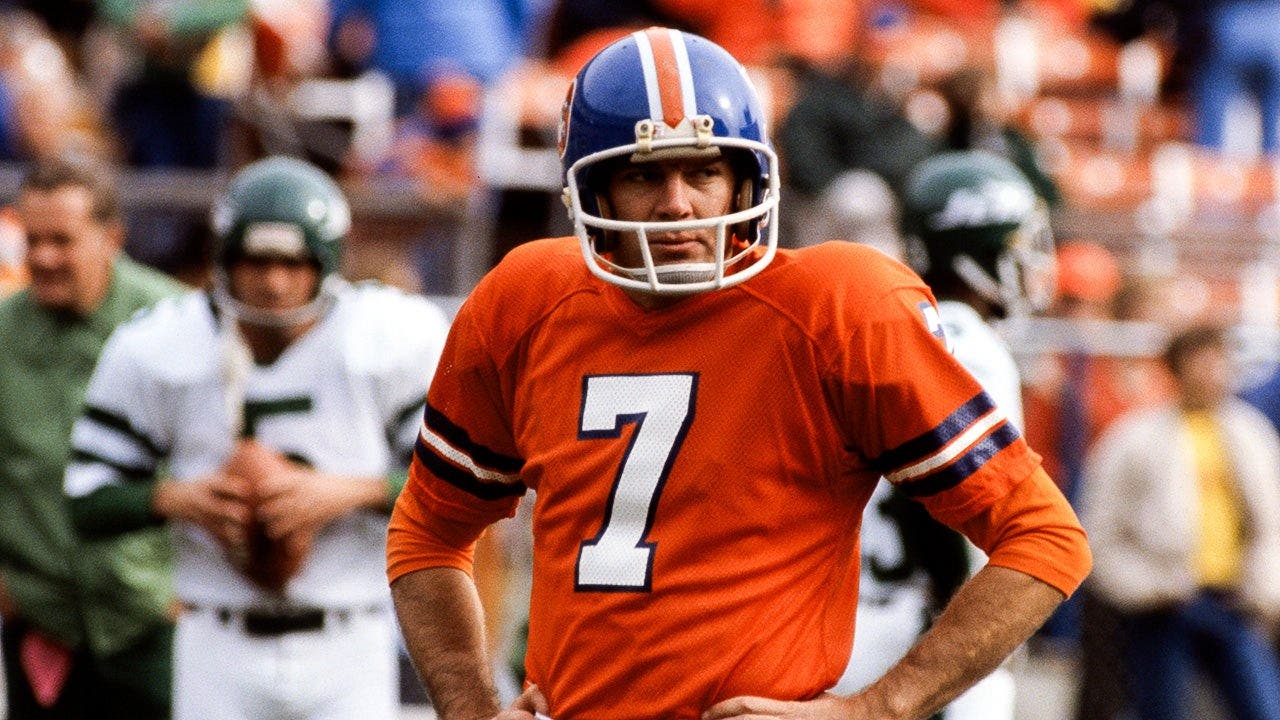
Former Denver Broncos quarterback Craig Morton, who was inducted into the team’s Ring of Fame, died on Saturday. He was 83.
Morton was critical in helping the Broncos reach their first-ever playoff appearance, ultimately getting them to Super Bowl XII during the 1977 campaign.
After going 12-2 during the season, and getting wins in the playoffs over the Pittsburgh Steelers and then-Oakland Raiders, Morton was named the AFC Offensive Player of the Year.
CLICK HERE FOR MORE SPORTS COVERAGE ON FOXNEWS.COM
Denver Broncos quarterback Craig Morton stands on the sidelines with both hands on his hips. (GETTY)
“Craig Morton is unbelievable,” fellow Ring of Famer Haven Moses said after the Broncos won the AFC Championship in 1978, per the New York Times. “To me, he’s the most valuable player in the National Football League.”
Morton also won Sporting News Player of the Year, the PFWA Comeback Player of the Year and the NFL UPI MVP in 1977.
“We are saddened to learn of the passing of #BroncosROF quarterback Craig Morton, who died on Saturday at the age of 83,” the Broncos posted on social media.
Morton also led the Broncos to two different division titles and three playoff berths during his six seasons with the franchise. He finished his career in Denver with 11,895 passing yards, which marked the most in franchise history at the time.
CLICK HERE TO DOWNLOAD THE FOX NEWS APP
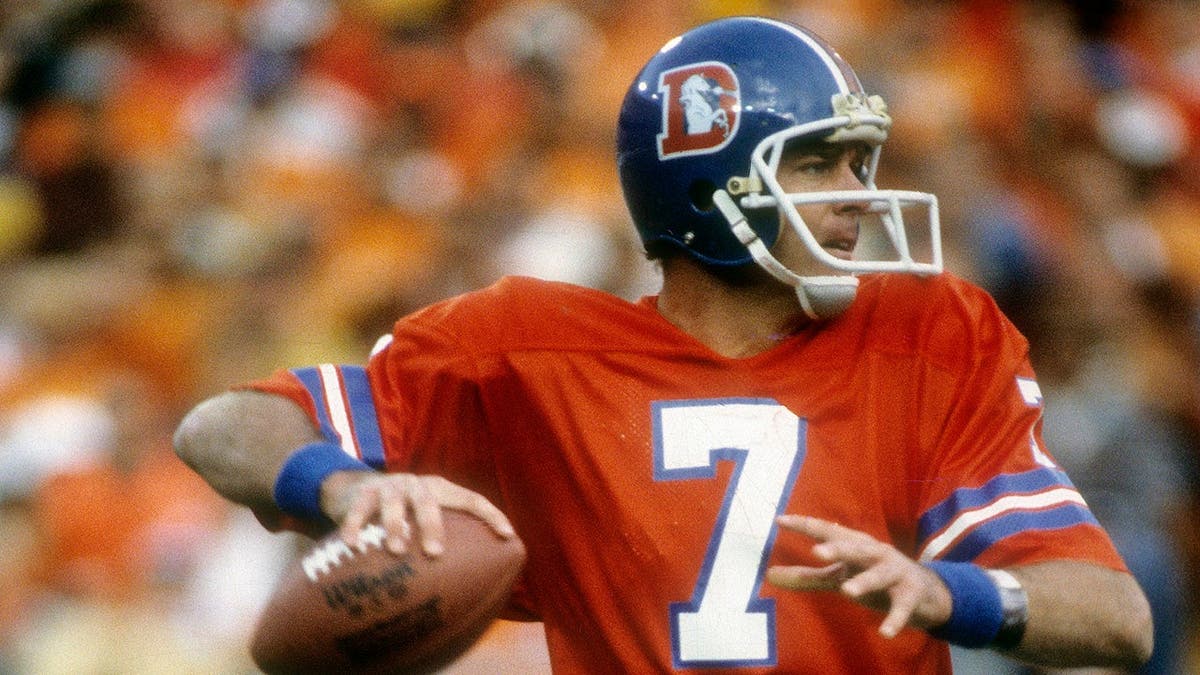
Quarterback Craig Morton #7 of the Denver Broncos drops back to pass during an NFL game at Mile High Stadium in Denver, Colo., circa 1978. Morton played for the Broncos from 1977 to 1982. (Focus On Sport/Getty Images)
Morton also led the Broncos with pass attempts (1,594) and completions (907). But Morton’s time with the Broncos was the latter half of his NFL career.
He was drafted by the Dallas Cowboys in 1965, the fifth overall pick out of Cal. Morton spent the first 10 seasons of his career with the Cowboys, where he threw for 10,279 yards with 80 touchdowns and 73 interceptions. He went 32-14-1 in his time with Dallas.
Then, during the 1974 season, Morton was moved to the New York Giants, a division rival of the Cowboys. He went 1-6 in his first seven starts that year and wouldn’t find much success in New York across three seasons.
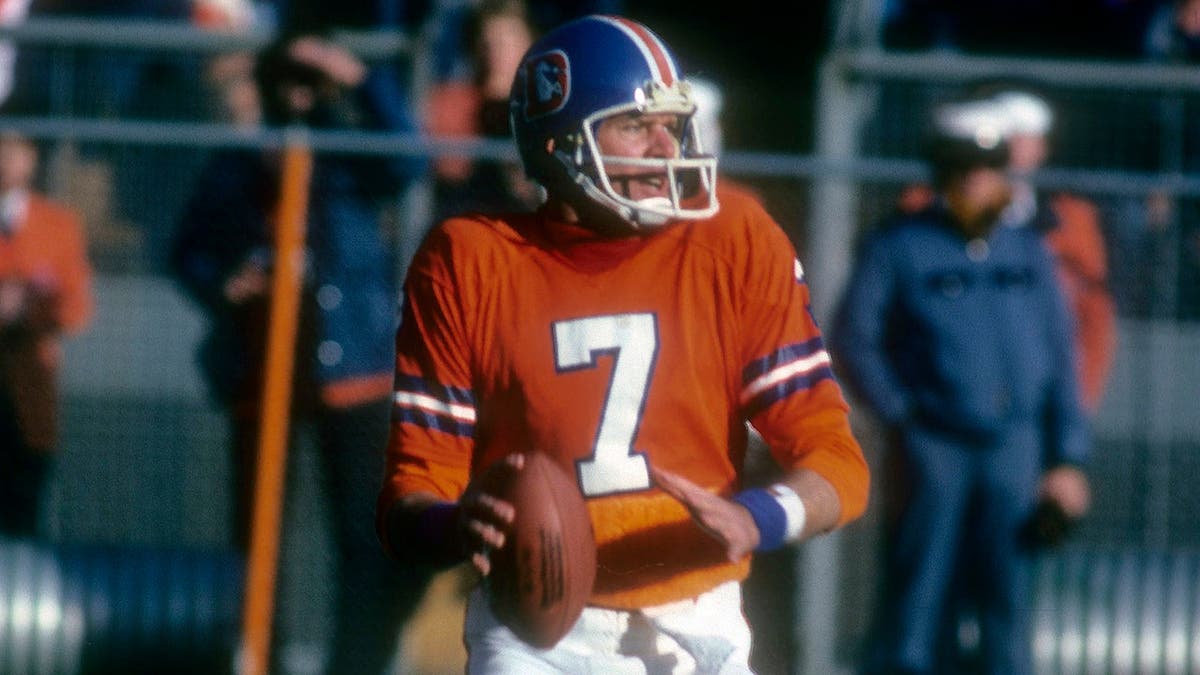
Quarterback Craig Morton #7 of the Denver Broncos drops back to pass during an NFL game at Mile High Stadium in Denver, Colo., circa 1978. Morton played for the Broncos from 1977 to 1982. (Focus On Sport/Getty Images)
CLICK HERE TO DOWNLOAD THE FOX NEWS APP
For his career, Morton threw for 27,908 yards with 183 touchdowns. He owned an 81-62-1 record across 207 games.
NEWYou can now listen to Fox News articles!
Indiana’s Fernando Mendoza’s year couldn’t have been more perfect.
He led his Hoosiers to an unblemished 16-0 season, captured the national championship in historic fashion and won the 2025 Heisman before being selected first in the 2026 NFL Draft by the Raiders.
Now that the path is clear for a new athlete to leave NYC in December holding the Heisman, who will it be?
Here are the way-too-early odds at DraftKings Sportsbook as of May 5.
This page may contain affiliate links to legal sports betting partners. If you sign up or place a wager, FOX Sports may be compensated. Read more about Sports Betting on FOX Sports.
2026 Heisman Trophy Winner
CJ Carr (Notre Dame): +750 (bet $10 to win $85 total)
Arch Manning (Texas): +750 (bet $10 to win $85 total)
Julian Sayin (Ohio State): +1000 (bet $10 to win $110 total)
Dante Moore (Oregon): +1000 (bet $10 to win $110 total)
Trinidad Chambliss (Ole Miss): +1100 (bet $10 to win $120 total)
Josh Hoover (TCU): +1200 (bet $10 to win $130 total)
Darian Mensah (Miami, FL): +1200 (bet $10 to win $130 total)
Jeremiah Smith (Ohio State): +1300 (bet $10 to win $140 total)
Gunner Stockton (Georgia): +1800 (bet $10 to win $190 total)
Sam Leavitt (Arizona State): +2000 (bet $10 to win $210 total)
Marcel Reed (Texas A&M): +2500 (bet $10 to win $260 total)
Jayden Maiava (USC): +2500 (bet $10 to win $260 total)
John Mateer (Oklahoma): +2800 (bet $10 to win $290 total)
Here’s more on a few of the names on the 2026 Heisman oddsboard:
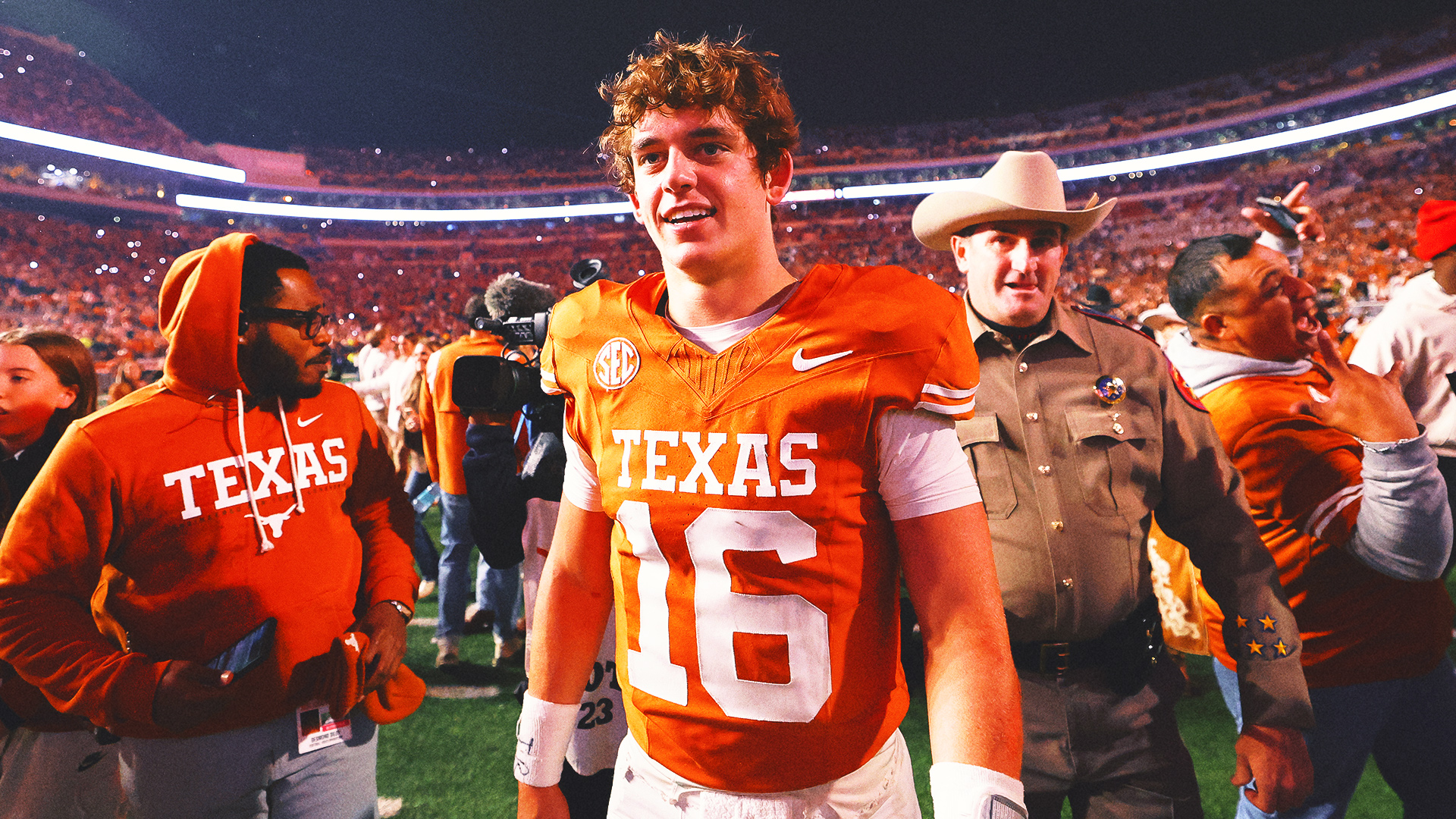
The Favorites: Carr and Manning are tied at +750 to win the Heisman Trophy at the end of the 2026 regular season. And the latter is no stranger to Heisman talk. He opened as the favorite for the 2025 Heisman at several books and right before the season kicked off, bettors were hammering Manning’s futures. The excitement over Manning was short-lived once his Longhorns went 4-2 to begin the season. If he is at least named a finalist, he would follow in the footsteps of his uncles and his grandfather, as both Peyton and Eli Manning, and their dad Archie, were Heisman finalists during their college careers.
Arch Manning is an early favorite to win the 2026 Heisman Trophy.
Ones to Watch: Ohio State teammates Jeremiah Smith and Julian Sayin are two players to watch for next season’s Heisman — especially because they were both in the conversation to win the award most of 2025. Sayin, in fact, was a Heisman finalist and finished fourth in the race with eight first-place votes. Smith didn’t make the trip to New York but finished sixth in the tally. FOX Sports college football writer RJ Young projects that both Smith and Sayin — as well as Manning — will be in the running in 2026.
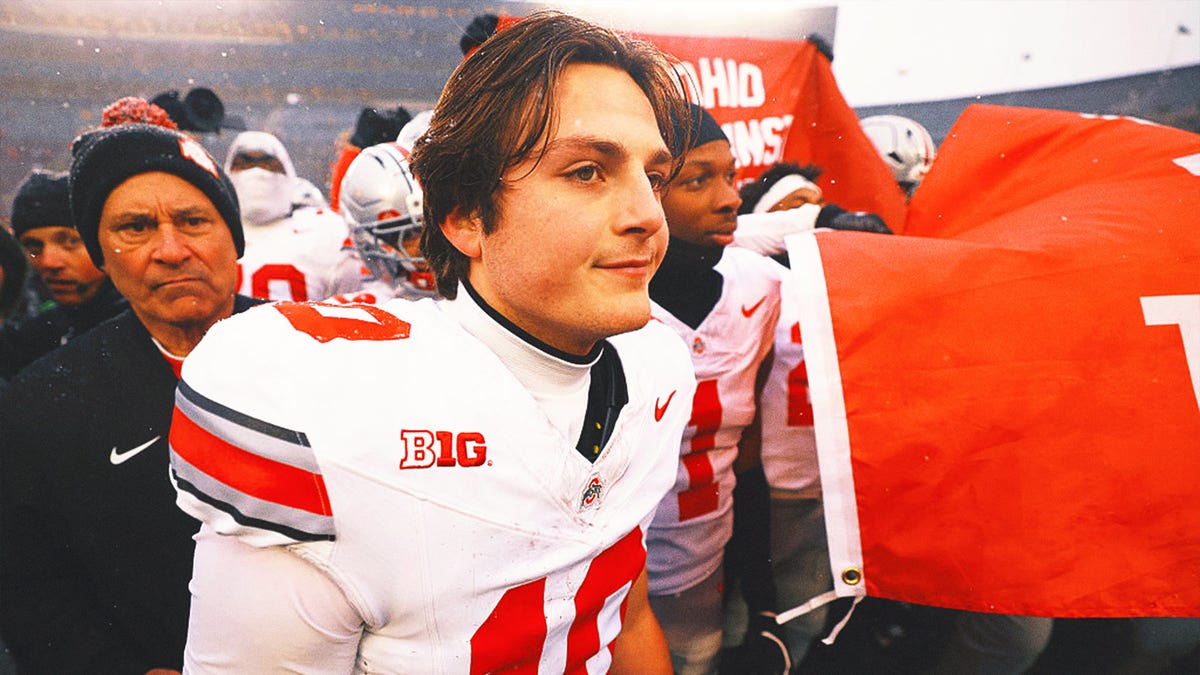
Ohio State’s Julian Sayin could make another trip to NYC — but this time as the winner.
Heisman in Troy?: Could Maiava bring the hardware back to SC from NYC? Based on the early odds, he could have at least a slight chance. If the Trojans’ QB wins the most coveted individual award in college football, he’d be the first USC player since Caleb Williams (2022) to do so. Maiava finished the 2025 season with 3,711 passing yards and 24 touchdowns, as his squad ended the year with a 9-4 record.
Sports
Aaron Rodgers never met with Steelers despite rumor-filled weekend as QB’s decision remains up in air
NEWYou can now listen to Fox News articles!
Aaron Rodgers didn’t make it back to Pittsburgh after all.
After reports surfaced this past Friday that Rodgers was expected to visit the Pittsburgh Steelers in preparation for a return to the team he played for last year, many were hopeful the months-long wait was over.
However, during his appearance on “The Pat McAfee Show” on ESPN this Monday, Adam Schefter said neither the Steelers nor his agent were aware of any such meeting being on the schedule.
CLICK HERE FOR MORE SPORTS COVERAGE ON FOXNEWS.COM
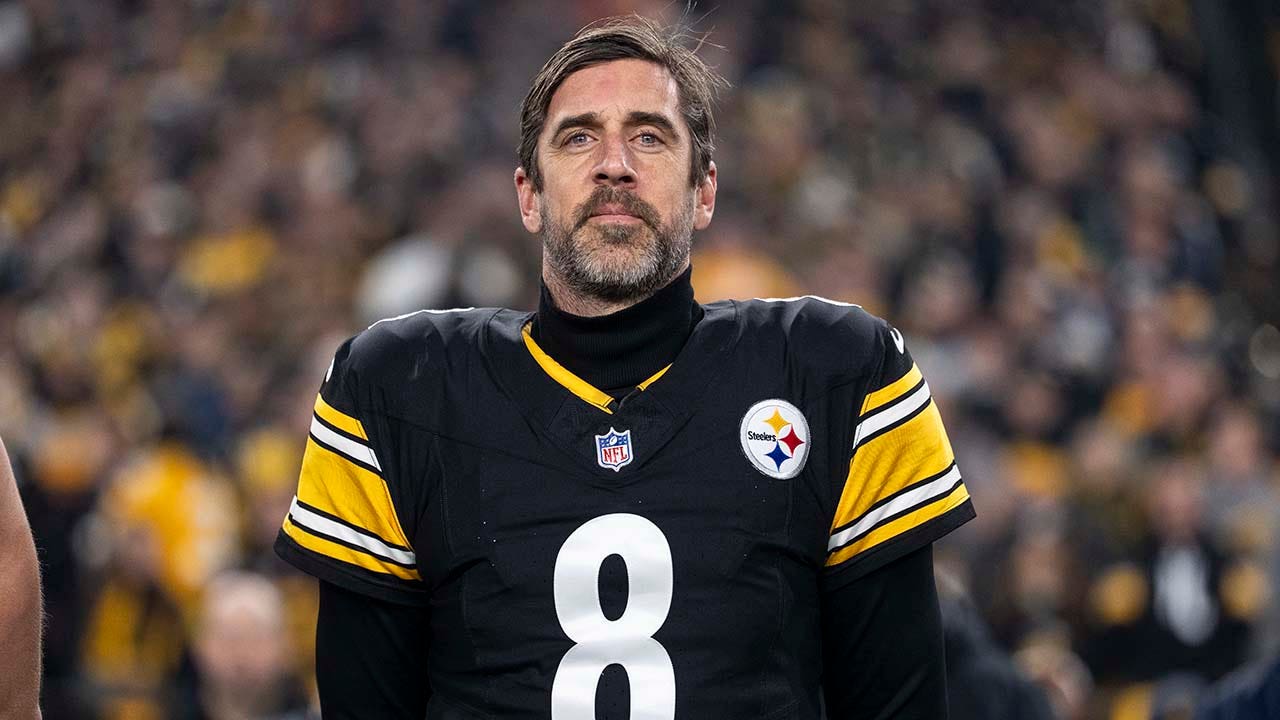
Aaron Rodgers of the Steelers stands during the national anthem before an NFL game against the Baltimore Ravens at Acrisure Stadium in Pittsburgh, Pa., on Jan. 4, 2026. (Michael Owens/Getty Images)
But then, there were the reports about where Rodgers is in the world, with the Pittsburgh Tribune-Review reporting that he was in the Steel City, though he wasn’t scheduled to visit with the team. A report from 93.7 The Fan added on, saying he was in town for golf.
Either way, the decision still lingers whether Rodgers will suit up for the Steelers, but the storied franchise gave themselves some insurance if the four-time MVP quarterback decides he wants to potentially play elsewhere.
STEELERS OWNERSHIP HOPES FOR CLARITY ON AARON RODGERS’ FUTURE ‘IN THE NEXT MONTH OR SO’
The Steelers used an unrestricted free-agent tender on Rodgers last month, which allows Pittsburgh the right to match any offer Rodgers may get from another team.
Despite doubt from some camps on Rodgers’ potential return, Schefter noted his belief he will be in the Steelers’ depth chart come training camp. The Steelers have their OTAs scheduled to begin next Monday.
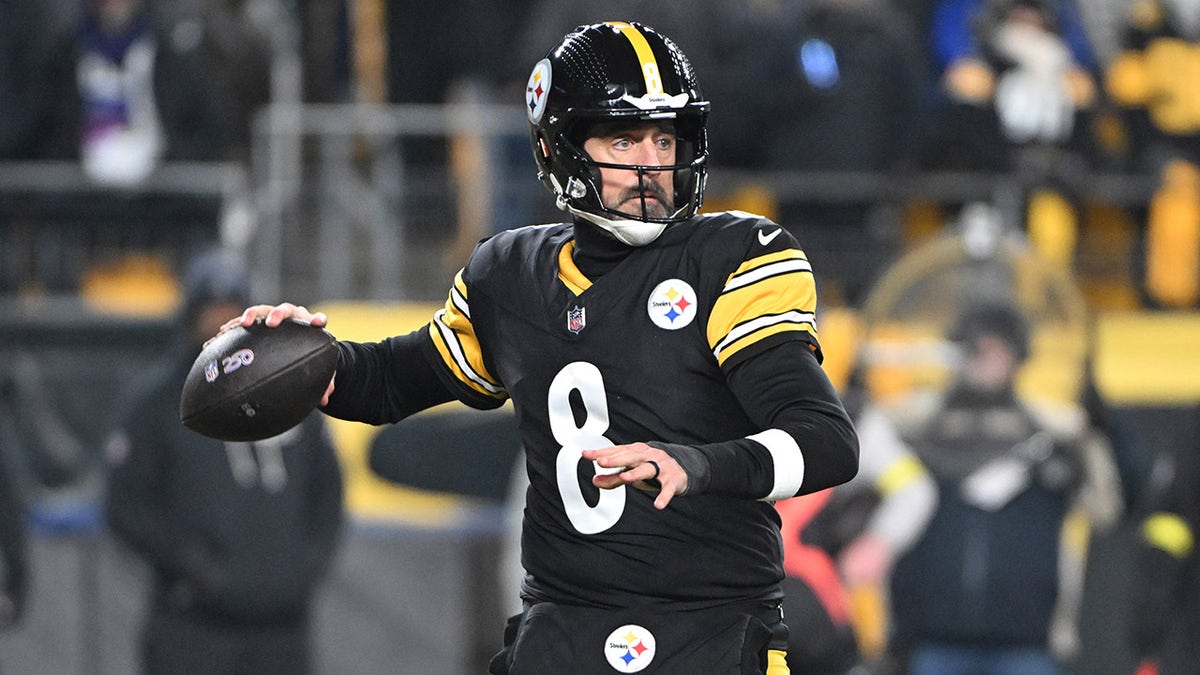
Steelers quarterback Aaron Rodgers drops back to pass against the Baltimore Ravens at Acrisure Stadium in Pittsburgh, Pa., on Jan. 4, 2026. (Getty Images)
With Rodgers at the helm this past season, the Steelers went 10-7, even earning a playoff berth after Baltimore Ravens rookie Tyler Loop’s now-infamous game-winning field goal did not get through the uprights. The Steelers ended up losing to the Houston Texans in the wild-card round, extending the team’s playoff winless streak to eight straight seasons, including three consecutive campaigns.
Rodgers, who’s slated for the Pro Football Hall of Fame once he decides to call it quits for his career, threw for 3,322 yards with 24 touchdowns to seven interceptions in 16 games for Pittsburgh in 2025.
CLICK HERE TO DOWNLOAD THE FOX NEWS APP
The Steelers also revamped their team for this season, as Mike McCarthy, Rodgers’ old head coach with the Green Bay Packers, takes over for Mike Tomlin, whose generational run in Pittsburgh ended after 19 seasons (2007-25). While D.K. Metcalf and Rodgers built chemistry this past season, the Steelers also added veteran receiver Michael Pittman Jr. in a deal with the Indianapolis Colts, while adding Alabama’s Germie Bernard in the 2026 NFL Draft.
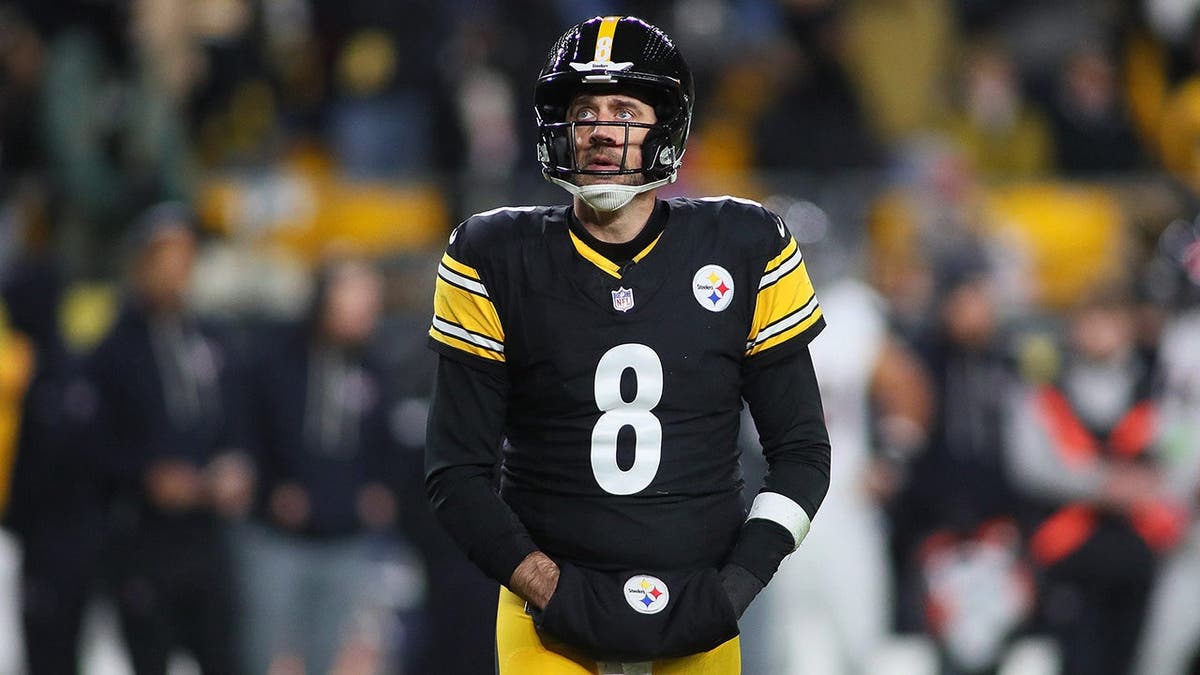
Steelers quarterback Aaron Rodgers after being sacked during the wild-card game against the Houston Texans at Acrisure Stadium in Pittsburgh, Pa., on Jan. 12, 2026. (Michael Longo/For USA Today Network-PA/USA Today Network via Imagn Images)
And while Kenneth Gainwell is gone after a solid performance with Pittsburgh, Rico Dowdle comes into the fold to work alongside Jaylen Warren at running back.
Yet, the biggest question in football still remains: will Rodgers be a part of these new-look Steelers in 2026?
Follow Fox News Digital’s sports coverage on X and subscribe to the Fox News Sports Huddle newsletter.


Bangladesh needs logistics upgradation to turn competitive: Think tank

Meghan Markle shares delightful family update amid rift with dad Thomas

Epstein files on display at New York pop-up exhibit, all 3.5 million pages

-

 Politics1 week ago
Iran weighs US reply delivered via Pakistan as Trump signals opposition to deal terms
-

 Tech1 week ago
DHS Demanded Google Surrender Data on Canadian’s Activity, Location Over Anti-ICE Posts
-
 Business1 week ago
Heineken to invest £44.5m in hundreds of pubs creating 850 jobs
-

 Entertainment1 week ago
Jelly Roll reacts to daughter Bailee Ann’s major life milestone
-

 Tech1 week ago
I Lugged the Best Travel Totes on Work Trips, Weekends, and More
-

 Politics1 week ago
Two women die on migrant boat seeking to reach UK
-
 Business1 week ago
Heineken plans huge investment in hundreds of UK pubs ahead of World Cup
-

 Entertainment1 week ago
Passage: In memoriam