

Business
Mixed day for stocks as oil prices climb amid ongoing Iran-US deadlock

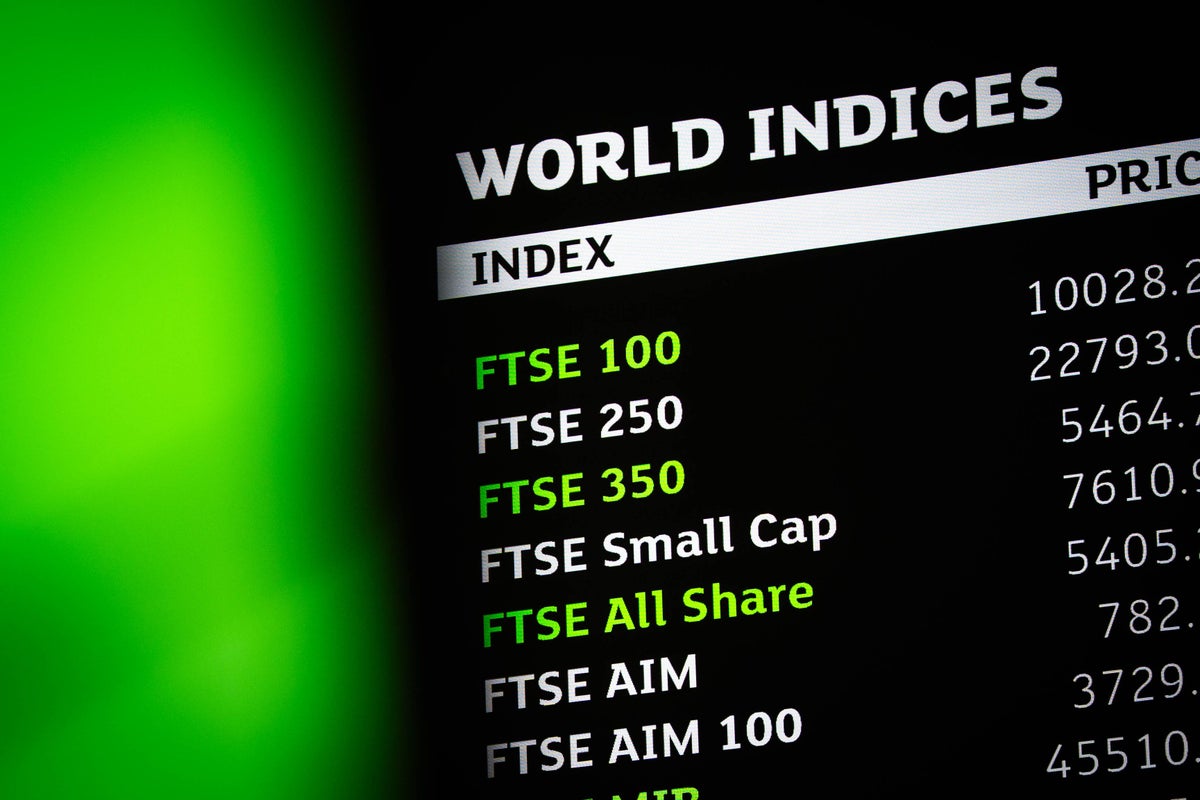
Stocks ended Monday mixed in London while oil prices pushed higher as investors weighed political developments in the UK and the lack of progress in peace talks between the US and Iran.
The FTSE 100 closed up 36.36 points, 0.4%, at 10,269.43. The FTSE 250 ended down 41.52 points, 0.2%, at 22,807.86, and the AIM All-Share rose 7.98 points, 1.0%, at 822.41.
Brent crude for July delivery was trading at 103.70 US dollars a barrel on Monday, up compared to 101.49 dollars at the time of the equities close in London on Friday.
The continued stalemate between the US and Iran dashed investors’ hopes of an imminent peace deal and heightened concerns over further violence and disruptions to oil supplies through the Strait of Hormuz.
US President Donald Trump described Tehran’s response to the latest US outline for peace talks as “totally unacceptable” in a social media post.
Iran said it had demanded the release of its frozen assets and the end of a US blockade of its ports.
“The price of oil remains highly reactive to news around the reopening of the Strait of Hormuz, both positive and negative,” said Kathleen Brooks, research director at trading group XTB.
“Signs that tankers are getting through the Strait, even if it is a trickle, could weigh on the oil price in the coming days,” she added.
But JPMorgan analyst Natasha Kaneva thinks that oil prices could remain a little over 100 dollars for most of the rest of this year, averaging 97 dollars for 2026 as a whole, in a scenario assuming the Strait of Hormuz reopens on June 1.
“Even if the Strait reopens in June, the seasonal lift in summer demand, combined with the exceptionally large commercial stock draws seen in March and April, and likely again in May, should push OECD inventories toward operational stress levels by August.
“This is what keeps crude prices elevated in the low 100s (US dollars) through most of the year, rather than allowing a sharp retracement once Hormuz reopens, Ms Kaneva wrote in a research note.
In Europe on Monday, the CAC 40 in Paris ended down 0.7%, and the DAX 40 in Frankfurt edged up 0.1%.
In New York, the Dow Jones Industrial Average was up 0.1%, the S&P 500 rose 0.3% while the Nasdaq Composite was up 0.2%.
The yield on the US 10-year Treasury widened to 4.39% on Monday from 4.37% on Friday. The yield on the US 30-year Treasury stretched to 4.97% from 4.94%.
The pound firmed to 1.3651 US dollars on Monday afternoon from 1.3623 dollars on Friday. Against the euro, sterling was higher at 1.1584 euros from 1.1568 euros on Friday.
In London, bond yields crept higher, with domestic political uncertainty adding to the Middle East worry.
Prime Minister Sir Keir Starmer vowed to prove his “doubters” wrong in a speech seeking to quell a growing threat to his leadership following disastrous local election results.
But a growing number of Labour party MPs called for Sir Keir to outline a timetable for a transition of leadership.
Susannah Streeter, chief investment strategist, Wealth Club said: “There is still a sense of jitters playing out as concerns about political instability collide with inflationary fears prompted by the ongoing conflict in the Middle East.
“His speech was designed to project a keep calm and carry on message, but the worry is that it lacks the real substance needed to keep Labour MPs on side.
“The concern is that a change of prime minister would prompt wider turmoil at the top of government,” Ms Streeter said, adding “political turbulence is never a good look for a nation that needs to project stability in order to attract long-term investment.”
The euro traded slightly higher against the greenback, at 1.1782 US dollars on Monday from 1.1773 dollars on Friday. Against the Japanese yen, the dollar was trading at 157.01 yen, higher than 156.63 yen.
In London, Airtel Africa stormed 15% to the good after Bharti Airtel – which has a 63% stake in the company – convened a meeting for May 13 to consider a reorganisation of its subsidiaries’ shareholding structure, including Airtel.
In an exchange filing, Bharti Airtel said the reorganisation of the shareholding framework could involve consolidation or acquisition of shares in its subsidiaries.
British Airways owner IAG shot up 6.4% as it announced the 825 million euro (£712 million) buyback of outstanding 1.125% senior unsecured convertible bonds due 2028.
The rising gold price boosted Fresnillio, up 3.5%, and Endeavour Mining, up 3.3%.
Gold traded higher at 4,733.27 US dollars an ounce on Monday, from 4,711.50 dollars on Friday.
Compass Group climbed 2.3% after raising guidance after better-than-expected interim results.
The Chertsey, England-based contract caterer said pre-tax profit rose 15% to 1.47 billion dollars (£1.08 billion) in the half-year to March 31 from 1.28 billion dollars (£994 million) the year prior. Underlying operating profit shot up 12% to 1.84 billion dollars (£1.35 billion) from 1.65 billion dollars (£1.21 billion).
Revenue improved 11% to 24.98 billion dollars (£18.31 billion) from 22.57 billion dollars (£16.54 billion) a year prior, with organic growth of 7.2%, benefiting from strong client retention at 96%.
UBS pointed out revenue was 0.5% ahead of Visible Alpha consensus of 24.86 billion dollars (£18.22 billion), underlying operating profit was 1% above consensus of 1.82 billion dollars (£1.33 billion) with organic revenue growth stronger than 7.0% consensus.
Looking ahead, Compass now expects underlying operating profit growth of “above 11%” for the full-year, its guidance raised from “around 10%”.
Compass said it will be “driven by organic revenue growth of around 7%, around 2% profit growth from M&A and ongoing margin progression”.
Meanwhile, F&C Investment Trust’s share price, down 75%, reflected a four-to-one share split coming into effect.
The biggest risers on the FTSE 100 were: Airtel Africa, up 53.2p at 420.2p; International Consolidated Airlines, up 24.7p at 409.7p; Anglo American, up 151.0p at 4,000.0p; Antofagasta, up 144.5p at 4,042.0p; and Fresnillo, up 126.0p at 3,698.0p.
The biggest fallers on the FTSE 100 were: F&C Investment Trust, down 989.0p at 329.0p; JD Sports Fashion, down 3.44p at 71.64p; Entain, down 21.4p at 560.6p; Burberry Group, down 40.5p at 1,169.5p; and Whitbread, down 77.0p at 2,333.0p.
Tuesday’s global economic calendar has an Australian consumer confidence print overnight and German and US inflation figures.
Tuesday’s local corporate calendar has half-year results from tobacco manufacturer Imperial Brands, full-year results from telecommunications group, Vodafone, and a trading statement from engineering company, IMI.
Contributed by Alliance News
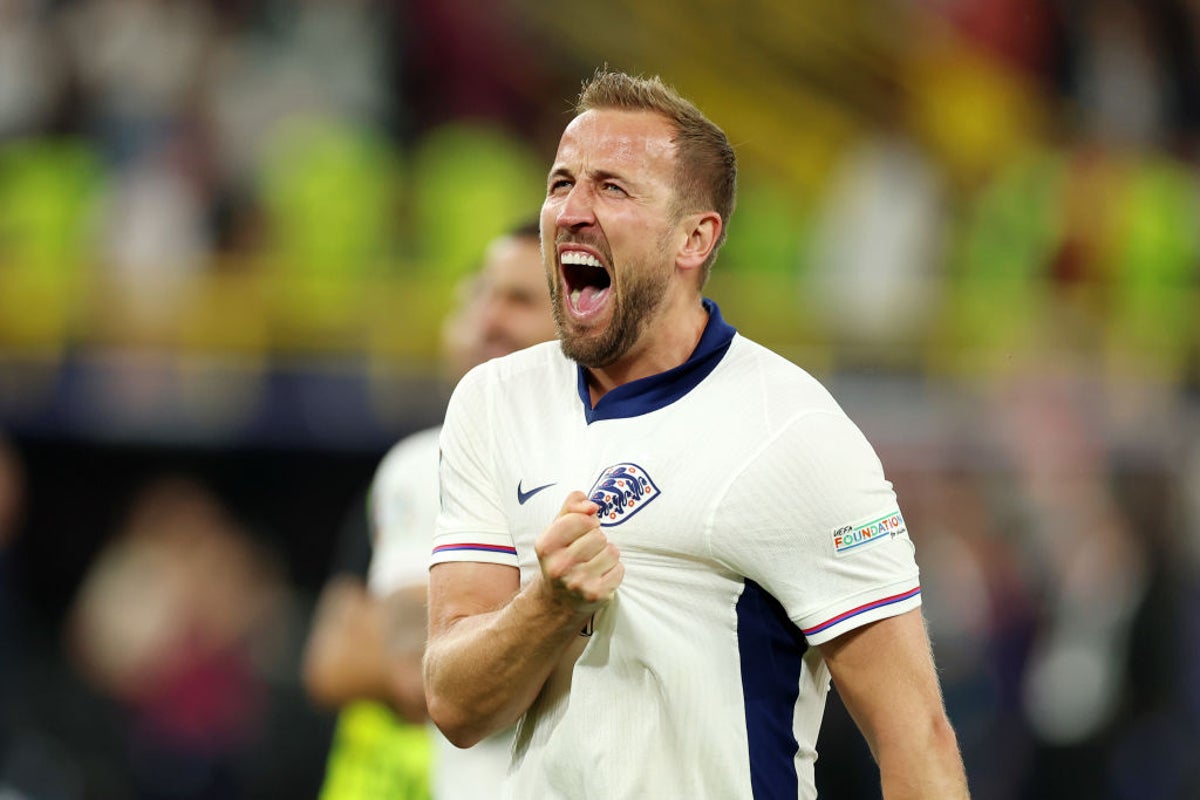
Struggling retailers are hoping for a bumper World Cup to boost the high street and improve consumer confidence.
Footfall figures, which measure trips rather than expenditure, already suggested that many shoppers have all but abandoned the UK high street.
The latest sales figures from the British Retail Consortium (BRC) show that sales fell 3 per cent in April compared to growth of 7 per cent in the same month a year ago.
That’s partly because Easter was in March this year, but even adjusting for that, the figures are disappointing for retailers.
Food sales decreased by 2.5 per cent year-on-year in April, against a growth of 8.2 per cent in April 2025. This was below the 12-month average growth of 3.5 per cent.
Helen Dickinson, chief executive at the BRC, said: “April’s sales fall was largely driven by the Easter shift, with food hit hardest. But weak consumer confidence also played a role as fears about the Middle East conflict driving up living costs led shoppers to rein in.
“Big-ticket purchases fell, with the recent recovery in furniture losing steam, and uncertainty around summer holidays hitting discretionary spend. With the World Cup coming, retailers hope it will provide a lift, and early signs show demand for TVs and sound systems picking up.”
Retailers have already warned about the effects of the Iran war on consumer spending, as food and fuel prices are forced upwards.
The BRC has asked the government to delay various regulatory burdens, including energy policy levies and packaging taxes.
According to the British Beer and Pubs Association, the World Cup could give the pub trade a £275m boost if England make it to the final. An extra 55 million pints would be drunk, the trade body said.
Pubs are currently closing at the rate of two a day, putting the future of the British boozer at risk.
Linda Ellett, UK head of consumer, retail and leisure at KPMG, said: “It was a disappointing April for the retail sector, even factoring in an earlier Easter shifting some spending into March. Bar marginal growth for beauty, health and jewellery, retail sales fell across all other categories.
“Consumer confidence has been further dampened by rising prices due to the Iran conflict, with consumers cautious about potential ongoing effects. As a result, the retail sector is facing a challenging start to spring/summer, but there is hope that holiday demand and the World Cup still manage to unlock spending in the weeks and months ahead.”

NEW DELHI: India cannot afford to remain a passive consumer in the AI era and must urgently build its own frontier-scale artificial intelligence models if it wants to shape global technology rules, according to Pratyush Kumar, co-founder of Sarvam AI.Speaking at the CII Business Summit, Kumar said Sarvam is now preparing to train its first trillion-parameter AI model within next nine months, marking what could become a major milestone for the country’s indigenous AI ambitions.“We can rent it for now until we don’t have it, but you have to build it. You have to own the destiny around that,” Kumar said, arguing that India must move beyond debates around whether it should build its own AI models and instead focus on creating long-term strategic capability.Kumar said AI would become the defining intelligence layer across industries, governance, science and manufacturing, making ownership of foundational models critical for economic value creation. He warned that India risks repeating mistakes made during earlier technological revolutions.“What we saw with steam engine, steel making and the internet, in all these eras, we became users and frankly lost out on key value creation,” he said. “This is now the start of a new era, which is going to play out quarter by quarter.” The Sarvam AI co-founder revealed that the company has already demonstrated a proof of concept showing India can build large-scale AI systems end-to-end, using domestic capabilities across data, algorithms, research and infrastructure. He also stressed that India would need significantly larger investments in AI infrastructure and research talent to compete globally. “The intelligence layer will accrue the value,” he said. “It requires infrastructure, but it requires R&D talent to build these models.” Warning against policy drift, Kumar said India still lacks a clear national AI direction.
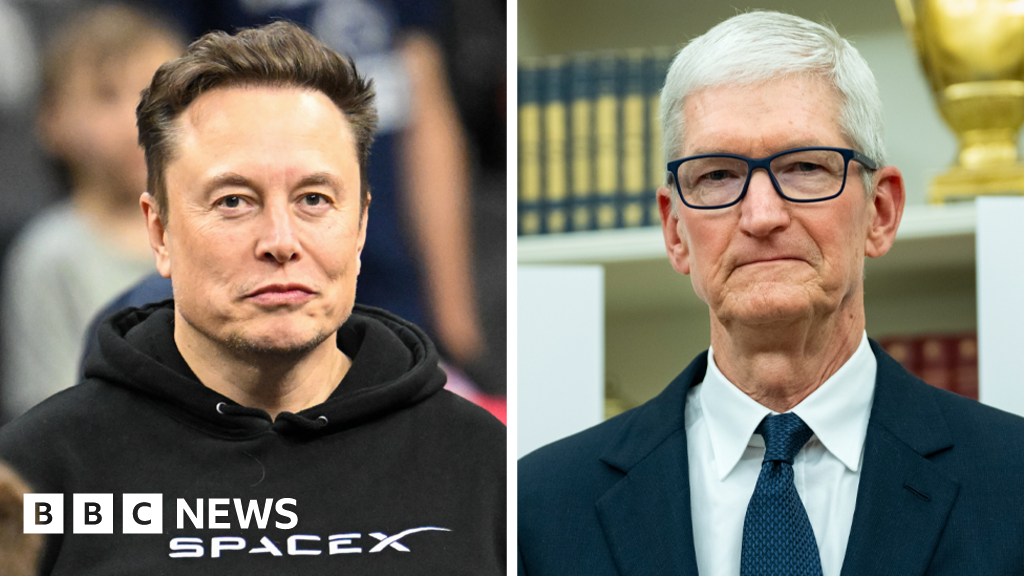
A total of 17 US executives are set to join the president on his visit, where he will meet his Chinese counterpart Xi Jinping.
Source link


Craig Morton, quarterback who led the Broncos to their first Super Bowl appearance, dead at 83

Ilya Sutskever Stands by His Role in Sam Altman’s OpenAI Ouster: ‘I Didn’t Want It to Be Destroyed’

Pete Davidson takes jab at Lizzo over weight loss

-

 Politics1 week ago
Iran weighs US reply delivered via Pakistan as Trump signals opposition to deal terms
-

 Tech1 week ago
DHS Demanded Google Surrender Data on Canadian’s Activity, Location Over Anti-ICE Posts
-
 Business1 week ago
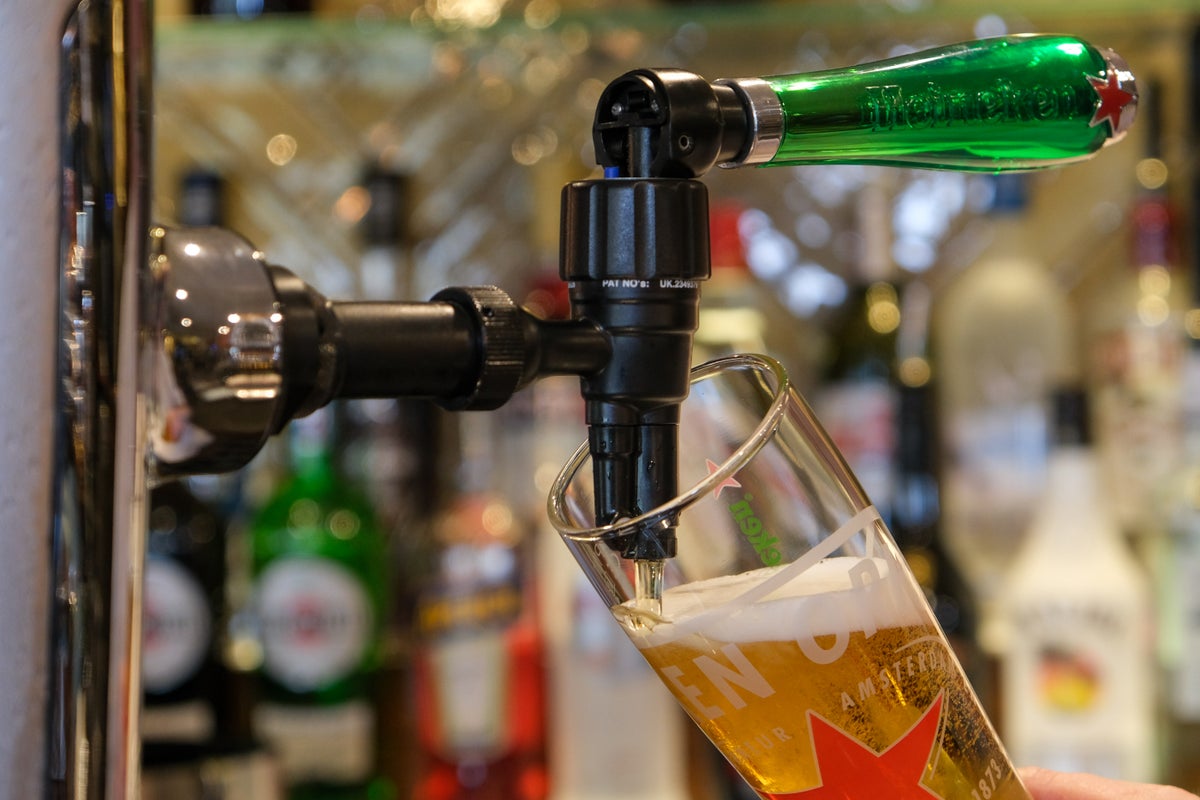
Heineken to invest £44.5m in hundreds of pubs creating 850 jobs
-

 Fashion1 week ago
Middle East conflict clouds India’s FY27 GDP forecast of 7-7.4%: Govt
-

 Entertainment1 week ago
Jelly Roll reacts to daughter Bailee Ann’s major life milestone
-

 Tech1 week ago
I Lugged the Best Travel Totes on Work Trips, Weekends, and More
-

 Politics1 week ago
Two women die on migrant boat seeking to reach UK
-
 Business1 week ago
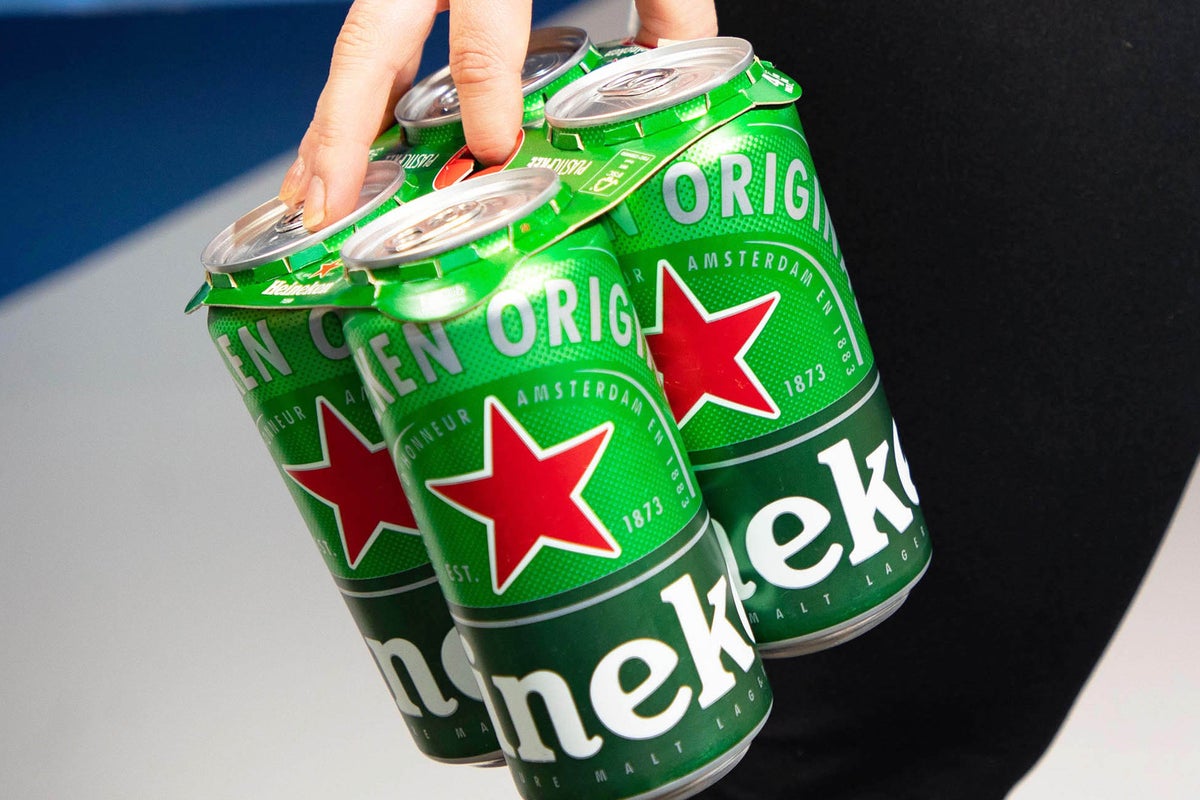
Heineken plans huge investment in hundreds of UK pubs ahead of World Cup