

Fashion
Vietnam factory output expands as PMI holds above 50 in Jan

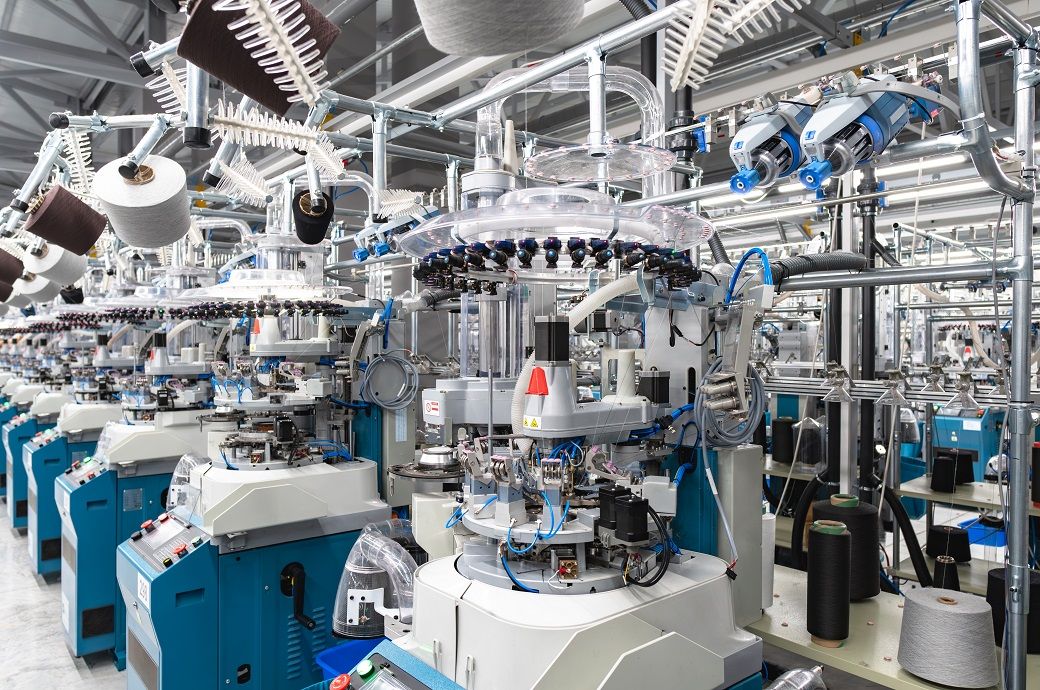
Vietnam’s manufacturing sector began 2026 with stronger output growth, supported by steady demand, rising employment and robust purchasing activity, even as headline PMI eased slightly in January.
S&P Global Vietnam Manufacturing Purchasing Managers’ Index stood at 52.5 in January 2026, down from 53 in December but remaining firmly above the 50 threshold, signalling a continued improvement in business conditions for the seventh straight month.
Production expanded sharply, driven by faster growth in new orders and a renewed, albeit modest, rise in export demand, including orders from other Asian markets such as India. Manufacturers responded by increasing hiring for a fourth consecutive month and stepping up purchasing to meet higher output requirements.
“It was a solid start to the year for the Vietnamese manufacturing sector as firms ramped up output in response to greater new orders and as part of efforts to meet client needs in a timely manner. Carrying on the momentum built towards the end of 2025, the sector looks to be in good shape for a successful 2026,” said Andrew Harker, economics director at S&P Global Market Intelligence.
Inflationary pressures, however, remained elevated. Input costs rose sharply due to strong demand and material shortages, while selling prices increased at the fastest pace since April 2022. Despite this, sentiment improved further, with 55 per cent of firms expecting output to rise over the next 12 months.
“The one potential headwind for firms, however, is the strength of inflationary pressures. Supply shortages of materials pushed up prices sharply again in January and firms responded accordingly by hiking their selling prices to a greater extent. So far demand has remained resilient in the face of these pressures, but we will need to keep an eye out for any softening of new order growth in the months ahead,” Harker added.
Vietnam’s manufacturing sector started 2026 on a strong footing, with output, new orders and employment expanding despite a slight dip in PMI.
January PMI eased to 52.5 but stayed in expansion for a seventh month.
Rising domestic and export demand lifted hiring and purchasing, though input costs and selling prices climbed sharply amid material shortages.
Fibre2Fashion News Desk (HU)













Fast fashion, particularly products priced below ₹1,000 (~$10.82), dominates their consumption patterns, reflecting a clear preference for affordable purchases, Reedseer said in an article titled ‘Gen Z: Defining Trends, Influencing Spends’ by Mrigank Gutgutia.
India’s Gen Z will drive nearly half of the fashion market by 2030, with $1.3 trillion in spending, according to Reedseer.
Value-conscious and digitally native, they favour affordable fast fashion and are influenced by peers and online content.
Their choices prioritise identity, comfort, and authenticity, while also shaping household purchases.
Having grown up in a digital-first environment, Gen Z consumers exhibit a strong comfort with online platforms, a behaviour further reinforced during the pandemic years. As many enter the workforce, their spending is increasingly directed towards identity-building, with purchasing decisions shaped heavily by peer influence and social validation.
Despite becoming the largest user base on leading fashion e-commerce platforms, Gen Z consumers tend to spend less per transaction than millennials, underscoring their value-conscious approach. At the same time, categories such as men’s accessories and sneakers are witnessing strong growth, indicating evolving consumption patterns across genders.
Comfort and versatility define Gen Z’s fashion choices, with two-thirds preferring semi-formal or casual wear even in professional settings. Beyond personal consumption, this cohort plays a decisive role in shaping household purchasing decisions, particularly for emerging brands, effectively acting as internal influencers within families.
Gen Z prioritises authenticity, inclusivity, and self-expression, with around 52 per cent choosing products that align with their identity, while nearly half discover brands through digital content. This has made influencer-led marketing and creator collaborations central to brand-building efforts.
The article emphasised that successful brands must transition from aspirational messaging to identity-driven positioning, supported by personalisation, community engagement, and cultural relevance. As Gen Z consumers establish long-term preferences in their twenties, brands that succeed in building early affinity are likely to secure sustained competitive advantage in the years ahead.
Fibre2Fashion News Desk (SG)

The company posted a net loss of $7 million, compared to a net income of $16.3 million in FY24. Adjusted EBITDA fell to $63.6 million, or 6.4 per cent of sales, from $109.1 million, or 9.9 per cent a year earlier.
Torrid Holdings has reported a weak FY25, with sales falling 9.4 per cent to $1 billion and a net loss of $7 million amid margin pressure.
The company closed 151 stores and saw EBITDA decline.
Q4 performance also weakened.
Despite this, Torrid expects modest recovery in FY26, supported by optimisation efforts, improved marketing and a stronger operational foundation.
The company closed a total of 151 stores during the year as part of its retail optimisation strategy, reducing its footprint from 634 to 483 stores, Torrid Holdings said in a press release.
Torrid ended the year with $20 million in cash and cash equivalents, while total liquidity stood at $84.9 million. Net cash used in operations was $13 million, compared to positive operating cash flow of $77.4 million in the previous year.
For the fourth quarter (Q4), net sales dropped 14.3 per cent year-on-year (YoY) to $236.2 million, while comparable sales fell 10 per cent. Gross margin contracted to 30.0 per cent from 33.6 per cent a year earlier. The company reported a net loss of $8.1 million, widening from a $3.0 million loss in the same period last year. Adjusted EBITDA declined sharply to $5.1 million, or 2.2 per cent of sales, compared to $16.7 million, or 6.1 per cent, previously.
During the quarter, Torrid closed 77 stores under its Store Footprint Optimisation Project, taking the total store count to 483 locations.
Commenting on performance, Lisa Harper, chief executive officer at Torrid Holdings, said, “2025 was a transformational year. We delivered $1 billion in net sales, in line with our guidance, and $63.6 million in Adjusted EBITDA, exceeding the high end of our outlook, while making deliberate strategic decisions required to put this business on a stronger footing. We closed 151 structurally unproductive locations, launched five sub-brands that generated approximately $70 million in sales, and fundamentally restructured our product assortment around core franchises and fabrications our customers value most. Trends in Q4 and early Q1 give us confidence that the foundation we’ve built is beginning to take hold.”
Looking ahead, the company expects first-quarter fiscal 2026 net sales in the range of $236 million to $244 million, with Adjusted EBITDA between $14 million and $18 million. For the full year, Torrid forecasts net sales between $940 million and $960 million and Adjusted EBITDA of $65 million to $75 million, alongside capital expenditure of $8 million to $10 million.
“We enter 2026 with a strong operational foundation—optimised channels, product and pricing. This positions us to accelerate customer file growth through renewed marketing efforts, helping us re-engage past shoppers, attract new customers and deepen loyalty across our existing base. I am confident we are on the right path and encouraged by early signs of progress we are seeing in the business,” added Harper.
Fibre2Fashion News Desk (SG)

The People’s Bank of China (PBoC) is set to conduct a one-year medium-term lending facility (MLF) operation worth 500 billion yuan (~$72.52 billion) on Wednesday. The move is aimed at ensuring sufficient liquidity within the banking system.
The People’s Bank of China will conduct a 500-billion-yuan (~$72.52 billion) one-year MLF operation to support banking liquidity.
Conducted via variable-rate tenders, the move will offset 450 billion yuan in maturing funds, resulting in a net injection of 50 billion yuan (~$6.9 billion).
This marks the 13th consecutive month of net liquidity infusion by the central bank.
The operation will be carried out via variable-rate tenders with a fixed volume, using a multiple-price auction mechanism, said Chinese media reports quoting the central bank.
With 450-billion-yuan worth of MLF funds due to mature this month, the latest operation will result in a net liquidity injection of. This marks the 13th consecutive month in which the PBoC has added net liquidity through the facility.
The operation will result in a net liquidity injection of 50 billion yuan (~$6.9 billion), after accounting for 450 billion yuan in MLF funds maturing this month, extending the PBoC’s streak of net injections to 13 consecutive months.
Fibre2Fashion News Desk (SG)


Ranking each NHL team’s top prospect: Hagens, Iginla, more

India’s Gen Z to drive half of fashion market by 2030: Reedseer

Queen Camilla daring move shocks Prince Harry after big announcement

-

 Fashion1 week ago
Sales at US apparel, clothing accessories stores up 4% YoY in Jan 2026
-
 Business1 week ago
Peloton is launching bikes and treadmills for gyms, accelerating commercial strategy
-

 Tech1 week ago
Justice Department Says Anthropic Can’t Be Trusted With Warfighting Systems
-

 Fashion1 week ago
Trump signs order to combat fraudulent ‘Made in America’ labels
-
 Business1 week ago
Stocks and pound rise as US rate call approaches
-
 Fashion1 week ago
Lenzing launches TENCEL Lyocell-HV100 at Intertextile Shanghai
-

 Entertainment7 days ago
Val Kilmer revived 1 year after death through AI
-

 Sports1 week ago
PCB files complaint over allowing Bangladesh to take review on penultimate ball – SUCH TV