

Politics
Mexican military kills cartel boss ‘El Mencho’ in US-backed raid

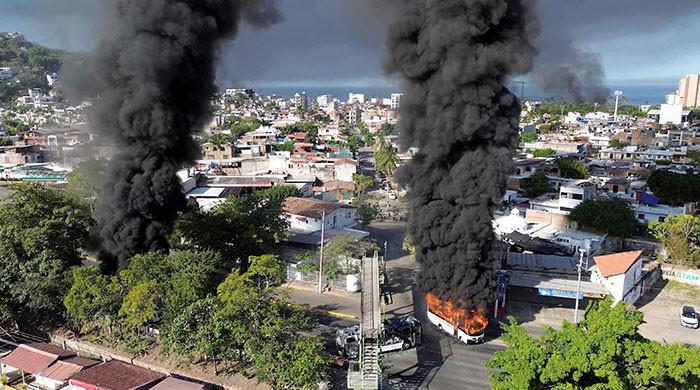
- Nemesio Oseguera dies in custody after being injured in operation.
- US-led task force played role in raid carried out by Mexican forces.
- Cartel henchmen block highways with burning cars torch businesses.
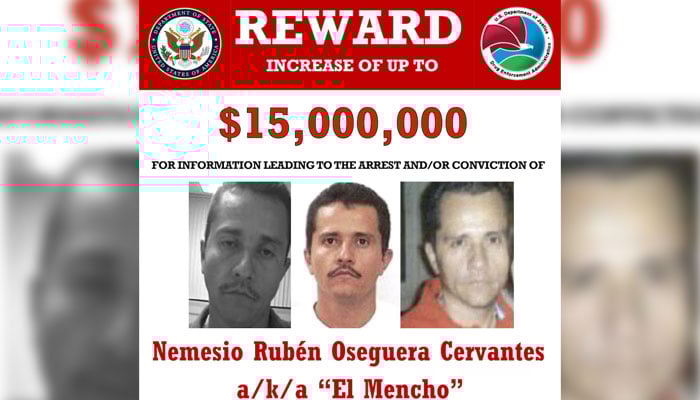
MEXICO CITY: One of Mexico’s most notorious drug lords, Nemesio Oseguera, or “El Mencho,” was killed in a military raid on Sunday, sparking widespread retaliatory violence.
President Claudia Sheinbaum has been under mounting pressure from Washington to intensify her offensive against drug cartels blamed for producing and smuggling drugs, particularly the synthetic opioid fentanyl, across the border to the US.
Oseguera, 60, the mastermind of the powerful Jalisco New Generation Cartel (CJNG) died in custody after being injured in a military operation by Mexican special forces in the town of Tapalpa on Mexico’s Pacific coast in Jalisco state, according to Mexico’s defence ministry.
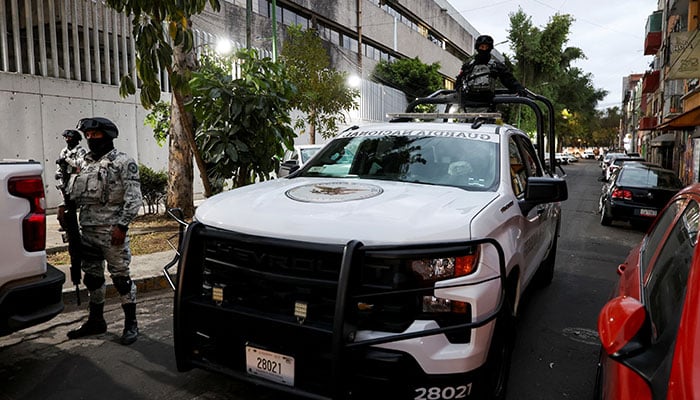
His corpse arrived in Mexico City on Sunday afternoon in a heavily guarded convoy of National Guard troops.
Reuters had reported on Sunday that a new US-military-led task force played a role in the raid led and carried out by Mexican forces. White House press secretary Karoline Leavitt later posted on social media that the US provided intelligence support.
Leavitt added that the Trump administration “commends and thanks the Mexican military for their cooperation and successful execution of this operation.”
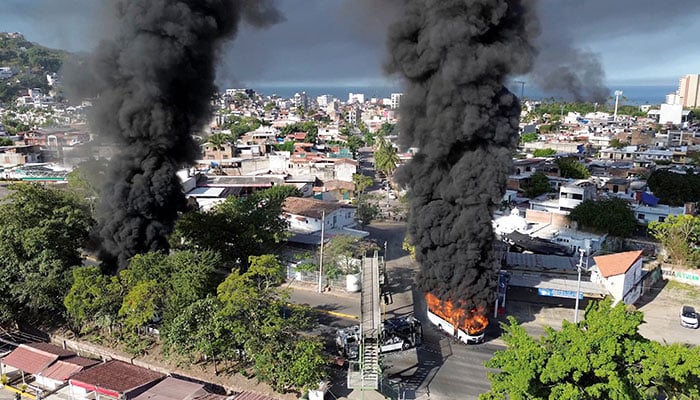
After reports of El Mencho’s death, cartel henchmen blockaded highways with burning cars and torched businesses in more than half a dozen states, paralysing parts of the country. No civilian deaths have been reported.
In Jalisco’s popular beach resort of Puerto Vallarta, frightened tourists on social media described a “war zone” as plumes of dark smoke rose into the sky from around the bay. Air Canada, United Airlines, Aeromexico and American Airlines suspended flights in the area.
Former cop to cartel kingpin
Oseguera, a former police officer, founded and oversaw the rapid rise of the CJNG, named for the western state of Jalisco that is home to one of Mexico’s biggest cities, Guadalajara.
In recent years, CJNG has expanded into one of Mexico’s most powerful cartels, known for violent tactics including forced labour and forced recruitment.
Under El Mencho’s leadership, CJNG also became a highly diversified criminal enterprise, expanding from drug trafficking to fuel theft, extortion, human smuggling, and complex financial fraud. The cartel pioneered the use of drones in attacks against civilians in remote regions of western Mexico as part of its rapid territorial expansion.
Sunday’s raid was one of Mexico’s highest-profile blows against drug gangs responsible for smuggling billions of dollars of drugs – including fentanyl — into the US. In recent years, the leaders of the rival Sinaloa Cartel — Joaquin ‘El Chapo’ Guzman and Ismael “El Mayo” Zambada — were captured alive. Both are now in US prisons.
President Donald Trump’s administration lauded El Mencho’s killing, but the domestic violence it triggered highlighted the political balancing act Sheinbaum must strike as her government escalates its cartel offensive.
On Sunday, Sheinbaum stressed that activities in most areas of the country were proceeding as usual. Schools in various states across Mexico protectively cancelled classes for Monday, according to announcements by state-level education departments.
Security experts were watching whether the raid and death of the cartel boss would fracture CJNG leadership and trigger bloody infighting.
“There will definitely be skirmishes between the various factions, and these spasms of violence could last for years,” said Carlos Olivo, a former US Drug Enforcement Administration assistant special agent in charge and an expert in CJNG.
US praise
US Deputy Secretary of State Christopher Landau, previously ambassador to Mexico, said Oseguera’s killing was a “great development” for the US and Mexico, as well as the rest of Latin America.
In January after the US capture of Venezuelan President Nicolas Maduro, Trump said “the cartels are running Mexico,” and warned “we are going to start now hitting land with regard to the cartels.”
Sheinbaum said she would strengthen efforts to cooperate with the U.S. to fight cartels., but vowed to uphold Mexico’s sovereignty and warned against any unilateral military action by the US in Mexico.
Sheinbaum in a social media post on Sunday said security officials would provide information on the operation.
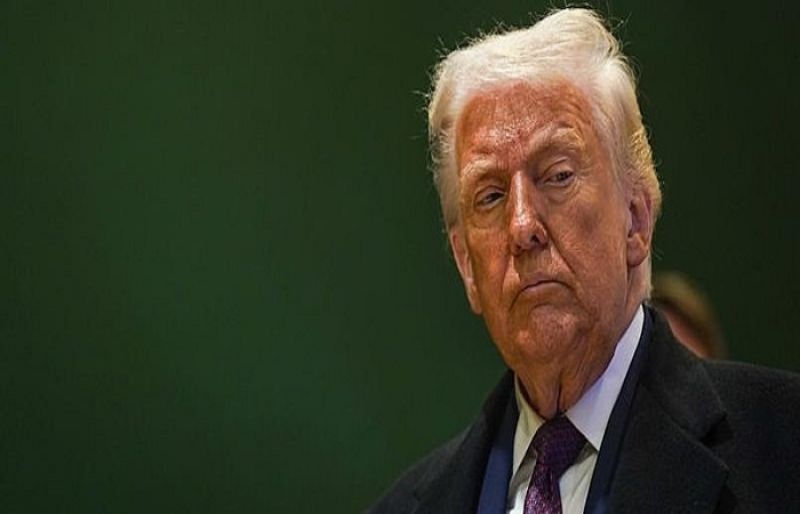
US President Donald Trump’s Republicans on Thursday blocked an attempt by the opposition Democrats to curb his authority to wage war in Iran, amid mounting frustration in Congress over his handling of the Middle East conflict.
House Minority Leader Hakeem Jeffries sought to pass a war powers resolution by “unanimous consent” — a procedure that bypasses the need to hold a recorded vote, provided no one objects — but was stopped, as expected, by the Republican majority’s presiding officer.
The maneuver, staged during a short procedural session while lawmakers remain out of Washington, was largely symbolic but underscored growing Democratic anger over a conflict that has not been formally authorized by Congress.
Jeffries had urged colleagues to attend the session and press for immediate action, arguing a recently announced two-week ceasefire was “woefully insufficient” and calling for a permanent end to US involvement in the war.
Republicans, however, showed little appetite to challenge Trump’s authority.
Some have backed the administration’s handling of the conflict, while others — though uneasy about the lack of congressional oversight — have stopped short of supporting measures that could constrain military operations.
The failed push sets the stage for a more consequential showdown next week, when lawmakers return from a two-week recess and Democrats plan to force a recorded vote on the resolution.
Jeffries has said he believes only a small number of Republicans would need to break ranks for the measure to pass.
In the Senate, Democratic Minority Leader Chuck Schumer has signaled a parallel effort, with a vote expected in the coming days.
Similar measures have struggled to gain traction in the past, and Republican opposition remains strong despite signs of unease within the party.
Under the 1973 War Powers Resolution, Congress is required to act within 60 days of the start of an unauthorized military conflict — a deadline that could intensify pressure on lawmakers if the Iran war continues.
“The American people are with us,” Jeffries told left-leaning cable news network MS NOW ahead of the vote.
“They don’t want to see billions of dollars being spent dropping bombs in Iran from an administration that’s not willing to spend a dime to actually make life more affordable for the American people.”
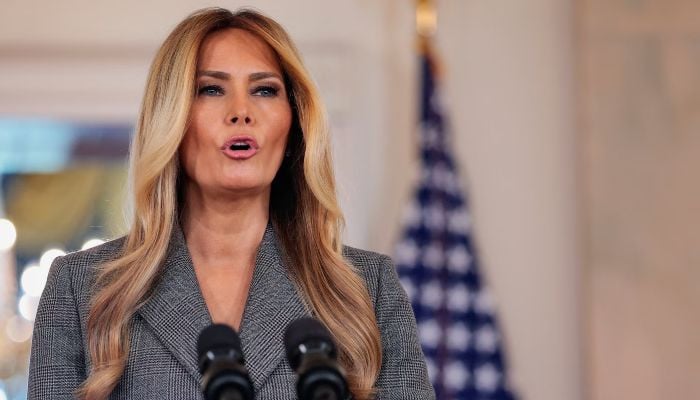
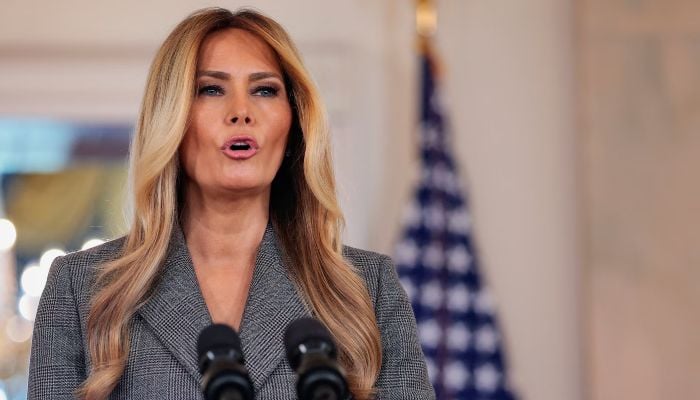
WASHINGTON: First lady Melania Trump denied on Thursday that she had any relationship with Jeffrey Epstein and said she was not one of his victims, thrusting the Epstein matter back into the spotlight after her husband had sought to put it behind him.
She denied online speculation that the disgraced financier and sex offender had introduced her to Donald Trump, saying she had met her husband at a New York City party in 1998, two years before crossing paths with Epstein at another event she attended with Trump.
She also urged Congress to hold public hearings for Epstein victims to tell their stories under oath, raising the prospect of further public attention on an issue the president wants to go away.
“The lies linking me with the disgraceful Jeffrey Epstein need to end today,” Melania Trump said, reading a statement and declining to take questions from reporters.
“I am not Epstein’s victim,” she said, responding to what she said were false smears against her.
Her extraordinary address, delivered under the presidential seal in the White House foyer, renews scrutiny of the Epstein case that has roiled Donald Trump’s presidency as even some supporters say his administration mishandled disclosures from government files.
Last week, the president fired Attorney General Pam Bondi, who had drawn the ire of Trump loyalists over the Justice Department’s slow release of millions of Epstein‑related files.
Trump, a onetime friend of Epstein who said he cut ties with the financier in the early 2000s, is among many famous people – celebrities, politicians and intellectuals – named in the government files.
Melania Trump did not say why she chose to speak out on Thursday, resurrecting an issue that had largely slipped from the headlines amid the US-Israeli war against Iran.
But Marc Beckman, her senior adviser, told Reuters in a statement: “First Lady Melania Trump spoke out now because enough is enough. The lies must stop.”
A spokesperson for the first lady said Trump’s aides were made aware of her plans for Thursday’s statement.
“This took guts”
While first ladies have occasionally addressed the nation on political issues, Melania Trump’s statement was exceptional.
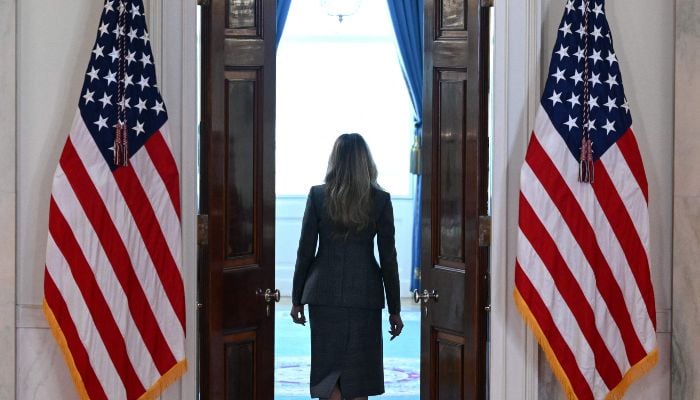
“A first lady in contemporary times has not publicly addressed controversy in this way, and certainly never from the state floor of the White House, so this took guts,” said Michael LaRosa, former press secretary to first lady Jill Biden.
“Melania is very intentional and deliberative on the frequency of her appearances, and I think this event is going to speak so loudly that I don’t think she will need to address this again,” LaRosa added in an interview.
The first lady said she had never had a relationship with Epstein or his convicted associate Ghislaine Maxwell, with whom she said she had only a casual correspondence.
Melania Trump said she first “crossed paths” with Epstein in 2000 at an event she attended with Donald Trump, five years before their marriage.
“At the time, I had never met Epstein and had no knowledge of his criminal undertakings,” she said.
Epstein, who pleaded guilty in 2008 to two Florida felonies, including procurement of a minor for prostitution, was facing federal charges of sex-trafficking minors in 2019, when he died in jail in what was ruled a suicide.
“I have never been friends with Epstein,” Melania Trump said. “Donald and I were invited to the same parties as Epstein from time to time, since overlapping in social circles is common in New York City and Palm Beach.”
The first lady sidestepped a question this year about the victims of Maxwell at an event with former captives of Hamas in Gaza.
The president has sought for months to move past discussions about Epstein.
“I think it’s really time for the country to get on to something else, really, now that nothing came out about me,” Trump said in February.
Release of the files
The Trump administration, under pressure from the president’s political base, ordered the US Justice Department to release files tied to criminal probes of Epstein in compliance with a transparency law passed by Congress.
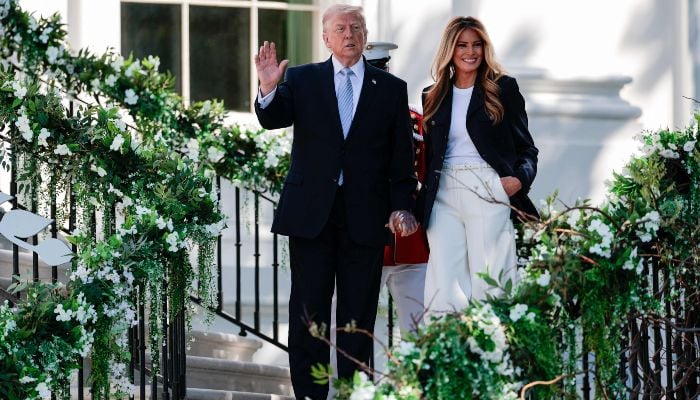
The files include a 2002 email from Melania Trump to Maxwell about a New York Magazine piece on Epstein.
“Nice story about JE in NY mag. You look great on the picture,” the email reads. “Give me a call when you are back in NY.”
On Thursday, Melania Trump described her email to Maxwell as just “casual correspondence,” and “a trivial note.”
A Reuters/Ipsos poll in January showed only 21% of respondents approved of Trump’s handling of the Epstein files.
A separate Reuters/Ipsos poll in February showed three-quarters of Americans – including two-thirds of Republicans – believe the federal government is hiding information about the alleged clients of Epstein.
Around a dozen Epstein survivors opposed Melania Trump’s proposal for public hearings, saying in a statement they had already done enough to publicise Epstein’s crimes through testimony and reports and that it was up to the US Justice Department to follow through. They also called on the Trump administration to comply with the Epstein Files Transparency Act.
- Khamenei tells southern neighbours told to choose “right side”.
- Adds Strait of Hormuz management to enter a new phase soon.
- Public urged to stay active despite ceasefire announcement.
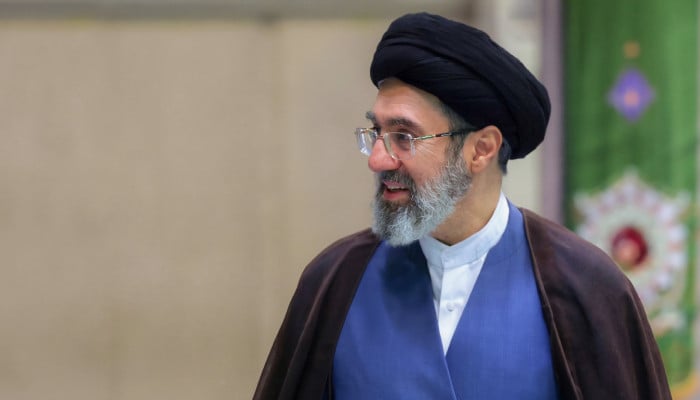
TEHRAN: Iran’s new supreme leader Mojtaba Khamenei said in his latest written message that his nation did not want war with the United States and Israel, but would protect its rights as a nation, state television reported Thursday.
“We did not seek war and we do not want it,” he said in the message read out on state TV, weeks after his father, Ayatollah Ali Khamenei, was martyred on February 28, the first day of the war.
“But we will not renounce our legitimate rights under any circumstances, and in this respect, we consider the entire resistance front as a whole,” he added, in an apparent reference to Lebanon where Israel is fighting with Tehran’s ally Hezbollah.
“All must know that, by Almighty God’s will, we definitely won’t allow the criminal aggressors who attacked our country to go unpunished.”
Iran this week agreed to a fragile two-week ceasefire with the United States that could lead to peace negotiations after threats of annihilation from US President Donald Trump.
The supreme leader also urged the country’s southern neighbours to carefully observe ongoing regional developments, describing them as a “miracle” and calling for a clear and informed stance.
He said that Iran will move the management of the strategic Strait of Hormuz into a new phase.
Khamenei told Iranians that they must “not imagine that taking to the streets is no longer necessary” despite the announcement of the ceasefire.
“Your voices in public squares are undoubtedly influential in the outcome of the negotiations,” he said.
Likely wounded in the strike that martyred his father, Mojtaba Khamenei, has still not been seen in public since his leadership appointment.
He has issued written declarations, most of them read out by presenters on state television.
US President Donald Trump has even speculated that he could be dead, but Iran’s state television said he is recovering from his injuries and posts photos of him, without specifying when they were taken.


This Bayern are special and a force to be reckoned with in Germany and Europe

US container imports steady despite Iran conflict: NRF

Transfer rumors, news: Arsenal look to raise £100m from double exit

-
 Business1 week ago
Jaguar Land Rover sees sales recover after cyber attack
-
Uncategorized1 week ago
[CinePlex360] Please moderate: “Trump signals p
-

 Entertainment7 days ago
Joe Jonas shares candid glimpse into parenthood with Sophie Turner
-

 Tech7 days ago
Our Favorite iPad Is $50 Off
-

 Sports6 days ago
UConn Final Four run could trigger a $50M furniture giveaway for Massachusetts-based Jordan’s Furniture
-

 Entertainment7 days ago
Blake Lively reacts to harassment claims dismissal against Justin Baldoni
-
 Business7 days ago
Video: Why Is the Labor Market Stuck?
-

 Politics7 days ago
Iran can sustain Strait of Hormuz closure for years, will cut US military logistics: Official