

Business
As Trump’s Tariffs Take Effect, How India Has Toughened Up To Tackle The Challenge

Last Updated:
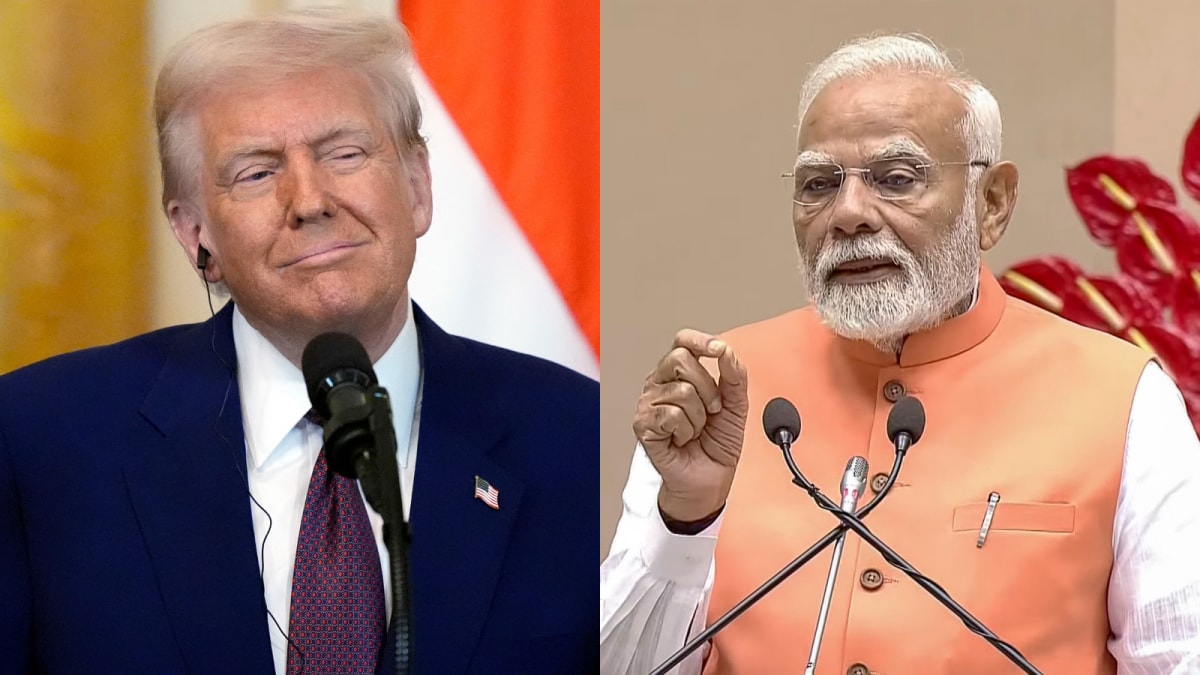
PM Modi has already outlined a new strategy to stand up to the US, vowing no compromise on protecting India’s agro- and labour-intensive sectors in any new trade agreements


India is resilient and prepared to confront challenges in the face of the massive tariffs imposed by President Donald Trump, sources said. File image/PTI
The message from the Narendra Modi government to the world, and particularly to Indian citizens and the United States, is clear: India is resilient and prepared to confront challenges in the face of the massive tariffs imposed by President Donald Trump. Citing its history of emerging stronger from crises like post-nuclear sanctions and the recent Covid-19 pandemic, the government asserts that India’s economic fundamentals remain robust, making it one of the world’s fastest-growing major economies.
This confidence is reflected in the positive assessments from global rating agencies. S&P Global recently upgraded India’s sovereign rating, while Fitch Ratings has affirmed a stable outlook. Both agencies have projected a strong growth trajectory for India, with Fitch forecasting a 6.5% rise in the country’s GDP for the fiscal year ending March 2026.
Despite this reassuring outlook, the government is not complacent, sources said. Recognising the concerns of exporters, particularly small-scale industries involved in sectors like jewellery and textiles, the Reserve Bank of India (RBI) is closely monitoring the situation. RBI governor Sanjay Malhotra has made it clear that the central bank will not be a passive spectator if the high tariffs begin to have a substantial impact on the economy. To mitigate the effects, the RBI could potentially slash the repo rate and expedite the implementation of BASEL 3 norms, which would facilitate credit and improve ratings for exporters and other stakeholders.
In addition to monetary policy, sources said the government is also planning a reworked export package that could offer new incentives, credit lines, and protection for the export sector.
Meanwhile, India is actively diversifying its trade portfolio to counter potential market losses in the US. A significant milestone has been the signing of the India-EFTA (European Free Trade Association) agreement, which includes Norway, Iceland, and Switzerland. This agreement is set to come into effect within a month. Furthermore, negotiations with the European Union (EU) are now at an advanced stage. The government views these agreements as major opportunities, especially given that the combined trade in goods of the UK, EFTA, and EU was approximately $16 trillion in 2024, nearly one-third of the total global trade.
Several concerns have been raised by textile industries that are worried about their future. This is where a new plan is being chalked out. Sources say the government could launch an outreach programme in key textile markets to counter the impact of the 50 per cent tariffs and increase its share of exports in the global market in the coming months, with a focus on Japan, the EU, the UK, and other EFTA countries.
Prime Minister Narendra Modi has already outlined a new strategy to stand up to the US, vowing no compromise on protecting India’s agro– and labour-intensive sectors in any new trade agreements. The government’s two-pronged approach focuses on “Atmanirbharta” (self-reliance) to reduce imports and “Swadeshi” (domestic products) to create a strong market for indigenous manufacturers. The government remains confident that through these measures, India will stand strong and navigate any global economic headwinds successfully.

Pallavi Ghosh has covered politics and Parliament for 15 years, and has reported extensively on Congress, UPA-I and UPA-II, and has now included the Finance Ministry and Niti Aayog in her reportage. She has als…Read More
Pallavi Ghosh has covered politics and Parliament for 15 years, and has reported extensively on Congress, UPA-I and UPA-II, and has now included the Finance Ministry and Niti Aayog in her reportage. She has als… Read More
Read More






Lauren Elcock is among the young Londoners who say rising rents are forcing them to quit the capital.
Source link
As governments across the world restricted the movements of their citizens during Covid lockdowns from 2020, people spent more time online. We bought more online and socialised more online, and this brought us closer to the people who want to scam us. At the same time, realistic video impersonations, voices, websites, and texts became more commonplace, and scammers increased their use of social media including WhatsApp.

The conflict in the Middle East has caused rapid price rises for both petrol and diesel.
Source link

The cost of rising rents: Working four jobs and pushed on to benefits

North Korea fires ballistic missiles again, flexing muscle amid Iran war

UAE-Jordan Railway Company formed to build freight railway

-

 Entertainment6 days ago
Palace left in shock as Prince William cancels grand ceremony
-

 Sports6 days ago
The case for Man United’s Fernandes as Premier League’s best
-

 Politics1 week ago
Chinese, Taiwanese will unite, Xi tells Taiwan opposition leader
-

 Entertainment1 week ago
Dua Lipa hits major career high ahead of wedding with Callum Turner
-
 Business1 week ago
100% road tax waiver for electric cars, new rules for 2, 3 and 4 wheelers – what Delhi govt’s draft EV policy says – The Times of India
-
 Business6 days ago
UK could adopt EU single market rules under new legislation
-
 Business1 week ago
The FAA wants gamers to apply for air traffic control jobs
-

 Fashion6 days ago
Energy emerges as biggest cost driver in textile margins