

Business
Budget 2026: How India Can Blunt China’s Rare Earth Minerals Dominance


Last Updated:
India holds an estimated 6-8% of global rare earth reserves but instead of exporting value-added products, the country largely exports concentrates and imports finished components



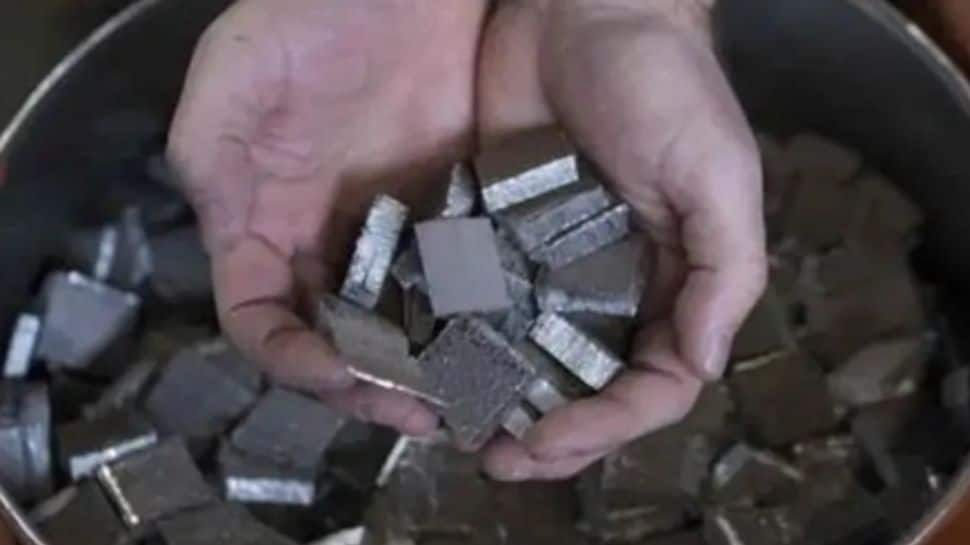
China controls around 70% of global rare earth mining and nearly 90% of refining and processing capacity. (Representational image)
Major global powers are investing billions of dollars to secure the supply chain of critical minerals, particularly rare earths, to cut their dependence on China. Against this backdrop, India is expected to move beyond policy intent and announce concrete measures on mining, processing and downstream manufacturing of rare earths in Budget 2026.
India holds nearly 6-8% of the world’s rare earth reserves, estimated at about 6.9 million tonnes, yet its share in global production is less than 1%. The contrast is stark. Despite sizeable reserves, India has failed to convert this advantage into strategic strength. The key question is whether Budget 2026 can translate this momentum into a full-fledged rare earths push and meaningfully reduce India’s dependence on China in what is fast emerging as the decade’s most critical resource contest.
Oil wells shaped global geopolitics in the 20th century. In the 21st, advanced electronics, electric vehicles (EVs), defence systems and the semiconductor industry depend almost entirely on rare earth minerals. Without these 17 elements including neodymium, dysprosium and lanthanum, wind turbines cannot spin and precision-guided missiles cannot function. Securing rare earth supplies has therefore become a strategic imperative for India. Major economies have already moved decisively. The European Union has committed €3 billion to cut reliance on China, while the United States is forging new mineral alliances and building industrial ecosystems.
China’s dominance
According to an ET Now report, China’s dominance in the sector is both overwhelming and unsettling. China controls around 70% of global rare earth mining and nearly 90% of refining and processing capacity. Last year, when China imposed export restrictions on seven key rare earth elements, global automobile and defence supply chains were jolted.
India’s efforts
India has initiated steps to reduce import dependence through the National Critical Mineral Mission (NCMM). However, industry leaders and policy experts argue that Budget 2026 must go further by lowering risks for private investment. The expectation is not limited to subsidies; the industry is seeking a comprehensive ecosystem that enables private capital to participate meaningfully. This would require long-term financing, targeted tax incentives, assured offtake arrangements and incentives across the value chain. Without these measures, India risks remaining stuck at the policy stage while global competitors race ahead.
Government’s expectations
China’s strength does not stem from cheap labour alone, but from decades of process engineering expertise and state-backed price controls. Experts say India must draw lessons from countries such as Australia and Japan, where governments actively partner with private firms to build strategic stockpiles. Market participants point to four key areas where government action is critical:
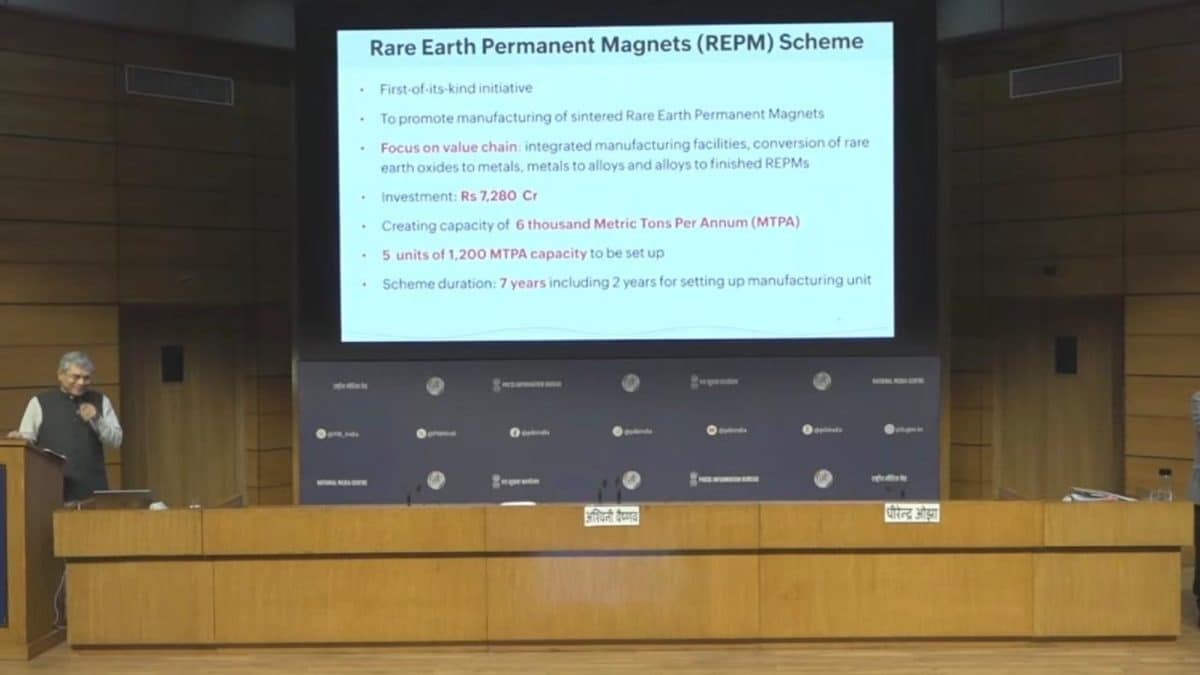
1. Financial incentives and expansion of PLI: The existing Rs 7,280-crore production-linked incentive (PLI) scheme for magnets is seen as a positive step, but experts say it must be extended upstream to cover oxide and metal manufacturing. Without domestic production of raw metals, magnet manufacturing in India will struggle to remain cost-competitive.
2. Tax holidays and long-term financing: Rare earth projects have long gestation periods, often taking years to reach profitability. The budget is expected to consider a 10 to 15-year tax holiday and access to low-interest, long-tenure loans to attract investors.
3. Plug-and-play hubs, on the lines of semiconductor clusters: The government is being urged to develop infrastructure hubs, particularly in coastal regions, with shared processing facilities. Such hubs could significantly lower costs for small and mid-sized developers.
4. Regulatory reforms: Industry has called for easing restrictions on monazite by delinking it from stringent nuclear regulations, improving transparency in commercial mining, and offering strategic relaxations under Coastal Regulation Zone (CRZ) norms.
Vedanta Resources CEO Deshani Naidu has said the government’s focus on critical minerals under the NCMM is providing much-needed impetus. Securing metals and minerals, she noted, is essential for India’s infrastructure build-out and energy transition.
Abundant reserves, extremely low production
India holds an estimated 6-8% of global rare earth reserves but instead of exporting value-added products, the country largely exports concentrates and imports finished components such as magnets and motors.
Abhinav Sengupta, Associate Director at PwC India, points out that India has the reserves but lacks the ecosystem. Mining, he says, is only the first step; the real challenge lies in processing, refining and separation. India also remains weak in midstream capabilities, particularly magnet manufacturing. Delays in beach sand mining due to radioactive thorium concerns and CRZ regulations, coupled with a shortage of expertise in rare earth chemistry and process engineering, have compounded the problem.
Monazite, India’s primary source of rare earths, is widely found in coastal beach sands across Kerala, Tamil Nadu, Odisha, Andhra Pradesh, Maharashtra and Gujarat, with additional inland deposits in Jharkhand and West Bengal. However, private participation was long barred under the Atomic Energy Act, with limited opening up only beginning in 2023. Long project timelines, heavy capital requirements, a lack of deposit-specific processing technologies and uncertain returns have continued to deter investors.
 Click here to add News18 as your preferred news source on Google.
January 16, 2026, 20:16 IST
Read More

new video loaded: Who’s Getting a Tariff Refund?

By Tony Romm, Nour Idriss, Stephanie Swart, Whitney Shefte and Paul Abowd
April 24, 2026
Business
Hair oil, ACs, soaps become costlier: How FMCG companies are dealing with Middle East supply blow – The Times of India

Consumer goods companies in India are facing a sharp rise in input costs due to the ongoing war in the Middle East. Surging raw material prices are forcing firms to track costs on a near-daily basis, review pricing frequently, and focus on short-term decisions instead of long-term planning.As firms are struggling with volatile input costs, company executives have told ET that the sudden spike in inflation has made it harder to manage business, while also raising concerns that higher prices could hurt consumer demand. This comes at a time when consumption had started improving after the government reduced goods and services tax rates on several products last September.Havells India chief executive officer Anil Rai Gupta was cited by the financial agency as saying that the company is taking a cautious approach and reviewing the situation month by month. “I have not seen this kind of price escalation in the recent past or in recent memory. Usually, inflation happens, but it is neither so steep nor spread across all product categories… consumer offtake can get affected if the price hike is too sharp.” Bajaj Consumer Care managing director Naveen Pandey said the company is closely tracking input costs and taking decisions almost daily. Speaking during the company’s earnings call last week, he said costs across the business have gone up between 20% and 60%. He added that the war has created “extreme volatility” in the prices of light liquid paraffin and packaging materials. At the same time, prices of mustard and copra have not fallen as expected and are still at pre-war levels. The company is working on cutting costs across its operations.Industry executives said the war has pushed up commodity prices and crude-linked products, increased freight costs, and made imports more expensive due to the fall in rupee. They added that even after a ceasefire, prices have not come down, and uncertainty remains over whether the conflict could start again.In the past month, companies have already raised prices in several categories, including air-conditioners, refrigerators, soaps, detergents, hair oil, apparel, decorative paints and footwear. Some companies have also reduced pack sizes to deal with higher costs. More price hikes are expected by the end of this month.Parle Products vice president Mayank Shah said the pressure on input costs is very high and the uncertainty is “killing”.Retailers are also seeing more careful spending. Trent Ltd, which runs Westside and Zudio stores, said in an investor presentation that while demand was steady at the start of the January–March quarter, the current situation is affecting consumer behaviour.“Consumers are spending with caution, resulting in moderation of discretionary spending on the back of continuing macro uncertainties and potential increase in cost of living. Structurally the demand levels and the underlying market opportunities remain strong. However, the duration and intensity of disruptions in the Middle East along with its second order effect on supply chain, commodity prices and inflation in general has potential implications for near term demand,” the company said.AWL Agri Business executive deputy chairman Angshu Mallick said the company has already increased edible oil prices by Rs 7–10 per kg to pass on higher freight costs. “Being a staples company, we hike or reduce prices immediately. As we are in basic necessities, the volume impact is usually lower,” he said.Meanwhile, the Middle East conflict is inching closer towards the two month mark. The conflict began back on February 28, when the US and Israel launched joint strikes on Iran. In retaliation, Tehran choked the crucial Strait of Hormuz, a pipeline that carries 20% of global energy supplies, straining flow across the globe.
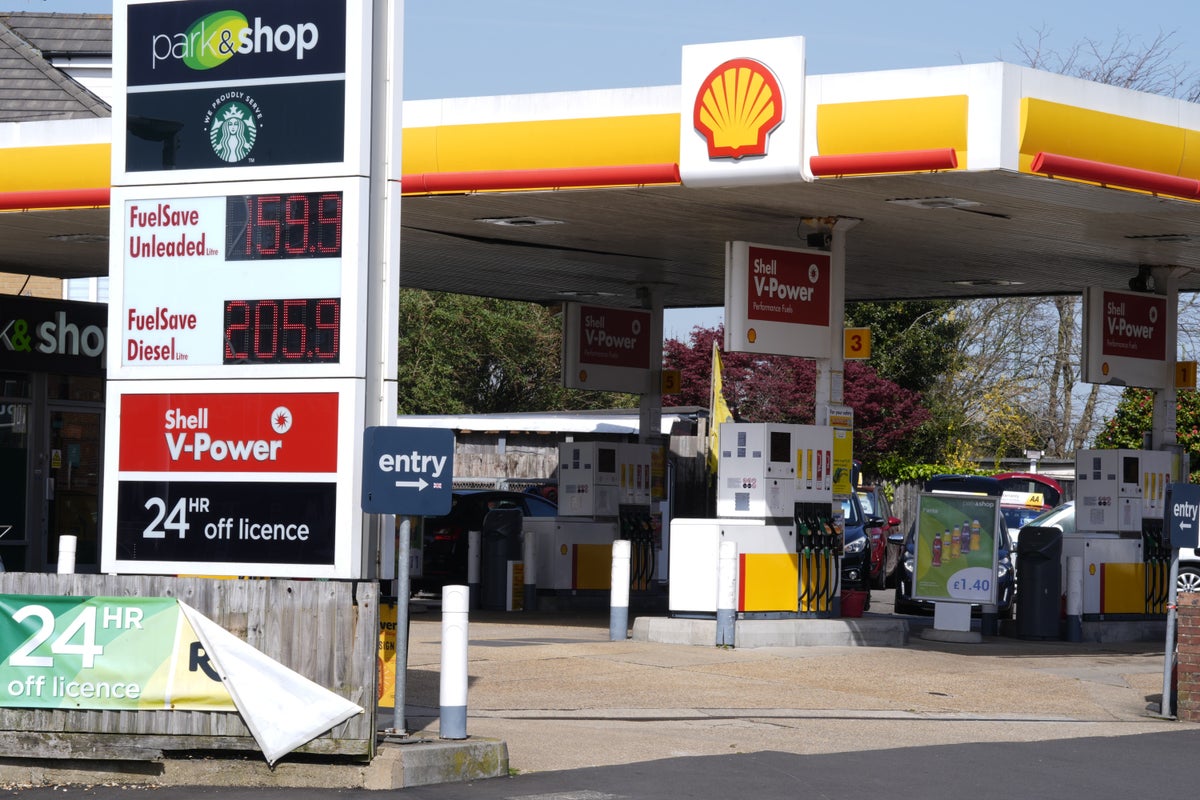
UK retail sales returned to growth last month as they were pushed higher by motorists stocking up on fuel as prices shot higher because of the Iran war, according to official figures.
The Office for National Statistics (ONS) said the total volume of retail sales, which measures the quantity bought, rose by 0.7% in March.
It compared with a 0.6% fall in February, which was revised slightly lower.
The latest reading was also stronger than expected, with economists having predicted a 0.1% dip for the month.
Statisticians said March’s increase was particularly driven by a spike in demand for fuel, which saw sales volumes jump by 6.1% for the month, the highest level since April 2021.
They indicated that this was especially linked to a short period, of less than a week, of particularly elevated sales as unfolding geopolitical events in the Middle East caused a significant rise in prices at the pump.
The value of sales, the amount of money spent, for fuel was up 11.6% amid the jump in petrol and diesel prices.
Recent data from the RAC shows that petrol prices have risen by 18.5% to 157.34 pence per litre, as recorded on Wednesday.
Meanwhile, diesel is up 33.4% to an average of 189.88 pence per litre.
Elsewhere, clothing stores also had a strong month, with sales volumes across the category rising by 1.2% in March amid a boost from better weather conditions.
Technology retailers also saw sales grow after they benefited from new products launches.
However, food sales were weaker, slipping by 0.8% for the month.
The ONS said overall retail sales volumes are up 1.6% for the first three months of 2026, as the industry was also supported by positive growth in January.
ONS senior statistician Hannah Finselbach said: “Retail sales rose in the three months to March, with commercial art galleries doing well earlier in the quarter and sales in beauty products stores rising as retailers reported launching new collections.
“Motor fuel sales were up on the quarter, with retailers commenting that many motorists had been filling up their tanks in March following the start of conflict in the Middle East.”
Elliott Jordan-Doak, senior UK economist at Pantheon Macroeconomics, said: “The first batch of hard data on consumers’ spending since the start of the Iran war was better than expected.
“Granted, stocking up on motor fuels drove headline sales higher, but even excluding petrol retail sales volumes nudged up showing that households largely brushed off the initial shock of higher energy prices.”


Sweden’s H&M & Stella McCartney return with nostalgic 2026 collection

Denise Richards is ‘grateful’ to be in Patrick Muldoon’s first and last film

They Wanted to Join Raya. They’ve Been on the Waiting List for Years

-

 Fashion1 week ago
France’s LVMH Q1 revenue falls 6%, shows resilience amid Iran war
-

 Entertainment1 week ago
Is Claude down? Here’s why users are seeing errors
-

 Sports1 week ago
PSL 11: Peshawar Zalmi win toss, opt to field first against Quetta Gladiators
-

 Tech1 week ago
CYBERUK ’26: UK lagging on legal protections for cyber pros | Computer Weekly
-

 Fashion1 week ago
Raymond unveils luxury Chairman’s Collection Store in Mumbai
-

 Sports5 days ago
WWE WrestleMania 42 Night 2: Live match results and analysis
-
 Business1 week ago
PepsiCo earnings beat estimates as North American food business improves
-

 Sports5 days ago
NCAA men’s gymnastics championship: All-time winners list