

Entertainment
Book excerpt: “Never Mind the Happy” by Marc Shaiman

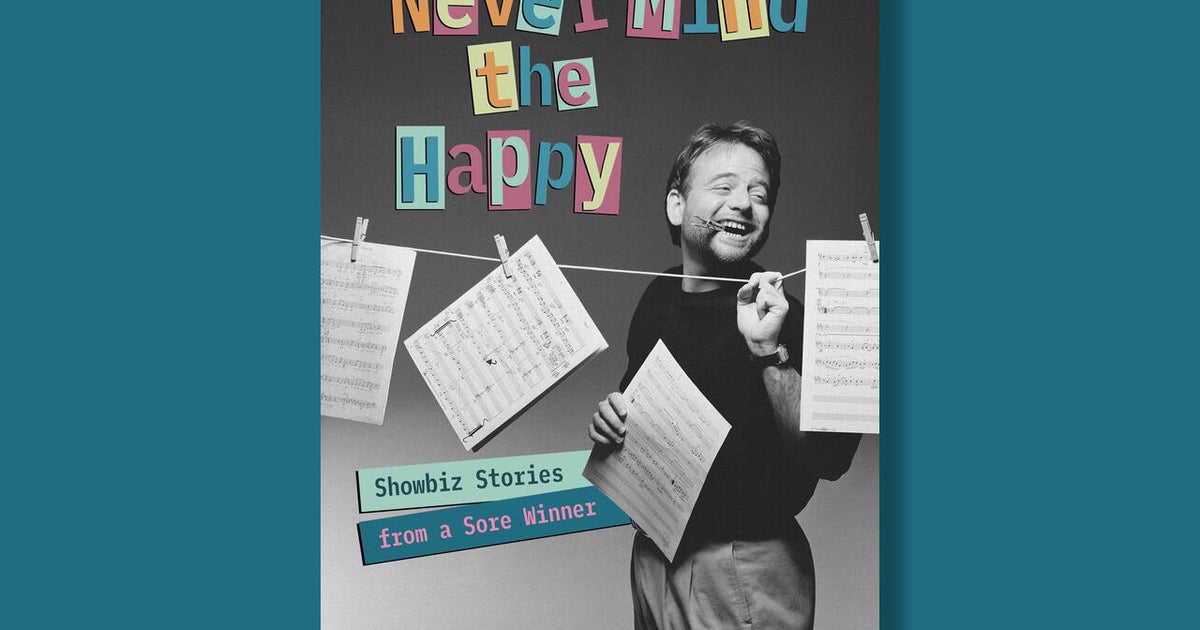
Regalo Press
We may receive an affiliate commission from anything you buy from this article.
In his memoir, “Never Mind the Happy: Showbiz Stories from a Sore Winner” (published by Regalo Press), Tony- and Emmy-winning composer Marc Shaiman, known for Broadway hits like “Hairspray,” and music for “South Park: Bigger, Longer and Uncut,” writes of his half-century in show business.
Read the prologue below, in which he recounts preparing to perform on the Oscar stage with the idol of his youth, Bette Midler (an adoration that would grow into a collaboration), and don’t miss Tracy Smith’s interview with Marc Shaiman on “CBS Sunday Morning” March 1!
“Never Mind the Happy” by Marc Shaiman
Prefer to listen? Audible has a 30-day free trial available right now.
Prologue
It’s February 24, 2019, and I am on stage with Bette Midler at the Dolby Theatre in Los Angeles, moments away from performing at the 91st Annual Academy Awards. On the other side of the closed curtain are 3,400 of the most powerful and successful players in Hollywood—plus another thirty million people tuning into the television coverage worldwide. One such player in the auditorium is Scott Wittman, my lyrical collaborator of almost fifty years, with whom I co-wrote the Oscar-nominated song “The Place Where Lost Things Go”—the very song Bette and I are about to perform. It has only been two months since Disney released Mary Poppins Returns—which has garnered my sixth and seventh Oscar nominations— and even though I am calm as I sit at the keyboard of the polished black grand piano, I am also conscious of what a fight it has been to get here.
A few weeks earlier, on the morning the Oscar nominations were announced, my husband, Lou Mirabal, and I sat on the couch in our Manhattan loft, our golden retriever, Chops, no doubt wondering why we were glued to the television at 8:30 a.m. instead of making her breakfast. A similar scene was playing out with Scott and his partner, Brian, at their apartment just six blocks to the south. Mary Poppins Returns had been a hit film, if not the billion-dollar blowout the studio had hoped it would be. Scott and I were very proud of the songs we wrote for the sequel to Disney’s classic about a magical British nanny, but they had inevitably been compared to the unforgettable music from the original—so we didn’t know if we should get our hopes up on the morning of the nominations.
Luckily, Oscar smiled and we were nominated for our song “The Place Where Lost Things Go,” and I was also nominated for Best Score. We were all excited and relieved, perhaps nobody more than Lou, because he was the one who would have had to mop me off the floor if things had turned out differently.
I always say, though, that if showbiz puts you on a pedestal on Tuesday, it’s only to have a better shot at your balls on Thursday. And right on schedule, after two days of elation, the producers of that year’s Oscars telecast announced that of the five nominated songs, only two—one a duet by Lady Gaga and Bradley Cooper from A Star Is Born, the other by Kendrick Lamar and SZA from Black Panther—would be performed. Clearly, they wanted star power to boost the broadcast’s ratings and, by cutting three songs, perhaps also trim a few minutes from its running time. But to say the remaining songs were not worthy of inclusion sent a message both to the public—and worse, to the Oscar voters, who had yet to cast their ballots—that they were not considered equal. It really was a low blow.
What those Oscars producers didn’t anticipate, however, was just how much a dog with a bone I can be. First, I put together an appeal from the writers of the three orphaned songs (including my dear and foul-mouthed friend Diane Warren)—but that led to a dead end. Then, I went to Alan Horn, who was chairman of Walt Disney Studios at the time and who I knew from his years as Rob Reiner’s producing partner. Since Disney owns ABC, the television network that broadcasts the Oscars, I thought he would be able to pull some strings—but he gruffly said, “The ship has sailed, there’s nothing I can do.” Well, maybe there was nothing he could do, but I was not going to give up.
I had met Bradley Cooper a few times due to our shared friendship with the great actor Victor Garber. Bradley had been to the home I then shared with Scott, my romantic partner for nearly thirty years, when he and Victor were filming the TV show Alias, and he had always been very friendly whenever I ran into him at other showbiz functions. I had also just recently become pals with Kevin Feige, Supreme Intelligence of the Marvel Cinematic Universe. In fact, it was at an Academy event just a few weeks earlier (where we had all been schmoozing for nominations) when someone tapped me on my shoulder and said, “Kevin Feige would like to meet you.”
“Kevin Feige would like to meet me?” I queried. I was in shock and couldn’t believe, of all nights, that my Marvel-nerd husband wasn’t with me. It turned out Kevin, who you would think is busy enough, also has time to be a serious film-score fanatic. And after enjoying a few minutes of him praising my work, I asked if we could take a selfie together so I could send it to Lou.
Not only are Bradley and Kevin two of the nicest guys in Hollywood, at that moment, being friendly with them was uniquely useful. After all, Bradley produced A Star Is Born and Kevin produced Black Panther—the two films whose Oscar-nominated songs had been anointed by the Academy to be performed. So, I reached out to them both to explain the situation, which they agreed was unfair, and each offered to do what they could to help.
I’m not privy to what happened next, but those two gentlemen clearly have their own superpowers, because only a day or so later, it was announced that all five songs would be performed. Thank you, Bradley, and thank you, Kevin—if you ever need a favor from someone less powerful, let me know.
And so, I made it onto the Oscars stage that year after all. Moments before our performance, through the curtain, I could hear the orchestra play a snatch of our movie theme, and then the crowd respond as Keegan-Michael Key was lowered from the ceiling of the Dolby Theatre clutching a Mary Poppins–style black umbrella.
“This evening’s next nominee for best original song was written by Marc Shaiman and Scott Wittman for the film Mary Poppins Returns,” he said. “In addition to lifting the Banks children’s spirits through a series of magical adventures, Mary Poppins offers comfort and compassion with this tender lullaby, underscoring the notion that a loved one who is lost can still be very much present. Performing ‘The Place Where Lost Things Go’ with Marc Shaiman on piano, please welcome the Divine Miss M.”
(Both Bette and I thought—but of course did not have time to discuss in the moment—What, he couldn’t say her name?)
Then the curtain lifted, Bette stepped into the spotlight as twenty-eight red umbrella lanterns descended against a stage backdrop of London’s foggy skyline, and I started accompanying my favorite performer in the world—on a song I had co-written with my cherished collaborator—from a musical about my most beloved literary character—at the Academy Awards.
How did I get there? Well, as an old-school piano player might say, it went a little something like this…
From “Never Mind the Happy: Showbiz Stories from a Sore Winner” by Marc Shaiman. © 2026 by Marc Shaiman. Reprinted with permission from Regalo Press. All Rights Reserved.
Get the book here:
“Never Mind the Happy” by Marc Shaiman
Buy locally from Bookshop.org
For more info:







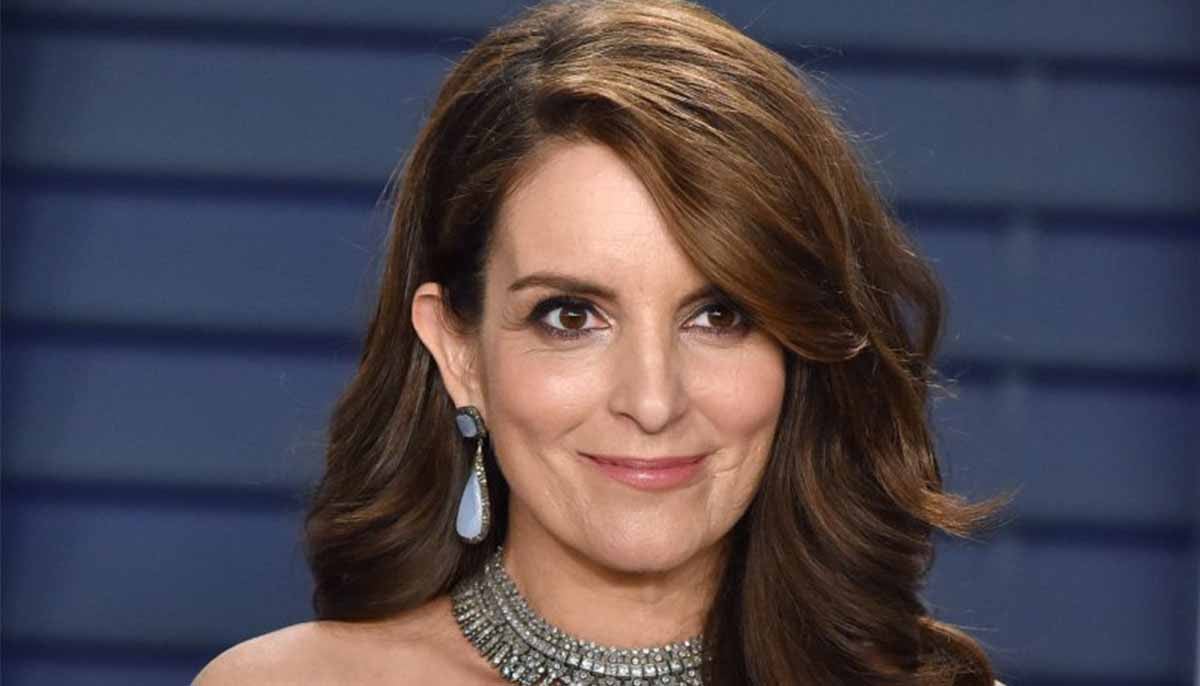
Saturday Night Live veteran Tina Fey reflected on her years at the NBC sketch institution, acknowledging that some of her jokes were “on the wrong side”.
Speaking at the History Talks event in Philadelphia, Fey said she’s realized with time that not every punchline was fair.
The two times Globe Globe winner added candidly, “I was pretty dumb.”
Fey joined SNL in 1997 and later became head writer.
She recalled navigating some of the show’s most difficult broadcasts, from the first episode after September 11 to the anthrax scare and even President George W. Bush’s visit to meet Will Ferrell.
Over time, she said, the line between comedy and current events grew thinner, with politicians and public figures often responding directly to the sketches.
One of her most memorable stretches came in 2008, when she teamed with Seth Meyers and Amy Poehler to craft the now iconic Sarah Palin sketches.
Fey explained that the team worked hard to make sure their material was “a fair hit,” grounded in truth rather than random exaggeration.
“If it’s not true, it will not be funny,” she noted.
Reflecting on the influence of SNL, Fey said it was both thrilling and intimidating to know that what she wrote could be taken seriously by people in power.
She emphasized that the show never set out to control politics or the national narrative, but admitted that some of her own jokes didn’t age well.
Fey appeared alongside Nicole Kidman, Ted Danson, Kate McKinnon, Colin Jost and others at the event, which marked the nation’s 250th anniversary.
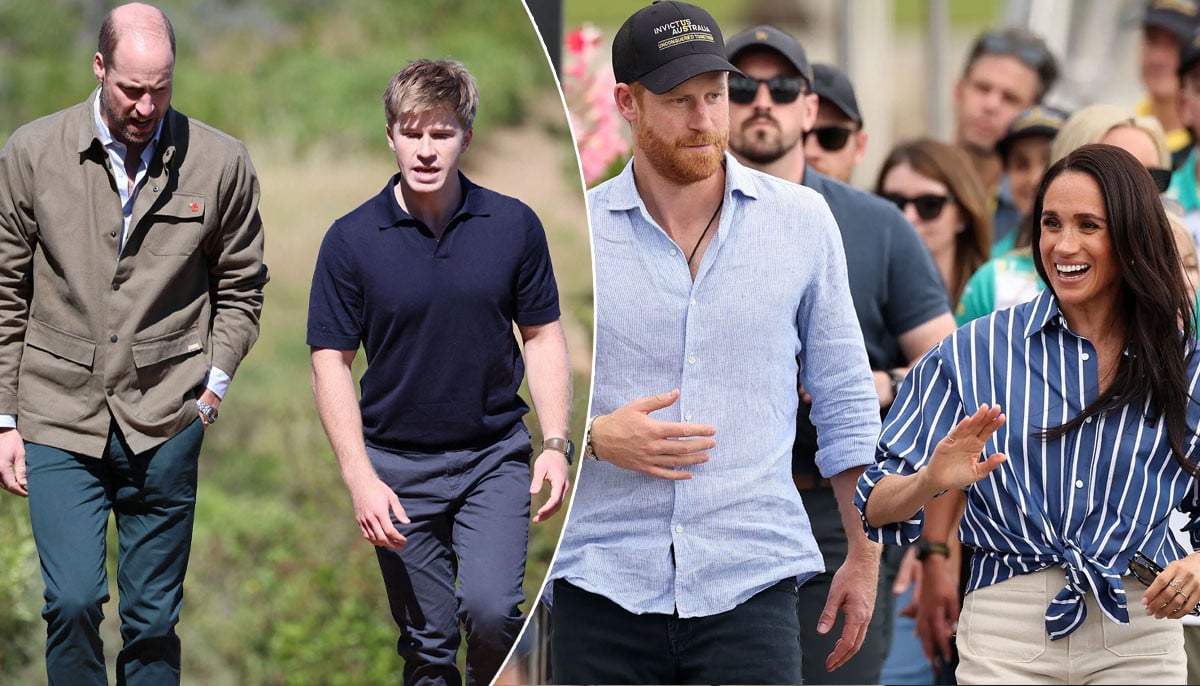
Prince Harry and Meghan Markle appeared to completed a successful four-day tour to Down Under, as they received a warm welcome from the Aussies.
The optics of the visit worked in the Sussexes’s favour, having plenty of similarities to an official royal tour. However, there was one particular item on their to-do list which they were not able to accomplish after facing a major rejection.
The Irwin family is hugely popular in Australia and especially with Robert Irwin’s work and amplified fame after winning Dancing with the Stars, they hold a special prestige in the country. So much so, Prince William has made Robert one of the ambassadors of the Earthshot Prize, a deeply personal and important initiative William had taken over five years ago.
Hence, the Duke and Duchess of Sussex were hoping to get a meeting with the Irwins especially the celebrity conservationist at Australia Zoo in Queensland. However, it was not possible during the four-day trip, per New Idea magazine.
The source revealed that there is “no ill-will” towards the Sussexes from the Irwins and cited that it “wasn’t possible”. Although, it is key to note that they are all “staunch monarchists and fiercely loyal to The Firm”.
“Aligning with the Irwins’ worthy causes is something that Meghan and Harry could be on board with,” the source said. But, it seems that Robert may have played it safe as he did not want to upset William.
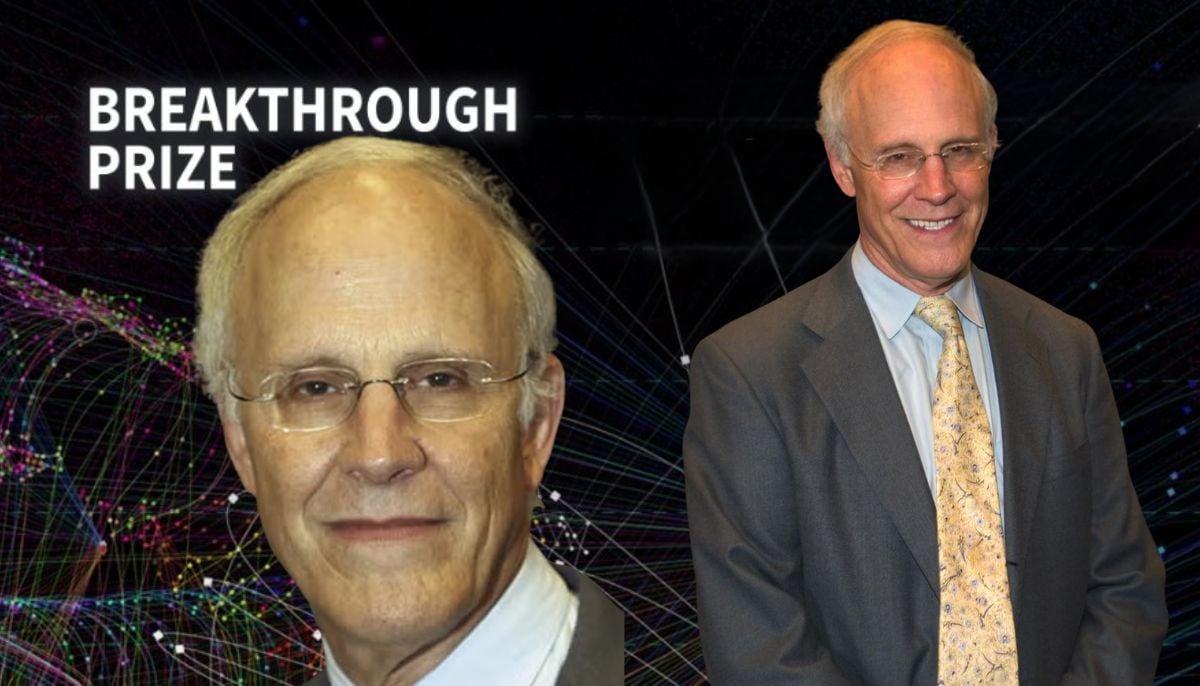
David Gross has won the Special Breakthrough Prize for Fundamental Physics with a whopping $3 million prize, as announced by the Breakthrough Prize Foundation on April 18, 2026.
The prize honors scientists whose discoveries have contributed significant advancement to the development of human knowledge.
The Breakthrough Prizes—commonly known as the ’Oscars of Science’—were established in 2012 to celebrate the wonders of the 21st century scientific age.
David Gross, who is a Nobel Prize laureate in Physics (2004), served as director at the Kavli Institute of Theoretical Physics at University of California, Santa Barbara for three decades.
What earned Gross winning Breakthrough Prize in Fundamental Physics?
In the early 1970s, there was a wide gap in quantum field theory, as it could not define the strong nuclear force, which holds the atom’s nucleus together.
But in 1973, Gross and his graduate student Frank Wilczek cracked the mystery.
They discovered that the strong force works the opposite way to familiar forces like gravity: it gets weaker as particles approach each other, but stronger as they move apart.
That discovery led to the development of quantum chromodynamics.
After taking home the Breakthrough Prize in Fundamental Physics, he drops a shocking prediction for humanity in an interview with LiveScience.
Gross, when asked if humanity will ever get to a place where we get rid of nuclear weapons.
Gross predicted, “We’re not recommending that. That’s idealistic, but yet, I hope so. Because if you don’t, there’s always some risk an AI 100 years from now, but chances of (humanity) living, with this estimate, 100 years, is very small, and living 200 years is infinitesimal.”
Gross became one of this year’s six awardees for his contributions to theoretical physics, earning the Special Breakthrough Prize in Fundamental Physics.
David Gross has remained an authority in fundamental physics for six decades.


2026 growth in Africa to drop by up to 0.2% due to Iran war: Report

Indian reforms strengthen DGFT norms committees’ functioning: Ministry

The Weird, Twisting Tale of How China Spied on Alysa Liu and Her Dad

-

 Fashion4 days ago
France’s LVMH Q1 revenue falls 6%, shows resilience amid Iran war
-

 Sports1 week ago
The case for Man United’s Fernandes as Premier League’s best
-

 Entertainment1 week ago
Palace left in shock as Prince William cancels grand ceremony
-
 Business1 week ago
UK could adopt EU single market rules under new legislation
-

 Entertainment5 days ago
Is Claude down? Here’s why users are seeing errors
-
 Sports1 week ago
Lamar Jackson hits back at critics with faithful message on social media
-

 Fashion1 week ago
Energy emerges as biggest cost driver in textile margins
-
 Business1 week ago
Road accidents: a massive economic challenge | The Express Tribune