

Business
IMF GCDA report ‘compromised’ | The Express Tribune

ISLAMABAD:
In scorching criticism of the International Monetary Fund (IMF)’s highly trumpeted Governance and Corruption Diagnostic Assessment (GCDA), an independent think tank has described the report as “analytically strong” but said it compromised on politically sensitive reforms and institutional independence.
The think tank’s report revealed that the IMF compromised on the independence of the National Accountability Bureau (NAB), the Auditor General of Pakistan and oversight of the Special Investment Facilitation Council (SIFC).
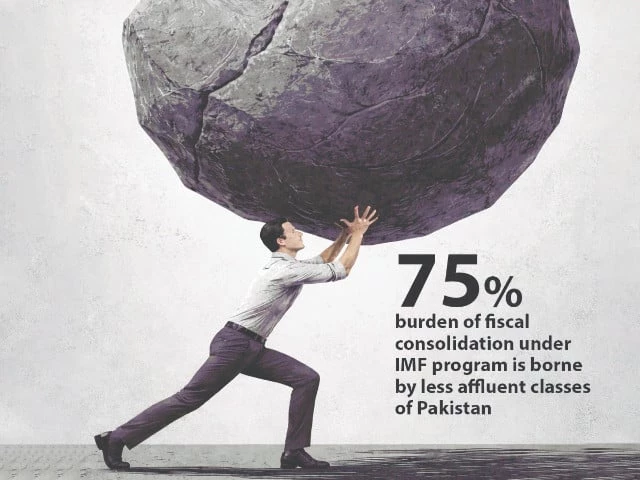
The Global Think Tank Network (GTTN) also said that 73% of fiscal consolidation under the IMF programme was the result of placing more tax burden, mostly on the “already-taxed formal firms, salaried individuals, and the less-affluent via petroleum levies and indirect taxation”.
The think tank released its report at the beginning of the IMF mission to Pakistan, which will review implementation of the action plan agreed to address corruption and governance-related vulnerabilities identified in its November 2025 report. However, the GTTN report also highlights compromises that the IMF struck with Pakistan.
The GCDA “is analytically strong and unusually candid”. Yet its omissions are consequential, said the GTTN.
The GCDA’s “enforcement mechanisms are weak, politically sensitive reforms are diluted or deferred, subnational governance is under-examined, and institutional independence is insufficiently secured,” according to the report.
The think tank said that while the IMF achieved fiscal stabilisation, structural reforms were postponed and “stability without reform does not resolve risk; it defers it”.
The GTTN said consistent fiscal consolidation since 2022 had delivered a cumulative primary adjustment of 5.6% of GDP, the largest in Pakistan’s history.
But “73% of this adjustment has come from revenue measures. The burden has fallen disproportionately on already-taxed formal firms, salaried individuals, and the less-affluent via petroleum levies and indirect taxation. One effect of this is to push firms into informality”.
The GTTN added that while already burdened people were overburdened, government expenses kept rising during the past three years. “Overall expenditure by federal and provincial governments has risen by 60% since 2023. Non-interest expenditure has increased by 70%, and personnel-related spending has ballooned from Rs3.7 trillion to Rs5.9 trillion – a 59% increase”, according to the report.
The think tank said the GCDA recognises corruption risks but does not integrate these macro-social consequences into reform design. “Fiscal pain is immediate, yet governance reform is deferred,” it added.
Proposed changes to NAB are confined to a future “review” of its appointment process, without mandating an independent selection committee, fixed non-renewable tenure or structural safeguards to insulate leadership from political influence.
“Although concerns about politicisation are acknowledged, they are not matched by binding institutional redesign,” said the GTTN said.
The GCDA flags the need for a more transparent procedure for key appointments, including the NAB chairman, yet fails to call for widening the pool of candidates beyond the civil service, judiciary and military, which are widely seen as responsible for Pakistan’s current state, according to GTTN.
“The widening of this pool is essential to give a chance to top professionals, academics and other suitably qualified candidates who can bring a fresh and more objective perspective to the fight against corruption”, it added.
Similarly, while weaknesses in audit follow-up are recognised, no enforceable mechanisms are introduced to ensure Auditor General findings result in corrective action. The absence of binding timelines, parliamentary reporting requirements or sanctions for non-compliance leaves a longstanding accountability gap largely intact, said the GTTN.
On the SIFC, the principal recommendation is publication of an annual report, which the government has proposed to issue starting March 2027.
“The GCDA fails to address broader governance concerns such as parliamentary oversight, transparency of concessions, cost-benefit evaluation of projects, or the scope of immunity provisions. Given the Council’s expanding role in economic decision-making, the limited reform requirement is striking”.
The GTTN said provinces account for about 60% of consolidated public expenditure, reflecting fiscal decentralisation, yet the GCDA remains overwhelmingly federal in scope with limited assessment of provincial governance vulnerabilities.
The GCDA provides serious treatment of fiscal governance weaknesses but, the GTTN said, “the most striking empirical evidence drawn from FY15-FY24 budget data points to serious budgetary deviations and malpractices that the GCDA omits”.
Ten out of 40 federal ministries have consistently posted significant ‘overspending’ deviations, with average cumulative overspending during FY15FY24 amounting to Rs210 billion. Five ministries – Energy, Defence, Interior, Cabinet and National Health – accounted for 91% of cumulative overspending.
The report added that the GCDA does not embed anti-money laundering and combating financing of terrorism reforms within a broader accountability ecosystem tied to elite financial disclosure or asset verification.
In Pakistan, where 80% of the population does not use banks, the stringent and mechanical imposition of AML/CFT requirements exacerbates de-banking and can push small and micro businesses into informality, it added.
The report further stated that ensuring an independent judiciary, empowering oversight institutions, creating a truly autonomous parliament, supporting a free press and encouraging a robust civil society are essential. However, the GCDA does not address these foundational horizontal reforms that are critical to tackling corruption.
“Instead, it opts for quick fixes – such as proposing asset declarations by senior state officials, which are considered basic anti-corruption measures,” according to GTTN.
Declarations are limited in coverage and oversight, and no autonomous authority is mandated to conduct regular audits or investigate discrepancies. In practice, politicians and members of the judiciary remain outside a robust and enforceable disclosure framework. While transparency is formally encouraged, deterrence is not institutionally embedded.
However, the GCDA reform agenda remains largely technocratic. It approaches the judiciary as an institution facing administrative constraints rather than as a constitutional body whose independence underpins credible enforcement, said the GTTN.
Issues such as appointment procedures, tenure security and potential executive influence receive limited substantive treatment. The question of ensuring judicial accountability for performance remains largely unexamined, especially given uncertainty over whether audits of judicial finances are conducted, it added.


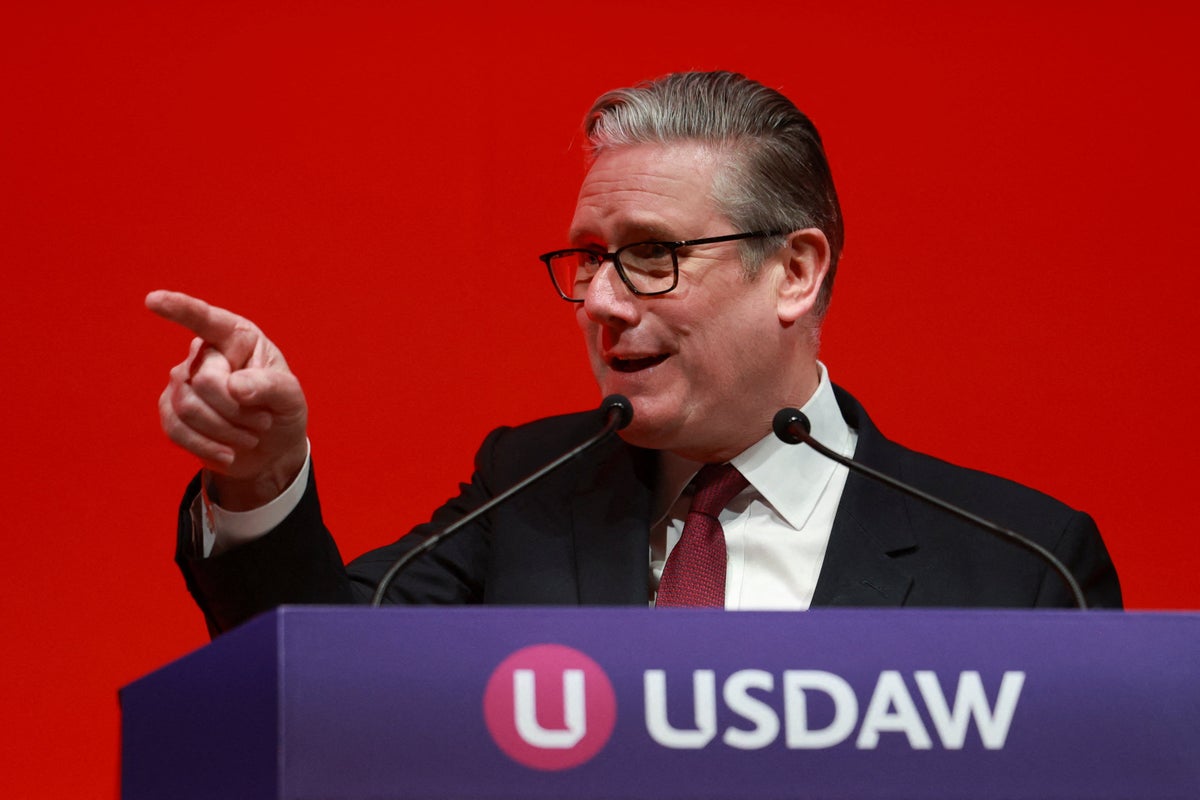
Sir Keir Starmer claimed “the tide could be turning” against shoplifting as he set out the Government’s efforts to crack down on retail crime.
The Prime Minister said shop thefts were “slightly down” in the latest figures and he wanted wider use of technology which allows CCTV footage to be shared immediately with the police.
His comments came as a think tank highlighted figures showing 67% of shoplifting offenders go on to commit another offence within 12 months, up from 55% before the pandemic.
In an address to the Usdaw shopworkers’ union, Sir Keir said: “It’s disgraceful that people just working in their shop have to take abuse from customers.
“It’s disgraceful that people feel sick to the stomach thinking about how they’re going to get through the day and it’s disgraceful that people can have their lives and livelihoods ruined by persistent shop theft.”
He said the Government has put an extra 3,000 neighbourhood police officers on the streets and scrapped the “ridiculous” rule which left theft of goods worth less than £200 “not properly investigated” by police.
“That was a shoplifters’ charter, and we’ve ended it and not before time,” he said.
“We’ve toughened up punishment too. We’re giving police stronger powers, making the abuse and assault of retail workers a specific crime and giving you the same protections as emergency workers.”
Sir Keir said he was “not blind to how big this challenge is” but said the number of people charged had gone up 17% in the latest statistics and shop theft was down.
The latest Office for National Statistics (ONS) data showed shoplifting offences fell slightly last year, down from 516,611 in 2024 to 509,566 in 2025.
Sir Keir said: “It’s only slightly down, but the tide could be turning.”
The Prime Minister’s speech came as the Centre for Social Justice (CSJ) warned of a high street crime epidemic.
The centre-right think tank highlighted figures uncovered by former Tory leader Sir Iain Duncan Smith through parliamentary questions which showed the extent of repeat offending.
The think tank’s analysis showed the average number of offences committed by shoplifters has nearly doubled in five years, rising from 5.5 to 9.1 offences per convicted thief.
Sir Iain, the CSJ’s chairman, said: “Communities across Britain are suffering from a high street crime wave.
“Set against years of economic difficulties, there is a risk that some of our town and city centres are left permanently hollowed out.”
A standalone offence for assaulting a retail worker is set to be introduced in the Crime and Policing Bill going through Parliament.
But the two Houses of Parliament are currently in a tussle over the final draft of the Bill as the end of the parliamentary session nears.
Almost 80% of shop workers said they experienced verbal abuse, more than half said they were threatened by a customer and 10% said they were assaulted in the latest annual survey by retail trade union Usdaw.
The small drop in shoplifting in the ONS figures may reflect a change in how such offences are recorded.
Offences where someone has entered a retail premises, steals, then either uses or threatens violence against staff or other people should be classed as robbery of business, police forces were advised in April last year.
This may account for the steep increase in the number of such robberies recorded, which rose 78% to 26,158 in 2025.
Joanne Thomas, Usdaw general secretary, said the incoming legislation delivers “much-needed protection of retail workers’ law”.
She said: “While there has been a welcome small decrease in shoplifting across last year, the fact is retail crime continues to be a significant issue for the sector and particularly staff.
“Usdaw’s last survey found that this is in no way a victimless crime, with two-thirds of attacks on retail staff being triggered by theft or armed robbery.
“Having to deal with repeated and persistent offences can cause issues beyond the theft itself, like anxiety, fear and physical harm to retail workers.”
Shadow home secretary Chris Philp accused the Prime Minister of “brazen cheek”, saying Sir Keir was “part of the problem, not the solution”.
He said: “Shoplifting is up 8% under Labour, made worse by a drop in total police numbers of 1,300 in the last year alone.
“Starmer is abolishing prison sentences under a year, which means virtually no shoplifter will ever go to prison.
“The Conservative plan to take back our streets will see 10,000 extra police hotspot patrol high crime areas, combined with a tripling of stop and search and widespread use of live facial recognition to catch wanted criminals.
“Only the Conservatives have a plan to fix this.”

Gold prices in Pakistan have risen again at the start of the business week after several days of decline, according to the All Pakistan Bullion Market.
The price of gold per tola increased by Rs 800, reaching Rs 493,962.
Similarly, the price of 10 grams of gold rose by Rs 686 to Rs 423,492.
In the global market, gold also recorded an increase of $8 per ounce, reaching $4,716.
Experts say global economic uncertainty, currency fluctuations, and investor preference for safe-haven assets are driving the upward trend in gold prices.
They add that changes in international markets directly impact Pakistan’s local bullion rates, leading to continued fluctuations in domestic prices.

Now one of the biggest sportswear firms, Anta’s rise follows a playbook adopted by many Chinese giants.
Source link

Starmer says ‘tide could be turning’ on shoplifting epidemic

SBP raises policy rate by 100bps to 11.5% as inflation risks mount

Finalise Bangladesh’s textile-RMG circular economy strategy: Experts

-

 Sports1 week ago
WWE WrestleMania 42 Night 2: Live match results and analysis
-

 Sports1 week ago
NCAA men’s gymnastics championship: All-time winners list
-

 Fashion1 week ago
UK’s Sosandar returns to profitability amid robust FY26 performance
-

 Politics6 days ago
UK’s Starmer seeks to deflect blame over Mandelson appointment
-

 Entertainment7 days ago
Lee Anderson, Zarah Sultana kicked out of UK Parliament for calling PM ‘liar’
-
 Business1 week ago
No fuel shortage: Govt assures 100% domestic LPG, PNG, CNG supply amid Hormuz energy crunch – The Times of India
-
 Business7 days ago
How Trump’s psychedelics executive order could unlock stalled cannabis reform
-
 Business6 days ago
Us-India Trade Talks: US–India trade deal: Where do talks stand & what to expect – explained – The Times of India