

Tech
The War on Iran Puts Global Chip Supplies and AI Expansion at Risk


South Korean officials have warned that the US-Israel war with Iran could hit the global semiconductor supply chain if it disrupts the flow of critical industrial materials from the Middle East.
South Korea’s semiconductor sector, led by giants like Samsung Electronics and SK Hynix, produces about two-thirds of the world’s memory chips. If the Middle East’s supply of chipmaking materials is disrupted, semiconductor production could slow unless alternative sources are found quickly.
The Helium Problem
One material at risk is helium, which is essential in chip manufacturing for managing heat, detecting leaks, and maintaining stable temperatures in fabrication equipment. For many of these uses, there is no real substitute.
About 38 percent of the world’s helium is produced by Qatar, where large extraction facilities are tied to the natural gas industry. This concentration means that disruptions can quickly ripple through the global supply chain.
National oil company QatarEnergy declared force majeure on March 4, after stopping its gas production and downstream operations due to ongoing attacks. Downstream facilities turn gas into other products, including urea, polymers, methanol, and aluminum.
South Korea’s Industry Ministry said the country also depends on the Middle East for 14 other materials in chipmaking, such as bromine and some chip-inspection equipment. While some of these materials can be sourced domestically or from other markets, shifting suppliers in the semiconductor sector is difficult because chipmakers need to test and validate new sources to meet strict purity standards.
Companies say the situation is manageable for now. As reported by Reuters, SK Hynix said it has secured diverse supply chains and maintains sufficient helium inventories, adding that there is “almost no chance” its operations would be affected in the near term.
Contract chipmaker TSMC similarly said it does not currently anticipate a significant impact, while GlobalFoundries stated it is in direct contact with suppliers and has mitigation plans in place.
Stuck in Transit
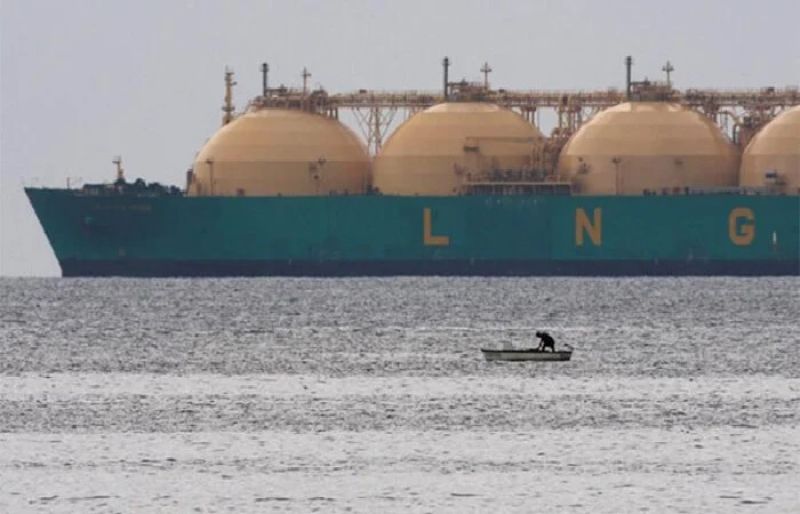
Even if Qatar’s gas production restarts, the semiconductor industry is vulnerable to disruptions in regional shipping routes. Much of the world’s energy and petrochemical exports from the Persian Gulf pass through the Strait of Hormuz, a key maritime choke point.
If shipping through this corridor is interrupted for an extended period, it could slow the movement of industrial gases and petrochemicals that chipmakers rely on. Disruptions to oil and gas exports from the region have also already pushed global energy prices higher: Brent crude, the European benchmark, is priced at $80 per barrel at the time of publication.
Energy costs are a major factor in semiconductor production. Fabrication plants run large clean rooms that need constant electricity and cooling, so chipmakers are sensitive to changes in global energy prices. Industry representatives in South Korea warned that a prolonged conflict could push energy prices higher, likely leading to higher semiconductor production costs and potentially higher chip prices.
These risks come as semiconductor supply chains are already stretched by growing demand from AI computing. Chip demand from AI data center operators has tightened supply across several electronics sectors, including smartphones, laptops, and automobiles.
A Long-Term Problem
For now, the immediate impact on chip production is unclear. Major chipmakers usually maintain a mix of suppliers and stockpile specialty gases and chemicals to help weather short-term disruptions.
But if instability in the region continues, pressure on supply chains will likely grow. A drawn-out conflict that hits energy infrastructure, export facilities, or shipping routes could slowly squeeze the global supply of materials needed for chipmaking.
This could delay plans by major technology companies to expand artificial intelligence infrastructure in the Middle East. Firms such as Amazon, Microsoft, and Nvidia have been positioning the UAE as a hub for AI computing capacity.
This story originally appeared on WIRED Middle East.








Government figures for projected carbon footprint for datacentres have been miscalculated. New figures for the likely carbon output resulting from electricity use by datacentres published last week have been revised upwards by around 100x for the minimum and maximum projected.
Last July, the Department for Science, Innovation & Technology (DSIT) published its Compute evidence annex, which set out the future for AI, compute demand and implications for carbon footprint. The DSIT has since unpublished the original report, but it can still be found here.
The document said: “We estimate that by 2035, the UK’s greenhouse gas emissions from AI compute could range from 0.025 to 0.142 MtCO₂ [millions of tonnes of CO₂] – this is below 0.05% of the UK’s projected total emissions.”
But in a correction to that document, the DSIT said last week: “The UK’s cumulative 10-year greenhouse gas emissions from AI compute could range from 34 to 123 MtCO₂ – this is around 0.9-3.4% of the UK’s projected total emissions over the 10-year period.”
The figures were miscalculated to a staggering degree. The earlier numbers appear to have been annual and the recent revision a 10-year figure, which makes an increase in the estimate of around 100x.
Meanwhile, analysis by climate change science and policy research group Carbon Brief suggests even those figures might be optimistic. Core to that belief is that the government aim is for 50gCO2/kWh by 2030. That figure is what can be achieved by “clean” sources of energy, such as wind, nuclear, hydro and solar.
But figures from last month – researched by Carbon Brief and published with environmental campaigners Foxglove – suggest that is a wildly optimistic estimate if any of that power generation needs to be powered by gas, as gas-powered electricity generation comes with a carbon intensity of around 10x that of clean sources.
Carbon Brief has calculated that emissions could in fact be somewhere between 3.4 MtCO₂ using 5% gas, and 68.1 MtCO₂ if electricity was 95% gas-generated. The higher figure – not far off the annual carbon emissions of Sweden – comes from an estimate based on a recent Ofgem projection of 20GW of future datacentre electricity demand. The same document illustrated the scale of demand by reference to actual peak demand in February 2026 of 45GW.
Ofgem’s 20GW is a projection based on National Energy System Operator research that asked customers about future grid connection requirements.
Foxglove head of strategy Tim Squirrell said: “The government has a legally binding commitment to reach net zero by 2050. This already sat awkwardly alongside its hell-for-leather embrace of a hyperscale AI datacentre buildout, which unchecked could double the electricity consumption of the entire country.
“The situation has now been revealed to be much, much worse, given the fact the government doesn’t seem to have done even the most basic arithmetic needed to measure the potential new carbon emissions of these datacentres. The government urgently needs to confront the reality that it can’t rubber stamp hundreds of new datacentres, whilst keeping its manifesto promise to the country – and legal obligation – to combat the climate crisis.”
Computer Weekly has calculated that there is currently around 1.6GW of datacentre capacity in the UK, with just over 8GW currently in planning or under construction.

Almost 90% of women choose to leave their tech career within 10 years of starting it, according to research from Akamai.
The tech services provider found that more than half of women leave their tech roles within the first five years of their career, and almost 90% within 10, making the average career length for a woman in tech in the UK six years. But the research also found that women would be willing to return to their tech career under the right circumstances.
Natalie Billingham, EMEA managing director at Akamai, said: “These insights illustrate that the UK tech industry has a window of opportunity to impact the choices of women in tech – from the past and present, and in the future.
“By providing opportunities for progression, flexible work and appropriate remuneration, tech leaders on the precipice of technological innovation have the chance to create impactful change on the tech workforce, fostering longer-lasting tenures, diverse leadership and an environment where women can thrive.”
The stagnant number of women in the UK’s technology sector is nothing new, with previous research finding multiple reasons why the tech industry cannot retain women workers even when it has succeeded in the equally difficult task of attracting them.
As well as a lack of visible and accessible role models, poor opportunities for career progression and lack of flexibility are reasons women often cite for opting out of the tech industry. The top reason women gave for quitting their tech roles was a lack of inclusive culture.
More than 50% said they left because they didn’t feel as though they belonged, 40% said it was because of a lack of gender diversity in leadership positions, and 10% said gender bias played a role in their exit from the technology sector.
Nearly three-quarters of women cited a lack of career progression as playing a part in their decision to leave the sector, while 19% stated it was their definitive reason for moving away from tech.
Flexible working has been an ongoing challenge for women in the technology sector, who often leave because they cannot balance working in an inflexible workplace when they often carry a disproportionate amount of the care burden at home.
More than half of women who have left the sector said they did so because of stringent working hours, with 15% outlining that there was no ability to work flexibly and more than 40% stated there was a lack of work-life balance. This could tie in with the 19% of women who said their main reason for leaving tech was due to burnout and a negative impact on their mental health.
Out of the large number of women who have left the technology sector, 15% are currently not working, while 13% moved into finance, 13% moved into teaching, and 12% chose to work in healthcare.
Just over 30% said they left the technology industry of their own volition and prefer their new employment situation, while many said they had no plans to return to tech.
But almost 40% claimed they would be willing to come back to their technology career under the right circumstances, of which pay, career progression and better flexibility were key factors. Just under 20% said better opportunities for career progression could entice them back to tech, while 48% said a higher salary would be the defining factor in their decision to return, and 38% would come back for better flexibility.
Out of those who have come back to the sector after having left, more than half did so because of an increase in pay, and 43% did so because of renewed opportunities for career progression.
Over 40% also claimed they returned to their tech career because they were given better work-life balance, and 37% of women who have left tech said they would consider returning to the industry if they were able to work flexibly, such as working part-time, job sharing or hybrid working. Those who have returned 90% said they’re likely to stay at least two more years if not more.
Hazel Little, CEO of Career Returners, said: “The findings provide a valuable picture of what mid‑career women are looking for to return to tech, and it’s encouraging to see that the majority could be persuaded to come back under the right conditions.
“Progression pathways are crucial for retaining talent, but equally important is ensuring that women who want to return have clear, supported ways to re-enter the sector in the first place. When employers build both return pathways and progression pathways, they create an environment where women can come back, grow and stay.”

The North East Automotive Alliance (NEAA), alongside the Port of Tyne, autonomous driving technology provider Oxa and a consortium of leading industry and academic partners, has delivered the Port‑Connected and Automated Logistics (P-CAL) project.
The Port of Tyne is one of the UK’s major deep-sea ports handling specialised bulk and containerised products, alongside delivery logistics, and assisting growing passenger numbers via its International Passenger Terminal.
Overall, the Port of Tyne adds £658m to the local economy, supporting 10,400 jobs directly and indirectly, and as one of the UK’s largest trust ports. Fully self-financing, it runs on a commercial basis, reinvesting all of its profits back into facilities along the River Tyne for the benefit of the North East and its stakeholders.
Delivered and funded through the UK government’s CAM [Connected and Automated Mobility] Pathfinder programme, NEAA – a collaborative, industry-led cluster dedicated to fostering a competitive and sustainable environment for businesses – is working with its partners to deliver P-CAL to demonstrate autonomous container transport at the Port of Tyne. The initiative will see the deployment of a fully autonomous terminal tractor and secure mesh communication network to move containers between the dockside and the container compound, creating a UK first in waterside port automation.
P-CAL was designed to push the boundaries of autonomous logistics by deploying and validating a fully autonomous terminal tractor in a live port environment. Building on the North East’s earlier 5G CAL and V‑CAL initiatives – which looked to assess the commercial viability of deploying autonomous yard tractors on the Vantec-Nissan route in Sunderland – the project worked to move autonomous technology from proof‑of‑concept trials into a complex, safety‑critical, real‑world operational setting.
Over the course of the project, the consortium is said to have successfully designed, integrated and tested an autonomous container transport service capable of operating on a busy quayside. The scope of work included the deployment of a fully autonomous terminal tractor; a resilient mesh communication network; the capability to integrate with terminal operating systems; real‑time coordination with live crane movements; and the implementation of a cyber security framework to enable safe, remote and automated operations.
The system was developed and tested in a newly defined and highly complex operational design domain. This is said to reflect the realities of a working port environment where traffic density, variable conditions and human interaction present unique challenges.
The regional and national partnership delivering the project combined expertise across autonomous systems, logistics, cyber security, academia, legal compliance and industrial operations. The consortium believes its project has generated valuable technical, operational and regulatory insight that will inform the future deployment of CAM services across ports, logistics hubs and industrial sites nationwide.
By augmenting the capability of the existing workforce, it says it has shown that autonomous systems can take on repetitive or more hazardous tasks, allowing skilled workers to focus on higher-value roles. This is seen as particularly vital for the North East, ensuring the region remains at the forefront of industrial evolution while creating a more resilient and tech-enabled labour market.
“Delivering autonomous logistics in a live port environment has been a major step forward for the sector,” said Graeme Hardie, operations director at the Port of Tyne. “P-CAL has shown what’s possible when innovation is applied to real operational challenges, improving safety, efficiency and sustainability. The Port of Tyne is proud to have played a leading role in a project that will influence how ports across the UK and beyond approach automation.”
Oxa founder and CEO Paul Newman added: “The success of P-CAL proves how autonomy will enable the future of resilient logistics operations. Through the project, we’ve demonstrated that existing work vehicles can be turned into a digital workforce – successfully completing autonomous container movements in a dynamic quayside environment, while providing worksite intelligence necessary for real-time industrial optimisation. P-CAL provides a blueprint for how ports and industrial hubs worldwide can deploy autonomous technology to drive productivity, efficiency and safety.”
CAM Pathfinder is funded by the UK government, delivered by the Department for Business and Trade in partnership with automated mobility firm Zenzic and Innovate UK, the UK’s national innovation agency.
Zenzic programme director Mark Cracknell said: “P-CAL is a strong example of how government and industry can work together to accelerate the commercial readiness of CAM technologies. Projects like this are vital in turning innovation into deployment, creating high‑value jobs and ensuring the UK remains globally competitive in connected and automated mobility. As the project closes, the outcomes and learning from P-CAL will continue to shape future CAM initiatives, investment opportunities and policy development, both regionally and nationally.”
The next phase of the project will examine how the system performs across broader port operations, including the added pressures of multiple vehicles working alongside people, equipment and live commercial activity.


SBP raises policy rate by 100bps to 11.5% as inflation risks mount

Finalise Bangladesh’s textile-RMG circular economy strategy: Experts

Gold prices rise rebound in Pakistan after recent decline – SUCH TV

-

 Sports1 week ago
WWE WrestleMania 42 Night 2: Live match results and analysis
-

 Sports1 week ago
NCAA men’s gymnastics championship: All-time winners list
-

 Fashion1 week ago
UK’s Sosandar returns to profitability amid robust FY26 performance
-

 Politics6 days ago
UK’s Starmer seeks to deflect blame over Mandelson appointment
-

 Entertainment7 days ago
Lee Anderson, Zarah Sultana kicked out of UK Parliament for calling PM ‘liar’
-
 Business1 week ago
No fuel shortage: Govt assures 100% domestic LPG, PNG, CNG supply amid Hormuz energy crunch – The Times of India
-
 Business7 days ago
How Trump’s psychedelics executive order could unlock stalled cannabis reform
-
 Business1 week ago
Exercise to test response to offshore energy threat involving vessels and drones