

Business
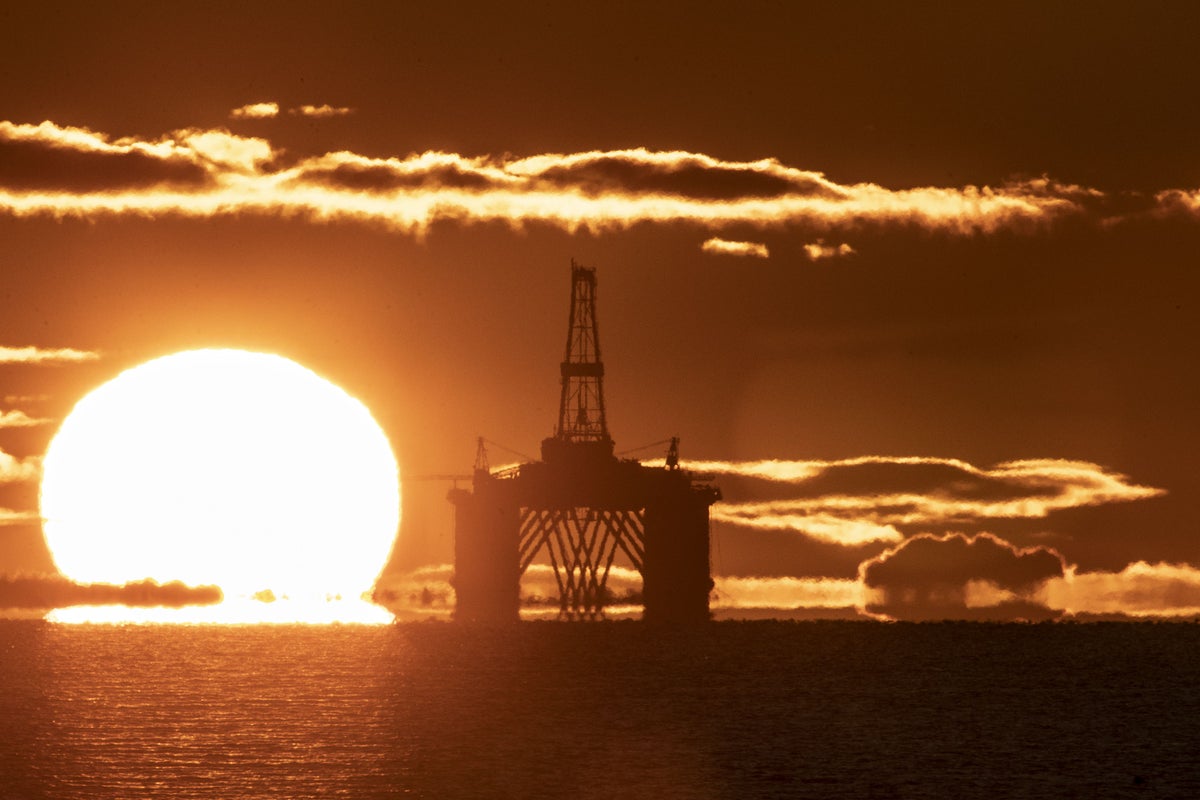
Oil holds above $100 as tensions escalates between Iran, US and Israel – SUCH TV


With the conflict heading towards its third week and showing no signs of ending, investors are growing increasingly worried about an extended crisis that could fan inflation and hammer the global economy.
Tehran has targeted energy facilities this week across the Gulf, with ships hit near Iraq, fuel tanks attacked in Bahrain and drones fired at oilfields in Saudi Arabia.
And it warned on Thursday that it would “set the region’s oil and gas on fire” if its own energy infrastructure and ports were targeted.
In his first public comments since succeeding his father four days ago, Ayatollah Mojtaba Khamenei said the Strait of Hormuz — through which a fifth of global oil and gas passes — must remain effectively shut. Khamenei also called for bases hosting US forces in region to close or attacks will continue.
“The lever of blocking the Strait of Hormuz must definitely be used,” Khamenei said in a message read by an anchor on state television.
He also said “studies have been conducted into opening other fronts where the enemy has little experience and would be highly vulnerable, and their activation will take place if the state of war persists”.
Khamenei vowed to avenge the Iranian casualties in the conflict.
Khamenei himself was wounded in the strikes, according to some Iranian officials and state TV. His whereabouts and details of his physical condition are unknown, prompting Israeli leader Benjamin Netanyahu to call on him to “show his face”.
Crude surged more than nine percent Thursday, with Brent ending above $100 for the first time since 2022 when Russia launched its invasion of Ukraine. Brent is up around 40 percent since the Middle East war began on February 28.
And it held there in early Friday business, with analysts saying the record 400 million barrels released from International Energy Agency stockpiles had little impact.
The IEA said Thursday that the war “is creating the largest supply disruption in the history of the global oil market”.
Meanwhile, Donald Trump has faced intense political pressure as the global economic fallout of the crisis has mounted, while markets have brushed off his assertions that the battle would be short-lived.
The US president struck a defiant tone in a social media post Thursday, writing that the United States “is the largest Oil Producer in the World, by far, so when oil prices go up, we make a lot of money”.
“BUT, of far greater interest and importance to me, as President, is stopping an evil Empire, Iran, from having Nuclear Weapons, and destroying the Middle East and, indeed, the World.”
However, Pepperstone’s Chris Weston said: “With crude closing near its highs, markets are increasingly pricing in a longer duration for the conflict and the continued impact of a potential closure of the Strait of Hormuz.
“Donald Trump may continue to explore the idea of assisting vessels through the strait, and if that were to materialise the market could see a strong relief rally.
“For now, however, the dominant features are higher energy prices and extremely elevated volatility markets.”
French soldier killed in Iraqi Kurdistan
A French soldier was killed in an attack in Iraq’s autonomous Kurdistan region, President Emmanuel Macron said on Friday, confirming the first French military death in the Middle East war.
Since US-Israeli strikes on Iran last month engulfed the Middle East in war, multiple attacks attributed to pro-Iranian factions have targeted the region where foreign forces are based as part of an international anti-jihadist coalition.
New missile wave targets Israel
The Israeli military said early Friday that Iran fired a new barrage of missiles toward Israel, with emergency services reporting that two were injured in the country’s north.
“A short while ago, the IDF identified missiles launched from Iran toward the territory of the State of Israel. Defensive systems are operating to intercept the threat,” the military posted on Telegram.
Saudi Arabia intercepts drones
Saudi Arabia intercepted dozens of drones entering its airspace, the defence ministry said Friday, as Iran carries out attacks on oil-rich Gulf countries in response to US-Israeli strikes.
“Twelve drones were intercepted and destroyed after entering Saudi airspace,” a ministry spokesperson posted on X, after authorities reported at least 16 other drones were also shot down.
Trump: war moving ‘rapidly’
US President Donald Trump told reporters the war against Iran was moving “very rapidly.”
“It’s doing very well, our military is unsurpassed,” he said at the White House, not directly responding to the latest comments from Iran’s new supreme leader.
Israel strikes Basij force
Israel’s military said it had struck checkpoints set up in the Iranian capital Tehran by the Basij paramilitary force of Iran’s Revolutionary Guards as part of efforts to undermine control by the authorities.
Later, the Israeli military said it launched a new broad wave of strikes in Tehran on Thursday evening, pressing ahead with its campaign against Iran for a 13th day.
Iraq-Syria border strikes
Air strikes killed at least 11 Iran-backed fighters in Iraq on Thursday near the Iraqi-Syrian border and in the capital Baghdad, senior security and armed faction officials told AFP.
Iraqi authorities denounced the “blatant attacks” on bases that belong to the Hashed al-Shaabi, a former paramilitary group now integrated into the regular army, which also encompasses brigades from Iran-backed armed groups.
Hormuz mines
Iran is not laying mines in the Strait of Hormuz, its deputy foreign minister said, after Trump said US forces had struck 28 Iranian mine-laying vessels in the waterway.
He told AFP that Iran was allowing ships from some countries to cross the narrow shipping lane that has remained effectively closed during the war.
Beirut strikes
Israel continued striking Beirut as it threatened to expand operations and seize territory in Lebanon if the militant group Hezbollah did not stop its attacks.
AFPTV footage showed dark smoke rising into the sky above Bashoura, in the heart of Beirut.
IEA: biggest oil shock ever
The war “is creating the largest supply disruption in the history of the global oil market”, as Iran’s chokehold on regional supplies forces Gulf producers to slash production, the International Energy Agency said.
An IEA market report said crude oil production was currently down by at least eight million barrels per day.
Israel moves deeper into Lebanon
The Israeli military moved further into southern Lebanon, telling residents to “move immediately north of the Zahrani River”, 40 kilometres (25 miles) from the Israeli border.
It said the Iran-backed Lebanese group Hezbollah had launched “approximately 200 rockets” towards it overnight, in what it said was the biggest barrage of the war so far.




Sam Sidhu, CEO of Customers Bank.
Courtesy: Customers Bank
Nearly half an hour into a conference call on Friday to discuss first-quarter results with analysts, Customers Bank CEO Sam Sidhu revealed something unusual — up until that point, he hadn’t actually been speaking.
“The prepared remarks you heard on my behalf today were delivered by my AI clone, not read by me,” Sidhu said, calling it a potential first for a public company earnings call.
The point of the stunt, he said, was to underscore a broader shift happening as Customers Bank, a $25.9 billion asset lender catering to startups and small businesses, embraces artificial intelligence.
Customers Bank has signed a multiyear partnership with OpenAI in which the AI giant will embed engineers at the company to help it automate lending and client onboarding, CNBC has learned exclusively.
The deal is part of Sidhu’s effort to get ahead of other banks in the industry’s race to transform itself using AI agents as a new digital workforce. His strategy hinges on automating core banking processes — slashing loan timelines from weeks to days, for instance — and scaling growth without adding staff at the same pace.
While many bankers have described AI in broad terms like productivity gains, Sidhu is tying it directly to financial targets.
Sidhu told CNBC that the project will improve the firm’s efficiency ratio from about 49 to the low 40s, boosting the bank’s returns starting next year.
The relationship with OpenAI — which has targeted finance as one of its core industries, even hiring former bankers to train its models — will be a symbiotic one for the AI giant, according to the bank CEO.
“We’re going to be co-creating enterprise solutions they could potentially sell to other banks in the future,” Sidhu said. “The goal here is end-to-end, automated agentic led workflow” for lending, deposits and payments.
OpenAI said it was proud to help Customers Bank “as they build a more intelligent operating model that empowers employees, strengthens client service, and sets a new standard for regional banking,” chief revenue officer Denise Dresser said in a statement provided to CNBC.
Always-on workers
The bank expects to roll out AI agents across lending, deposits and payments over the next six to 12 months.
If they succeed, closing a commercial loan will go from taking 30 to 45 days, including underwriting, document collection and legal negotiations, to about seven days, Sidhu said.
Opening accounts for complex commercial clients, which can take more than a day, will be collapsed to under 20 minutes using conversational AI and automated document gathering, he said.
“When you have an autonomous agent, you’re essentially creating a digital worker … and they can work around the clock,” Sidhu said.
Customers Bank has been laying the groundwork for this announcement for years, first tapping OpenAI in 2023 because Sidhu had what he describes as a tiny investment in the AI giant through his contacts in the venture capital world. The OpenAI deal signed last week broadens their relationship, enabling AI engineers into the bank’s processes, he said.
The bank is among a handful of smaller lenders that target the startup and venture capital community, and it reportedly bid for Silicon Valley Bank in 2023 amid the regional banking crisis that year.
Key advantage
While it is a relatively tiny firm compared to the likes of JPMorgan Chase, which has $4.9 trillion in assets, Customers Bank has a key advantage, according to Sidhu, who began his career at Goldman Sachs in 2004. The megabanks have sprawling global operations and far higher complexity and regulatory standards for AI implementation, he said.
“Smaller banks are not going to be expected to have the same level of frameworks as many of the larger banks,” he said. Regulators want community and regional banks “to be able to compete with larger banks.”
The lender already uses AI to write half the firm’s software code and has saved 28,000 hours of work so far, equal to not hiring about 15 full-time employees, he said.
“This is an opportunity for us to potentially slow that hiring … and do more revenue per employee,” he said.
The bank is also exploring entering new businesses that would have been prohibitively expensive to tackle before AI agents. For these AI-native business lines, smaller teams oversee automated systems that handle work previously requiring large numbers of humans, he said.
Unlike typical software licensing agreements, Sidhu said both sides are contributing resources to build new tools together, with OpenAI gaining real-world use cases inside a regulated financial institution.
“It’s going to benefit our investors. It’s going to benefit our customers,” Sidhu said. “Our regulators will hopefully also be happier over time, because they’re going to see us reducing risk as well.”
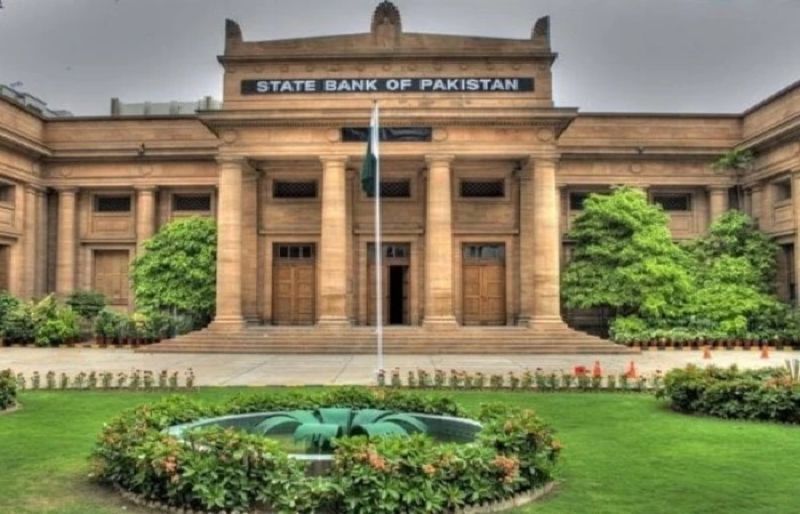
The State Bank of Pakistan (SBP) on Monday raised its benchmark policy rate by 100 basis points (bps) to 11.5% on Monday, warning of “intensified risks” to the macroeconomic outlook due to the US-Israel war on Iran.
In a statement, the central bank said that its Monetary Policy Committee (MPC) noted that global energy prices, freight charges and insurance premiums continued to remain significantly above pre-conflict levels due to the Mideast conflict.
Disruptions in the supply chain have also contributed to the prevailing uncertainty, it added.
While the incoming data has been broadly in line with the MPC’s expectations, the impact of the ongoing global developments will be visible in key economic indicators going forward, the SBP warned.
The MPC assessed that inflation is likely to increase and remain above the target range in the next few quarters.
Accordingly, the committee deemed it necessary to maintain a tighter policy stance to keep inflation expectations anchored and contain second-round effects of the current supply shock to bring inflation within the target range, the SBP said.
This will be important to preserve macroeconomic stability, which is necessary for achieving sustainable economic growth, it added.
Since its last meeting, the MPC highlighted several key developments, including a rise in inflation to 7.3% in March and an increase in core inflation to 7.8%. It also noted deteriorating consumer and business confidence in recent surveys.
On the macroeconomic front, real GDP grew by 3.8% in the first half of fiscal year 2026, compared to 1.9% a year earlier. The current account posted a small surplus during July-March FY26.
SBP’s foreign exchange reserves stood at approximately $15.8 billion as of April 24, bolstered by Eurobond issuances, marking Pakistan’s return to international capital markets after more than four years.
The MPC also referenced the staff-level agreement reached with the International Monetary Fund on March 27 as a positive development supporting external financing.
“In light of the above developments and evolving risks, the MPC viewed today’s decision as important to achieve the objective of price stability over the medium term,” the SBP said.
The MPC stressed the need for continued fiscal discipline, structural reforms, and strengthening of external buffers to ensure resilience against global shocks and sustain long-term growth.
Likely rise in inflation
Inflation was projected to increase up to the upper bound of the target range before the start of the Middle East conflict, mainly due to adverse base effect, the SBP said, adding that the energy price shock has led to a surge in fuel prices, which have already begun to seep into core inflation via transport fares.
However, contained food inflation amidst ample supplies is likely to offset some of the impact on headline inflation, the central bank said.
Going forward, the central bank’s MPC assessed that the current supply shock may push inflation to double digits in the coming months before it starts to ease subsequently.
It expects inflation to stay above the upper bound of the target range of 5% to 7% for most of the fiscal year 2027.
The SBP said that the outlook is subject to multiple risks, particularly the duration and intensity of the Mideast conflict, the extent of pass-through of changes in global energy prices to the domestic economy, and potential fiscal slippages.
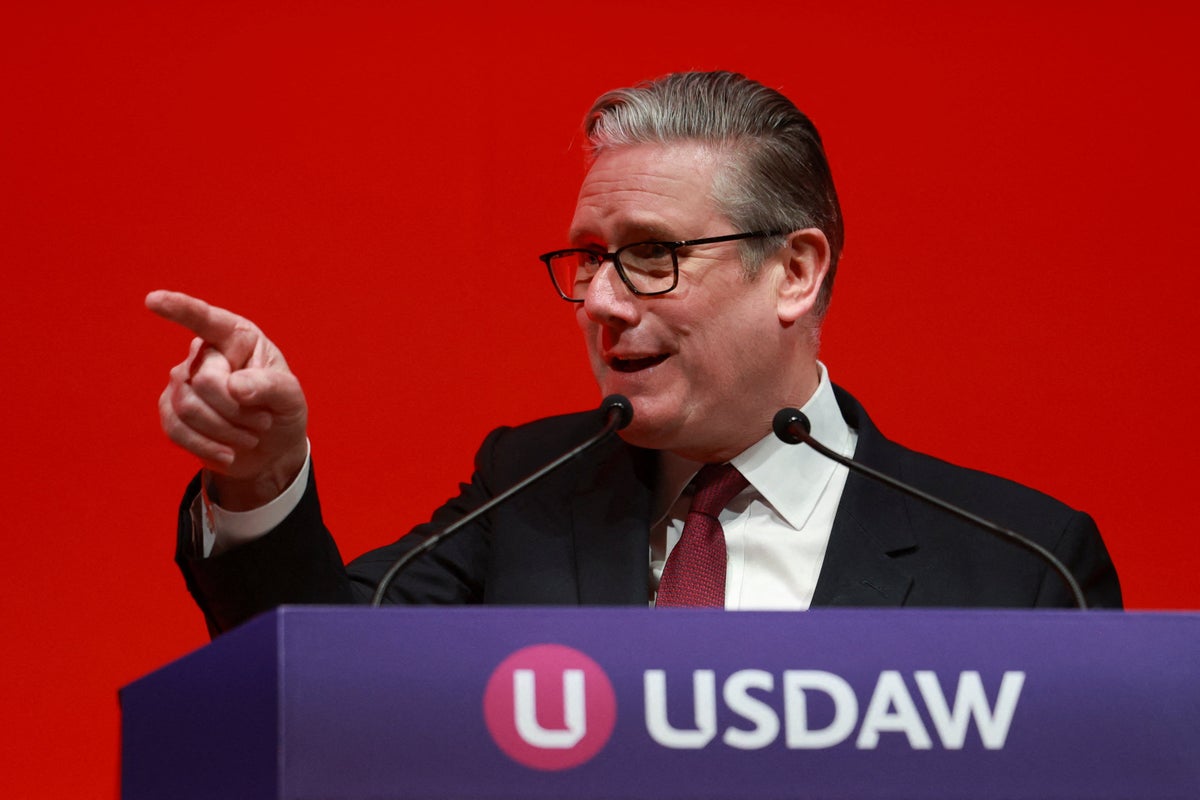
Sir Keir Starmer claimed “the tide could be turning” against shoplifting as he set out the Government’s efforts to crack down on retail crime.
The Prime Minister said shop thefts were “slightly down” in the latest figures and he wanted wider use of technology which allows CCTV footage to be shared immediately with the police.
His comments came as a think tank highlighted figures showing 67% of shoplifting offenders go on to commit another offence within 12 months, up from 55% before the pandemic.
In an address to the Usdaw shopworkers’ union, Sir Keir said: “It’s disgraceful that people just working in their shop have to take abuse from customers.
“It’s disgraceful that people feel sick to the stomach thinking about how they’re going to get through the day and it’s disgraceful that people can have their lives and livelihoods ruined by persistent shop theft.”
He said the Government has put an extra 3,000 neighbourhood police officers on the streets and scrapped the “ridiculous” rule which left theft of goods worth less than £200 “not properly investigated” by police.
“That was a shoplifters’ charter, and we’ve ended it and not before time,” he said.
“We’ve toughened up punishment too. We’re giving police stronger powers, making the abuse and assault of retail workers a specific crime and giving you the same protections as emergency workers.”
Sir Keir said he was “not blind to how big this challenge is” but said the number of people charged had gone up 17% in the latest statistics and shop theft was down.
The latest Office for National Statistics (ONS) data showed shoplifting offences fell slightly last year, down from 516,611 in 2024 to 509,566 in 2025.
Sir Keir said: “It’s only slightly down, but the tide could be turning.”
The Prime Minister’s speech came as the Centre for Social Justice (CSJ) warned of a high street crime epidemic.
The centre-right think tank highlighted figures uncovered by former Tory leader Sir Iain Duncan Smith through parliamentary questions which showed the extent of repeat offending.
The think tank’s analysis showed the average number of offences committed by shoplifters has nearly doubled in five years, rising from 5.5 to 9.1 offences per convicted thief.
Sir Iain, the CSJ’s chairman, said: “Communities across Britain are suffering from a high street crime wave.
“Set against years of economic difficulties, there is a risk that some of our town and city centres are left permanently hollowed out.”
A standalone offence for assaulting a retail worker is set to be introduced in the Crime and Policing Bill going through Parliament.
But the two Houses of Parliament are currently in a tussle over the final draft of the Bill as the end of the parliamentary session nears.
Almost 80% of shop workers said they experienced verbal abuse, more than half said they were threatened by a customer and 10% said they were assaulted in the latest annual survey by retail trade union Usdaw.
The small drop in shoplifting in the ONS figures may reflect a change in how such offences are recorded.
Offences where someone has entered a retail premises, steals, then either uses or threatens violence against staff or other people should be classed as robbery of business, police forces were advised in April last year.
This may account for the steep increase in the number of such robberies recorded, which rose 78% to 26,158 in 2025.
Joanne Thomas, Usdaw general secretary, said the incoming legislation delivers “much-needed protection of retail workers’ law”.
She said: “While there has been a welcome small decrease in shoplifting across last year, the fact is retail crime continues to be a significant issue for the sector and particularly staff.
“Usdaw’s last survey found that this is in no way a victimless crime, with two-thirds of attacks on retail staff being triggered by theft or armed robbery.
“Having to deal with repeated and persistent offences can cause issues beyond the theft itself, like anxiety, fear and physical harm to retail workers.”
Shadow home secretary Chris Philp accused the Prime Minister of “brazen cheek”, saying Sir Keir was “part of the problem, not the solution”.
He said: “Shoplifting is up 8% under Labour, made worse by a drop in total police numbers of 1,300 in the last year alone.
“Starmer is abolishing prison sentences under a year, which means virtually no shoplifter will ever go to prison.
“The Conservative plan to take back our streets will see 10,000 extra police hotspot patrol high crime areas, combined with a tripling of stop and search and widespread use of live facial recognition to catch wanted criminals.
“Only the Conservatives have a plan to fix this.”


The Man Behind AlphaGo Thinks AI Is Taking the Wrong Path
This bank CEO let his AI clone handle an earnings call — now he’s signing an OpenAI deal

TNA wrestling star Xia Brookside gets baptized: ‘A new chapter’

-

 Sports1 week ago
WWE WrestleMania 42 Night 2: Live match results and analysis
-

 Sports1 week ago
NCAA men’s gymnastics championship: All-time winners list
-

 Fashion1 week ago
UK’s Sosandar returns to profitability amid robust FY26 performance
-

 Politics6 days ago
UK’s Starmer seeks to deflect blame over Mandelson appointment
-
 Entertainment7 days ago
Lee Anderson, Zarah Sultana kicked out of UK Parliament for calling PM ‘liar’
-
 Business1 week ago
No fuel shortage: Govt assures 100% domestic LPG, PNG, CNG supply amid Hormuz energy crunch – The Times of India
-
 Business7 days ago
How Trump’s psychedelics executive order could unlock stalled cannabis reform
-
 Business1 week ago
Exercise to test response to offshore energy threat involving vessels and drones