

Politics
Thai court sacks PM Paetongtarn Shinawatra for ethics violation



Thailand’s Constitutional Court dismissed Prime Minister Paetongtarn Shinawatra from office on Friday for an ethics violation after only a year in power, dealing another crushing blow to the Shinawatra political dynasty that could usher in a new period of turmoil.
Paetongtarn, who was Thailand’s youngest prime minister, becomes the sixth premier from or backed by the billionaire Shinawatra family to be removed by the military or judiciary in a tumultuous two-decade battle for power between the country’s warring elites.
In its verdict, the court said Paetongtarn violated ethics in a leaked June telephone call, during which she appeared to kowtow to Cambodia’s former leader Hun Sen when both countries were on the brink of an armed border conflict. Fighting erupted weeks later and lasted five days.
The decision paves the way for the election by parliament of a new prime minister, a process that could be drawn out, with Paetongtarn’s ruling Pheu Thai party losing bargaining power and facing a challenge to shore up a fragile alliance with a razor-thin majority.
In a 6-3 decision, the court said Paetongtarn had put her private interests before those of the nation and damaged the reputation of the country, causing a loss of public confidence.
“Due to a personal relationship that appeared aligned with Cambodia, the respondent was consistently willing to comply with or act in accordance with the wishes of the Cambodian side,” the court said in a statement.
The ruling brings a premature end to the premiership of the daughter and protégé of influential tycoon Thaksin Shinawatra. Paetongtarn, 39, was a political neophyte when she was thrust abruptly into the spotlight after the surprise dismissal of predecessor Srettha Thavisin by the same court a year ago.
Paetongtarn has apologised over the leaked call and said she was trying to avert a war.
Uncertainty ahead
She is the fifth premier in 17 years to be removed by the Constitutional Court, underlining its central role in an intractable power struggle between the elected governments of the Shinawatra clan and a nexus of powerful conservatives and royalist generals with far-reaching influence.
The focus will next shift to who will replace Paetongtarn, with Thaksin expected to be at the heart of a flurry of horse-trading between parties and other power-brokers to try to keep Pheu Thai in charge of the coalition.
Deputy premier Phumtham Wechayachai and the current cabinet will oversee the government in a caretaker capacity until a new prime minister is elected by the house, with no time limit on when that must take place.
There are five people eligible to become prime minister, with only one from Pheu Thai, 77-year-old Chaikasem Nitisiri, a former attorney general with limited cabinet experience, who has maintained a low profile in politics.
Others include former premier Prayuth Chan-ocha, who has retired from politics and led a military coup against the last Pheu Thai government in 2014, and Anutin Charnvirakul, a deputy premier before he withdrew his party from Paetongtarn’s coalition over the leaked phone call.
The ruling thrusts Thailand into more political uncertainty at a time of simmering public unease over stalled reforms and a stuttering economy expected by the central bank to grow just 2.3% this year.
Any Pheu Thai administration would be a coalition likely to have only a slender majority and could face frequent parliamentary challenges from an opposition with huge public support that is pushing for an early election.
“Appointing a new prime minister…will be difficult and may take considerable time,” said Stithorn Thananithichot, a political scientist at Chulalongkorn University.
“It’s not easy for all parties to align their interests,” he said. “Pheu Thai will be at a disadvantage.”
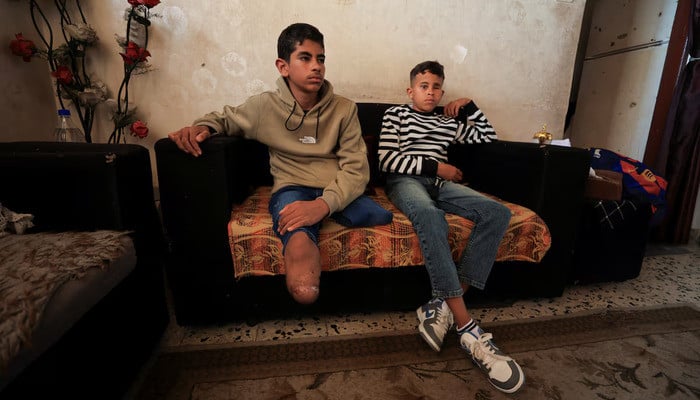
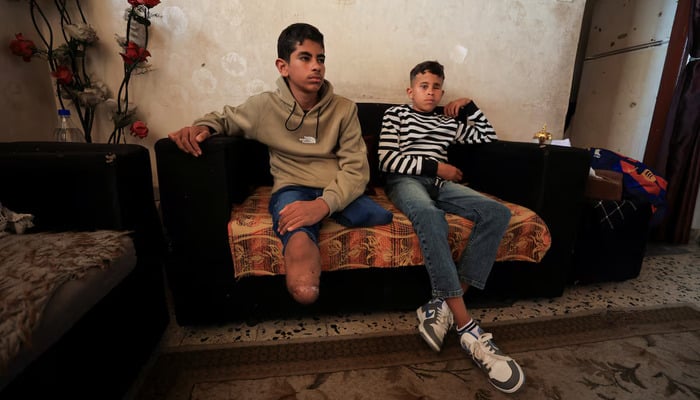
Fourteen-year-old Fadel al-Naji used to be a keen footballer but is now largely confined to his home in Gaza City since both legs were severed in an Israeli drone attack in September.
He sits sullenly on a couch with one hollow pant leg dangling and the other tucked into his waist beside his 11-year-old brother who lost an eye in the same strike.
“He has become withdrawn and isolated,” said his mother Najwa al-Naji, showing old videos of him doing kick-ups on her phone. “It is as if he is dying slowly, and I wish that they would fit him with prosthetic limbs.”
But those are in scarce supply for Gaza’s nearly 5,000 war amputees – a quarter of whom are children like al-Naji – because of Israeli restrictions on materials like plaster of Paris, seven aid and medical sources told Reuters.
Israel, which fought a two-year war with Hamas fighters in the Palestinian enclave, cites security concerns as the reason for restrictions.
Taken together with Gaza’s pre-war amputee population provided by Palestinian health officials, its per capita amputee rate now exceeds even Cambodia, which had been the worst due to landmines, aid group Humanity & Inclusion said.
Such is the need that two medical centres said they were trying to reuse old prosthetic limbs recovered from people killed in the war. Others are creating makeshift artificial limbs with plastic piping or wooden planks, medics said, though this risks damaging the stump or causing infection.
Unfulfilled promise
Gaza’s amputees are a symbol of unfulfilled pledges from the October ceasefire and US President Donald Trump’s 20-point plan envisaging full aid “without interference”.
It also foresaw the reopening of the Rafah border crossing – Gaza’s sole route out to Egypt – but medical evacuations including for amputees have been irregular.
Israel restricts imports of items it says have potential military as well as civilian use under a policy pre-dating the two-year war. While plaster of Paris and other plastic components for prostheses are not specified on Israeli lists of so-called dual use items, “construction products” are there, an Israeli export control document showed.
Israel’s COGAT military agency, which controls access to Gaza, says it facilitates the regular entry of medical equipment but will not permit materials that could be used by Hamas for a “terrorist build-up”.
Responding to questions about prostheses, COGAT said it is in dialogue with the UN and other aid groups to identify ways to enable an adequate medical response.
The International Committee of the Red Cross, which supports the Artificial Limbs and Polio Centre in Gaza, the main centre for prosthetics, said imports of plaster of Paris have been almost completely restricted for over four months with supplies left only to June or July.
“What we are producing now are very small quantities compared to the actual need,” said Hosni Mhana, the centre’s spokesperson, without giving numbers.
The Qatari-funded Sheikh Hamad Hospital said no supplies have been received during the war and that it has run out. It can now only offer maintenance on existing prostheses. “There are no local alternatives for prosthetic manufacturing materials,” said the hospital’s General Director Ahmed Naim.
Humanity & Inclusion, which has fit 118 temporary prostheses in Gaza since early 2025, said supplies from its last shipment in December 2024 are dwindling.
The Trump-led Board of Peace, which has sought to boost aid for Gaza, said it took very seriously the hardships of amputees and other patients in Gaza.
“These are urgent civilian needs,” it said in a statement to Reuters, noting that the ceasefire obligations included the sustained flow of humanitarian, commercial and medical supplies.
Restrictions and delays are raised with the relevant authorities, it added. “We have significant guarantees and commitments that these restrictions will be eased and eliminated as armed parties agree to decommission their weapons and hand over authority to a Palestinian technocratic government in Gaza.”
Prolonged trauma
Artificial limbs cannot be imported whole into Gaza since they are built for each patient, with plaster used to take an exact cast of the residual limb to shape a custom-made socket.
Reuters interviewed three other Gaza amputees all struggling to resume their pre-war lives without prostheses.
Some of the amputees are on a waiting list and may have undergone preparatory work, which can include stump revisions, a form of surgery to hone its shape.
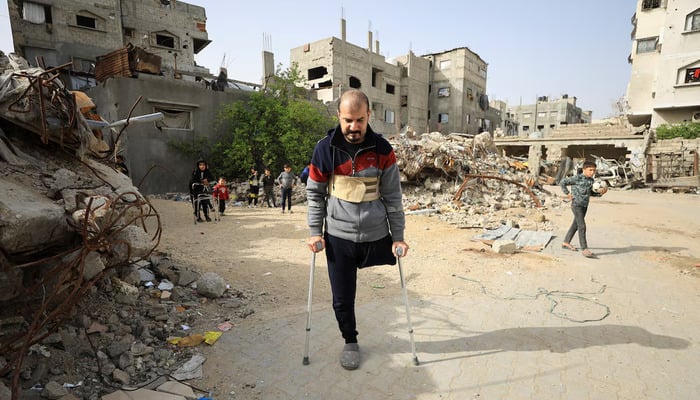
One on the list is Hazem Foura, a 40-year-old former office worker unable to work since losing his left leg above the knee in December 2024 when he says Israel bombed his house.
“I am not asking for the luxuries of life, I am asking for a limb so I can regain my humanity,” he said.
Lack of prostheses severely disrupts recovery and prolongs trauma for amputees, many of whom might have avoided limb loss had more specialist surgeons been available.
It also puts them in greater danger from ongoing Israeli attacks, which have killed 750 Palestinians since the ceasefire, Palestinian health officials say.
Israeli restrictions on items like wheelchairs have eased since the ceasefire, the ICRC and the UN children’s agency said, but medics said manoeuvring around Gaza’s rubble-strewn roads remains a challenge.
As well as materials, expertise is lacking, with only eight prosthetists still in Gaza, according to the World Health Organisation. Follow-up care for children is especially tough, medics said, since they need regular refittings as they grow.
“The amputation itself is not just a lost limb, it’s lost hope, it’s lost independence,” said Heba Bashir, prosthetic and orthotic technical officer for Humanity & Inclusion. “For the kids, it means losing their future.”


At least 16 people, including a 12-year-old child, were killed and several others were injured Russia’s drone and missile strikes in Ukrainian capital Kyiv, officials said on Thursday.
Fires burned out of control in parts of the capital, sending black smoke billowing into the night sky, as firefighters struggled to control multiple blazes. The morning saw residents and emergency crews cleaning debris scattered around heavily damaged buildings in the city.
Four people, including the child, died in Kyiv, mayor Vitali Klitschko said. Nine people were killed in Odesa, and two in the southeastern city of Dnipro, where Russian attacks set residential buildings ablaze, according to regional officials.
President Volodymyr Zelenskiy said the night had proven that Russia did not deserve any easing of global policy or lifting of sanctions, with 100 people wounded alongside those killed.
“There can be no normalisation of Russia as it is today. Pressure on Russia must work. And it is important to fulfill every promise of assistance to Ukraine on time,” he said.
Air force units shot down or neutralised 31 missiles and 636 drones, but 12 missiles and 20 drones hit in the 24 hours to 7 am (0500 GMT) on Thursday, the air force said.
Deputy Prime Minister Oleksiy Kuleba said rescue operations were ongoing and the toll could rise, while Foreign Minister Andrii Sybiha urged the international community to act.
“All decisions required to increase pressure on the aggressor must be unblocked now,” he said on X. “It is immoral, counterproductive, and dangerous to delay sanctions against Russia or packages of support for Ukraine.”
Klitschko said that Kyiv came under another attack early on Thursday, adding that a drone, flying very low, slammed into an 18-storey building.
Prosecutors put the number of injured in the city at 54.
Klitschko said rescue teams had rescued a mother and child from a building in a central district where the ground floor was badly damaged. He also said missile debris had hit the sixth floor of an apartment building in the central Podil district.
A large fire had broken out in a building in a district in the north of the capital and four emergency medical workers were injured, while debris had fallen in several locations, Klitschko said.
Dnipro, Odesa under attack
Nine people were killed and 23 injured in an attack on a high-rise building in the southern city of Odesa, officials said.
“Last night, the city came under several waves of missile and drone attacks,” Serhiy Lysak, the head of the local military administration, wrote on Telegram, reporting damage to infrastructure facilities and a residential building.
The regional governor said that port and critical infrastructure facilities in the city had also been damaged.
In Dnipro, regional governor Oleksandr Ganzha said that two people were killed and 30 injured in an evening and overnight attack on the city; he posted pictures showing residential buildings ablaze. Another man was killed and four people injured in the surrounding region, Ganzha added.
In Kharkiv, Ukraine’s second-largest city in the northeast, officials said two people had been injured in drone strikes.
- Senate Republicans have blocked war powers measures four times.
- Almost all Republicans remain firmly behind Trump.
- Democrats warn conflict could escalate.
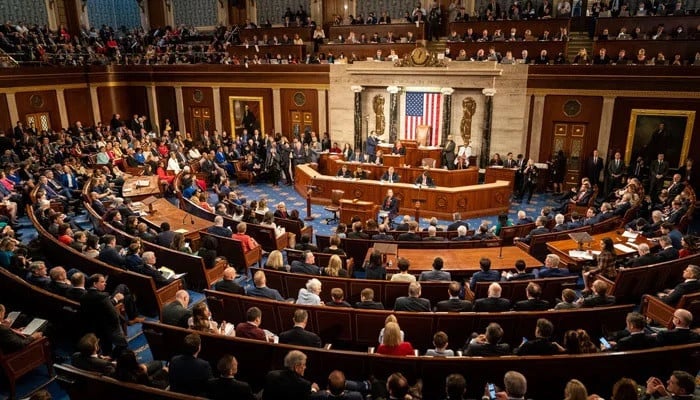
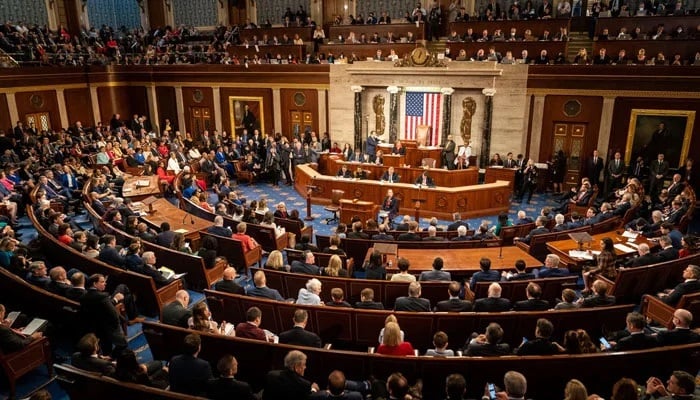
A majority of the US Senate backed President Donald Trump’s military campaign against Iran on Wednesday, voting to block a Democratic-led resolution aiming to stop the war until hostilities are authorised by Congress.
The Senate voted 52-47 not to advance the war powers resolution, underscoring his party’s continuing support for the Republican president’s war policy more than six weeks after the US and Israel launched airstrikes on Iran.
Trump said in an interview with Fox Business Network conducted on Tuesday and aired on Wednesday that the war was close to over. Also on Wednesday, the army chief of mediator Pakistan arrived in Tehran to try to prevent a renewal of the conflict, after weekend peace negotiations ended without an agreement.
It was the fourth time Democrats have forced Senate votes on war powers measures since the war began. All of them have failed in the face of opposition from every Senate Republican except Rand Paul of Kentucky.
The libertarian-leaning Paul, who often advocates against excessive military spending and for a strict interpretation of the Constitution, was the only Republican vote in favour of the resolution in the latest vote. The only Democratic “no” came from Pennsylvania Senator John Fetterman. Republican Senator Jim Justice of West Virginia did not vote.
Although the US Constitution says that Congress, not the president, can declare war, presidents from both parties have long held that the restriction does not apply to short-term operations or if the country is under immediate threat.
‘Nobody is coming to help you, Iran’
The White House, and almost all of Trump’s fellow Republicans in Congress, say Trump’s actions are legal and within his rights as commander-in-chief to protect the US by ordering limited military operations.
Opinion polls show the war is broadly unpopular, although views differ along partisan lines. A Reuters/Ipsos poll published on March 31 found that 60% of Americans opposed US military strikes on Iran, with 74% of Republicans supporting the action, compared with 7% of Democrats.
Senator Jim Risch of Idaho, the Republican chairman of the Foreign Relations Committee, accused backers of the war powers resolution of supporting Iran in a speech before the vote.
“Nobody is coming to help you, Iran, except for the 47 people over here,” he said, referring to senators who back the resolution.
Democrats said they wanted Congress to retake its constitutionally mandated power to declare war, and pull the country back from what they warned could become a long conflict.
“I urge my colleagues … to choose the path of peace before President Trump’s war becomes irreversible,” Senator Jack Reed of Rhode Island, the top Democrat on the Armed Services Committee, said in a speech urging support for the vote.
Democratic Party leaders have vowed to keep bringing war powers resolutions until the conflict ends or Congress authorises continued fighting.
The House of Representatives is expected to consider a similar measure later this week.


‘Miss Congeniality’ Benjamin Bratt opens up on working with Sandra Bullock

PepsiCo earnings beat estimates as North American food business improves

France’s LVMH Q1 revenue falls 6%, shows resilience amid Iran war

-

 Fashion1 week ago
India’s exports face reset as EU links trade to carbon metrics: EY
-

 Entertainment1 week ago
Queen Elizabeth II emotional message for Archie, Lilibet sparks speculation
-

 Tech1 week ago
Azure customers up in arms over ‘full’ UK South region | Computer Weekly
-

 Tech1 week ago
As the Strait of Hormuz Reopens, Global Shipping Will Take Months to Recover
-

 Fashion1 week ago
CII submits 20-pt agenda to Indian govt to back firms hit by Iran war
-

 Tech1 week ago
This AI Button Wearable From Ex-Apple Engineers Looks Like an iPod Shuffle
-

 Politics6 days ago
Indian airlines hit hardest after Dubai limits foreign flights until May 31
-

 Fashion1 week ago
ICE cotton hits 11-month high on drought concerns, demand boost