

Politics
Thai court sacks PM Paetongtarn Shinawatra for ethics violation



Thailand’s Constitutional Court dismissed Prime Minister Paetongtarn Shinawatra from office on Friday for an ethics violation after only a year in power, dealing another crushing blow to the Shinawatra political dynasty that could usher in a new period of turmoil.
Paetongtarn, who was Thailand’s youngest prime minister, becomes the sixth premier from or backed by the billionaire Shinawatra family to be removed by the military or judiciary in a tumultuous two-decade battle for power between the country’s warring elites.
In its verdict, the court said Paetongtarn violated ethics in a leaked June telephone call, during which she appeared to kowtow to Cambodia’s former leader Hun Sen when both countries were on the brink of an armed border conflict. Fighting erupted weeks later and lasted five days.
The decision paves the way for the election by parliament of a new prime minister, a process that could be drawn out, with Paetongtarn’s ruling Pheu Thai party losing bargaining power and facing a challenge to shore up a fragile alliance with a razor-thin majority.
In a 6-3 decision, the court said Paetongtarn had put her private interests before those of the nation and damaged the reputation of the country, causing a loss of public confidence.
“Due to a personal relationship that appeared aligned with Cambodia, the respondent was consistently willing to comply with or act in accordance with the wishes of the Cambodian side,” the court said in a statement.
The ruling brings a premature end to the premiership of the daughter and protégé of influential tycoon Thaksin Shinawatra. Paetongtarn, 39, was a political neophyte when she was thrust abruptly into the spotlight after the surprise dismissal of predecessor Srettha Thavisin by the same court a year ago.
Paetongtarn has apologised over the leaked call and said she was trying to avert a war.
Uncertainty ahead
She is the fifth premier in 17 years to be removed by the Constitutional Court, underlining its central role in an intractable power struggle between the elected governments of the Shinawatra clan and a nexus of powerful conservatives and royalist generals with far-reaching influence.
The focus will next shift to who will replace Paetongtarn, with Thaksin expected to be at the heart of a flurry of horse-trading between parties and other power-brokers to try to keep Pheu Thai in charge of the coalition.
Deputy premier Phumtham Wechayachai and the current cabinet will oversee the government in a caretaker capacity until a new prime minister is elected by the house, with no time limit on when that must take place.
There are five people eligible to become prime minister, with only one from Pheu Thai, 77-year-old Chaikasem Nitisiri, a former attorney general with limited cabinet experience, who has maintained a low profile in politics.
Others include former premier Prayuth Chan-ocha, who has retired from politics and led a military coup against the last Pheu Thai government in 2014, and Anutin Charnvirakul, a deputy premier before he withdrew his party from Paetongtarn’s coalition over the leaked phone call.
The ruling thrusts Thailand into more political uncertainty at a time of simmering public unease over stalled reforms and a stuttering economy expected by the central bank to grow just 2.3% this year.
Any Pheu Thai administration would be a coalition likely to have only a slender majority and could face frequent parliamentary challenges from an opposition with huge public support that is pushing for an early election.
“Appointing a new prime minister…will be difficult and may take considerable time,” said Stithorn Thananithichot, a political scientist at Chulalongkorn University.
“It’s not easy for all parties to align their interests,” he said. “Pheu Thai will be at a disadvantage.”
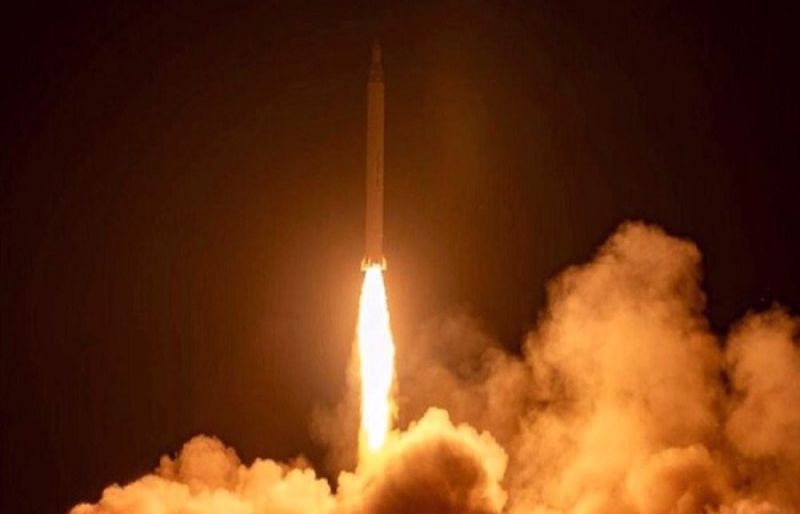

The Iranian armed forces have started a new wave of extensive drone and missile attacks on targets in the Israeli-occupied territories and US assets in regional countries.
A late Monday statement from the Islamic Revolution Guards Corps (IRGC) said that the 11th wave of offensive attacks under Operation True Promise 4 had been launched by the naval and aerospace units of the elite force.
The statement said the “extensive and high-density operation” had targeted American intelligence centers and military support warehouses in the Persian Gulf region, the Israeli communications industries complex in the occupied city of Beersheba, as well as 20 locations in the occupied regions of Tel Aviv, West al-Quds, and Galilee.
It said the “brave sons of Iran’s armed forces” had used more than 700 drones and hundreds of missiles to hit 60 strategic targets and 500 military locations linked to the United States and the Israeli regime since the start of the US-Israeli aggression on Iran on Saturday.
The statement said the number of missiles and drones and the success rate of the attacks had far outpaced records seen during the 12-day war with Israel and the US in June 2025.
The IRGC said recent “brutal and terrorist” attacks on Iran that targeted citizens in hospitals, schools, and offices of the national media service (IRIB) had further strengthened their resolve and determination to pursue an all-out war against the enemies.
The IRGC has been carrying out retaliatory attacks on US military assets across the region and on targets in the Israeli-occupied territories since Saturday, when the US and Israel started the unprovoked war of aggression against Iran and assassinated Leader of the Islamic Revolution Ayatollah Seyyed Ali Khamenei.
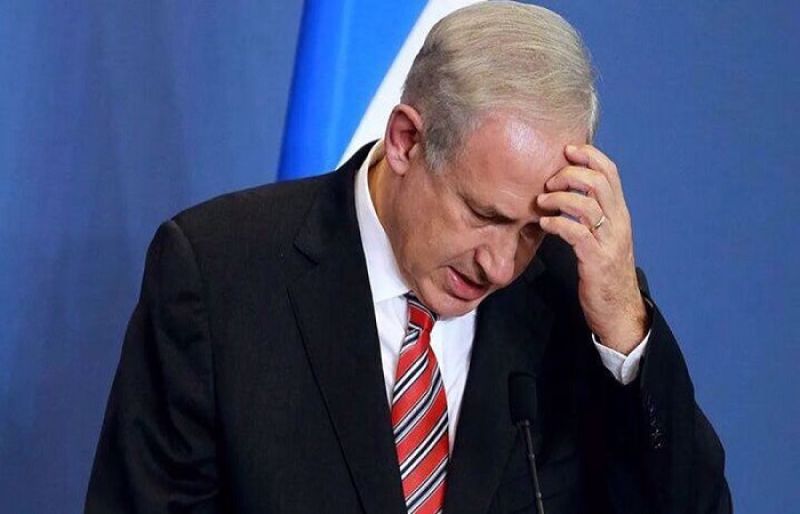

The Islamic Revolution Guards Corps (IRGC) says the fate of Israeli prime minister Benjamin Netanyahu is uncertain following “purposeful and surprise” attacks on his office and the residence of the regime’s air force commander.
In a statement on Monday, the IRGC said Iranian Armed Forces heavily attacked the office of Israel’s criminal prime minister and the residence of commander of the Israeli air force.
They were hit during “purposeful and surprise” attacks by Kheybar missiles, the elite force stated.
According to the statement, the 10th phase of Iran’s successful missile attacks on occupied territories focuses on the Israeli regime’s premises.
The IRGC said it would later announce the achievements of the attacks and provide further information.
The United States and Israel launched a joint war of aggression against Iran early on Saturday, assassinating Leader of the Islamic Revolution Ayatollah Seyyed Ali Khamenei and several senior military commanders before attacking military and civilian sites across the country.
Iranian armed forces have responded with massive missile and drone strikes, hitting strategic targets deep inside the Israeli-occupied territories as well as American military bases scattered across the region.
Iranian authorities say the retaliatory attacks will continue as long as necessary and that it will be the Islamic Republic that will decide when and how the war will end.
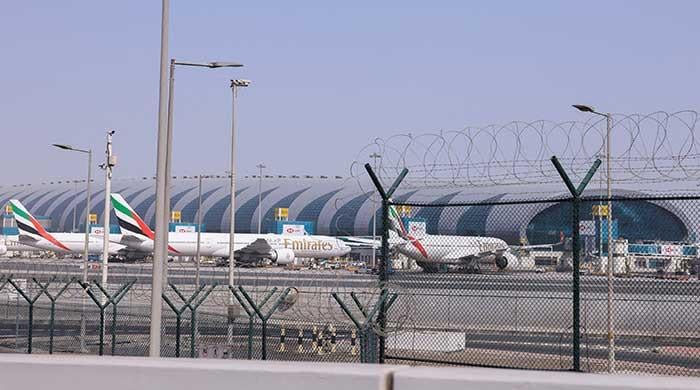
- Emirates, flydubai to restart limited flights from today.
- Etihad Airways announces resuming flights on Tuesday.
- Iran strikes targeted Gulf airports, airspace remains restricted.
Dubai Airports said “limited” flights would resume on Monday evening, three days after they were cancelled as Iran began striking targets in the Gulf, including Dubai and Abu Dhabi airports.
Global air travel remained in severe disarray since Sunday as sustained air strikes forced the closure of major Middle Eastern airports, including Dubai — the world’s busiest international transit hub — in one of the most significant aviation disruptions in recent years.
Transit gateways such as Dubai and Abu Dhabi in the United Arab Emirates, as well as Doha in Qatar, were either shut down or operating under heavy restrictions, with large sections of regional airspace closed.
The disruption followed US and Israeli strikes that reportedly killed Iranian Supreme Leader Ayatollah Ali Khamenei on Saturday, plunging the Gulf into heightened uncertainty.
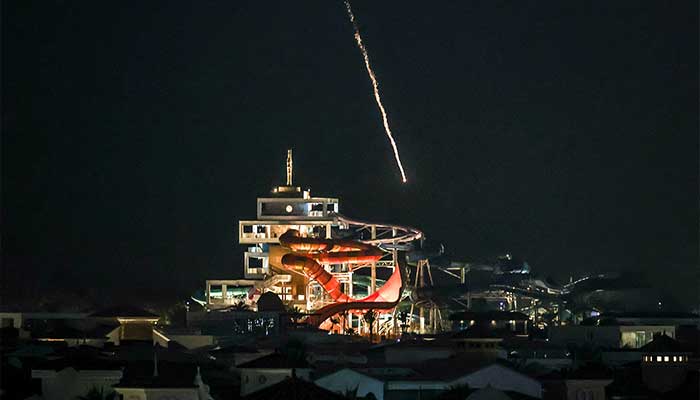
A fresh wave of attacks extended into a third consecutive day, deepening concerns over regional stability and prolonging the paralysis of air traffic.
“Dubai Airports announces a limited resumption of flights from Dubai International Airport (DXB) and Dubai World Central – Al Maktoum International Airport (DWC) starting this evening, Monday, March 2, 2026,” it said in a statement.
Emirates and low-cost carrier flydubai both said they would resume some flights on Monday evening.
In a post on X, Emirates, one of the UAE’s flag carriers, said it would prioritise passengers with existing bookings. Travellers rebooked on the limited services will be contacted directly by Emirates.
All other flights remain suspended until further notice, the airline said, urging passengers not to travel to the airport unless formally notified. It added that operations will be adjusted in line with developments on the ground.
Eihad Airways, which operates flights from Abu Dhabi, said it would resume flights on Tuesday.
Iran’s unprecedented bombardment in the Gulf states has hit military bases but also civilian infrastructure such as residential buildings, hotels, airports and sea ports, rattling a region long seen as a refuge from Middle East conflict.
Since Iran launched its campaign on Saturday, Dubai, Abu Dhabi, Kuwait and Manama airports were targeted.
Authorities reported one death in the Emirati capital Abu Dhabi in the “incident” at the facility.
On Saturday, the UAE announced it had closed its airspace “temporarily and partially” as an exceptional precautionary measure.
Dubai’s main airport (DXB) ranks as the second-busiest worldwide, behind Atlanta in the United States, according to Airports Council International.
The airspace closures hit a vital sector for the city, with Dubai’s air industry accounting for about a third of the emirate’s economy.


Travel stocks fall after thousands of flights grounded following Iran strikes

Trump’s neck rash sparks fresh health questions

MLS Power Rankings: Miami surge after comeback win

-
 Business6 days ago
Households set for lower energy bills amid price cap shake-up
-
 Entertainment1 week ago
Talking minerals and megawatts
-
 Business6 days ago
Lucid widely misses earnings expectations, forecasts continued EV growth in 2026
-

 Entertainment1 week ago
Hailee Steinfeld shares big life update amid excitement for baby’s arrival
-

 Politics1 week ago
Supreme Court ruling angers Trump: Global tariffs to rise from 10% to 15%
-

 Sports1 week ago
South Africa thrash India by 76 runs in T20 World Cup Super 8 – SUCH TV
-
 Business1 week ago
Haryana Govt bars IDFC First Bank, AU Small Finance Bank over alleged Rs 590 crore fraud
-

 Sports7 days ago
Top 50 USMNT players of 2026, ranked by club form: USMNT Player Performance Index returns