

Business
India eases FDI rules for firms with up to 10% Chinese shareholding – The Times of India

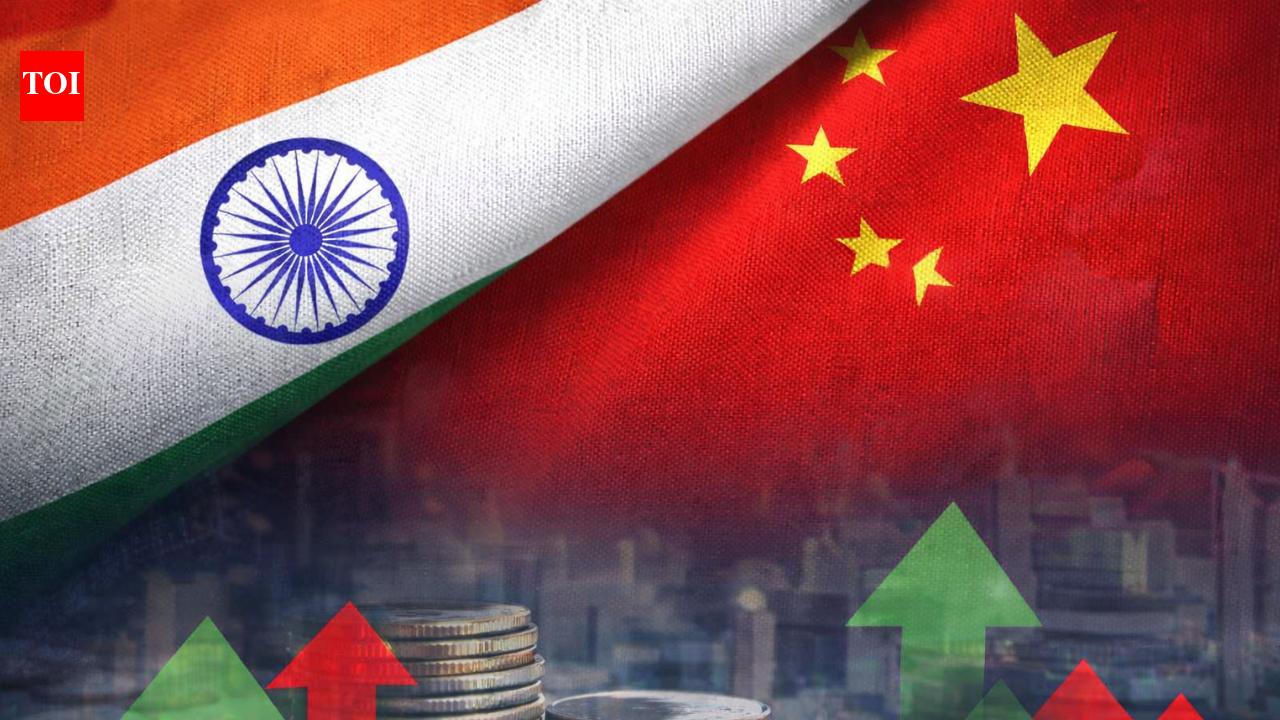
The Department for Promotion of Industry and Internal Trade (DPIIT) on Monday notified changes in the foreign direct investment (FDI) policy to permit overseas companies with Chinese shareholding of up to 10 per cent to invest in India through the automatic route, subject to sectoral limits and conditions, PTI reported.However, the relaxation will not apply to entities incorporated in China, Hong Kong or other countries sharing land borders with India. Earlier, foreign firms with even a single shareholding link to such nations were required to seek mandatory government approval for investments across sectors.A DPIIT notification said, “The expression ‘beneficial owner’ of an investment in India will mean the beneficial owner of the investor entity incorporated or registered in a country other than a country which shares a land border with India”.The term will carry the same meaning as defined under Section 2(1)(fa) of the Prevention of Money-laundering Act (PMLA), 2002. Under PMLA rules, controlling ownership interest refers to entitlement to more than 10 per cent of shares, capital or profits in a company.The revised rules also mandate that investments from entities having any direct or indirect ownership link with citizens or firms from land-bordering nations — and not requiring prior approval — will have to follow additional reporting requirements under the standard operating procedure prescribed by DPIIT.The decision to ease the norms was cleared by the Union Cabinet last week. The government had earlier tightened the FDI policy through Press Note 3 (2020) on April 17, 2020, to prevent opportunistic takeovers of Indian companies during the Covid-19 pandemic.Under that framework, investments from entities in countries sharing land borders with India, or where the beneficial owner was situated in such nations, required prior government approval. This was seen as affecting investment flows, particularly from global private equity and venture capital funds with minority Chinese or Hong Kong shareholding.DPIIT has also indicated that proposals for FDI from these countries in specified sectors will be considered under an expedited approval mechanism with a 60-day timeline.Countries sharing land borders with India include China, Bangladesh, Pakistan, Bhutan, Nepal, Myanmar and Afghanistan.China currently ranks 23rd in FDI equity inflows into India, accounting for 0.32 per cent share, or USD 2.51 billion, between April 2000 and December 2025.

Annual earnings grew at an annual rate of 3.8% in the November to January period, the Office for National Statistics says.
Source link

The scheme provides £500 to support low-income families welcoming a new baby in the London borough.
Source link

Electricity consumers could see higher power bills as early as April after utilities asked the country’s energy regulator Monday to approve an additional charge of Rs1.64 per unit.
The charge is meant to recover fuel costs that ran significantly above what customers were billed in February 2026, The News reported.
The Central Power Purchasing Agency (CPPA-G), acting on behalf of ex-Wapda distribution companies, filed the request with the National Electric Power Regulatory Authority (Nepra).
In its request, the CPPA-G cited a gap between the reference fuel cost of Rs6.73 per unit built into February bills and the actual cost of Rs8.37 per unit, a shortfall of nearly 25%.
The surcharge, if approved, would apply to K-Electric consumers as well.
Total power generation in February reached 7,696 gigawatt-hours (GWh) at a cost of Rs62.75 billion, or roughly Rs8.15 per unit.

Pay grows at slowest rate in more than five years

Burberry marks Queen Elizabeth II birth centenary with capsule

Messi scores 900th career goal, joins Ronaldo in elite club

Stock market crash today (March 12, 2026): Nifty50 opens below 23,600; BSE Sensex down over 900 points on continuing US-Iran war – The Times of India

UK’s Topshop unveils Tolu Coker capsule collection

What time will NASA’s 600 kg satellite crash to Earth today— 14 years after launch?

-
Business1 week ago
Stock market crash today (March 12, 2026): Nifty50 opens below 23,600; BSE Sensex down over 900 points on continuing US-Iran war – The Times of India
-
 Fashion1 week ago
UK’s Topshop unveils Tolu Coker capsule collection
-
 Entertainment1 week ago
What time will NASA’s 600 kg satellite crash to Earth today— 14 years after launch?
-

 Fashion1 week ago
India’s textile recycling market may reach $3.5 bn by 2030: Report
-
 Tech1 week ago
Meta Developed 4 New Chips to Power Its AI and Recommendation Systems
-
 Business1 week ago
US ignites Iran war, but Gulf Arab states pay the price | The Express Tribune
-

 Entertainment1 week ago
Gas, food, household prices explained
-

 Tech1 week ago
I Used Google’s New Gemini-Powered ‘Help Me Create’ Tool in Docs. It’s Great at Corporate-Speak