

Business
India eases FDI rules for firms with up to 10% Chinese shareholding – The Times of India

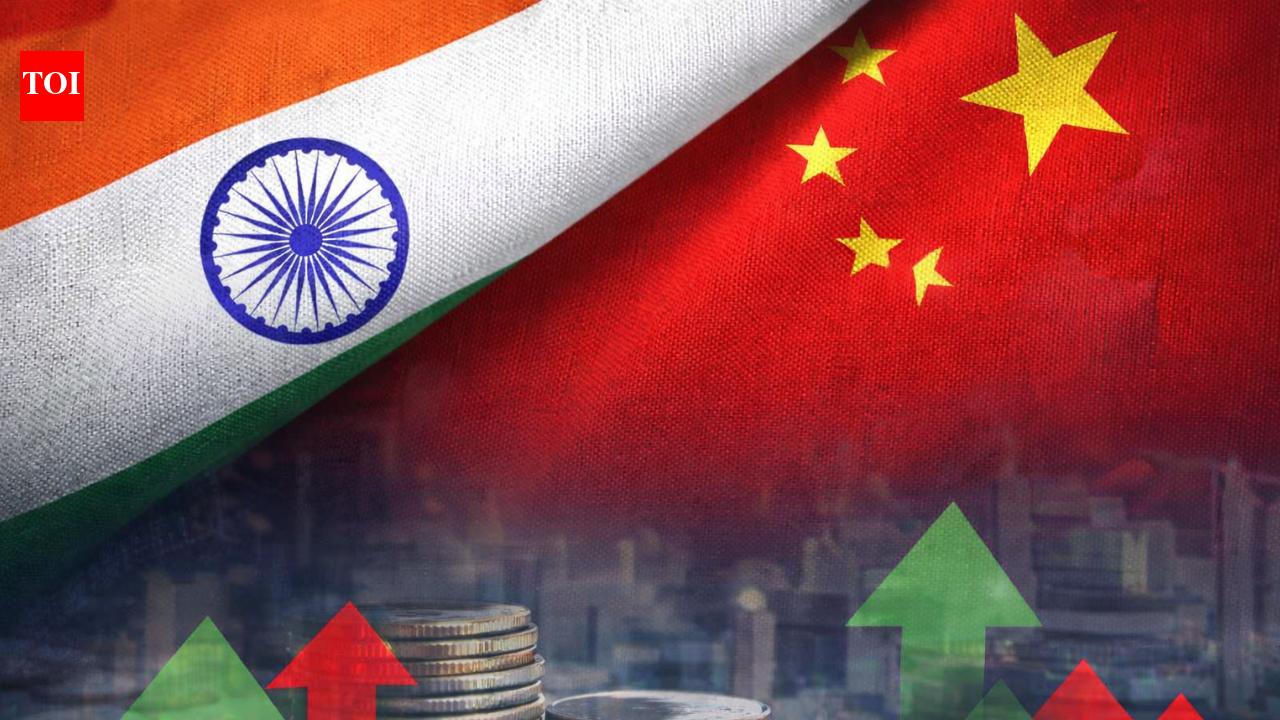
The Department for Promotion of Industry and Internal Trade (DPIIT) on Monday notified changes in the foreign direct investment (FDI) policy to permit overseas companies with Chinese shareholding of up to 10 per cent to invest in India through the automatic route, subject to sectoral limits and conditions, PTI reported.However, the relaxation will not apply to entities incorporated in China, Hong Kong or other countries sharing land borders with India. Earlier, foreign firms with even a single shareholding link to such nations were required to seek mandatory government approval for investments across sectors.A DPIIT notification said, “The expression ‘beneficial owner’ of an investment in India will mean the beneficial owner of the investor entity incorporated or registered in a country other than a country which shares a land border with India”.The term will carry the same meaning as defined under Section 2(1)(fa) of the Prevention of Money-laundering Act (PMLA), 2002. Under PMLA rules, controlling ownership interest refers to entitlement to more than 10 per cent of shares, capital or profits in a company.The revised rules also mandate that investments from entities having any direct or indirect ownership link with citizens or firms from land-bordering nations — and not requiring prior approval — will have to follow additional reporting requirements under the standard operating procedure prescribed by DPIIT.The decision to ease the norms was cleared by the Union Cabinet last week. The government had earlier tightened the FDI policy through Press Note 3 (2020) on April 17, 2020, to prevent opportunistic takeovers of Indian companies during the Covid-19 pandemic.Under that framework, investments from entities in countries sharing land borders with India, or where the beneficial owner was situated in such nations, required prior government approval. This was seen as affecting investment flows, particularly from global private equity and venture capital funds with minority Chinese or Hong Kong shareholding.DPIIT has also indicated that proposals for FDI from these countries in specified sectors will be considered under an expedited approval mechanism with a 60-day timeline.Countries sharing land borders with India include China, Bangladesh, Pakistan, Bhutan, Nepal, Myanmar and Afghanistan.China currently ranks 23rd in FDI equity inflows into India, accounting for 0.32 per cent share, or USD 2.51 billion, between April 2000 and December 2025.

Ben Johns comes over to the right side to hit a dink shot against Anna Bright and Hayden Patriquine in the 2026 PPA Carvana Mesa Cup finals match of the Pro Mixed Doubles Division at Arizona Athletic Grounds on February 22, 2026 in Mesa, Arizona.
Bruce Yeung | Getty Images
Pickleball Inc., the new parent company of Major League Pickleball and the PPA Tour, said Friday it has raised a record $225 million in new investment, as the paddle sport continues its rapid growth trajectory.
The latest investment comes from Apollo Global Management’s newly created sports fund, Apollo Sports Capital, and Dundon Capital Partners, owned by billionaire Tom Dundon. Dundon is an owner of the Portland Trail Blazers NBA team and the Carolina Hurricanes NHL team and was an early investor in pickleball.
The fresh funds bring the total investment in Pickleball Inc. to $315 million, as investors continue to look at emerging sports as a place to park their money. The raise values Pickleball Inc. at $750 million, according to a person familiar with the matter, who asked to remain unnamed because they were not authorized to speak publicly about the company’s valuation.
The deal also includes rolling up several pickleball assets under the Pickleball Inc. umbrella, creating what the company called the largest pickleball ecosystem to date.
Pickleball Inc. will take on a portfolio of pickleball assets previously owned by Dundon, including Pickleball Central, a leading site for pickleball equipment founded in 2006. The portfolio also includes PickleballTournaments.com, software that powers thousands of tournaments across all levels of play, as well as Just Courts, a pickleball court installer.
Pickleball Inc.’s newly merged business verticals combined generated over $140 million in 2025 revenue, the company said.
In a release, MLP and PPA Tour CEO Connor Pardoe called the new investment a “seismic day” for pickleball’s rapidly growing business at all levels.
“This investment allows us to fully integrate the sport into one cohesive ecosystem – uniting professional pickleball, consumer goods, technology, and media under a single, unified platform,” Pardoe said.
Dundon and the Pardoe family will remain majority shareholders in the business after the investment.
Pickleball has exploded in popularity in recent years, with more than 24 million U.S. players participating in 2025, making it the fastest growing sport in the country over the last three years, according to the Sports & Fitness Industry Association’s Annual Report.
At the professional level, the MLP and PPA Tour have seen major growth with a combined $30 million in sponsorship revenue in 2025 and $60 million in combined top line revenue for 2025, according to the United Pickleball Association, which operates both leagues. The MLP and PPA Tour are projecting $74 million in combined revenue in 2026.
The new capital for Pickleball Inc. will be used to further integrate the pickleball business at all levels of play and create a streamlined pickleball ecosystem, the company said.
“This capital raise will allow us to expand our focus into new and scalable opportunities like content, media, and the development of infrastructure to support our fast growing events,” MLP Commissioner Samin Odhwani said in a statement. “The continued and dynamic year-over-year growth data has proven without doubt that pickleball is no longer an emerging sport, and is instead quickly becoming the next tier one sport in America.”
Business
Gross GST collections hit record high of Rs 2.43 lakh crore in April 2026 despite US-Iran war concerns – The Times of India

GST collections: The gross Goods and Services Tax (GST) collections touched a new high in April, reflecting continued strength in economic activity even in the midst of the ongoing Middle East conflict.According to government data released on Friday, gross GST revenue for the month reached a record Rs 2.43 lakh crore, registering an 8.7% increase over Rs 2.23 lakh crore collected in April last year.After accounting for refunds, net GST collections stood at Rs 2.11 lakh crore, up 7.3% from the corresponding period a year earlier.Refund disbursements during the month rose sharply, climbing 19.3% year-on-year to Rs 31,793 crore.As a result, net GST revenue for April 2026 came in at Rs 2,10,909 crore.Robust revenues from imports played a major role in driving GST collections during the month. Gross receipts from imports climbed sharply by 25.8% to Rs 57,580 crore, while gross domestic GST collections recorded a comparatively moderate increase of 4.3%, reaching Rs 1.85 lakh crore.The net GST revenue from imports surged 42.9%, significantly outpacing the marginal 0.3% rise in net domestic collections.The April performance follows a strong showing in March, when net GST collections stood at Rs 1.78 lakh crore, up 8.2% from a year earlier. Gross collections in that month had also crossed the Rs 2 lakh crore mark.For the full financial year 2025-26, gross GST revenue increased 8.3% year-on-year to Rs 22.27 lakh crore. Net GST collections for the year rose 7.1% to Rs 19.34 lakh crore.Major contributors such as Maharashtra, Karnataka and Gujarat continued to account for a substantial share of total collections.

NEW DELHI: Government on Friday increased the price Aviation Turbine Fuel for international airlines by 5 per cent.This is the second straight monthly rise amid the global energy crisis.However, there is no change in the ATF price for domestic airlines.ATF prices have been increased by USD 76.55 per kilolitre, or 5.33 per cent, to USD 1511.86 per kl in Delhi, home, according to state-owned oil firms.Under this mechanism, foreign airlines and other carriers will pay market-linked rates, while prices for domestic airlines have been moderated, new agency PTI reported, citing sources.Earlier on April 1, rates for domestic airlines were hiked by 25 per cent to Rs 104,927.18 per kl.Jet fuel prices were deregulated more than two decades ago and have since been linked to international benchmark rates under a written understanding with airlines.However, a surge in global energy prices triggered by the West Asia crisis led to what sources described as the steepest-ever hike in ATF rates, prompting the government and state-run oil companies to take a calibrated approach.Jet fuel prices were deregulated more than two decades ago and have since been linked to international benchmark rates under a written understanding with airlines.


US’ Gap partners with Victoria Beckham on timeless wardrobe essentials

Graduation Gifts That Aren’t Totally Cringe

Canada’s Lululemon appoints Esi Eggleston Bracey to board of directors

-

 Sports1 week ago
PSL 11: Hyderabad Kingsmen opt to field after winning toss against Multan Sultans
-
 Business1 week ago
Trump administration in advanced talks for a rescue package for Spirit Airlines, source says
-

 Entertainment1 week ago
Anne Hathaway shares major news about ‘Princess Diaries 3’
-
 Business1 week ago
Gold prices in Pakistan Today – April 23, 2026 | The Express Tribune
-

 Fashion1 week ago
Canada forms new advisory committee to strengthen US trade relations
-

 Entertainment1 week ago
Mike Vrabel to miss Patriots’ final NFL draft day —here’s why
-
 Business1 week ago
Oil surges past 4% as Iran keeps Hormuz locked – SUCH TV
-

 Fashion1 week ago
US CBP to soon launch electronic system for importers to claim refunds