

Business
Stocks and pound rise as US rate call approaches


Stock prices in London closed higher on Tuesday, as uncertainty surrounding the Middle East conflict continued.
The UK should follow more of the EU’s rules to boost trade and cut prices, Chancellor Rachel Reeves has said.
She warned the UK risked being “stranded” between rival trading blocs unless it sought a closer relationship with Brussels.
She said the UK would still diverge from the EU’s regulations in some areas but they would be “the exception, not the norm”.
The Chancellor, delivering the annual Mais Lecture at the Bayes Business School in London, put greater economic co-operation with Europe at the centre of her plan to kickstart the UK’s weak growth.
“The prize is considerable,” Ms Reeves said, claiming closer alignment would help bring down prices and inflation.
Brexit had created “profound uncertainty” and left the UK facing the risk of being “stranded between powerful trading blocs as globalisation retreats”, she said.
“Our fate as a country is inescapably bound with that of Europe,” the Chancellor added.
Setting out the “deep damage” of Brexit, Ms Reeves said it had hit gross domestic product – a measure of the size of the economy – by up to 8% and contributed to higher prices for businesses and consumers.
Meanwhile, the number of companies in the UK collapsing into administration jumped by nearly a third last month, official figures have shown.
The Insolvency Service said company administrations rose 30% year on year in February to 146.
Overall, company insolvencies across the board were 7% higher when compared with January, at 1,878, but were 7% lower on an annual basis.
Fears are mounting that the cost shock being caused by the Iran conflict and rocketing oil prices could push company failures even higher, the Press Association reported, with inflation set to rise once more and interest rates now expected to stay higher for longer.
However, Prime Minister Sir Keir Starmer has told his ministers that Britain is better placed to handle the impact of the Iran war thanks to the Chancellor.
Downing Street said he had praised Rachel Reeves at the start of the weekly cabinet meeting, after she told ministers their work had “put the Government in a better place to weather a storm”.
Sir Keir’s official spokesman said Ms Reeves had told the cabinet that “the Government had to govern for the world as it was, not as we would like it to be”.
The FTSE 100 index closed up 85.91 points, 0.8% at 10,403.60. The FTSE 250 was up 158.43 points, 0.7%, at 22,180.90, and the AIM all-share was up 5.88 points, 0.8%, at 760.14.
Brent oil was quoted at 101.95 US dollars a barrel at the time of the London equities close on Tuesday, down from 102.83 dollars late on Monday. However, Shell was up 1.7% on the FTSE 100, and BP was close behind with a 1.5% rise.
The Revacy Fund’s Zaheer Anwari said: “From a technical perspective, while oil prices have been edging up since December 2025, caution is important as risks remain, unless a sustained trend above 100 dollars is confirmed.
“Meanwhile, the trend could remain bullish overall, leaving short bets at risk.
“As a result, traders could continue to monitor the developments in the Middle East and their impact on inflation expectations. Plans to put in place military escorts for oil tankers in the Strait of Hormuz could drive oil, the dollar, and yields down if they materialise.”
Telecommunications firms performed well, with Airtel Africa up 2.7% and BT up 2.5% on the FTSE 100, after UK regulator Ofcom said it will cap the price that BT subsidiary Openreach can charge retailers to access its 80 megabit-per-second broadband network.
The change, which will take effect on April 1 and last until 2031, comes at the end of a consultation on broadband pricing and infrastructure access, which began in October.
The regulatory changes also include quality of service protections surrounding speed and repairs in less populated areas of the UK, as well as flexibility for Openreach to move customers to its full-fibre networks as it gradually phases out the legacy telephone exchanges running on copper wires.
Meanwhile, on the FTSE 250, Wickes rose 3.0%.
The home improvement retailer reported that its pretax profit more than doubled to £48.7 million for the financial year that ended December 27, while revenue grew 5.9% to £1.64 billion, although its final and total dividends were flat at 7.3 pence and 10.9p, respectively.
The company also announced a new £10 million buyback programme, following the completion of its £20 million scheme in December.
“To beat profit forecasts when the going is good is one thing, to do it when market conditions are more volatile is another, which suggests Wickes has sharpened its proposition,” AJ Bell’s Dan Coatsworth commented.
“Shareholders will be encouraged to see accelerated investment in the business – with management clearly not resting on their laurels.
In small caps, BSF Enterprise closed up 54%.
The London-based biotech company’s subsidiary Lab-Grown Leather has successfully tanned scaffold-free, cultivated skin in A4-sized sheets, it said, in a “critical step” toward large-scale commercialisation of sustainable luxury and ultra-luxury materials.
PYX Resources fell 44%.
The Indonesia-focused zircon and mineral sands producer’s shares have been suspended from trading in Australia, after it was unable to lodge its 2025 financial statements on time.
The pound was quoted higher at 1.3345 dollars at the time of the London equities close on Tuesday, compared to 1.3293 dollars on Monday.
The euro stood at 1.1531 dollars, higher against 1.1480 dollars. Against the yen, the dollar was trading lower at 159.01 yen compared to 159.34 yen.
In European equities on Tuesday, the CAC 40 in Paris closed up 0.5%, while the DAX 40 in Frankfurt ended up 0.7%.
The US has provided clarity on its trade policy and can expect progress on implementing a tariff agreement with the EU, European Parliament President Roberta Metsola said on Tuesday.
“[The European] Parliament will vote on the EU-US trade deal later this month” after the US provided “clarifications” on its trade policy, Ms Metsola told a conference hosted by four major German news outlets in Berlin.
After US President Donald Trump began slapping tariffs on most trading partners last year, the EU negotiated a trade deal that limited duties on most imports from the bloc to 15%. In return, the EU promised to allow duty-free imports of US industrial goods.
But the deal was put on ice after the European Parliament delayed voting on its implementation in February, after a US Supreme Court ruling that declared the legal basis used for many of Mr Trump’s tariffs invalid.
Stocks in New York were higher. The Dow Jones Industrial Average was up 0.3%, the S&P 500 index up 0.3%, and the Nasdaq Composite up 0.4%.
US pending home sales rose modestly in February, supported by improved affordability, though activity remained slightly lower than a year earlier, data from the National Association of Realtors showed.
The pending home sales index rose 1.8% month on month in February, reversing a 1.0% decline in January and beating FXStreet-cited consensus expectations for a 0.5% fall. Compared with a year earlier, the index was down 0.8%.
The yield on the US 10-year Treasury was quoted at 4.20%, narrowing from 4.24%. The yield on the US 30-year Treasury was quoted at 4.85%, narrowing from 4.88%.
Gold was quoted higher at 4,994.57 dollars an ounce against 4,983.55 dollars.
“Gold edged higher on Tuesday, but remained close to its weakest level in nearly a month,” said FXEM’s Abdelaziz Albogdady.
“The metal continued to face the impact of the geopolitical developments in the Middle East. Elevated crude prices, increasing inflation concerns and the subsequent increase in Treasury yields could continue to weigh on gold.
“Markets are also turning to the Federal Reserve’s decision tomorrow. The institution is expected to keep interest rates unchanged, but any hawkish indication regarding how long policy may remain on hold could lift yields and the dollar, creating additional headwind.
“However, downside risks could remain limited due to the safe-haven demand amid continued tensions in eastern Europe and the ongoing purchases from central banks around the world.”
The biggest risers on the FTSE 100 were Standard Chartered, up 53.5p at 1,603.5p, 3i, up 85.0p at 3,020.0p, Airtel Africa, up 9.7p at 368.7p, BT, up 5.4p at 220.0p, and Haleon, up 9.3p at 395.0p.
The biggest fallers on the FTSE 100 were Imperial Brands, down 39.0p at 3,215.0p, Compass, down 24.0p at 2,267.0p, Reckitt Benckiser, down 54.0p at 5,430.0p, GSK, down 12.4p at 2,013.5p, and British American Tobacco, down 28.0p at 4,544.0p.
On Wednesday’s economic calendar, the US has its interest rate call, as well as producer inflation and factory orders. Canada also has its rate decision, and the eurozone has consumer inflation.
On Wednesday’s UK corporate calendar, Moonpig has a trading update and there are annual results from Softcat, Beeks Financial, Advanced Medical Solutions and others.
Contributed by Alliance News.

Two ads promoting British beef and milk have been banned after television presenter and environmental campaigner Chris Packham complained that they misled consumers about the products’ carbon footprints.
Both ads for the Agriculture and Horticulture Development Board’s (AHDB) Let’s Eat Balanced campaign used the carbon footprint of British beef and milk to promote the products, firstly stating: “British beef not only tastes great, but has a carbon footprint that’s half the global average*.”
The asterisk linked to text that stated: “Full lifecycle emissions of CO2 eq (carbon dioxide equivalent) per kg of beef.”
The ad for milk stated: “British milk not only tastes good, but is also produced to world-class standards, and has a carbon footprint a third lower than the global average.”
Packham complained to the Advertising Standards Authority (ASA) that the ads, and specifically the carbon footprint claims, were misleading as they did not reflect the full environmental impact of British meat and dairy.
The AHDB said the ads’ mention of carbon emissions would be understood in relation to the environmental impact of beef and milk that occurred between the “cradle-to-retail” stages.
But the ASA said the average consumer “being reasonably well-informed, observant and circumspect” would understand the claims to apply beyond the retail stage and include actions such as cooking and wastage.
The ASA said: “While we acknowledged the potential difficulties in producing post-retail emissions data, the claims in the ads suggested those emissions were included and we therefore expected the evidence provided to also include them.
“We therefore concluded that the evidence presented was insufficient to support the full life-cycle claims in the ads, which was how the average consumer was likely to interpret them.
“We reminded AHDB that environmental claims should be based on the full life cycle unless the ad stated otherwise.”
AHDB’s director of communications and market development, Will Jackson, said: “Let’s Eat Balanced is doing what it was designed to do, providing clear, factual, evidence-led information about British food, nutrition and farming standards.
“Since the investigation began, we have conducted independent consumer research which found that the majority of respondents interpreted these adverts as relating to the production phase only, from farm to retail.
“This research provides important insight into consumer understanding and supports our belief that consumers were not misled by the information we shared in these two specific adverts.”

BENGALURU: India’s Gen Z workforce is embracing what experts describe as “portfolio careers” – balancing multiple professional identities and income streams simultaneously. New research from LinkedIn shows that 75% of Gen Z entrepreneurs in India now manage multiple income streams, significantly higher than the 62% among Gen X entrepreneurs. The findings point to a growing preference among younger professionals for flexibility, autonomy and diversified sources of income. “We’re also seeing the rise of the ‘portfolio era’, with more professionals creating multiple income streams and redefining what a career can look like. This shift is making entrepreneurship more accessible than ever before,” said LinkedIn India country manager Kumaresh Pattabiraman.Rather than depending on a single full-time role, many professionals are simultaneously building businesses, freelancing, consulting, creating online content and monetising specialised skills through digital platforms. The trend comes amid a broader rise in entrepreneurial activity in India. LinkedIn recorded a 104% year-on-year increase in members adding “Founder” to their profiles – the highest growth among all global markets.AI is also emerging as a major enabler of this shift. The report found that 85% of Gen Z entrepreneurs consider AI and digital tools important to their business operations.
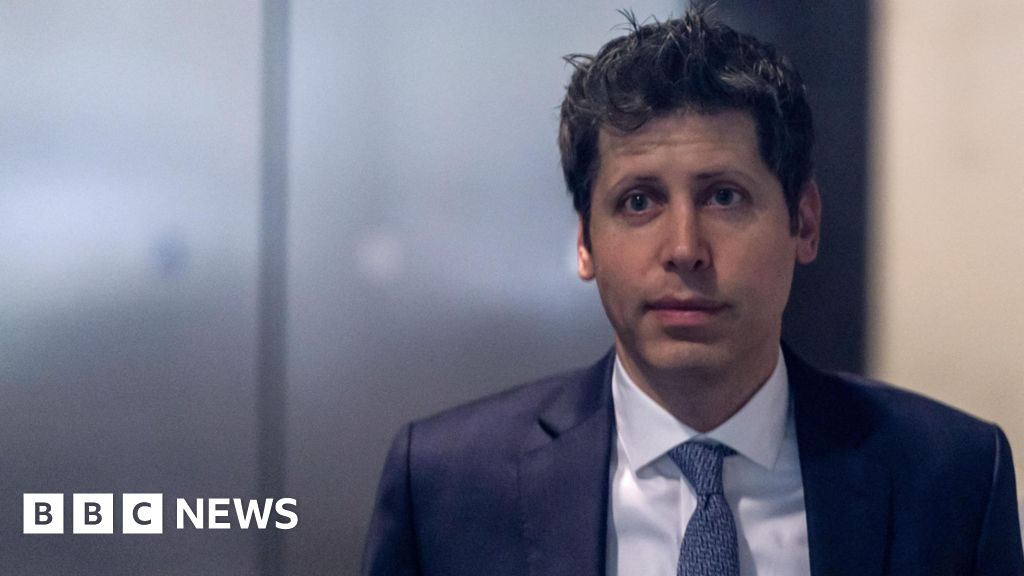
Sam Altman said Elon Musk tried many times for total control of OpenAI, which he’s now suing.
Source link


Will LeBron James retire after current season?

South Korea reviews phased support for Strait of Hormuz security efforts

New Jersey Gov. Mikie Sherrill announces another NJ Transit World Cup ticket cut days after first reduction

-

 Tech1 week ago
DHS Demanded Google Surrender Data on Canadian’s Activity, Location Over Anti-ICE Posts
-
 Business1 week ago
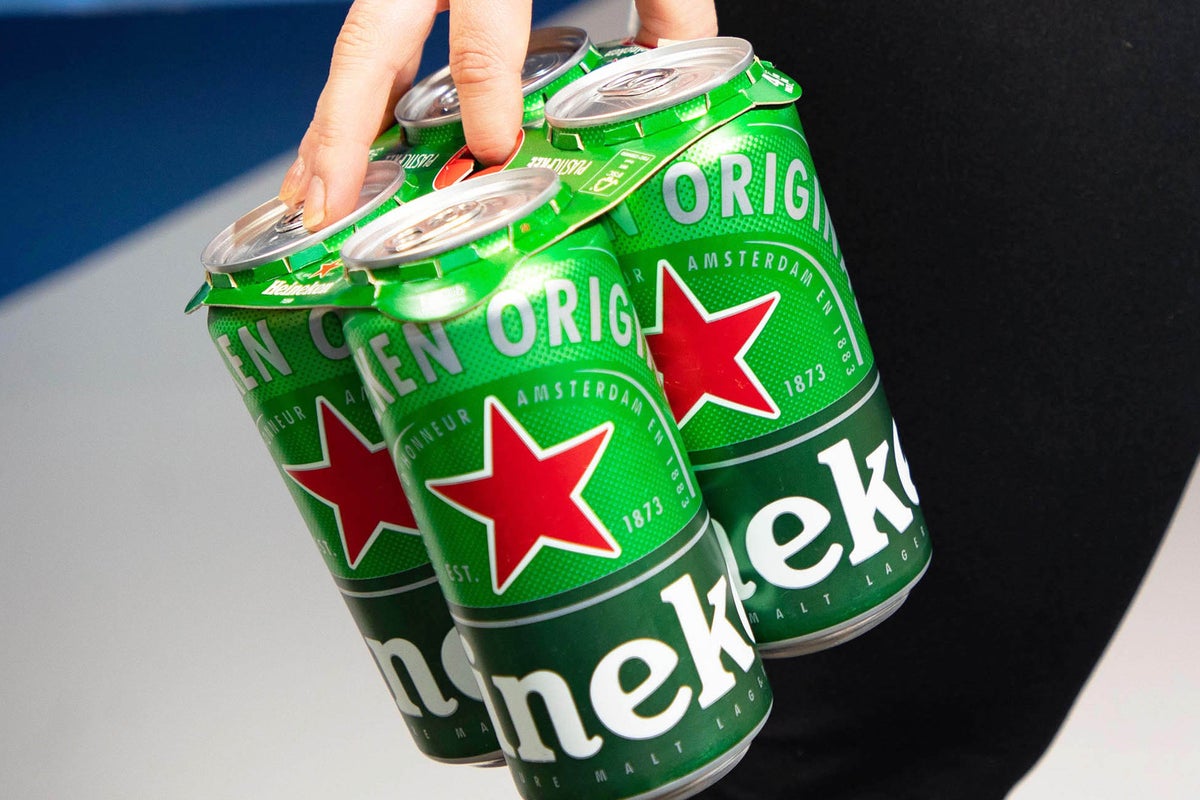
Heineken plans huge investment in hundreds of UK pubs ahead of World Cup
-

 Tech5 days ago
A new frontier: Identity stack evolves for agentic systems | Computer Weekly
-

 Tech4 days ago
‘Orbs,’ ‘Saucers,’ and ‘Flashes’ on the Moon: Pentagon Drops New UFO Files
-
 Business1 week ago
India among most resilient large EMs, better placed for future global shocks; policy reforms & strong buffers help: Moody’s – The Times of India
-
 Fashion5 days ago
New orders in German manufacturing up 5% MoM in Mar 2026: Destatis
-

 Tech5 days ago
What Microsoft Executives Really Thought About OpenAI in 2018
-

 Sports5 days ago
Shaheen Afridi achieves landmark feat during opening Test against Bangladesh