

Business
More fuel-saving measures likely amid unstable Middle East situation: committee told | The Express Tribune

Government urges public to save petrol and diesel to avoid possible disruption in fuel availability in coming days
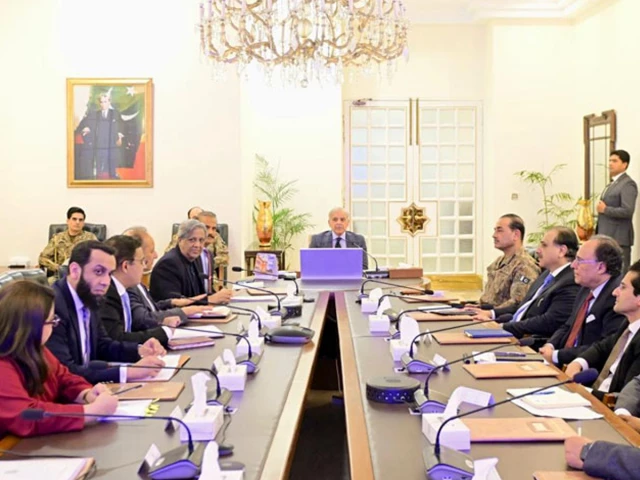
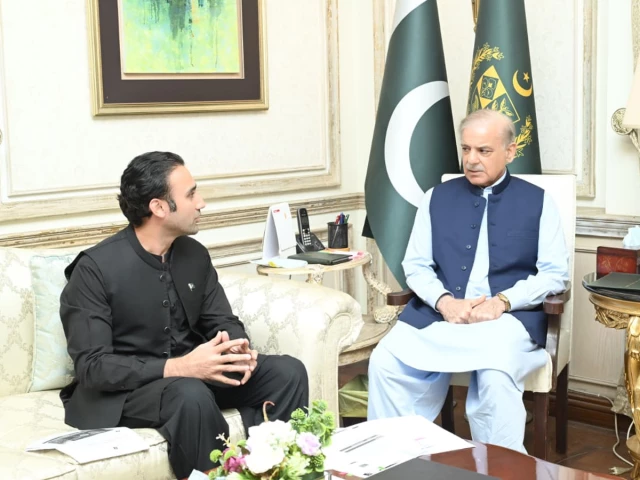
Prime Minister Shehbaz Sharif chairs a meeting in Islamabad to discuss the implementation of fuel-saving and austerity measures. Photo: APP
The government’s fuel conservation and austerity committee was informed on Thursday that further measures would have to be taken in the coming days to deal with the crisis arising from the unstable situation in the Middle East and its impact on fuel supply lines.
On March 6, the government sharply increased petrol and diesel prices by Rs55 per litre, or 20%, marking the first in a series of hikes expected in the coming days due to the ongoing US-Israel and Iran conflict. The war has disrupted supply chains and pushed crude oil prices to their highest level in two years.
Both federal and provincial governments have since introduced a range of austerity steps, including an additional weekly holiday, cutting free petrol allocations for ministers, limiting protocol vehicles, and proposing subsidised fuel for students
Read: PM Shehbaz says petroleum prices to remain unchanged despite increase in int’l market
The prime minister chaired a high-level meeting today to assess the economic situation and availability of petroleum products in the country due to the Gulf situation.
A post on X by state broadcaster PTV News said the meeting’s members were informed the following: “In view of the unstable situation in the Middle East and the region, which could severely impact fuel supplies, further conservation measures will need to be taken in the coming days.”
وزیراعظم محمد شہباز شریف کی زیر صدارت خطے کی تیزی سے بگڑتی ہوئی صورتحال کے پیش نظر ایندھن کی بچت اور کفایت شعاری کے اقدامات کے نفاذ پر جائزہ اجلاس
اجلاس کو ملکی موجودہ ذخائر، کھپت اور کارگوز پر بریفنگ.
اجلاس کو بتایا گیا کہ ملکی ضروریات کو پورا کرنے کیلئے پیٹرولیم مصنوعات کا… pic.twitter.com/38Uoe3SCzO
— PTV News (@PTVNewsOfficial) March 19, 2026
The meeting’s members were informed that adequate petroleum product reserves were available to meet national requirements, with further arrangements being made. They were further told that the arrangements were made possible due to the prime minister’s timely practical measures and directives.
The participants were also told that “the entire situation is being monitored, and records of petroleum products are being maintained, so that any irregularity can be immediately identified and corrective measures taken.”
The government appealed to the public to adopt measures to save petrol and diesel in order to avoid the risk of petroleum product availability being affected in the coming days.
“It will be necessary to remain prepared for every possible situation and adopt a course of action in accordance with changing circumstances,” the post quoted the meeting’s communique as saying.
Also Read: Govt expands austerity drive as fuel prices rise and global oil markets turn volatile
It further recommended that carpooling should be adopted to save fuel and called for collective transportation. “Unnecessary travel should be avoided and movement should be restricted to save oil,” it added.
The meeting’s members were also informed about the progress on the implementation of austerity and conservation measures, including the fact that implementation of the directives issued by the premier was being ensured, with monitoring being carried out by the Intelligence Bureau.
In his remarks, the prime minister said all relevant departments should remain prepared for emergency measures until the situation improved.
“By adopting a policy of conservation and austerity, it has become possible to provide relief to the public,” he said. The premier also directed that a comprehensive plan should be formulated to address any emergency in coordination with the provinces.
The meeting was also attended by Chief of Defence Forces and Chief of the Army Staff Field Marshal Asim Munir, National Security Adviser Lieutenant General Muhammad Asim Malik, federal ministers and senior government officials.
The steep rise in fuel prices has intensified the cost of living, with citizens reporting increased transport fares and rising prices of essential goods.
Two days after the price hike, Prime Minister Shehbaz Sharif, while announcing austerity measures in response to the Middle East crisis, had acknowledged that international petrol prices were expected to rise further but assured that the government would try to shield the public from the full impact.
As part of austerity measures, the federal government has cancelled the Pakistan Day parade scheduled for March 23, citing the ongoing oil crisis.
Earlier this week, the secretary of petroleum informed the Senate Standing Committee on Petroleum that Pakistan currently holds crude oil reserves sufficient for 11 days, diesel for 21 days, petrol for 27 days, LPG for nine days, and jet fuel for 14 days.





Heineken has announced a substantial investment exceeding £44 million into hundreds of its pubs across the UK, a move expected to create approximately 850 jobs.
The Dutch brewing giant’s Star Pubs operation, which manages 2,350 sites nationwide, is undertaking this significant financial commitment despite a challenging period for the pub sector.
The industry has faced considerable pressure over the past year, grappling with escalating labour costs and increases in national insurance contributions.
Concurrently, consumer spending has been constrained by concerns over inflation and rising unemployment, further impacting pub revenues. However, pubs did receive additional business rates support from the government last month, aimed at alleviating some of these financial burdens.
Lawson Mountstevens, managing director of Star Pubs, indicated that the investment strategy is partly designed to bolster revenues and help the group navigate the recent “sustained increases in running costs”.
This year, £44.5 million will be allocated to upgrades for 647 pubs. A notable 108 of these venues are earmarked for particularly significant cash injections, with each transformation costing at least £145,000.
Heineken clarified that while the majority of its pubs are group-owned, they are independently operated by local licensees. A key focus for this investment, particularly in the lead-up to the 2026 football World Cup, will be on sports-focused venues.
The pub firm and brewer has a history of significant investment in British pubs, having pumped £328 million into the sector since 2018. Work has already commenced at 52 locations, including eight projects dedicated to reopening boarded-up pubs that have endured lengthy closures.
Mr Mountstevens also urged the government to reduce the tax burden on pubs, arguing it would ease cost pressures and foster further job creation within the industry.
He stated: “We can only do so much; the root-and-branch reform of business rates that the industry has been calling for over many years is urgently required, as well as a lowering of the burden of taxation on pubs, including VAT and beer duty.”
He concluded with a direct appeal: “We are calling on the Government to support us in bringing out the best in the Great British pub.”
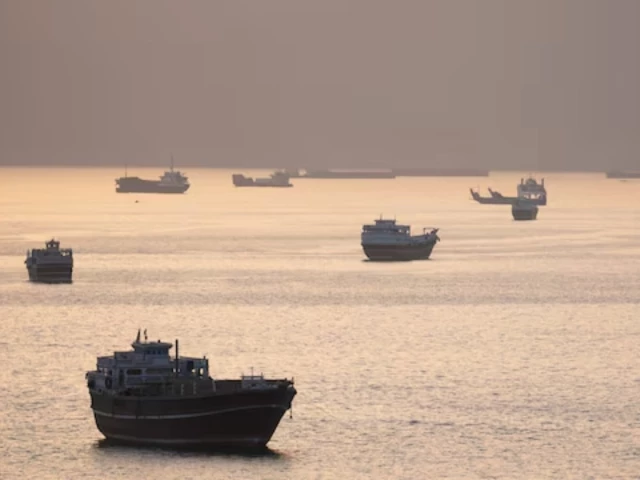
It comes as the US said on Monday it will begin to help “guide” vessels out of the Strait of Hormuz.
Source link
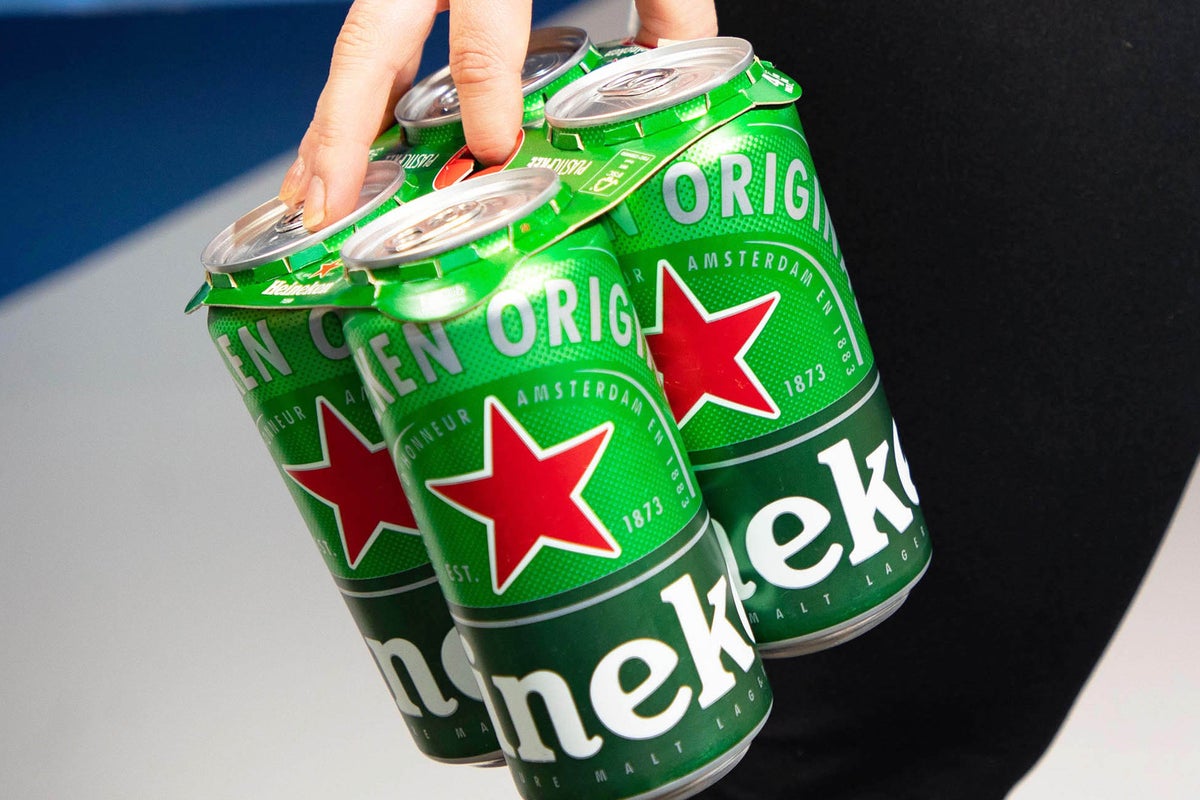
Heineken has revealed plans to invest more than £44 million into improvements for hundreds of its UK pubs.
The Dutch brewing giant said the cash injection into its Star Pubs operation, which runs 2,350 sites across the UK, will create around 850 jobs.
The major investment plan comes despite a challenging backdrop for the pub sector.
Pubs have come under pressure from rising labour costs and increases to national insurance contributions over the past year, while consumer spending has also come under pressure with concerns over inflation and rising unemployment.
However, pubs received additional business rates support from the Government from last month to help ease their cost pressures.
Lawson Mountstevens, Star Pubs’ managing director, said the company’s investment plan is partly aimed at boosting revenues to help the group cope with the recent “sustained increases in running costs”.
The plans will see the business invest £44.5 million this year into upgrades for 647 of its pubs.
It said 108 of its venues will see particularly significant cash injections, with these all set for transformations costing at least £145,000.
Heineken said the majority of pubs are owned by the group but independently operated by locals, with sports-focused venues an emphasis for investment in the run-up to the 2026 football World Cup.
The pub firm and brewer said it has pumped £328 million into British pubs since 2018.
It has already started work in 52 locations, including eight projects where it is reopening boarded-up pubs which have suffered from lengthy closures.
Mr Mountstevens urged the Government to reduce the tax burden on pubs to help ease the cost burden and support more job creation in the industry.
He said: “We can only do so much; the root-and-branch reform of business rates that the industry has been calling for over many years is urgently required, as well as a lowering of the burden of taxation on pubs, including VAT and beer duty.
“We are calling on the Government to support us in bringing out the best in the Great British pub.”

Heineken to boost British pubs with £44 million investment before World Cup

India aligns RoDTEP schedules with amended customs tariff

Emily Blunt celebrates as ‘Devil Wears Prada 2’ dominates box office

-

 Tech7 days ago
A Brain Implant for Depression Is About to Be Tested in Humans
-

 Tech1 week ago
Almost 90% of women leave tech industry within 10 years | Computer Weekly
-
 Business7 days ago
‘I had £20,000 stolen and had to fight a 13-month fraud reporting rule to get it back’
-
 Business1 week ago
Pakistan’s oil market is fuelling the crisis | The Express Tribune
-

 Sports6 days ago
Pro wrestling star Steph De Lander reveals how colleague’s advice helped lead her to title triumph at ACW
-

 Entertainment7 days ago
Melania Trump says ABC should ‘take a stand’ on late-night host Kimmel
-
 Tech6 days ago
This Ambitious Laptop Doesn’t Leave Much Room for Your Hands
-

 Entertainment7 days ago
Norway joins Type 26 Frigate Programme to boost NATO naval power