Business
Oil prices fall, bonds struggle on hawkish rate repricing as Iran war rages – SUCH TV
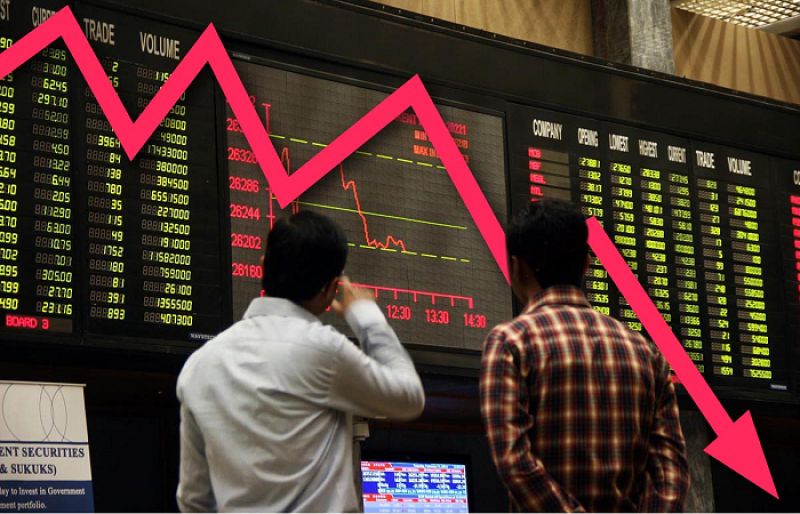
Oil prices eased on Friday while bonds were nursing losses, after global central bankers sounded the alarm on inflation risks stemming from the ongoing war in the Middle East that has sent markets into a tailspin.
Following a hectic week of monetary policy meetings across effectively the Group of Seven (G7) nations and others, the key takeaway for investors has been the prospect of a more aggressive policy path.
Traders are no longer expecting a Federal Reserve rate cut this year, a hike from the Bank of England next month is seen as a coin toss, and sources said the European Central Bank may need to begin discussing rate increases in April and possibly tighten policy in June.
“There’s a lot of value in the signal,” said Vishnu Varathan, Mizuho’s head of macro research for Asia ex-Japan, of the hawkish rhetoric from central banks this week.
“It’s a messaging to markets that we are on top of this, you don’t need to send yields unnecessarily higher, because… the yields are already starting to do the work for them.”
A rout in global bonds pushed yields to multi-month highs on Thursday, though the selloff abated in Asia on Friday.
Trading of cash US Treasuries was closed due to a holiday in Japan, but futures edged marginally higher.
The yield on the two-year US Treasury note, which typically reflects near-term rate expectations, had jumped as much as over 20 basis points in the previous session.
“Probably every day that goes by without an end to the war or clear positive steps increases the chances of that more adverse scenario for the bond market,” Thomas Mathews, head of markets for Asia-Pacific at Capital Economics, said of the possibility of rate hikes from major central banks by the year-end.
For the month thus far, Germany’s two-year yield has already risen some 56 bps, while yields on two-year British gilts have jumped 88 bps.
Energy chokehold
Brent crude futures were down 3% at $105.43 a barrel on Friday while US crude fell 2.2% to $94 per barrel, after leading European nations and Japan offered to join efforts to secure safe passage for ships through the Strait of Hormuz and the US outlined moves to boost oil supply.
Still, both remained well above levels prior to the US-Israeli war on Iran, having risen more than 40% this month.
Natural gas prices have also soared, with those in Europe surging as much as 35% on Thursday, as Iranian and Israeli strikes targeted some of the Middle East’s most important gas infrastructure.
That prompted US President Donald Trump to tell Israel not to repeat its attacks on Iranian natural gas infrastructure.
“Even if the US leaves (the conflict), Israel might not leave, and there may still be some strikes and Iran will retaliate, maybe at a lower volume,” said Alicia Garcia-Herrero, chief Asia-Pacific economist at Natixis.
“But this means that the Gulf will still be under pressure… so oil prices will not go back to $60, they will maybe stay at $90, at least until the end of the year. So the shock is already unavoidable.”
Shares steady, dollar falls
MSCI’s broadest index of Asia-Pacific shares outside Japan rose 0.18% and was set for a weekly gain of roughly 0.7%, snapping two straight weeks of losses.
The retreat in oil prices on Friday helped stabilise the market mood, though moves remained volatile.
Nasdaq futures rose 0.3% while S&P 500 futures advanced 0.37%, after closing lower in the overnight cash session. EUROSTOXX 50 futures were up 0.87%, while DAX futures jumped 0.8%.
The dollar was meanwhile set for a weekly loss of more than 1% , as investors priced in steeper rate hikes from other central banks this year as compared to the Fed.
The euro last bought $1.1570, having jumped 1.2% on Thursday, while sterling was steady at $1.3424 after a 1.3% rise overnight.
Even the yen , which was on the cusp of 160 per dollar in the previous session, found some reprieve and last stood at 157.85.
The Japanese currency was also supported by some hawkish comments from Bank of Japan Governor Kazuo Ueda on Thursday, after the central bank held rates steady but maintained its bias for tighter monetary policy.
Yusuke Miyairi, Nomura’s JPY FX and rates strategist, said that while Ueda may have left the door open to a rate hike in April, it remains “premature” to conclude that such a move would be coming.
Elsewhere, spot gold was up 0.8% to $4,686.97 an ounce.
, bonds struggle on hawkish rate repricing as Iran war rages

Business
Core sector output slows to 2.3% in February; crude, gas and refinery drag weighs on momentum – The Times of India
Growth in India’s eight core infrastructure industries eased to 2.3 per cent in February, down from 3.4 per cent in the same month last year, reflecting weakness in energy-linked segments even as output expanded in several manufacturing-oriented sectors.According to official data, production of crude oil, natural gas and petroleum refinery products declined during the month, moderating the overall expansion in the core sector basket. The eight industries together account for 40.27 per cent of the weight in the Index of Industrial Production (IIP).The combined Index of Eight Core Industries (ICI) rose 2.3 per cent (provisional) year-on-year in February 2026, the Ministry of Commerce and Industry said in a release, noting that cement, steel, fertilisers, coal and electricity recorded positive growth during the month.During April–February of FY26, cumulative growth in core infrastructure output stood at 2.9 per cent, compared with 4.4 per cent in the corresponding period of the previous financial year, indicating a broader slowdown in momentum.“The final growth rate of Index of Eight Core Industries for January 2026 was observed at 4.7 per cent. The cumulative growth rate of ICI during April to February, 2025-26 is 2.9 per cent (provisional) as compared to the corresponding period of last year,” the release said.Coal production — carrying a 10.33 per cent weight — increased 2.3 per cent in February over the same month last year. However, its cumulative index remained unchanged at 185.8 during April–February FY26.Crude oil output (8.98 per cent weight) declined 5.2 per cent year-on-year in February, while the cumulative index contracted 2.5 per cent over the April–February period.Similarly, natural gas production (6.88 per cent weight) fell 5.0 per cent during the month, with its cumulative index slipping 3.5 per cent compared with the year-ago period.Production of petroleum refinery products (28.04 per cent weight) declined 1.0 per cent in February and remained marginally lower — by 0.1 per cent cumulatively — during the first eleven months of the fiscal.Among the growth drivers, fertiliser output (2.63 per cent weight) rose 3.4 per cent year-on-year in February and recorded 2.0 per cent cumulative growth during April–February.Steel production — with a 17.92 per cent weight — posted a strong 7.2 per cent increase in February, while cumulative growth stood at 9.7 per cent.Cement output (5.37 per cent weight) expanded 9.3 per cent during the month and recorded 9.2 per cent growth cumulatively over the fiscal period under review.Electricity generation (19.85 per cent weight) increased 0.5 per cent year-on-year in February and registered 0.9 per cent cumulative growth during April–February.The data indicates that while construction-linked and industrial segments continue to lend support, the contraction in energy-related sectors remains a key drag on overall core infrastructure output.(With inputs from Agencies)
Business
The spring housing market is on, but mortgage rates just shot higher. Here’s what to know.
A realtor gives neighbors a tour during an open house at a home in Palm Beach Gardens, Florida, US, on Sunday, Jan. 11, 2026.
Zak Bennett | Bloomberg | Getty Images
Spring is traditionally the busiest season for home sales, and while this year’s market dynamics have shifted strongly in favor of buyers, broader forces in the economy are creating significant challenges.
The most important factor in any season is mortgage rates. They were expected to be lower this year, as the Federal Reserve dropped its lending rate to counter inflation, but the war with Iran has turned that on its head. The cost of oil is shooting higher, leading to rising inflation and causing the Fed to reconsider.
Now, U.S. interest rates are rising, with mortgage rates following suit.
The average rate on the popular 30-year-fixed mortgage had started this year lower, even briefly dipping below 6% at the end of February, but it rose sharply this week to 6.53% on Friday, the first day of spring, according to Mortgage News Daily. It is now just 18 basis points below where it was a year ago.
Higher rates will weigh on affordability, but other factors have flipped the market in favor of buyers. Homes are sitting on the market longer, sellers are increasingly willing to lower prices and the supply of homes for sale is rising, albeit not as quickly as it should be.
“As the housing market approaches the ‘best time to sell’ season, it sits in a precarious position, caught between long-term improvements and sudden short-term instability,” Jake Krimmel, senior economist at Realtor.com, wrote in a Weekly Housing Trends report. “Everything seems much more unsettled and uncertain than it did just a month ago.”
For the week ending March 14, active inventory was up 5.6% year-over-year, according to Realtor.com, but new listings were down 1.4%.
This means the number of homes for sale is climbing not because there are so many more sellers, but because the homes on the market are sitting. That may be because potential sellers who expected to put their homes on the market are holding back due to concerns about the implications of the Iran war.
“I think inventory is the bigger decider,” said Jonathan Miller, director of markets for StreetMatrix, a housing market data provider. “The idea that rates are going to noticeably come down this year, I think, is generally off the table.”
Location, location
Given the disparity in inventory across different markets, this spring is likely to be a tale of many cities.
For example, in February, active listings in Las Vegas, Seattle, Cincinnati and Washington, D.C., were all up over 20% from a year ago, according to Realtor.com. Listings in San Francisco, Chicago, Miami and Orlando, Florida, meanwhile, were lower than a year ago.
Home prices had been cooling off for much of the past year, and they continue to do so. Prices were just 0.7% higher in January than they were in January 2025, according to Cotality. That’s down from the 3.5% annual growth at the beginning of 2025. Higher mortgage rates, however, are taking away from that improved affordability.
The Northeast and Midwest are seeing the strongest price appreciation, led by New Jersey, Connecticut, Illinois, Wisconsin and Nebraska, due to tighter supply in those regions, according to Cotality.
Cotality ranks 69% of top metropolitan housing markets as overvalued, noting undervalued markets like Los Angeles, New York City, San Francisco and Honolulu could see a rebound in prices in 2027.
“Ultimately, locations with consistent job growth will remain the primary engines for price appreciation, but they also have larger inventory deficits which are driving pressure on home prices,” Selma Hepp, Cotality’s chief economist, wrote in a recent report.
As for new construction, buyers are likely to see better deals this spring, as builders are struggling to unload an oversupply of homes. Inventories hit a 9.7-month supply in January, according to the U.S. Census, as the result of sales falling to the lowest level since 2022. A growing share of builders cut prices in March, according to the National Association of Home Builders.
“Affordability for buyers and builders remains a top concern,” Bill Owens, chairman of the NAHB, said in a release. “Many buyers remain on the fence waiting for lower interest rates and due to economic uncertainty. Builders are facing elevated land, labor and construction costs and nearly two-thirds continue to offer sales incentives in a bid to firm up the market.”
Construction of single-family homes also dropped in January. While some are blaming rough winter weather for the weakness in the new home market, builders are consistently battling affordability for both their customers and their own bottom lines. Costs for land, labor and materials have not eased.
“I think this is not going to be an inspiring year for the housing market. It started out with high expectations. I think the war, whatever the outcome, has really dampened enthusiasm and kept uncertainty really high,” Miller said.
Business
‘Marriage penalty’ in Washington state’s new millionaire tax stirs debate
A version of this article first appeared in CNBC’s Inside Wealth newsletter with Robert Frank, a weekly guide to the high-net-worth investor and consumer. Sign up to receive future editions, straight to your inbox.
Washington state’s proposed new income tax includes the largest “marriage penalty” in the nation, placing higher taxes on certain couples who file jointly, according to tax experts.
The state House of Representatives approved Washington’s first-ever income tax, imposing a 9.9% tax on income of more than $1 million a year. Having also passed the state Senate, it will now go to the governor, who plans to sign it into law. Washington is currently one of only nine states with no state income tax, and the new rate would be one of the highest in the nation.
While Democratic legislators call it “the millionaire’s tax,” some taxpayers making far less as individuals will also be subject to the tax thanks to a steep marriage penalty. According to the legislation, the $1 million threshold for the tax applies to individuals, couples and domestic partners. So if a married couple each makes $600,000, their combined income of $1.2 million would trigger the tax.
“According to the statute, it doesn’t matter if you’re single or married, the exemption is $1 million,” said Joe Wallin, an attorney who advises companies and tech founders in Washington. “It should be called the half-millionaire tax.”
While marriage penalties are not uncommon in state or federal tax codes, Washington’s stands out for its size. Most states use two income thresholds for tax brackets, one for individuals and another for couples that’s usually twice as high. Some high-tax states, such as California and New York, only apply marriage penalties for the highest earners, according to the Tax Foundation, a nonprofit tax policy think tank.
In New York, for instance, the income thresholds for each bracket are doubled for joint filers through the 9.65% rate, which applies to income above $1,077,550 for single filers and $2,155,350 for joint filers. But for the special millionaire surtax rates of 10.3% and 10.9% — relevant to those making above $5 million and $25 million in income, respectively — the income thresholds are the same for joint and single filers.
In California, bracket thresholds double for joint filers, except for the 1% Mental Health Services Act, which applies to income above $1 million for both single and married filers.
Jared Walczak, senior fellow of the Tax Foundation, said the marriage penalties in New York and California are relatively small, amounting to a 1% tax rate difference in California and a 0.65% difference in New York. In Washington state, however, the difference can be up to 9.9%.
“In the most extreme case, if you had two single filers who both earned exactly $1 million, they would owe $0, but if they married and earned the same income, they would owe $99,000,” he said. “Washington’s marriage penalty will be the largest by far.”
The state’s Democratic lawmakers and governor haven’t specifically addressed concerns about the marriage penalty. State Sen. Noel Frame, who leads fiscal policy for the state Senate Democrats, said the standard deduction of $1 million per household is the same structure used for the state’s capital gains excise tax, passed by voters in 2021.
“As we work to make the two separate tax structures work together, having consistency in the deduction helps with both administration of the tax by our Department of Revenue and simplicity for taxpayers,” she said in a statement. “Since the tax doesn’t apply to income less than $1 million, there are many high-earning couples that still won’t see much of a tax impact even if their combined incomes are more than $1 million.”
Yet in a state that depends on highly skilled, highly paid workers at companies such as Amazon, Microsoft and other tech companies, many dual-income families could get hit with the tax, analysts said.
“There’s this idea that, ‘We’re just taxing rich dudes with yachts,'” said Brian Heywood, a Washington hedge-fund manager who founded Let’s Go Washington, a conservative political action committee opposed to the tax. “They’ve been less than honest with who they’re going after and what the numbers are.”
Wallin joked that some dual-earning couples might even explore a legal divorce for tax reasons, even if they want to stay effectively married. “The tax savings alone would more than pay the costs of a divorce lawyer,” he said.
The marriage penalty is the latest controversy for Washington’s new income tax, which has become a beacon in the Democratic Party’s movement to raise taxes on the wealthy. From Rhode Island and New York to Virginia and Michigan, Democrats in state legislatures are seeking to counteract rising inequality and federal funding cuts to health care by raising taxes on top earners. California is considering a ballot initiative to create the first state wealth tax, taxing the total net worth of the state’s billionaires.
Washington will be a closely watched experiment in the debate over the impact of higher state taxes on wealth migration.
Two of the state’s most celebrated entrepreneurs — Jeff Bezos of Amazon and Howard Schultz of Starbucks — have already left the state for Florida, which has no income tax. Bezos announced his move to Miami in 2023, after the state’s new capital gains tax of 7% took effect. He sold more than $9 billion worth of Amazon stock in 2024, effectively saving over $600 million in capital gains taxes that he would have had to pay to Washington state.
Schultz recently announced that he had moved from Seattle after 44 years. He said his family office will also move to Miami but that his foundation would continue to operate in Seattle.
“It is our hope that Washington will remain a place for business and entrepreneurship to thrive, creating essential opportunity for those in Seattle and the surrounding areas,” he wrote.
-
Business1 week agoStock market crash today (March 12, 2026): Nifty50 opens below 23,600; BSE Sensex down over 900 points on continuing US-Iran war – The Times of India
-
Business1 week agoUS issues 30-day waiver for Russian oil shipments stranded at sea | The Express Tribune
-
Fashion1 week agoUS unemployment rate 4.4% in Feb 2026, LFPR 62%: BLS
-
Fashion1 week agoChinese firm to invest $15.34 million in garment factory at BEPZA
-
Tech6 days agoTips and Advice for Buying Used or Refurbished Electronics
-
Business1 week agoOil holds above $100 as tensions escalates between Iran, US and Israel – SUCH TV
-
Tech1 week agoTech Traveler’s Guide to Dumbo: Where to Stay, Eat, and Recharge
-
Sports1 week agoBilas’ All-America teams: My top 20 men’s college basketball players of 2025-26