

Business
Oil prices fall, bonds struggle on hawkish rate repricing as Iran war rages – SUCH TV


Oil prices eased on Friday while bonds were nursing losses, after global central bankers sounded the alarm on inflation risks stemming from the ongoing war in the Middle East that has sent markets into a tailspin.
Following a hectic week of monetary policy meetings across effectively the Group of Seven (G7) nations and others, the key takeaway for investors has been the prospect of a more aggressive policy path.
Traders are no longer expecting a Federal Reserve rate cut this year, a hike from the Bank of England next month is seen as a coin toss, and sources said the European Central Bank may need to begin discussing rate increases in April and possibly tighten policy in June.
“There’s a lot of value in the signal,” said Vishnu Varathan, Mizuho’s head of macro research for Asia ex-Japan, of the hawkish rhetoric from central banks this week.
“It’s a messaging to markets that we are on top of this, you don’t need to send yields unnecessarily higher, because… the yields are already starting to do the work for them.”
A rout in global bonds pushed yields to multi-month highs on Thursday, though the selloff abated in Asia on Friday.
Trading of cash US Treasuries was closed due to a holiday in Japan, but futures edged marginally higher.
The yield on the two-year US Treasury note, which typically reflects near-term rate expectations, had jumped as much as over 20 basis points in the previous session.
“Probably every day that goes by without an end to the war or clear positive steps increases the chances of that more adverse scenario for the bond market,” Thomas Mathews, head of markets for Asia-Pacific at Capital Economics, said of the possibility of rate hikes from major central banks by the year-end.
For the month thus far, Germany’s two-year yield has already risen some 56 bps, while yields on two-year British gilts have jumped 88 bps.
Energy chokehold
Brent crude futures were down 3% at $105.43 a barrel on Friday while US crude fell 2.2% to $94 per barrel, after leading European nations and Japan offered to join efforts to secure safe passage for ships through the Strait of Hormuz and the US outlined moves to boost oil supply.
Still, both remained well above levels prior to the US-Israeli war on Iran, having risen more than 40% this month.
Natural gas prices have also soared, with those in Europe surging as much as 35% on Thursday, as Iranian and Israeli strikes targeted some of the Middle East’s most important gas infrastructure.
That prompted US President Donald Trump to tell Israel not to repeat its attacks on Iranian natural gas infrastructure.
“Even if the US leaves (the conflict), Israel might not leave, and there may still be some strikes and Iran will retaliate, maybe at a lower volume,” said Alicia Garcia-Herrero, chief Asia-Pacific economist at Natixis.
“But this means that the Gulf will still be under pressure… so oil prices will not go back to $60, they will maybe stay at $90, at least until the end of the year. So the shock is already unavoidable.”
Shares steady, dollar falls
MSCI’s broadest index of Asia-Pacific shares outside Japan rose 0.18% and was set for a weekly gain of roughly 0.7%, snapping two straight weeks of losses.
The retreat in oil prices on Friday helped stabilise the market mood, though moves remained volatile.
Nasdaq futures rose 0.3% while S&P 500 futures advanced 0.37%, after closing lower in the overnight cash session. EUROSTOXX 50 futures were up 0.87%, while DAX futures jumped 0.8%.
The dollar was meanwhile set for a weekly loss of more than 1% , as investors priced in steeper rate hikes from other central banks this year as compared to the Fed.
The euro last bought $1.1570, having jumped 1.2% on Thursday, while sterling was steady at $1.3424 after a 1.3% rise overnight.
Even the yen , which was on the cusp of 160 per dollar in the previous session, found some reprieve and last stood at 157.85.
The Japanese currency was also supported by some hawkish comments from Bank of Japan Governor Kazuo Ueda on Thursday, after the central bank held rates steady but maintained its bias for tighter monetary policy.
Yusuke Miyairi, Nomura’s JPY FX and rates strategist, said that while Ueda may have left the door open to a rate hike in April, it remains “premature” to conclude that such a move would be coming.
Elsewhere, spot gold was up 0.8% to $4,686.97 an ounce.
, bonds struggle on hawkish rate repricing as Iran war rages

Heineken has announced a substantial investment exceeding £44 million into hundreds of its pubs across the UK, a move expected to create approximately 850 jobs.
The Dutch brewing giant’s Star Pubs operation, which manages 2,350 sites nationwide, is undertaking this significant financial commitment despite a challenging period for the pub sector.
The industry has faced considerable pressure over the past year, grappling with escalating labour costs and increases in national insurance contributions.
Concurrently, consumer spending has been constrained by concerns over inflation and rising unemployment, further impacting pub revenues. However, pubs did receive additional business rates support from the government last month, aimed at alleviating some of these financial burdens.
Lawson Mountstevens, managing director of Star Pubs, indicated that the investment strategy is partly designed to bolster revenues and help the group navigate the recent “sustained increases in running costs”.
This year, £44.5 million will be allocated to upgrades for 647 pubs. A notable 108 of these venues are earmarked for particularly significant cash injections, with each transformation costing at least £145,000.
Heineken clarified that while the majority of its pubs are group-owned, they are independently operated by local licensees. A key focus for this investment, particularly in the lead-up to the 2026 football World Cup, will be on sports-focused venues.
The pub firm and brewer has a history of significant investment in British pubs, having pumped £328 million into the sector since 2018. Work has already commenced at 52 locations, including eight projects dedicated to reopening boarded-up pubs that have endured lengthy closures.
Mr Mountstevens also urged the government to reduce the tax burden on pubs, arguing it would ease cost pressures and foster further job creation within the industry.
He stated: “We can only do so much; the root-and-branch reform of business rates that the industry has been calling for over many years is urgently required, as well as a lowering of the burden of taxation on pubs, including VAT and beer duty.”
He concluded with a direct appeal: “We are calling on the Government to support us in bringing out the best in the Great British pub.”
GameStop’s boss Ryan Cohen says he sees potential to make eBay a much bigger rival to Amazon.
Source link
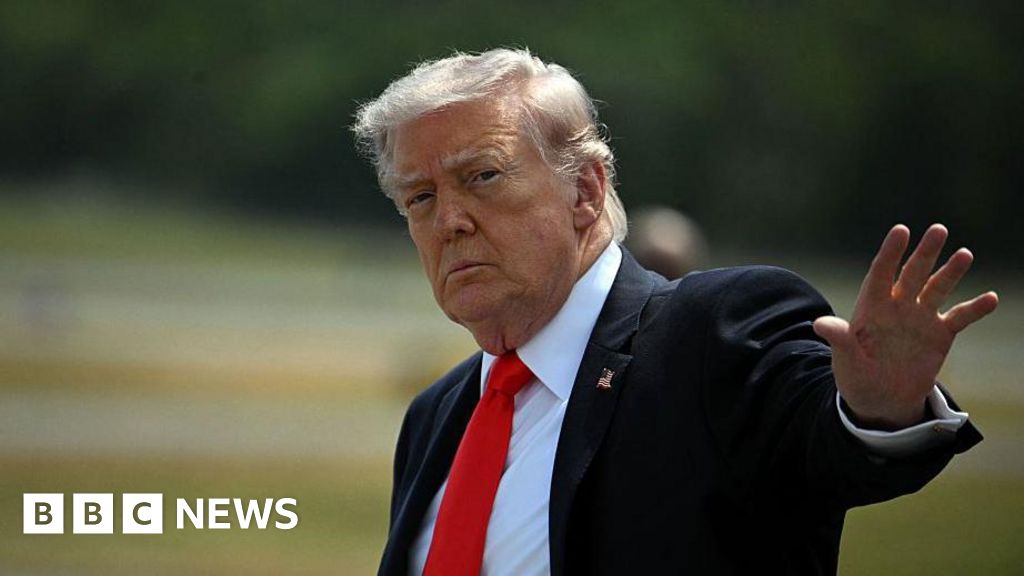
It comes as the US said on Monday it will begin to help “guide” vessels out of the Strait of Hormuz.
Source link


Dwayne Johnson shocks everyone with bold Met Gala outfit

Greg Brockman Defends $30B OpenAI Stake: ‘Blood, Sweat, and Tears’

Met Gala 2026 “Costume Art” red carpet pictures from New York City

-

 Tech1 week ago
A Brain Implant for Depression Is About to Be Tested in Humans
-
 Business1 week ago
Pakistan’s oil market is fuelling the crisis | The Express Tribune
-

 Tech1 week ago
Almost 90% of women leave tech industry within 10 years | Computer Weekly
-
 Business1 week ago
‘I had £20,000 stolen and had to fight a 13-month fraud reporting rule to get it back’
-

 Sports7 days ago
Pro wrestling star Steph De Lander reveals how colleague’s advice helped lead her to title triumph at ACW
-

 Entertainment1 week ago
Norway joins Type 26 Frigate Programme to boost NATO naval power
-
 Entertainment1 week ago
Melania Trump says ABC should ‘take a stand’ on late-night host Kimmel
-
 Tech7 days ago
This Ambitious Laptop Doesn’t Leave Much Room for Your Hands